By 2027, the global landscape for home appliance ownership is undergoing a fundamental shift: you will no longer be trapped by manufacturer-restricted repair ecosystems, meaning your warranties will finally cover products that are designed to be fixed rather than replaced.
Key Takeaways:
- Warranty Protection: Under upcoming 2027 standards, performing basic repairs or using independent service providers will no longer automatically void your manufacturer warranty.
- Parts Availability: Manufacturers are increasingly mandated to provide spare parts and diagnostic software to the public and independent shops for at least 7-10 years post-production.
- Financial Impact: While initial appliance costs may fluctuate, the lifecycle cost of your home equipment will drop significantly as modular designs become the industry standard.
If you have ever spent a Saturday afternoon staring at a broken dishwasher, only to be told by a customer service representative that the repair would cost nearly as much as a new unit—or that opening the casing yourself would void your warranty—you know the frustration of the current “throwaway” culture. For those of us balancing school runs, work deadlines, and the endless cycle of household chores, appliance failure isn’t just an inconvenience; it’s a financial and logistical emergency. The “Right-to-Repair” movement is moving from a niche political talking point to a legal reality, and by 2027, it will change how we manage our homes.
What the 2027 Regulatory Landscape Actually Means for You
The core of the Right-to-Repair movement isn’t just about the “right” to pick up a wrench; it is about ending the practice of “planned obsolescence.” Currently, many manufacturers design appliances as sealed units. If a motor fails, you are often forced to replace the entire machine because the specific part is “unavailable” or the internal assembly is glued shut. By 2027, new regulations in major markets—including the European Union and several U.S. states—will enforce modularity. This means appliances must be designed so that common failure points (like heating elements, pumps, or control boards) are physically accessible and replaceable with standard tools.
Why does this matter for your warranty? Historically, manufacturers have used warranty terms as a deterrent. They included clauses stating that any repair performed by a non-authorized technician—or by the consumer—would immediately cancel the remainder of the warranty coverage. Starting in 2027, regulators are pushing back. The new standard is shifting toward a model where the warranty follows the product, not the service provider. As long as you follow the official repair manual, your warranty remains intact, even if you replace a part yourself or hire a local independent repair shop.
Consider a realistic scenario: Your washing machine’s drain pump fails two years into a five-year warranty. In the past, you might have been forced to wait two weeks for a brand-specific technician who charges a premium. In 2027, you will be able to purchase the genuine OEM (Original Equipment Manufacturer) part directly from the manufacturer’s website, consult the digital repair manual provided by the company, and install it yourself or have a local technician do it at a fraction of the cost—all while keeping your warranty valid.
The Evolution of Spare Parts and Diagnostic Access
The most significant hurdle to fixing our own appliances has always been the “gatekeeping” of parts and diagnostics. Many modern appliances are essentially computers with motors attached. When an error code pops up, the machine often locks itself, requiring a proprietary software key held only by authorized service centers. This is the “hidden cost” of your appliance—you own the hardware, but you don’t own the software that runs it.
By 2027, the mandate for “diagnostic transparency” will change this. Manufacturers will be required to provide public access to the same diagnostic software and error code databases that they provide to their own repair centers. This levels the playing field. If your smart oven stops heating, you will be able to plug in a diagnostic tool (or use a mobile app) to identify exactly which component is faulty, rather than guessing and replacing expensive parts one by one.
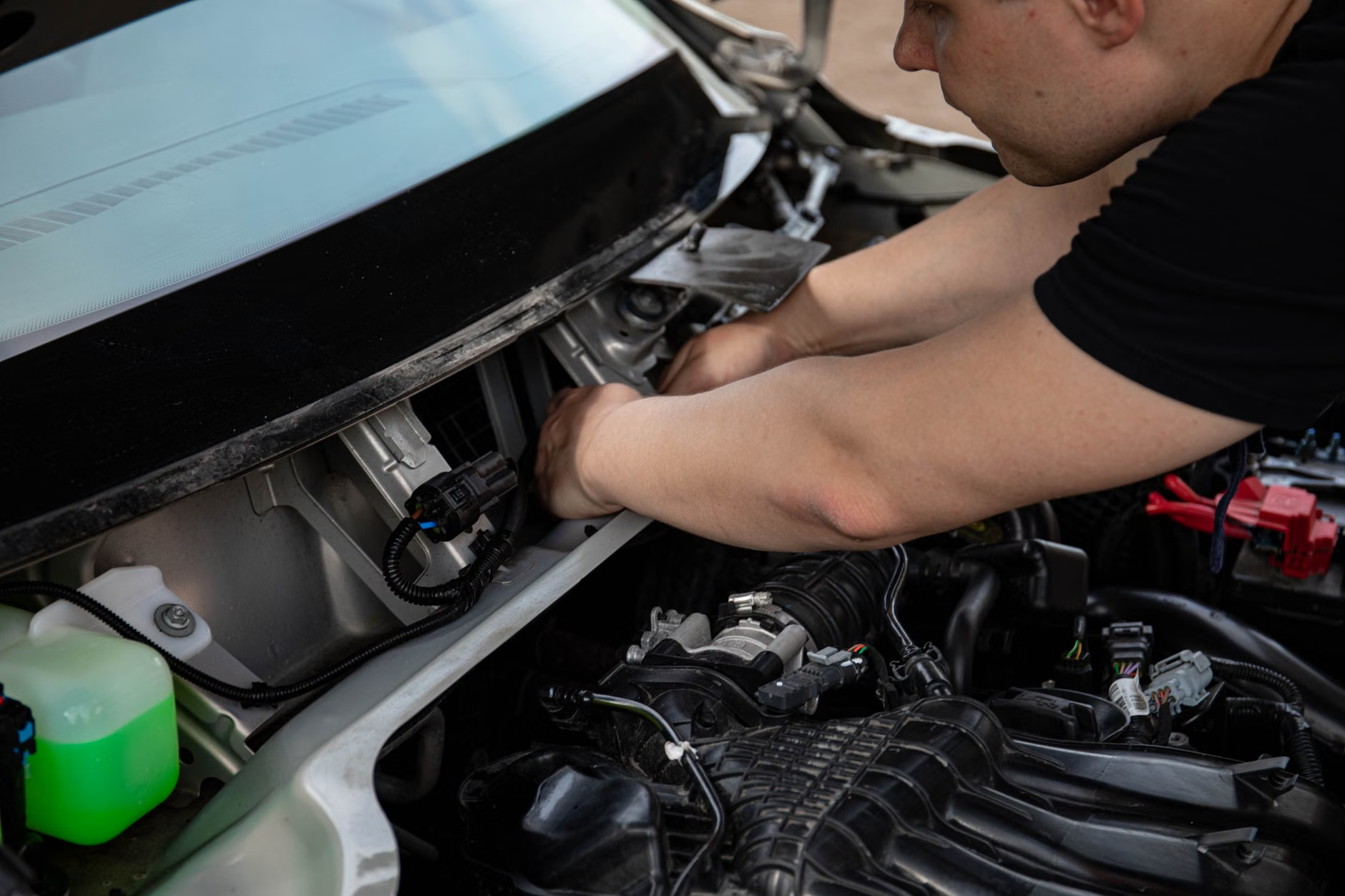
However, there is a catch: compatibility and safety. While you will have more access, you must ensure you are using parts that meet the safety certifications for your specific model. A common mistake consumers make is purchasing “compatible” or “generic” parts that may fit physically but lack the electrical specifications required for the appliance. While the law grants you the right to repair, it does not absolve you of the responsibility of ensuring the repair is safe. Always verify the part number against the manufacturer’s official database, which will be much easier to access by 2027.
Managing Your Home Appliance Lifecycle: A Strategic Approach
For those of us in our 30s and 40s, we are often at the stage where we are buying “family-sized” appliances—large refrigerators, high-capacity laundry units, and heavy-duty dishwashers. These are significant investments. When you are shopping for these items today, you should look for the “Repairability Score” that is becoming increasingly common in many regions. This score isn’t just a marketing gimmick; it is an objective measure of how easy it is to disassemble the unit, the availability of spare parts, and the cost of those parts relative to the machine’s price.
When you are evaluating a purchase, use this decision framework to determine if the appliance is a smart buy for the long term:
| Feature | Indicator of High Repairability | Indicator of High Risk |
|---|---|---|
| Part Access | Standard screws, modular panels, clear labeling. | Glued panels, proprietary security screws, hidden internal clips. |
| Documentation | Publicly available service manuals and schematics. | “Authorized personnel only” warnings, no schematics available. |
| Software | Open error codes, user-accessible diagnostic menus. | Encrypted software, requires proprietary hardware key to reset. |
| Part Lifespan | Manufacturer guarantees parts for 7-10 years. | Parts discontinued 2-3 years after model release. |
If you are currently choosing between two models, one slightly cheaper and one slightly more expensive, check the manufacturer’s stance on spare parts availability. The cheaper model might end up costing you twice as much over five years if the parts are proprietary or unavailable, forcing a full replacement.
The Hidden Trade-offs of the 2027 Shift
It is important to manage expectations. While the Right-to-Repair movement is a net positive for consumers, it is not a magic solution to every mechanical failure. As appliances become more modular, there is a design trade-off. Some engineers argue that making components modular can increase the footprint of the appliance or slightly reduce energy efficiency. For example, a single, integrated circuit board might be more energy-efficient than a series of modular components connected by wires. You may find that some high-end, ultra-efficient appliances still lean toward the “sealed” design to meet strict environmental standards.
Furthermore, the 2027 regulations primarily cover major home appliances. Small kitchen gadgets—like high-end blenders or coffee makers—often fall into a grey area. When purchasing these, you should still prioritize brands that have a history of offering repair services or selling individual replacement parts. A common misconception is that “everything” will be easily repairable. In reality, the law focuses on appliances with a significant environmental impact, meaning your toaster might remain a “replace, don’t repair” item for a few more years.
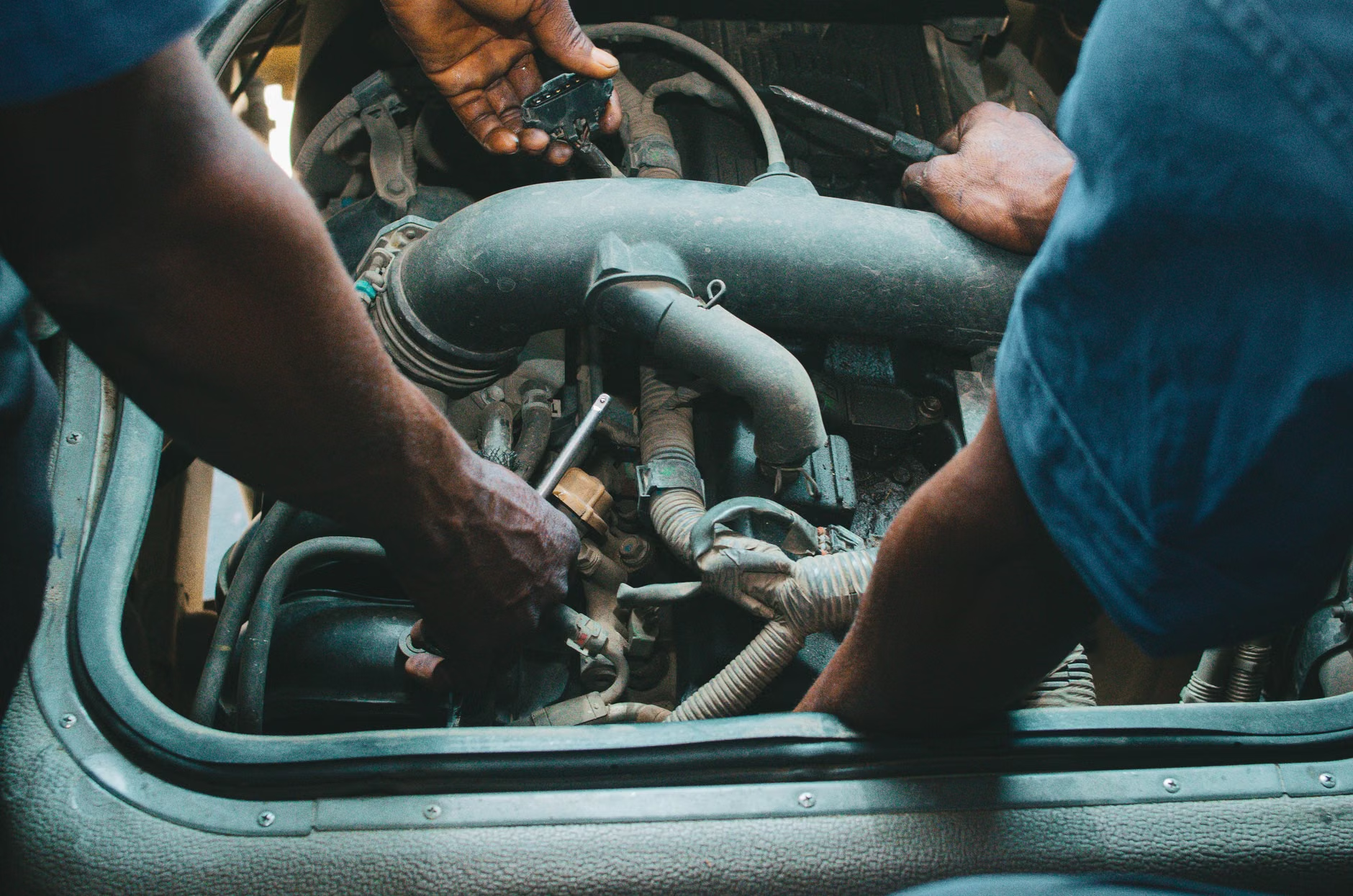
Another overlooked variable is the skill gap. Having the right to repair is not the same as having the ability to repair. While manufacturers will provide manuals, these documents are often written for technicians. If you are not comfortable working with electricity or plumbing, having access to the part doesn’t necessarily mean you should perform the repair yourself. The most practical next step for the average household is to use these new rights to lower your costs by buying the parts yourself and hiring an independent technician to perform the labor, rather than paying the inflated markup that authorized service centers often charge for parts.
Step-by-Step: Preparing for a Future of Self-Reliance
To prepare your household for the 2027 standards, start building your “repair culture” now. It begins with how you treat your appliances today. Stop treating the user manual as a piece of trash to be thrown away; keep it in a dedicated folder or, better yet, digitize it. If you have an appliance that is currently working well, take 10 minutes to locate the model number and search online to see if the manufacturer provides a PDF service manual. If they do, save it to a cloud drive.
When something does break, follow this decision-making process:
- Verify the Error: Use the manufacturer’s documentation to decode the error. Do not rely solely on internet forums, as they can sometimes lead you to perform unnecessary “hard resets” that don’t address the root cause.
- Check Warranty Status: Even if you are outside the standard 1-year warranty, check for “extended limited warranties” on specific components like compressors, motors, or drums, which often last 5-10 years.
- Source the Part: Use the official part number. Avoid generic “universal” parts unless you are absolutely certain of the electrical match.
- Assess Safety: If the repair involves high-voltage capacitors or gas lines, hire a professional. If it involves replacing a door seal, a pump, or a heating element, it is likely within the scope of a competent DIYer.
- Document the Repair: Keep a record of what you did and the part number used. This will be invaluable for future maintenance.
This approach transforms your relationship with your home. Instead of feeling helpless when a machine fails, you become the manager of your own home’s infrastructure. By 2027, this will be the standard way we interact with our possessions. It is a shift from being a passive consumer to an active owner. This doesn’t mean you need to become a full-time mechanic, but it does mean you are no longer at the mercy of a broken system that benefits from your inconvenience.
Frequently Asked Questions
Does the Right-to-Repair law apply to all home appliances, or just large ones?
The 2027 regulations primarily target “major” home appliances like refrigerators, washing machines, dryers, and dishwashers. These are categorized based on their size, energy consumption, and environmental impact. Smaller kitchen appliances, such as blenders or toasters, are not currently subject to the same strict mandates, though the market is gradually shifting toward better repairability for these items as well due to consumer demand.
If I perform a repair myself, what proof do I need to maintain my warranty?
Under the new standards, you should keep all receipts for the spare parts you purchased, ensuring they are genuine OEM parts. Additionally, keep a simple log of the repair date and the steps taken according to the official manual. While you won’t need a “certificate of repair,” having a clear paper trail showing you followed recommended procedures will be your best protection if a dispute arises regarding your warranty coverage.
Will appliances become more expensive because they are designed to be repaired?
There is a common fear that repairable appliances will cost more upfront. While there may be a slight adjustment in manufacturing costs to accommodate modular designs, the long-term cost of ownership is expected to decrease. When you factor in the ability to fix a $50 part rather than replacing a $1,000 machine, the total lifecycle cost of the appliance is significantly lower. Manufacturers are also finding that repairable, long-lasting products are becoming a key competitive advantage in a market that is increasingly conscious of sustainability.
As we move toward 2027, the best thing you can do is stay informed about your specific appliance brands and their repair policies. The power to maintain your home is moving back into your hands, and with a bit of preparation, you can save both money and the stress of dealing with sudden, forced replacements. For more official updates on these regulations, you can monitor the progress of the European Commission’s Circular Economy Action Plan or the U.S. Federal Trade Commission’s ongoing reports on repair restrictions. Your home is your biggest investment; treat it with the care that true ownership requires.