Key Takeaways:
- Carbon Border Taxes (CBAM) are designed to level the playing field for domestic producers by taxing carbon-intensive imports, which will likely raise the shelf price of non-local goods.
- Food security and supply chains are shifting; expect higher premiums on out-of-season produce and goods shipped from countries with weaker carbon regulations.
- Strategic shopping—prioritizing seasonal, local produce and reducing reliance on ultra-processed imports—is your best defense against these inevitable climate-related price adjustments.
If you have noticed that your weekly grocery haul seems to be getting more expensive even when you aren’t buying anything particularly fancy, you aren’t imagining it. While we often talk about inflation in terms of fuel prices or supply chain bottlenecks, there is a quieter, more structural force beginning to exert pressure on your wallet: the Carbon Border Adjustment Mechanism, or CBAM.
For most of us, “carbon policy” sounds like something that belongs in a legislative chamber or a climate summit—certainly not in our local supermarket. But as governments move to prevent “carbon leakage”—the process where companies move production to countries with lax environmental laws—the cost of doing business globally is being recalculated. And as usual, that recalculation is finding its way to the bottom line of your receipt.
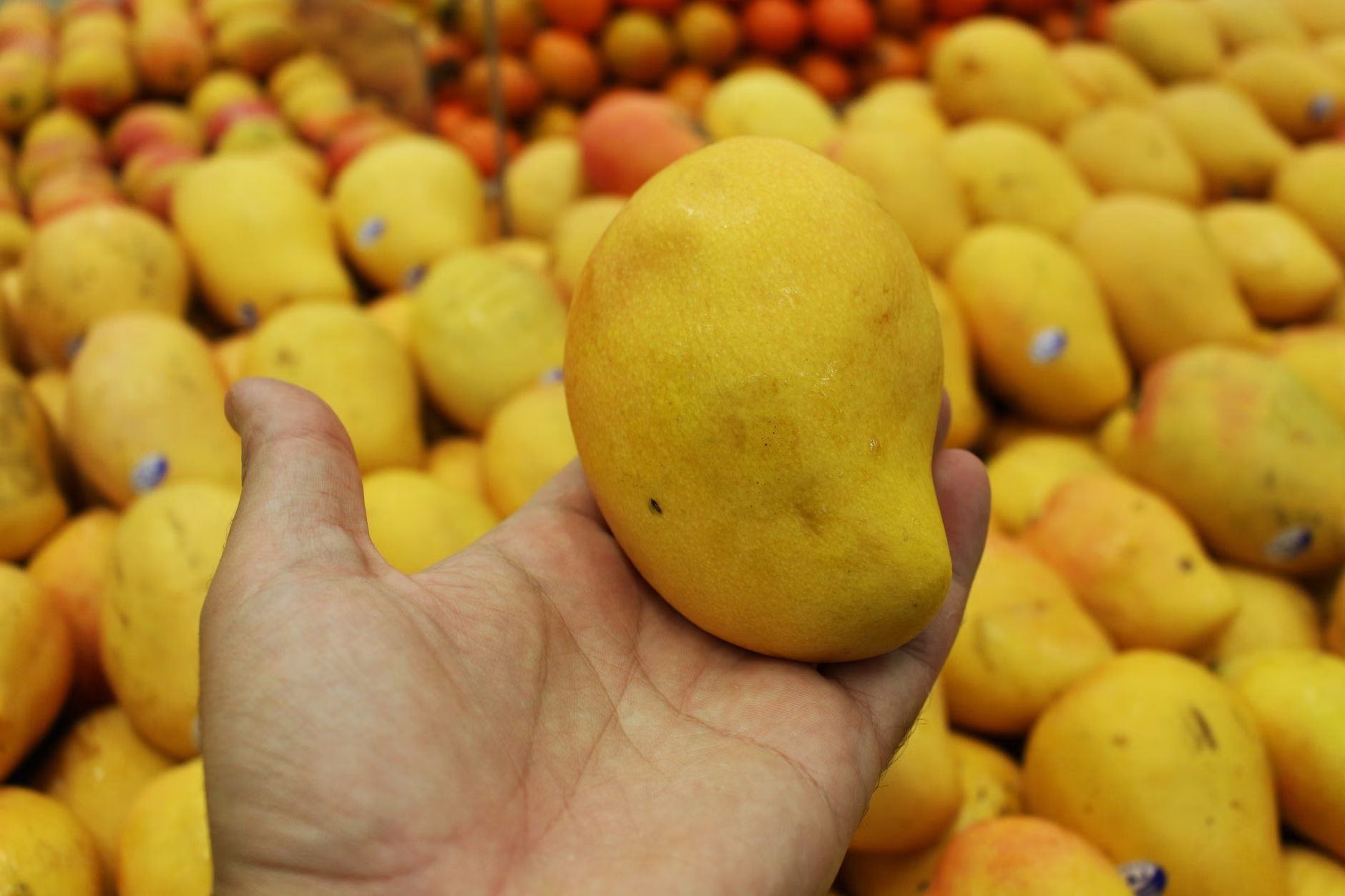
What Exactly Is a “Carbon Border Tax” and Why Should You Care?
At its core, a Carbon Border Tax is a tariff on goods entering a country based on the amount of carbon emitted during their production. Think of it as a “pollution fee” that follows a product across international borders. The goal is to ensure that businesses cannot gain a competitive advantage simply by moving their manufacturing or agricultural operations to a country that doesn’t tax carbon emissions.
Why does this land in your grocery cart? Because agriculture and food processing are incredibly carbon-intensive. From the energy used to power greenhouses in colder climates to the maritime fuel required to ship avocados from South America to Europe or North America, every step of the journey leaves a carbon footprint. When a government decides to tax that footprint, the producer or the importer usually has two choices: absorb the cost, or pass it on to the consumer.
In your 30s and 40s, you are likely managing a household budget that is already stretched thin by childcare, housing, and general inflation. Understanding this tax is not about becoming an environmental policy wonk; it is about recognizing which parts of your grocery spending are likely to see steady, structural price increases over the next decade. This is not a temporary spike; it is a fundamental shift in how global trade prices the environment.
The Mechanics of Price Hikes: How the Tax Travels from Farm to Shelf
It is easy to assume that a tax on “carbon” only applies to heavy industry like steel or cement, but food is one of the most traded commodities on earth. When the European Union, for instance, implements its CBAM, it starts with heavy hitters, but the logic of carbon pricing is rapidly expanding to cover agricultural inputs like fertilizers and, eventually, the food products themselves.
Let’s look at how this price hike actually happens. Imagine a scenario where a specific type of coffee or fruit is imported from a country with very low environmental standards. Under the new regime, the importer must pay a fee equivalent to what that producer would have paid if they were operating under the importing country’s carbon pricing system. This fee is a cost of entry. To maintain their profit margins, the importer raises the wholesale price. The grocery store, facing higher wholesale costs, adjusts the retail price on the shelf.
| Product Category | Carbon Intensity | Expected Price Impact |
|---|---|---|
| Local, Seasonal Produce | Low | Minimal |
| Imported Exotic Fruits | High (Air freight) | High |
| Processed Foods (Global Supply Chain) | High | Moderate to High |
| Greenhouse-grown (Out of Season) | High | Moderate |
The table above illustrates a critical reality: the more complex and geographically distant your food’s supply chain is, the higher the likelihood of price volatility driven by carbon-border adjustments. If you rely heavily on imported processed goods or out-of-season luxury produce, you are effectively paying a “carbon premium” that will likely grow as these policies become more stringent.

Identifying the “Hidden” Costs in Your Weekly Receipt
One of the biggest mistakes shoppers make is assuming that “organic” or “natural” always equals a lower carbon footprint. This is a trap. An organic apple flown halfway across the world in a refrigerated cargo plane has a massive carbon footprint compared to a conventional apple grown in a local orchard. When carbon border taxes hit, the “organic” label won’t save you from the price hike if the product is carbon-intensive to transport.
Another overlooked variable is the role of packaging and processing. A bag of frozen peas is often more “carbon-efficient” than fresh peas shipped by air, because they are processed locally and shipped by sea, which is generally more efficient per kilogram of food. However, as international shipping companies begin to pay for their emissions, even sea freight will become more expensive. We are entering an era where “food miles” and “processing energy” are becoming primary drivers of the cost of living.
For a family, this means the “cheap” imported snack foods that keep the kids happy might see their prices creep up faster than whole-food staples. The companies producing these goods have less margin to absorb the new taxes, meaning the full cost is almost always pushed to the consumer. If you see a sudden, non-inflationary jump in the price of specific global brands, you are likely looking at the impact of new carbon-related trade policies.
Strategies for Families: How to Buffer Your Budget
So, what can you actually do? You cannot change global trade policy, but you can change your consumption patterns. The most effective strategy is to “localize” your diet as much as possible. This doesn’t mean you have to become a purist who only eats what grows in your backyard, but it does mean being mindful of the trade-offs.
1. Prioritize Seasonality: The most carbon-efficient food is food that is in season. Out-of-season produce is either grown in energy-intensive greenhouses or flown in from the other side of the planet. Both methods are prime targets for carbon taxes. By aligning your meal planning with the local harvest calendar, you not only pay less but also often get better quality.
2. Reduce Reliance on Ultra-Processed Imports: Ultra-processed foods are the most complex in terms of supply chain. Every ingredient—the flour from one country, the sugar from another, the palm oil from a third—has its own carbon cost. When you buy these products, you are paying the carbon tax for every single stage of that complex global journey.
3. Look for “Low-Carbon” Labels: While still in their infancy, some grocery chains are beginning to experiment with carbon labeling. If you see a product with a lower carbon score, it is often a sign that the supply chain is shorter or more efficient, which may insulate it from future trade-tax shocks.
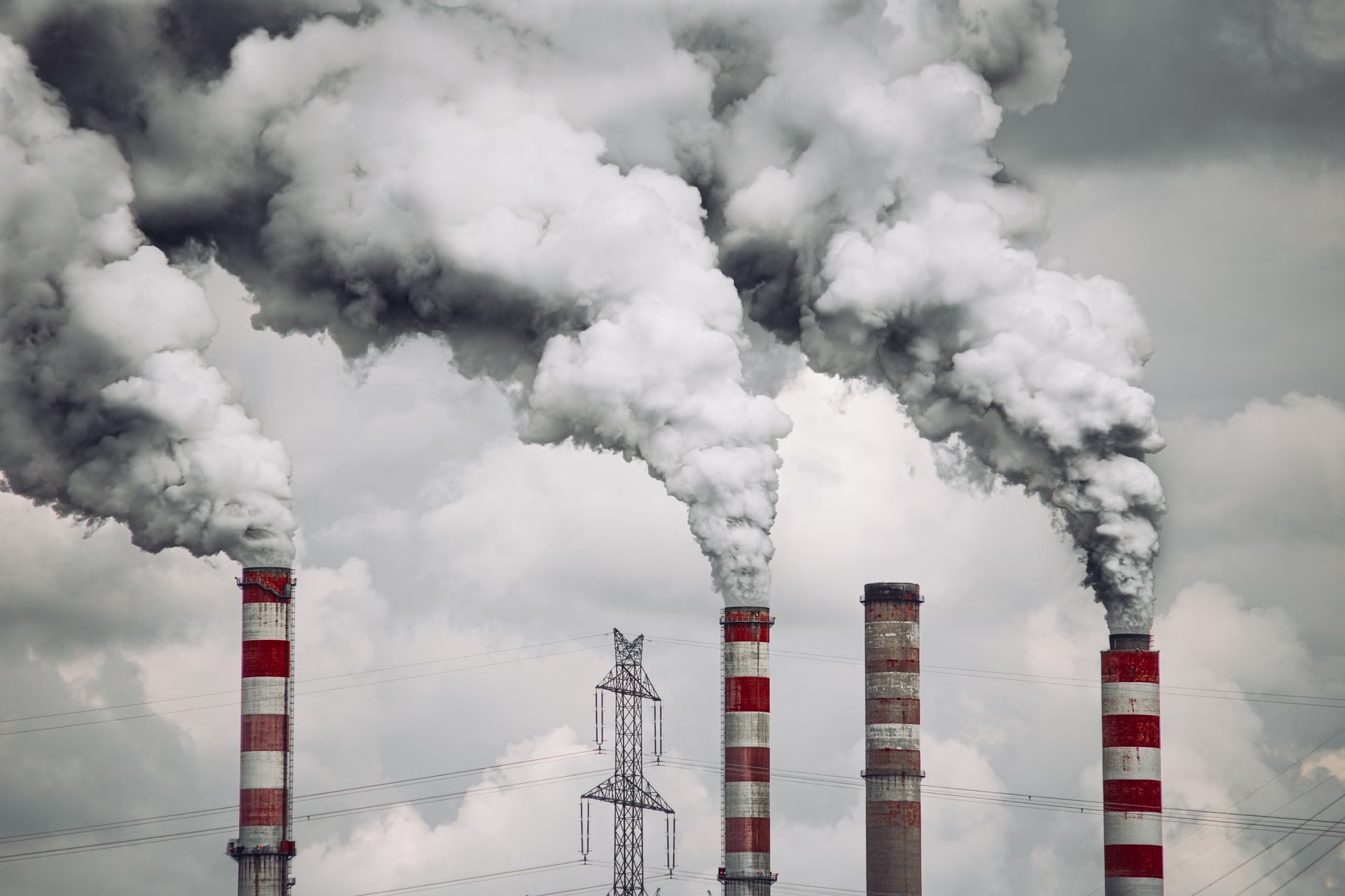
The Long-Term Outlook: Why This Is the New Normal
It is important to understand that these taxes are not going away. In fact, they are part of a global trend toward “decarbonizing” the economy. As nations commit to net-zero targets, they are essentially creating a global pricing structure for carbon. This is a fundamental change in the economic landscape. For the next decade, we should expect a gradual but persistent upward pressure on the price of goods that rely on fossil-fuel-heavy supply chains.
This reality requires a shift in how we view the grocery store. It is no longer just a place to buy calories; it is a place where we are participating in a global economic transition. The families who will fare best are those who are flexible, who understand the value of local supply chains, and who are willing to adjust their habits to favor products that are less dependent on long-distance, high-emission logistics.
While the prospect of higher grocery bills is never pleasant, framing this as an inevitable part of the climate transition helps move the conversation from “why is this happening to me?” to “how can I adapt my spending to be more resilient?” The goal is to build a pantry that is less sensitive to the shocks of global carbon policy. By moving away from imported, highly processed, and out-of-season goods, you are not just saving money—you are future-proofing your household budget against the inevitable shifts in the global climate economy.
Ultimately, the best advice is to focus on what you can control. Shop local when possible, embrace seasonal variety, and be wary of the “convenience premium” on imported processed foods. The carbon border tax is a signal to the market, and by listening to that signal, you can make smarter, more sustainable choices for your family’s financial future.
Frequently Asked Questions
Does a carbon border tax apply to everything I buy at the supermarket?
No, not currently. Most carbon border adjustment mechanisms, such as the EU’s CBAM, focus on carbon-intensive industrial goods like steel, aluminum, and electricity. However, the scope is expected to widen over time to include more agricultural products and processed foods. The goal is to eventually cover a broad range of goods that have a significant carbon footprint.
Is buying locally always cheaper?
Not necessarily. Local food can sometimes be more expensive due to higher labor costs or smaller economies of scale compared to massive, globalized agribusinesses. However, as international shipping becomes more expensive due to carbon taxes, the price gap between local and imported goods will likely narrow, making local options more competitive in the long run.
How can I tell if a product is going to be hit by these taxes?
Look for products that are shipped over long distances or require extensive processing. If a product is “imported” from a region with lower environmental regulations, it is at higher risk of being subject to these taxes. While you won’t see a “carbon tax” line item on your receipt, the price increase will be baked into the retail cost.
For more information on how climate policy is evolving and its impact on trade, you can visit the official World Trade Organization page on Climate Change and Trade, or check the European Commission’s detailed breakdown of the Carbon Border Adjustment Mechanism (CBAM).