Investing in high-end professional attire is no longer about walking into a flagship boutique and paying full retail price; the smartest professionals in their 30s and 40s are now building their wardrobes through the secondary market, where quality garments often cost 50% to 70% less than their original tags.
- Quality over Quantity: Focus on timeless materials like wool, silk, and cashmere that hold value and structure, even after years of wear.
- The “Cost-per-Wear” Metric: A $300 pre-owned blazer worn 100 times is a significantly better financial decision than a $100 fast-fashion piece that loses its shape after five washes.
- Strategic Platforms: Use specific platforms for specific items—high-end consignment for business suits, and peer-to-peer marketplaces for casual-professional accessories.
If you have ever stared at your closet at 7:00 AM, feeling like you have nothing to wear despite a rack full of clothes, you aren’t alone. Most of us in our 30s and 40s are balancing career demands with the chaotic logistics of parenting. We need clothes that look polished, hold up to a commute, and don’t require an hour of ironing. The “second-hand luxury” movement isn’t just about saving money; it is about reclaiming your style and your time.
Why Pre-Owned Luxury is the New Standard for Professionals
For a long time, buying second-hand was seen as a compromise. Today, it is a strategic advantage. When you buy pre-owned, you are often accessing “investment pieces”—garments made with construction standards that are increasingly rare in modern mass-market production. We are talking about hand-finished hems, natural fibers, and silhouettes designed to last a decade, not a season.
Consider the “fast fashion” trap. A mass-produced blazer might look fine in the store, but the synthetic lining will trap heat, the seams will begin to pucker after a few dry cleanings, and the shape will soften in ways that make you look disheveled by the end of a long meeting. Conversely, a pre-owned blazer from a reputable legacy brand is already “broken in” but retains its structural integrity because it was built to endure.
When you shift your mindset from “buying new” to “curating a collection,” the entire process changes. You stop shopping for a quick dopamine hit and start shopping for gaps in your wardrobe. This is how you build a “capsule wardrobe”—a small, cohesive set of items that all work together, saving you precious minutes during your morning routine.
The Economics of Professional Resale: Calculating Your True Value
To understand why this is a financial win, we have to look at the math. A new designer wool suit might retail for $1,500. After two years, if it is in excellent condition, that same suit often sells on the resale market for $400 to $500. You are essentially getting 80% of the value for 30% of the cost.
The Cost-per-Wear Framework
The most common mistake professionals make is looking at the “sticker price” rather than the “cost-per-wear.” If you buy a $100 pair of trousers that you wear twice before they pill, your cost-per-wear is $50. If you buy a $300 pre-owned pair of high-end trousers that you wear 60 times a year for three years, your cost-per-wear is approximately $1.66.
This is the secret that luxury shoppers have known for decades. By opting for pre-owned, you are not just saving money; you are upgrading the quality of your daily environment. You are wearing better fabrics and better fits, which naturally boosts your confidence in professional settings. When you feel put-together, you perform better.
The digital marketplace for luxury goods is vast, but it is not all created equal. You need to choose the right platform based on what you are looking for. Not every site offers the same level of protection or curation.

| Platform Type | Best For | Pros | Cons |
|---|---|---|---|
| Curated Consignment | Suits, blazers, high-end shoes | High trust, authenticating services included | Higher price point |
| Peer-to-Peer Marketplaces | Everyday workwear, accessories | Lower prices, direct negotiation | Variable condition, requires diligence |
| Brand-Specific Resale | Brand loyalists | Guaranteed authenticity, easy fit | Limited inventory |
For the busy parent in their 30s or 40s, I recommend sticking to platforms that provide authenticated listings. Your time is far too valuable to spend it verifying whether a piece is a knock-off. Look for platforms that handle the shipping and authentication process for you. If you are buying on a peer-to-peer site, always ask for “measurements laid flat” rather than relying on the brand’s size label, which can vary wildly between eras.
The Art of the Search: How to Find Hidden Gems
Finding the perfect item requires a bit of strategy. Don’t just browse; search with intent. If you need a navy blazer, search for specific materials like “100% wool” or “silk blend.” Avoid searching by brand alone, as this often hides high-quality pieces from lesser-known but superior manufacturers.
Another overlooked variable is the “tailor factor.” Many people pass over a high-quality item because it is slightly too long or the sleeves are a bit loose. If you find a high-quality garment in a durable fabric, it is almost always worth the $20-$40 investment to have it tailored to your frame. A $100 second-hand suit that has been tailored to fit you will look infinitely more expensive than a $1,000 off-the-rack suit that fits poorly.
Common Pitfalls to Avoid
- Ignoring Fabric Composition: If a listing doesn’t show the care tag, ask for it. Avoid items with high percentages of acrylic or polyester that are meant for “business” wear; they do not breathe, they hold odors, and they will not last.
- Underestimating Shipping Costs and Return Policies: Always check the return policy. If a seller doesn’t accept returns, be extra cautious about asking for specific measurements.
- The “Sale” Trap: Just because something is a great deal doesn’t mean it belongs in your closet. If it doesn’t match your existing wardrobe or your lifestyle, it is not a bargain; it is clutter.
Building Your Professional Capsule Wardrobe
Start with the foundation: the “Work Uniform.” For most, this means a few high-quality blazers, well-cut trousers, and a selection of silk or high-quality cotton blouses or shirts. By keeping your color palette neutral (navy, grey, black, camel), you ensure that every item you buy second-hand can be mixed and matched with what you already own.
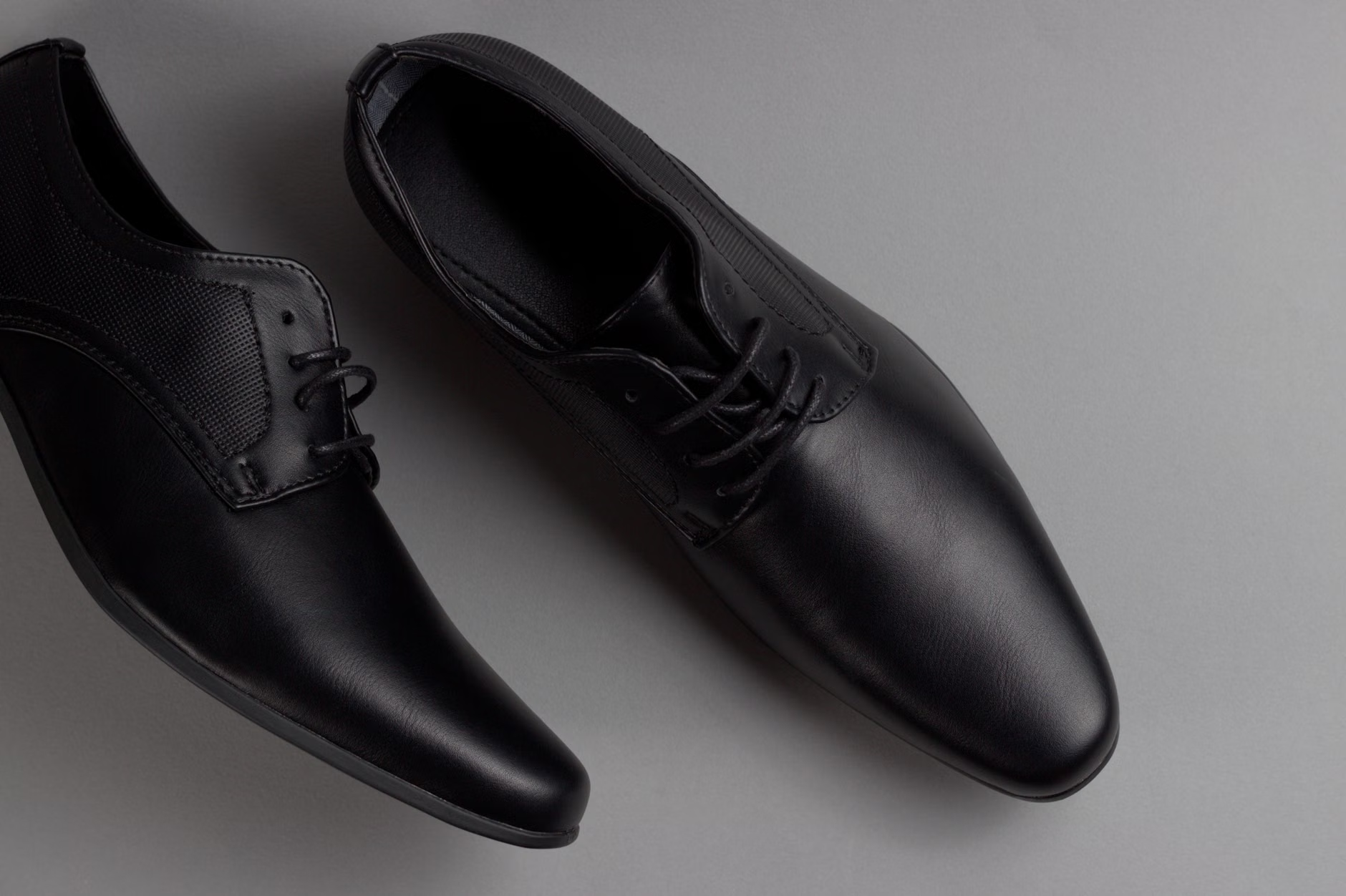
When you start shopping, prioritize footwear and outerwear. These are the items where quality is most visible. A pair of high-end leather oxfords or loafers, even if they have been worn previously, can be resoled and conditioned to look brand new. A cheap pair of shoes, however, is a dead end. Once the synthetic sole wears down, the shoe is effectively finished.
If you are a parent, consider the “machine washability” factor. While luxury items often require dry cleaning, many modern luxury blends are more resilient than you think. Don’t be afraid to look for “travel-friendly” high-end fabrics that resist wrinkling. These are lifesavers for the professional who goes from a board meeting to a school pickup.
The Sustainability Aspect: Why It Actually Matters
While the focus here is on professional utility, it is worth noting that the fashion industry is one of the largest polluters globally. By choosing to buy second-hand, you are effectively opting out of the “overproduction cycle.” You are extending the life of a garment that already exists, which is the most sustainable way to consume fashion. For those of us raising the next generation, this is a small but meaningful way to model more conscious consumption.
Moreover, the resale market is a circular economy. When you are finished with an item, if you have taken care of it, you can often resell it for nearly what you paid. This makes your wardrobe a liquid asset rather than a sunk cost. This is the ultimate “adulting” upgrade to how we manage our personal finances and our professional image.
Actionable Steps for Your Next Purchase
If you are ready to dive in, do not try to overhaul your entire wardrobe in a weekend. Start small. Identify the one item you wear most often—perhaps a black blazer or a specific type of work pant—and make that your first search. Set up saved searches on your preferred platforms so you get notified when that item, in your size, hits the market.
Before you commit to a purchase, use this simple checklist:
- Does this item complement at least three other things I own? If not, skip it.
- Is the material durable? (Check for wool, silk, linen, cashmere, or high-quality cotton).
- Do I have the measurements of my best-fitting current item to compare? Never guess your size.
- Is the seller’s rating high, and is the item authenticated?
The transition to a second-hand professional wardrobe is a journey, not a destination. It requires patience and a bit of research, but the payoff is a wardrobe that is uniquely yours, higher in quality, and far more sustainable than anything you could pull off a fast-fashion rack. You are not just buying clothes; you are investing in a more intentional, efficient, and polished version of your professional life.
Final Thoughts
The “second-hand luxury” movement is a correction to the excesses of modern retail. By focusing on quality materials and classic construction, we can build wardrobes that serve our careers and our lives without the constant cycle of buying, discarding, and buying again. Start by auditing your current closet, identify what actually works for your daily routine, and let the resale market fill in the gaps with pieces that are built to last.
For more information on the resale industry and how it is changing global consumption habits, you can look at the ThredUp Resale Report, which provides ongoing insights into the circular fashion economy.
Frequently Asked Questions
1. How can I ensure the items I buy are authentic?
Always stick to platforms that offer “authentication guarantees” or utilize third-party authentication services. Reputable sites like The RealReal or Vestiaire Collective have internal teams that inspect items before they are shipped to you. If buying from a peer-to-peer site, look for detailed photos of labels, serial numbers, and stitching, and compare them to official product photos from the brand’s website.
2. Is it really worth buying second-hand if the item needs tailoring?
Yes, absolutely. In fact, it is often the best way to get a “bespoke” feel for a fraction of the cost. A $50 pre-owned designer jacket plus $40 in tailoring is almost always superior to a $200 mall-brand jacket that doesn’t fit your shoulders or waist correctly. The tailoring is what makes the garment look expensive, not the original price tag.
3. How do I handle hygiene concerns with pre-owned clothing?
Most professional resale platforms require items to be laundered or dry-cleaned before they are listed. However, as a best practice, you should always dry-clean or wash your items according to the care label as soon as they arrive. For items like blazers or structured coats, a professional steam cleaning is usually sufficient to refresh the fabric and remove any lingering odors.
Note: This guide is intended for informational purposes and does not constitute financial or fashion advice. Always perform your own due diligence when making online purchases.