- Software is the new hardware: Many “broken” smart appliances are actually functional devices locked by proprietary software that requires manufacturer-only authentication to repair.
- Legislative shifts are gaining ground: Laws in the EU and parts of the US are forcing manufacturers to provide spare parts and manuals, but “smart” features often remain legally exempt from these requirements.
- Prioritize “repairability scores”: When shopping for new appliances, look for modular designs and avoid devices that require a constant cloud connection to perform basic, non-smart functions.
You’re standing in your kitchen on a Tuesday morning. The kids are shouting for breakfast, you’ve got a virtual meeting in twenty minutes, and your “smart” coffee maker—which cost three times as much as a regular one—is flashing a cryptic error code. It’s not just broken; it’s locked. When you check the manufacturer’s website, you’re told that the part isn’t available for individual purchase and that you need to send the entire unit back for an “authorized service,” which will cost nearly as much as buying a new one.
This is the reality of the modern smart kitchen. We’ve traded simplicity for connectivity, but in the process, we’ve inadvertently surrendered our right to own and repair the tools we use every single day. The “Right-to-Repair” movement isn’t just about saving money; it’s about reclaiming control over the devices that keep our households running. But how does this actually apply to your smart air fryer, your Wi-Fi-enabled oven, or that blender with a touch screen?
Understanding the “Smart” Trap: Why Your Appliance Isn’t Really Yours
In the past, if a toaster stopped working, you could unscrew the casing, inspect the heating element, and likely fix it with a simple replacement part or a bit of cleaning. Today, smart appliances are designed with “planned obsolescence” and “digital locks” in mind. When we talk about smart kitchen tech, we aren’t just talking about a clock on the oven door. We are talking about appliances that rely on firmware, cloud servers, and proprietary software to operate.
The problem arises because many manufacturers use software locks that prevent third-party parts from functioning. Even if you manage to physically replace a broken sensor or a heating element, the device’s internal computer may refuse to recognize the new part because it hasn’t been “digitally signed” or authorized by the manufacturer’s central server. This is a massive shift from the mechanical era, where parts were interchangeable and universal.
For parents juggling a busy schedule, this feels like an unnecessary tax on time and money. When an appliance goes down, you don’t have the luxury of spending weeks waiting for an authorized technician. You need a solution, and you need it now. The Right-to-Repair movement aims to change this by pushing for legislation that requires companies to make diagnostic tools, manuals, and spare parts available to the public, rather than hoarding them to force upgrades.
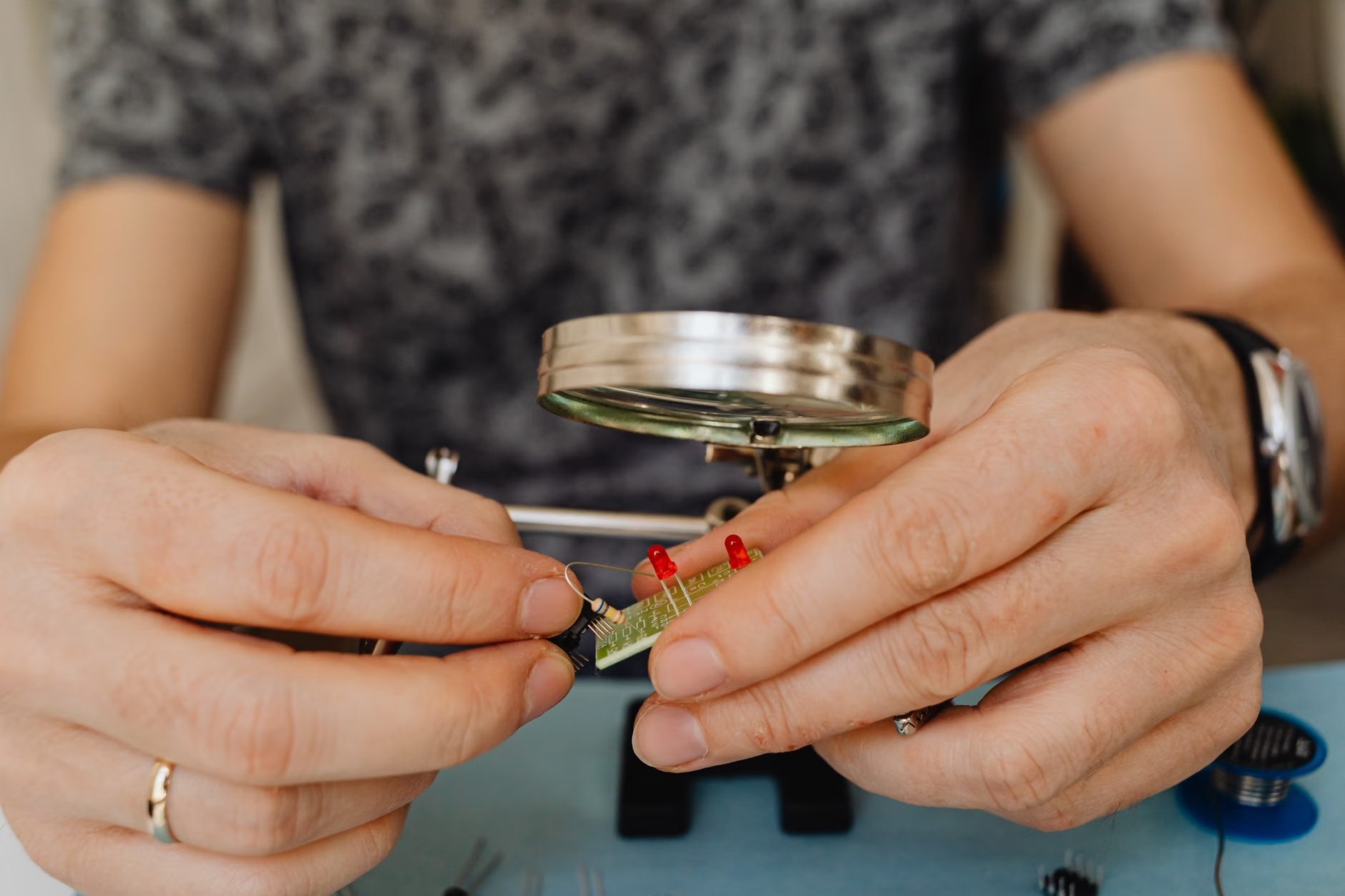
The Legislative Landscape: Where Do We Stand?
The legal battleground for Right-to-Repair is complex and varies significantly depending on where you live. In the European Union, the “Ecodesign Directive” has made significant strides in requiring manufacturers to ensure that spare parts for appliances are available for up to 10 years. However, this primarily covers mechanical components—not the complex microchips and software that define “smart” appliances.
In the United States, states like New York, California, and Minnesota have passed various versions of Right-to-Repair legislation. These laws generally mandate that manufacturers provide consumers and independent repair shops with the same diagnostic tools and documentation that they provide to their own authorized service centers. Yet, there is a catch: digital electronics and “security-sensitive” components are often excluded from these requirements.
What does this mean for you? It means that while the law is catching up to the physical reality of a broken hinge or a faulty heating element, it is lagging behind the digital reality of a “bricked” smart machine. If your appliance stops working because the manufacturer decided to shut down the server that supports its app, you currently have very little legal recourse.
| Component Type | Repairability Potential | Manufacturer Support |
|---|---|---|
| Mechanical (Hinges, Trays, Casing) | High | Improving (due to EU/US laws) |
| Electrical (Heating elements, Motors) | Medium | Mixed |
| Digital (Sensors, Touchscreens, Wi-Fi) | Low | Very Low / Proprietary |
The table above illustrates the hierarchy of repairability. When you are shopping for a high-end smart appliance, consider the balance. If you are buying a smart oven, ensure that it can still function as a regular oven if the Wi-Fi connection or the smart features fail. This is your primary defense against a total loss of investment.
The Hidden Costs of “Smart” Features
It’s easy to be seduced by the convenience of a recipe-sharing fridge or a coffee maker that you can start from your bed. But in your 30s and 40s, when you are balancing a career, parenting, and household maintenance, you need to look at the “hidden costs.” These aren’t just monetary; they are cognitive and temporal.
1. The Software Dependency Tax: Every software-dependent appliance is a ticking time bomb. If the company goes bankrupt or decides to stop supporting the app, your appliance loses its “smart” functionality. This effectively turns a premium product into a standard one overnight, but without the benefit of a simple interface.
2. Data Privacy and Security: Smart appliances are essentially IoT (Internet of Things) devices. They collect data on your habits—when you cook, what you eat, and how often you use the kitchen. If a device is no longer supported by the manufacturer, it likely won’t receive security patches. This leaves your home network potentially vulnerable to cyberattacks via an insecure, outdated smart toaster.
3. The “Service Loop”: Many manufacturers use the repair process as a way to collect data or push for a new sale. By making the repair process opaque and difficult, they nudge you toward the path of least resistance: buying a new unit. For the environment, this is a disaster, contributing to the massive growth of electronic waste (e-waste).

How to Choose Appliances That Last
Does this mean you should go back to the 1950s and avoid all technology? Not necessarily. Smart technology can genuinely improve efficiency—like a smart dishwasher that detects the soil level of your dishes to save water. The key is in the selection process. Here are three criteria to use before you swipe your card:
Look for “Offline” Functionality: Can the device perform its primary job without an internet connection? If an air fryer requires you to log into an account just to set the temperature, walk away. A good smart appliance enhances the experience, it doesn’t gatekeep it.
Check for Modular Design: Brands that offer “repairable” versions of their products are becoming more common. Look for appliances where the internal components are easily accessible via standard screws (Torx or Phillips) rather than glued-together plastic shells. If a brand offers a “repair kit” or explicit instructions on their website, they are already miles ahead of the competition.
Research the Manufacturer’s Reputation: How long do they support their software? Do they have a history of “bricking” older models? Look at community forums like Reddit or dedicated repair wikis (like iFixit) to see if other users have successfully repaired that specific model in the past. If the community is silent, it’s usually because the device is impossible to fix.
The DIY Approach: What You Can Actually Do
If you have a broken appliance at home, don’t rush to the curb just yet. Even if you aren’t an electrical engineer, there are steps you can take to reclaim your right to repair.
Step 1: Document the Error: Before doing anything, search for the specific error code + the model number. Sometimes, the “fix” is a simple hard reset or a software update that the manufacturer hides in a deep menu.
Step 2: Check the “iFixit” Database: iFixit is the gold standard for repair guides. Even if they don’t have a guide for your exact model, they often have guides for similar models from the same manufacturer. The internal logic of these machines is often standardized across product lines.
Step 3: Source Parts Responsibly: If you identify the broken component (e.g., a thermal fuse or a capacitor), search for the part number on the component itself, not just the appliance model. Often, you can find the exact same part on electronics supply sites for a fraction of what an “official” repair kit would cost.
Step 4: Safety First: This is non-negotiable. Always unplug the device and wait at least 30 minutes for capacitors to discharge before opening the casing. If you are dealing with high-voltage components, do not attempt a repair unless you have proper training. Your safety is worth more than the cost of a new blender.

The Future of Home Maintenance
The Right-to-Repair movement is fundamentally a shift in mindset. It’s about moving away from a disposable culture toward one of stewardship. When we choose to repair, we are teaching the next generation that objects have value beyond their immediate convenience. We are also voting with our wallets, signaling to manufacturers that we value longevity over flashy, short-lived “smart” features.
As we move further into a world dominated by connected devices, the pressure on manufacturers to open up their ecosystems will only grow. We are already seeing “Right to Repair” labels appearing on some appliances in Europe, similar to energy efficiency ratings. This is the future we need to advocate for. By being mindful consumers, we can influence the market to prioritize repairability as a core feature rather than an afterthought.
If you find yourself stuck, remember that you are not alone. There are thousands of repair cafes and online communities dedicated to helping people fix their gear. Don’t be afraid to ask for help or to start small. Your kitchen, your rules—and hopefully, your right to keep them running for years to come.
Frequently Asked Questions
Q: Is it dangerous to repair my own smart appliances?
A: It can be. Appliances like microwaves, ovens, and dishwashers involve high-voltage electricity and, in the case of microwaves, hazardous capacitors that hold a charge even when unplugged. Always research the specific risks for your appliance and never attempt to bypass safety interlocks. If you are unsure, consult a professional.
Q: Does opening my appliance void the warranty?
A: In many jurisdictions, such as the US under the Magnuson-Moss Warranty Act, simply opening your device or performing a DIY repair does not automatically void your warranty unless the manufacturer can prove that your repair caused the damage. However, it’s always best to check your specific warranty terms and, if the device is still under warranty, contact the manufacturer first to see if they will provide a free repair.
Q: Where can I find spare parts if the manufacturer doesn’t sell them?
A: If the manufacturer refuses to sell parts, look for the component’s manufacturer and model number (usually printed on the part itself). Sites like eBay, independent electronics wholesalers, and specialized appliance parts retailers often carry surplus or third-party compatible parts. For older items, sometimes “donor” units purchased used can provide the necessary parts for a successful repair.
For more information on the evolving legal standards for repair, you can visit the Repair Association or check out the ongoing initiatives at iFixit, which provides comprehensive guides and advocate for legislation that protects your right to fix what you own.
Disclaimer: This article is for informational purposes only. Always prioritize safety and consult professional service centers when dealing with electrical appliances.
To truly grasp the scale of the Right-to-Repair issue, we must look at the macro-economic drivers of the appliance industry. In the 1970s and 80s, appliances were built with a “repair-first” architecture. A refrigerator was a compressor, a thermostat, and some copper coils. If the thermostat failed, you replaced the thermostat. Today, that same refrigerator is a computer system that happens to keep food cold. This transition has allowed manufacturers to move from a one-time product sale model to a “product-as-a-service” model. They want you to use their app, subscribe to their cloud services, and eventually, buy the next generation of the product when the software support for your current one ends.
This business model relies on the consumer’s inability to maintain the product. If you could fix the motherboard of your smart fridge, you wouldn’t need to buy the new model just because the old one’s screen stopped responding. By controlling the repair ecosystem, manufacturers effectively control the lifecycle of the product. This is why the fight for the Right-to-Repair is so central to consumer sovereignty. It isn’t just about a screwdriver; it’s about who controls the digital identity of your home.
Consider the “Planned Obsolescence” aspect. Manufacturers argue that they stop supporting older devices to focus on “new, innovative features.” But for a user in their 30s, this “innovation” often feels like a burden. Do you really need your toaster to receive a firmware update? Does your oven need to sync with your calendar? Often, these features are just ways to keep you tethered to the manufacturer’s ecosystem. When you recognize this, you can start to make different choices. You can opt for “dumb” appliances that are high-quality and built to last, rather than “smart” appliances that are essentially disposable computers.
Let’s dive deeper into the technical side of the repair. When you open a modern smart device, you’ll often find “proprietary fasteners.” These are screws designed to be difficult to remove without a specialized tool. This is a clear signal from the manufacturer that they do not want you inside the casing. However, these tools are now widely available on the secondary market. By investing in a high-quality precision screwdriver set, you are equipping yourself to bypass these barriers. It’s a small investment that pays for itself the first time you fix a $500 appliance instead of replacing it.
Another nuance is the “Software Lock.” This is the most difficult hurdle. Even if you replace the physical component, the device might require a digital “handshake” with the manufacturer’s server to verify that the part is genuine. This is common in high-end appliances. In these cases, your only recourse is to look for community-developed firmware or “jailbreaks.” While this is a grey area, it is becoming increasingly common as the community of “repair hackers” grows. Websites like GitHub often host open-source projects aimed at unlocking the full potential of these devices.
For the busy parent, this might sound overwhelming. You have enough to do without becoming a computer programmer to fix your breakfast machine. But it’s important to remember that you don’t have to be an expert. You just need to be a critical consumer. Before your next appliance purchase, spend ten minutes on a repair forum. Search for the model name and the word “problems.” If you find a thread filled with people complaining about software updates breaking the device or the company refusing to provide parts, save your money and look for another brand. This simple act of due diligence is the most powerful tool you have.
Furthermore, the environmental impact of this cannot be overstated. We are generating millions of tons of e-waste every year. Many of these appliances are made of complex plastics and metals that are difficult to recycle. By extending the life of your appliances, you are making a direct, positive impact on the environment. It’s a small, tangible way to contribute to a more sustainable future, right from your own kitchen.
We should also discuss the “Right-to-Repair” as a community effort. If you have a skill—whether it’s soldering, 3D printing a replacement part, or just navigating a complex manual—share it. Post your findings online. Join a local repair cafe. When we share our knowledge, we make it harder for manufacturers to keep us in the dark. The more we document, the less power they have to force us into a cycle of constant replacement.
Finally, let’s address the psychological shift. There is a sense of accomplishment in fixing something yourself. It’s a tangible, real-world skill that feels increasingly rare in our digital-first lives. When you fix that coffee maker, you aren’t just saving money; you’re asserting your autonomy. You’re showing yourself—and perhaps your children—that you are not a passive consumer, but an active steward of your household. That is a lesson worth more than the price of any appliance.
As we close, remember that the goal is not to be a martyr for the cause of repairability. It’s to be a smart, informed participant in the modern world. Buy what you need, maintain what you can, and support the brands that respect your right to own your possessions. The tools for change are in your hands, quite literally. Keep them sharp, keep them clean, and most importantly, keep them working.
Don’t be discouraged by the complexity of modern tech. Every machine, no matter how “smart,” is ultimately a collection of parts that can be understood. Take it one step at a time, prioritize your safety, and never hesitate to reach out to the growing community of people who believe that we have the right to fix the things we own. Your kitchen is the heart of your home—make sure it stays in your control.
In the final analysis, the Right-to-Repair is about trust. Do you trust the manufacturer to act in your best interest, or do you trust yourself to maintain your own property? By demanding the right to repair, we are saying that we deserve to be treated as owners, not just users. That is a demand that is long overdue, and one that we must continue to make, one appliance at a time.
Remember, the best appliance is the one that lasts. When you shop, look for durability, simplicity, and a manufacturer that provides clear, accessible support. If you can’t find it, look for a brand that encourages the DIY community. There is always an option, and there is always a way to keep your home running smoothly without falling into the trap of planned obsolescence. Stay curious, stay informed, and enjoy the satisfaction of a job well done.
The journey to a more repairable home starts today. Whether it’s a simple cleaning, a minor part replacement, or a complete overhaul, every effort counts. By standing up for your right to repair, you are part of a global movement that is redefining our relationship with technology. It’s an exciting time to be a consumer, and with the right knowledge, you can navigate this landscape with confidence and ease. Go forth, fix, and enjoy the peace of mind that comes with knowing your home is truly yours.