Three Key Takeaways for Your Heritage-Rail Journey
- Prioritize “Station-to-Stay” proximity: Heritage-rail lines often run on limited schedules; choosing accommodation within a 10-minute walk of the station eliminates the stress of coordinating local taxis or rental cars with tired children.
- The 60/40 Rule for Itineraries: Dedicate 60% of your time to the train experience and coastal views, and leave 40% completely unscheduled to account for sensory overload in children and the inevitable delays inherent in vintage transport.
- Pack “Analog” Entertainment: Heritage trains rarely offer power outlets or reliable Wi-Fi; bring physical books, card games, or window-facing sketchpads to keep kids engaged without relying on digital devices that lose charge.
The smartest way to approach a heritage-rail coastal vacation is to stop viewing the train as mere transportation and start viewing it as the primary activity itself. For parents in their 30s and 40s, the appeal of a vintage rail route is obvious: the rhythmic clatter of the tracks, the panoramic coastal views, and the absence of highway traffic stress. However, the reality of traveling with children on these lines requires a specific set of tactical adjustments to ensure you aren’t spending your entire vacation managing meltdowns instead of enjoying the scenery.
Most heritage lines—those historic, often steam-powered or vintage-diesel routes that hug coastlines—operate differently than modern commuter rail. They are slower, less frequent, and often lack the amenities we’ve come to expect in modern travel. If you treat this like a standard commute, you will likely encounter frustration. If you treat it like an immersive, slow-travel event, it becomes the highlight of your year.
Why Heritage Rail Requires a Different Planning Mindset
When we plan trips, we often fall into the “efficiency trap.” We look for the fastest route, the most frequent departures, and the most centralized hubs. Heritage rail destroys this logic by design. These routes were often built in the late 19th or early 20th century to serve coastal communities that have since evolved, and they operate today primarily for tourism and preservation. This means your “schedule” is effectively dictated by a timetable that might only offer three departures a day.
For a parent, this is actually a hidden benefit. It forces a “slow travel” pace. You cannot rush. You cannot squeeze in five activities in one day. You are forced to commit to a slower rhythm. The common mistake here is trying to force a high-energy city itinerary onto a low-energy transport system. If you book a hotel 30 minutes away from the station, you have just created a logistical nightmare involving local transit that likely doesn’t exist, or expensive ride-shares that are difficult to book with car seats in tow.
The Golden Rule: If the train station is your anchor, your accommodation must be your satellite. Look for lodging within walking distance of the primary stops. This simple constraint changes the entire dynamic of your trip. It turns a “commute” into a “stroll” and allows you to return to your base easily if the kids need a nap or a midday reset.
Mapping Your Route: The 5-Day “Coastal Anchor” Strategy
A 5-day itinerary is the sweet spot for heritage rail. It’s long enough to justify the travel time to reach the route but short enough that the novelty of the train doesn’t wear off. Here is how you should structure your five days to balance the “rail experience” with family reality.
| Day | Focus | Activity Strategy |
|---|---|---|
| 1 | Arrival & Settlement | Check into the station-adjacent hotel; explore the immediate walking vicinity. |
| 2 | Full-Line Transit | Ride the full length of the line; identify one “off-train” stop for later. |
| 3 | Deep Dive Stop | Take the morning train to your chosen stop; spend the day hiking or exploring. |
| 4 | Local Exploration | Stay off the train; visit local beaches or town centers to avoid “train fatigue.” |
| 5 | Departure | A final morning scenic ride back or to the nearest major transit hub. |
This structure prevents the “travel burnout” that often plagues family trips. By Day 4, you are consciously choosing to stay off the tracks. This is crucial. Even the most exciting steam engine becomes “just a train” to a six-year-old by the third day. Giving them a day to run on a beach or visit a local playground without the pressure of a departure time is the secret to a successful trip.

Budgeting for the “Heritage Premium”
Heritage railways are not cheap. They are expensive to maintain, and the ticket prices reflect the cost of keeping vintage machinery running. Many families make the mistake of budgeting for these tickets as if they were standard regional train fares. They are not. You should expect to pay 200% to 300% more per mile than you would on a national rail network.
Hidden Costs to Anticipate:
- Seat Reservations: On high-demand coastal lines, the “scenic side” seats often require a premium booking. If you don’t book early, you might end up facing a cliff wall instead of the ocean.
- Luggage Logistics: Heritage trains have very limited storage. If you are traveling with large suitcases, you may need to look into local luggage-forwarding services (often called “takuhaibin” in Japan or similar courier services in Europe) or travel with minimalist carry-on gear.
- On-Board Dining: Food on these trains is often overpriced and limited. Pack your own. A high-quality picnic (sandwiches, fruit, pre-cut vegetables) is not only cheaper but avoids the disappointment of a child refusing the limited menu on the train.
The Sensory Reality: Managing Expectations for Kids
Heritage rail is loud, it is smoky (if it’s steam-powered), and it is shaky. For adults, this is “nostalgic.” For a toddler or a sensitive child, this can be overwhelming. Before you book, consider the “sensory profile” of your children. If they struggle with loud, sudden noises or strong odors (coal smoke), look for lines that offer “diesel-electric” heritage days rather than steam-engine days.
Also, consider the seating configuration. Many heritage carriages feature “compartment” seating—enclosed rooms with doors. This is a godsend for families. It gives you a private space where your children can move around, play games, and make noise without bothering other passengers. If you have the option to book a full compartment, do it. The extra cost is worth the reduced stress of trying to keep your children quiet in an open-plan carriage.
Common Mistakes That Ruin the Experience
The most common mistake I see parents make is the “Last Train Panic.” Because these lines are often single-track, a minor mechanical issue can delay the entire schedule. If you are relying on the last train of the day to get back to your hotel, you are setting yourself up for a high-stress situation. Always aim for the “second-to-last” train. If that one is delayed, you still have a buffer. If it’s not, you have extra time for a relaxed dinner at the station before heading back.
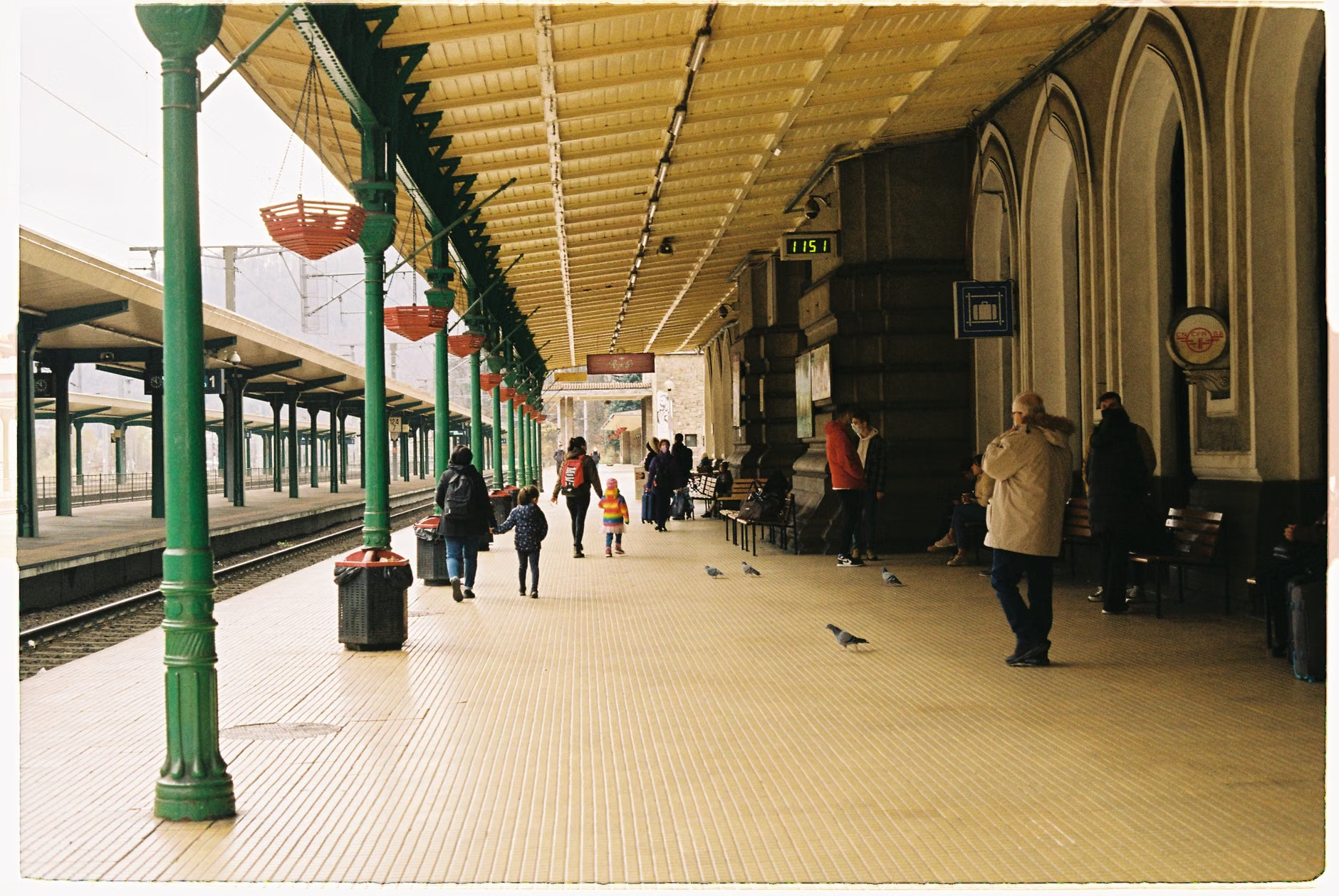
Another pitfall is assuming that “scenic” means “accessible.” Many historic stations have steep stairs, gravel platforms, or long walks to the nearest level crossing. If you are bringing a stroller, ensure it is a lightweight, travel-friendly model. A heavy, full-sized pram will become a burden the moment you encounter a platform that hasn’t been updated since 1950.
Selecting the Right Route for Your Family
Not all heritage lines are created equal. When researching, look for “family-friendly” indicators beyond just a pretty picture. Does the line offer “family activity packs”? Are there specific stops with easy-access walking trails? Some of the best-managed lines in the world (such as the Ffestiniog & Welsh Highland Railways or parts of the Durango & Silverton line) have dedicated resources for families on their websites. If you can’t find a clear “plan your visit” section on their site, it’s a red flag that they are not geared toward the logistical needs of families.
Additionally, check the “shoulder season” availability. Heritage lines in the summer are often packed with tour groups. Traveling in the “shoulder” (the weeks just before or after peak summer) often means you get the same scenery, the same trains, and the same coastal air, but with 50% fewer people and lower accommodation costs. This is the ultimate “pro-tip” for parents looking to save money while improving the quality of their experience.
Actionable Steps for Your Next Booking
To finalize your trip, follow this checklist to ensure you aren’t missing the small details that make or break a rail vacation:
- Check the Rolling Stock: Does the line use open-air carriages? These are fantastic in good weather but brutal in the rain. Check if they have “covered” options.
- Verify Station Facilities: Are there toilets at every stop? If not, plan your bathroom breaks around the “main” stations only.
- The “Backup” Plan: Download an offline map of the area. These coastal routes often go through “dead zones” where cellular data is non-existent. You don’t want to be stranded at a remote station without a way to check if the next train is actually coming.
- Engage the Staff: Heritage rail enthusiasts (the staff) love to talk about their trains. If you have a child who loves machines, ask the conductor if you can look at the engine during a long stop. It turns a boring wait into a core memory.
Ultimately, the heritage-rail coastal route is about accepting that the journey is the destination. You aren’t trying to get from Point A to Point B in the shortest time. You are trying to sit, watch the ocean, listen to the click-clack of the wheels, and be present with your family. It requires more planning than a standard flight-and-hotel trip, but the payoff—a genuinely slower, more connected pace of life—is worth every bit of the effort.
Frequently Asked Questions
Q: Should I bring a car seat on the train?
A: Most heritage trains do not have secure anchor points for modern car seats. If you are traveling with an infant, a soft baby carrier is much more practical for navigating narrow train aisles and historic station platforms. If you need a car seat for your destination, consider renting it with your arrival vehicle or checking if your accommodation can provide one.
Q: Are these trains safe for children who tend to wander?
A: Heritage trains often have older, manual-locking doors. Unlike modern trains with automatic sensors, these doors can be heavy and tricky. Always supervise children when entering or exiting the train, and keep them away from the vestibule areas (the space between cars) where the floor may be uneven or open to the elements.
Q: What happens if the weather turns bad?
A: Coastal weather is notoriously unpredictable. Always check the line’s “cancellation policy” for weather-related events. Many heritage lines operate in light rain but will suspend service for high winds. If the train is cancelled, have a “Plan B” ready—usually a local coastal bus route or a nearby museum—so you don’t lose the entire day to a weather-related closure.
For further reading on specific regional rail safety and accessibility standards, refer to your national transport authority’s guidelines on historic rail operations, such as the Office of Rail and Road (UK) or the Federal Railroad Administration (US), which provide resources on how these lines are regulated compared to modern transit.