The traditional restaurant model—where you sit at a private table, order from a fixed menu, and leave without ever making eye contact with the neighboring party—is losing its grip on the social calendars of those in their 30s and 40s. We are shifting toward “social dining,” specifically the rise of community-table pop-ups, which prioritize shared experiences and connection over the transactional nature of standard dining.
- Intentional Connection: Unlike standard restaurants, community-table pop-ups are designed to facilitate interaction, making them ideal for expanding social circles beyond parenting groups or work colleagues.
- Curated Experiences: These events are usually ticketed, fixed-menu affairs, which removes the “decision fatigue” that often plagues busy parents planning a night out.
- The “Social Risk” Factor: You must be prepared for the unpredictability of who you are seated next to; success depends on embracing the spontaneity of the format.
If you are in your 30s or 40s, you know the cycle: the week is a blur of school runs, project deadlines, and the logistical puzzle of childcare. By the time Friday rolls around, the idea of “going out” often feels like just another chore. You want an experience, not just a meal, yet you are tired of the same chain restaurants or the stiff, overly formal atmosphere of high-end dining. This is exactly where the social-dining shift hits home.
Why the Community-Table Model is Winning Over Busy Professionals
The appeal of the community-table pop-up isn’t just about the food; it’s about the architecture of the evening. When you book a table for two at a standard restaurant, the wall between you and the rest of the world is invisible but impenetrable. At a community table, that wall is removed by design.
For those of us juggling the demands of mid-life, these events offer a “low-stakes” social environment. You don’t have to organize a group of eight friends, coordinate schedules, or worry about splitting the bill. You buy a ticket, you show up, and the environment is already primed for conversation. It is the social equivalent of a curated playlist—someone else has done the heavy lifting of environment design so you can just show up and participate.
The “Decision Fatigue” Solution: One of the greatest benefits of these pop-ups is the fixed menu. In our daily lives, we make hundreds of decisions, from what to pack for lunch to which insurance plan to pick. Having a chef decide the menu—often based on seasonal, local ingredients—provides a mental break that is surprisingly refreshing.
Understanding the Mechanics: What Actually Happens at a Pop-Up?
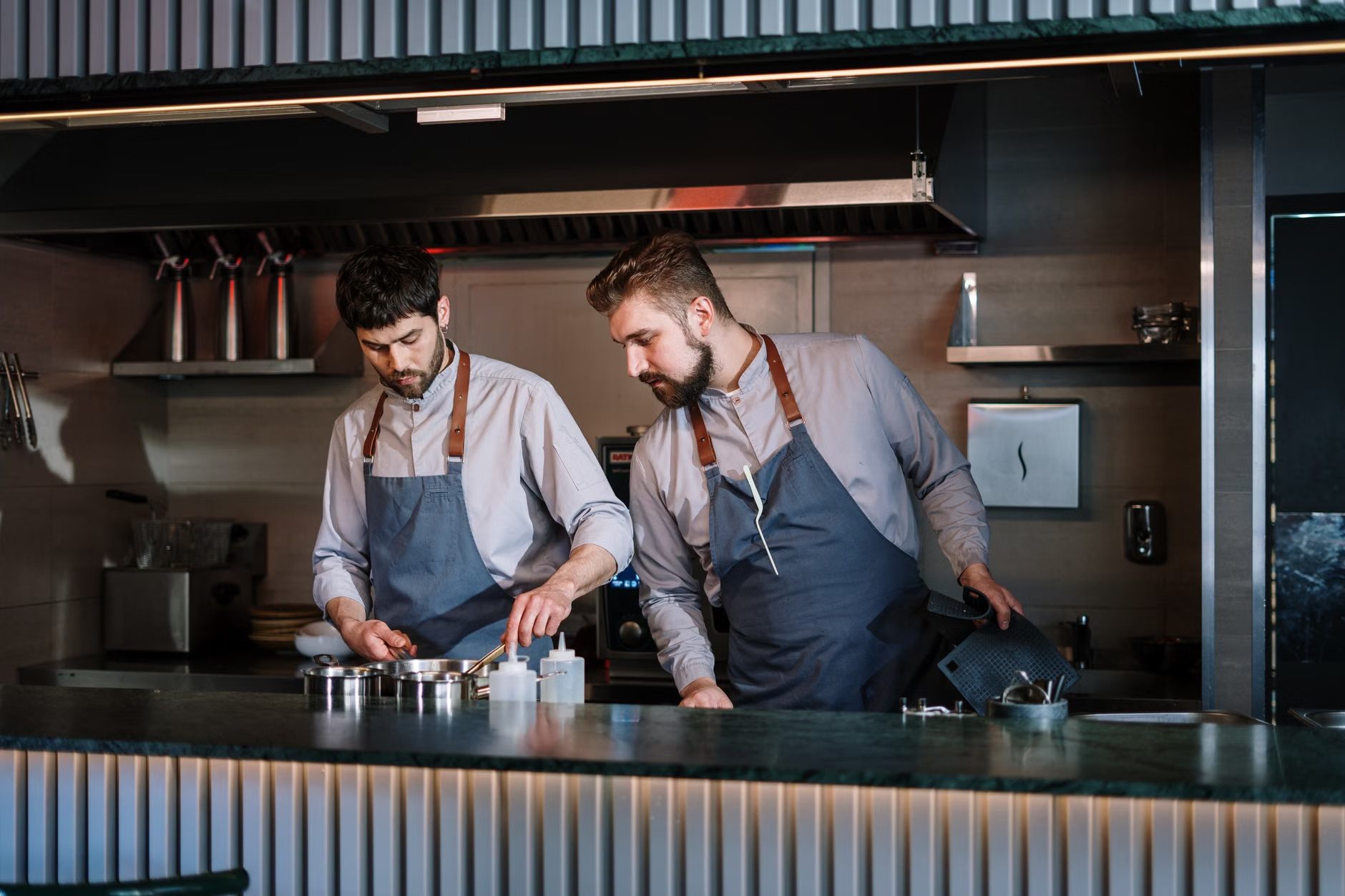
Pop-ups are transient by nature. They might occupy a renovated warehouse, a gallery space, or even a local community garden for a single weekend. Because they aren’t tied to a permanent storefront, they lack the overhead of a traditional restaurant, which allows the organizers to focus on the “vibe” and the quality of the ingredients rather than the rent.
When you attend one, the flow is usually standardized:
- Arrival & Aperitif: Guests arrive and are often greeted with a welcome drink. This is the “mingling phase” where the ice is broken before you even sit down.
- The Seating: Seating is typically assigned or semi-assigned. You will find yourself sitting next to strangers, which is the core of the experience.
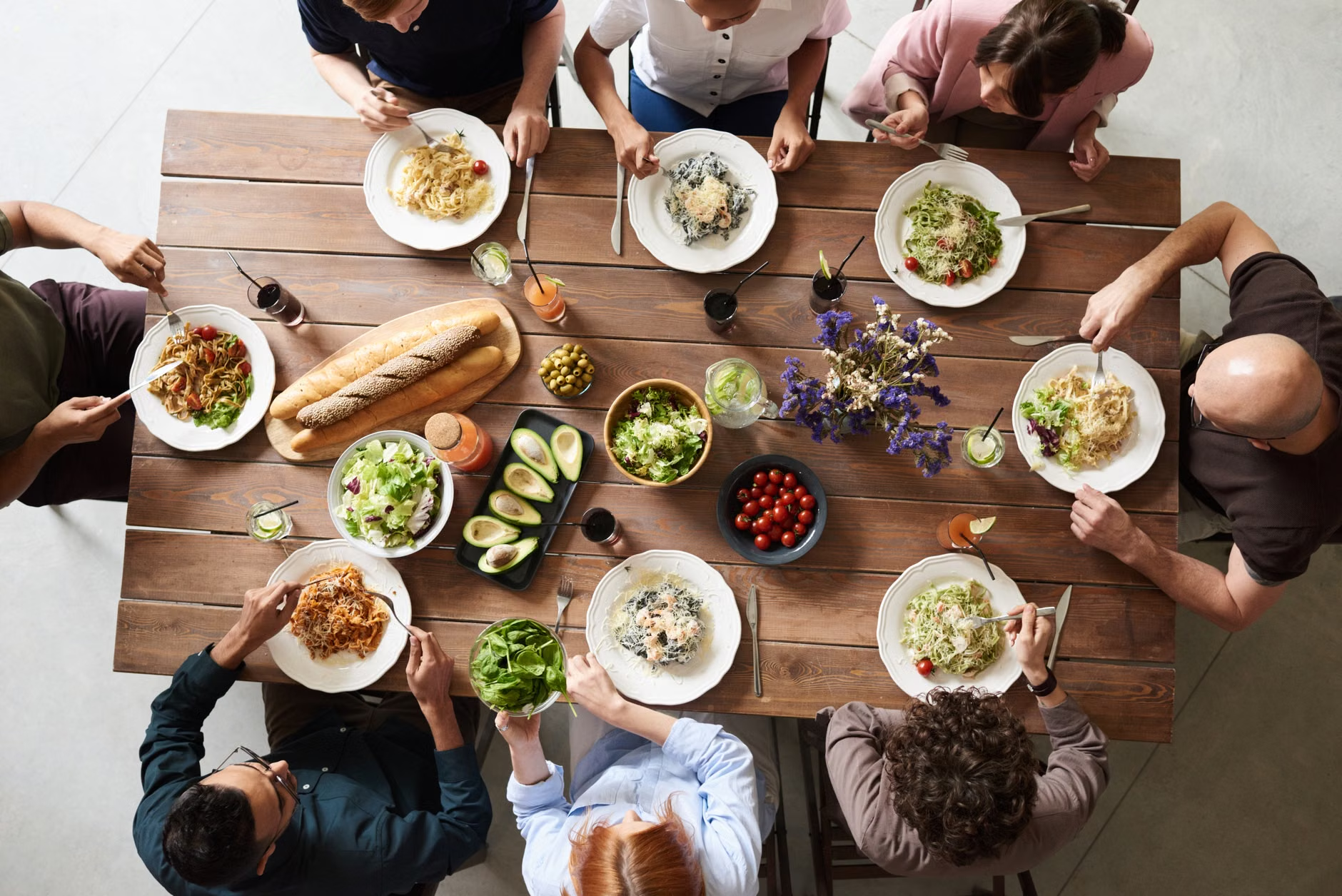
- The Service: Food is usually served “family-style” or as a multi-course tasting menu. Sharing platters is common because it forces interaction—you have to ask the person next to you to pass the salt or the roasted vegetables.
- The Conclusion: Unlike a busy restaurant where you feel pressured to turn the table over for the next reservation, pop-ups often have a more relaxed exit, allowing for lingering conversations.
Common Misconception: Many people assume these events are “networking” in the traditional, stiff sense of the word. They are not. Most attendees are there simply to escape their routine and meet people outside of their immediate bubble. If you go with a “networking” agenda, you will likely find the atmosphere too relaxed; if you go with an “open” mindset, you will likely find the connections more authentic.
Evaluating the Trade-offs: Is This Right for You?
Before you book your next Friday night out, consider the specific dynamics of a communal environment. It is not for everyone, and there are distinct trade-offs to consider based on your personality and current life stage.
| Factor | Standard Restaurant | Community-Table Pop-up |
|---|---|---|
| Social Control | High (You choose your company) | Low (You sit with strangers) |
| Menu Choice | High (A la carte) | Low (Fixed menu) |
| Atmosphere | Predictable | Spontaneous/Unpredictable |
| Cost Transparency | Variable | High (Usually pre-paid) |
If you are an introvert, the idea of being forced to talk to the person on your left and right might sound like a nightmare. However, the beauty of the community table is that the conversation is usually facilitated by the event flow. You can talk about the food, the wine, or the venue—these are built-in “safe” topics that bridge the gap between strangers. If you find yourself in a lull, the shared experience of the meal gives you a common ground to anchor the conversation.
The “Hidden” Cost: While the ticket price might look higher than a typical dinner bill, remember that it often includes gratuity and sometimes drinks. Always check the fine print to see what is included. The hidden cost is usually in the “social energy” required. If you are already at the end of a long, exhausting week of parenting, you need to decide if you have the battery left to engage with new people. If not, a quiet booth might be the better choice for your mental health.

If you have decided to take the plunge, follow these steps to ensure you get the most out of the experience without feeling overwhelmed.
1. Do Your Research on the Organizer
Not all pop-ups are created equal. Look for organizers who have a track record. Check their social media for photos of previous events. Are the people laughing? Does the food look fresh? Is the venue well-lit? If the organizer is a chef with a strong reputation or a known community group, the quality is generally more consistent.
2. Prep Your “Elevator Pitch”
You will be asked, “So, what do you do?” about a dozen times. In your 30s and 40s, this is a boring question, but it’s a standard opener. Have a two-sentence answer ready that isn’t just your job title. Maybe mention a hobby, a project you’re excited about, or a trip you’re planning. It makes the conversation much more interesting for both you and the person sitting next to you.
3. Manage Your Expectations on Food
Because pop-up kitchens are often makeshift, there can be service delays. Don’t go in expecting the precision of a Michelin-starred restaurant. The goal here is the experience of the meal, not the perfection of the plating. If a dish is slightly cold or the wine pours are slow, treat it as part of the charm of the venue.
4. The “Exit Strategy”
It is perfectly acceptable to leave after the main course if you are feeling tired. You don’t have to stay for the coffee or the post-dinner drinks. Most of these events have a natural “wind-down” phase; keep an eye on the room energy. If you’ve had a great time, stay. If you’re hitting a wall, it’s okay to head home to your family.
The Role of Technology in Finding These Events
Finding these events has become significantly easier, but it requires knowing where to look. While generic search engines are okay, they often bury the best local pop-ups under mass-market restaurant listings.
Instead, focus on niche platforms. Instagram and specialized event-ticketing sites (like Eventbrite or local city-guide newsletters) are where the best organizers post their upcoming dates. If you find an organizer you like, follow them. They often have a mailing list, and the best seats—or the most limited events—often sell out to the mailing list before they even hit public social media.
A Note on Safety and Transparency: Always ensure the event is ticketed through a secure platform. Never send money via direct bank transfer or unverified payment apps to an organizer you haven’t vetted. If the “deal” looks too good to be true, it likely is. Trust your gut; if the website looks sketchy, it probably is.
Addressing the “Parenting” Barrier
For parents in their 30s and 40s, the biggest barrier to social dining is the “logistics of departure.” You have to book a babysitter, coordinate with your partner, and manage the guilt of leaving the kids. This is why the “pop-up” format can actually be a benefit rather than a hurdle.
Because these events are often ticketed and have a set end time, it is easier to tell your babysitter exactly when you will be home. It creates a defined window of “adult time.” Treat this window as sacred. Do not check your work emails during the dinner. Do not spend the entire time talking about your children (though it’s fine to mention them as a grounding point). Use this time to reclaim a piece of your identity that exists outside of your role as a parent or an employee.
Common Mistake: Trying to “force” a friend to come with you who isn’t interested. If you go alone, you are more likely to talk to new people. If you go with a friend, you will likely spend the whole night talking to each other. If you are looking to expand your social circle, go solo. If you are looking for a reliable night out with a partner, go together, but sit at opposite ends of the table occasionally to engage with others.
Synthesizing the Experience: What Matters Most?
The social-dining shift is a response to the isolation of modern life. We are busier than ever, yet often feel more disconnected. By choosing to sit at a communal table, you are making a small, deliberate choice to prioritize human interaction over convenience.
It’s not about finding your new best friend on the first night. It’s about the practice of being open. It’s about the realization that the person sitting next to you—who might be a project manager, a teacher, a fellow parent, or a retiree—has a story that is just as complex and interesting as yours. When you remove the barriers of the private table, you open the door to a much richer social experience.
Final Recommendation: Start small. Look for a “low-commitment” pop-up—maybe a brunch or a casual lunch series—before committing to a full-blown, multi-course dinner event. Test the waters, see how you feel in the environment, and adjust. If you leave the event feeling a little more energized than when you arrived, you’ve found a winning strategy for your social calendar.
Frequently Asked Questions
1. Is it considered rude to leave a communal table before the entire event is over?
Not at all, provided you do it respectfully. These events are not “captive” experiences. If you have a hard stop for a babysitter or just need to get home, a simple “It was lovely meeting you, but I have to head out now” is perfectly polite. You don’t need to make a scene or explain your entire life story—a brief, pleasant departure is standard.
It happens. Even at the best-planned events, sometimes the chemistry just isn’t there. If you find yourself in a lull, focus on the food and the environment. You can always ask the organizers questions about the sourcing of the ingredients or the history of the venue—this is a great way to stay engaged without needing to force a personal conversation with your seatmates. Remember, you are there for the experience, not just the company.
3. Are these events usually accessible for people with dietary restrictions?
Most professional pop-up organizers are very accustomed to handling dietary restrictions, but you must communicate this at the time of booking. Because these are often fixed-menu events, the chef prepares specific quantities of food. They cannot “pivot” on the night of the event to accommodate a sudden allergy. Always check the event page for a “dietary requirements” field during the checkout process.
For further reading on the sociology of communal dining and local event trends, visit Eater or check your local city’s cultural events board for verified pop-up listings. Always prioritize events with transparent ticketing and clear contact information.