Urban foraging is the practice of identifying and harvesting edible plants, fruits, and nuts in public or semi-public urban spaces, and it is becoming one of the most effective ways to turn a mundane weekend walk into a hands-on biology lesson for your children.
Key Takeaways for Busy Parents
- Safety First: Never consume anything unless you are 100% certain of its identity; use the “three-way check” method (guidebook, app, and local expert consensus).
- Legal Awareness: Foraging laws vary significantly by city and country; always check local council or park authority bylaws regarding the removal of vegetation before you start.
- Educational Value: Focus on the process of observation, taxonomy, and ecology rather than the harvest itself to build long-term critical thinking skills in children.
If you are a parent in your 30s or 40s, you likely know the struggle of trying to pry your kids away from screens on a Saturday morning. You want them to get fresh air, but a simple walk around the block often feels like a chore for everyone involved. Urban foraging changes the dynamic by giving the walk a “mission.” Instead of just walking, you are hunting for patterns, textures, and specific species.
This isn’t about gathering enough food to sustain your family for the week; it is about reconnection. It is about teaching your children that food doesn’t just appear in neatly wrapped plastic at the supermarket—it has a life cycle, a habitat, and a place in the urban ecosystem.
Why Urban Foraging is More Than Just Finding Food
At its core, urban foraging is an exercise in biophilia—the innate human tendency to seek connections with nature. For a parent, it serves as an accessible, low-cost “outdoor classroom.” When you teach a child to identify the difference between a common mallow and a toxic lookalike, you are teaching them observation skills, patience, and the scientific method.
Most children grow up with “plant blindness,” where they view greenery as a generic background. Foraging forces them to look closer. They start noticing the serrated edges of a leaf, the way a stem grows, or the specific environment where a plant thrives. These are the building blocks of ecological literacy. By treating your backyard or local park as a living library, you turn a passive activity into an active, intellectual pursuit.
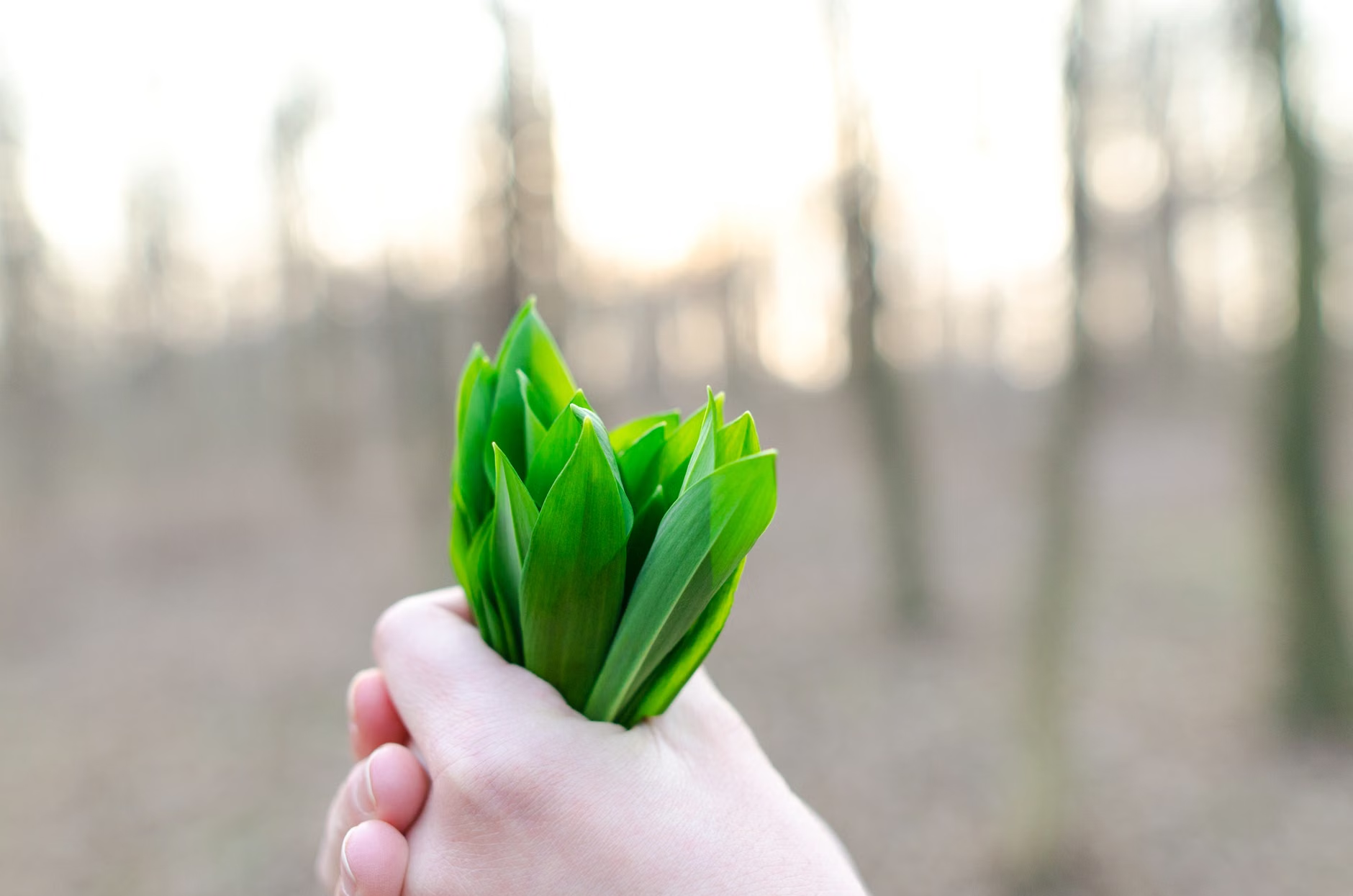
Furthermore, it helps children understand the concept of seasonality. When they realize that wild garlic only appears in early spring or that blackberries are a late-summer treat, they gain a deeper appreciation for the timing of nature. This awareness is a powerful antidote to the convenience-first culture we live in, where everything is available year-round regardless of climate or season.
The Three-Way Verification Rule for Safety
Before you even step out the door, you need to address the most critical aspect: safety. The biggest mistake beginners make is relying on a single source for identification. A blurry photo in an app or a single page in a generic guidebook is not enough to risk ingestion.
Adopt the Three-Way Verification Rule. To confirm a plant is edible, you must match it across three independent sources:
| Source Type | Role | Why it matters |
|---|---|---|
| Physical Field Guide | Baseline identification | Provides detailed botanical descriptions that apps often miss. |
| Digital Identification App | Pattern recognition | Uses AI to narrow down possibilities quickly. |
| Local Foraging Community | Contextual validation | Confirms if the plant is common/safe in your specific region. |
If these three sources do not agree, or if you have any lingering doubt, do not eat it. The rule of thumb in foraging is: “When in doubt, throw it out.” This is a vital lesson to teach your children. It reinforces that nature is not a toy and that knowledge and respect are required to interact with it safely.
Common mistakes also include harvesting from polluted areas. Avoid foraging near roadsides where car exhaust and heavy metals accumulate, near industrial runoff areas, or in places where dogs are frequently walked. Always choose “clean” zones, such as the back of a large, well-managed park or a private garden where you know the soil history.
Understanding Local Regulations and Ethics
Just because a plant is growing in a public park does not mean you have the legal right to pick it. Laws regarding foraging vary drastically depending on where you live. In the United Kingdom, for example, the “Four Fs” rule (flowers, fruit, foliage, and fungi) generally allows for personal use, provided you aren’t digging up roots or damaging the plant. However, in many parts of the United States, municipal codes can be strict, and foraging in city-run parks may be prohibited.
Before heading out, check your local council’s website or the parks and recreation department’s guidelines. Look for terms like “harvesting,” “removal of vegetation,” or “foraging policy.” If you cannot find a clear answer, assume that harvesting is discouraged and stick to private land where you have explicit permission from the owner.
Beyond the law, there is the matter of foraging ethics. The “Ten Percent Rule” is a widely respected guideline: never harvest more than 10% of a plant population in any given area. This ensures that the plant can continue to reproduce and that local wildlife, which depends on these plants for survival, still has enough to eat. Teach your children that we are guests in nature, not just consumers.
Step-by-Step Guide to Your First Foraging Trip
If you want to start this weekend, don’t try to identify everything you see. That leads to burnout and confusion. Instead, pick one specific plant to “hunt” for. Let’s take the Dandelion (Taraxacum officinale) as an example, as it is globally recognizable and largely edible.
Phase 1: The Pre-Trip Research
Spend 15 minutes on Friday evening looking at photos of dandelions. Look at the jagged leaves, the hollow stem, and the yellow flower head. Then, look up “Dandelion lookalikes.” This is crucial. Many people confuse dandelions with Catsear (Hypochaeris radicata). While not poisonous, knowing the difference builds your confidence and observation skills.
Phase 2: The Field Hunt
Bring a small basket and a pair of scissors. When you find your target, don’t just pull it out of the ground. Examine the habitat. Is it near a busy road? If yes, skip it. Is it in a grassy area where dogs run? Skip it. Find a patch that looks clean and untouched.
Phase 3: The Collection
If you are picking greens, pick only the younger, smaller leaves; they are less bitter. If you are picking flowers, make sure they are fully open and free of insects. Show your children how to cut the plant cleanly so you don’t disturb the root system.
Phase 4: The Kitchen Analysis
Once home, wash everything thoroughly. This is non-negotiable. Even in “clean” areas, nature is full of dirt, insect eggs, and microscopic debris. Use a salad spinner to dry the greens. If you’ve gathered dandelions, try a simple salad with a light vinaigrette. If it’s too bitter for the kids, remind them that the goal was the learning, not the gourmet meal.

Common Pitfalls and How to Avoid Them
One of the most frequent mistakes is assuming that “natural” equals “safe.” Many highly toxic plants look remarkably similar to edible varieties at certain stages of their growth. For example, Hemlock, which is deadly, can look like wild carrot or parsley to the untrained eye. This is why you must prioritize learning the entire plant, not just the leaves or flowers.
Another pitfall is “over-harvesting” out of excitement. When you find a patch of wild berries, it is tempting to pick every single one. This is where the ethical guidelines mentioned earlier come into play. If your children are with you, turn it into a math lesson: “If there are 50 berries here, and we only take 5, we are leaving enough for the birds and for the plant to grow more next year. How many are we leaving?”
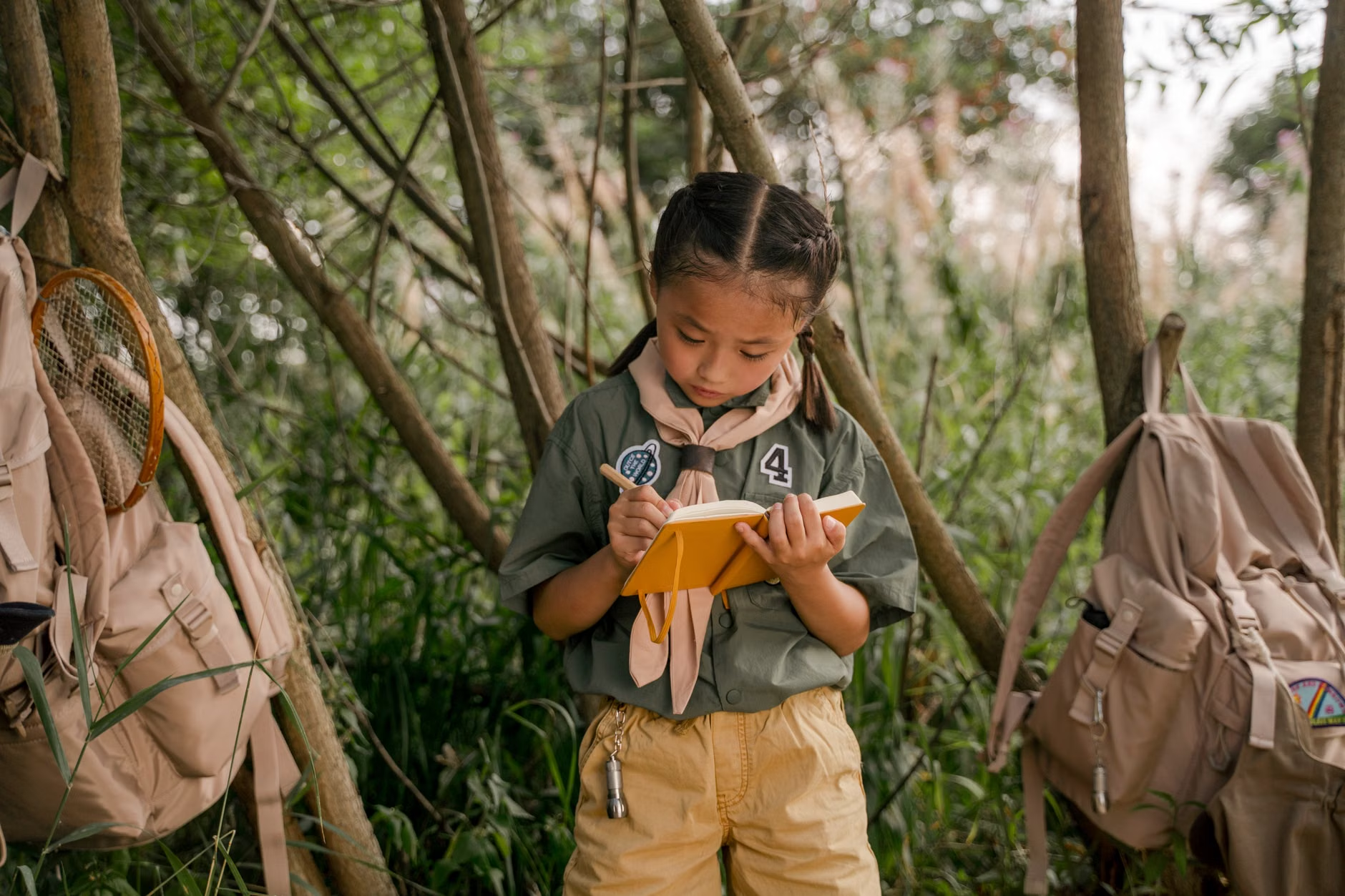
Finally, avoid the “must-eat” pressure. If you find a plant you are only 90% sure about, do not eat it. Even if you are 99% sure, if that 1% doubt exists, treat it as a botanical specimen for your journal rather than food. Documenting your finds with sketches or photos is just as satisfying as eating them, and it removes the health risk entirely.
Integrating Foraging into Your Busy Schedule
You don’t need a forest to do this. Urban foraging is specifically designed for the gaps in your schedule. You can forage in your own backyard, a local alleyway, or the edges of a park while your kids are waiting for their soccer practice to start. The key is to keep your tools ready.
Keep a small, dedicated “foraging kit” in your car or by the door. It should include:
- A small field guide specific to your region.
- A pair of blunt-nosed scissors.
- A cloth bag or small basket.
- A notebook and pencil for sketching.
- A magnifying glass.
By having this ready, you remove the friction of preparation. When you have a free hour, you just grab the kit and go. It turns a “dead” hour of waiting into an opportunity for discovery. This is how you sustain the hobby—by making it a low-effort, high-reward habit rather than a massive, planned expedition.
The Long-Term Impact on Your Parenting
As you continue these outings, you will notice your children’s relationship with the environment changing. They will start pointing things out to you: “Look, Mom, is that the plant we saw last week?” or “Dad, I think that’s a different type of clover.” This is the ultimate goal. You are not just teaching them about plants; you are teaching them to be engaged, observant, and thoughtful citizens of the world.
In a world where our attention is constantly fragmented by digital noise, these slow, focused, nature-based activities provide a much-needed mental reset for you, too. The rhythm of walking, observing, and identifying is meditative. It allows you to step away from the pressures of work, household management, and the endless to-do lists that define life in your 30s and 40s.
It is important to remember that this is a journey, not a destination. You will make mistakes. You will misidentify a plant. You will have days where you find absolutely nothing of interest. That is all part of the process. The value is in the shared curiosity between you and your child. When you say, “I don’t know what this is, let’s look it up together,” you are showing them that learning is a lifelong pursuit, not something that ends when you leave school.
Frequently Asked Questions
Is urban foraging actually safe given the potential for pollution?
It is safe if you are selective. Avoid areas with high traffic, industrial history, or heavy pesticide use. Always wash your harvest thoroughly in a bowl of water with a dash of white vinegar to remove surface contaminants. When in doubt, prioritize observation over consumption.
Which apps do you recommend for plant identification?
Apps like iNaturalist (specifically the Seek feature) are excellent for general identification. However, they should only be used as a starting point. Never rely on an app’s result to decide whether to ingest a plant. Always cross-reference with a physical, regional field guide.
What should I do if my child accidentally eats something I haven’t identified?
If this happens, stay calm but act immediately. Try to safely retrieve a sample of the plant for identification. If your child shows any signs of distress—nausea, rashes, or lethargy—contact your local poison control center or emergency services immediately. Do not wait for symptoms to worsen. Keeping a photo of the plant is vital for medical professionals to provide the correct treatment.
Urban foraging is a rewarding way to deepen your family’s connection to the natural world. It requires patience, a commitment to safety, and a willingness to learn. Start small, be ethical, and enjoy the process of discovery. Your next weekend walk might just turn into an adventure that sticks with your children for the rest of their lives.
Official Resources for Further Learning: