Unstructured play—the kind of activity where children lead the way without goals, rules, or adult interference—is the single most effective tool for developing the executive functions of the brain in our increasingly digital, high-pressure world.
Three Key Takeaways
- Executive Function Boost: Unstructured play strengthens the brain’s “CEO”—the prefrontal cortex—which manages planning, focus, and impulse control.
- The Anti-Screen Effect: Unlike passive screen time, free play requires active problem-solving and social negotiation, balancing out the digital input of modern life.
- Low-Stakes Risk Taking: By playing without an adult-defined goal, children learn to navigate failure and uncertainty in a safe, self-regulated environment.
If you are a parent in your 30s or 40s, you’ve likely felt the subtle, persistent anxiety that comes with raising kids in the digital age. We schedule their gymnastics, their coding classes, and their playdates, all while managing our own endless pinging of notifications and remote work emails. We are the generation of the “optimized” childhood, where every hour is accounted for. But here is the irony: in our rush to provide the best tools, the best apps, and the most curated experiences, we are often accidentally stripping away the very thing that builds a resilient, agile mind. That thing is unstructured play.
The Neuroscience of “Nothing to Do”
When we hear “unstructured play,” it’s easy to imagine a chaotic living room or a bored child complaining about having nothing to do. But from a neurological perspective, “having nothing to do” is essentially a call to action for the brain. When a child initiates their own play, they are moving from a state of passive consumption (like watching a video) to active construction.
The prefrontal cortex is the area of the brain responsible for executive function—the mental processes that enable us to plan, focus attention, remember instructions, and juggle multiple tasks successfully. When a child decides to turn a cardboard box into a spaceship, they are engaging in complex cognitive work. They have to conceptualize the ship, determine the materials needed, negotiate the “rules” of the spaceship with any playmates, and solve problems when the “hull” (the box) starts to collapse.
Unlike a video game, where the rules are hard-coded and the goal is predetermined, unstructured play is open-ended. If the child gets bored, they must innovate. If the game isn’t working, they must pivot. This is essentially high-level project management for children. By allowing this to happen, we are training their brains to handle the ambiguity of adult life, where there isn’t always an instruction manual.
Why Digital Overload Changes the Game
We need to talk about the screen-time elephant in the room. Digital devices are designed to be “sticky.” They provide immediate feedback loops: you tap, something happens; you swipe, a new image appears. This is essentially “dopamine-loop” architecture. While there is a place for technology in our lives, it is a poor substitute for the slow, messy, and sometimes frustrating process of real-world play.
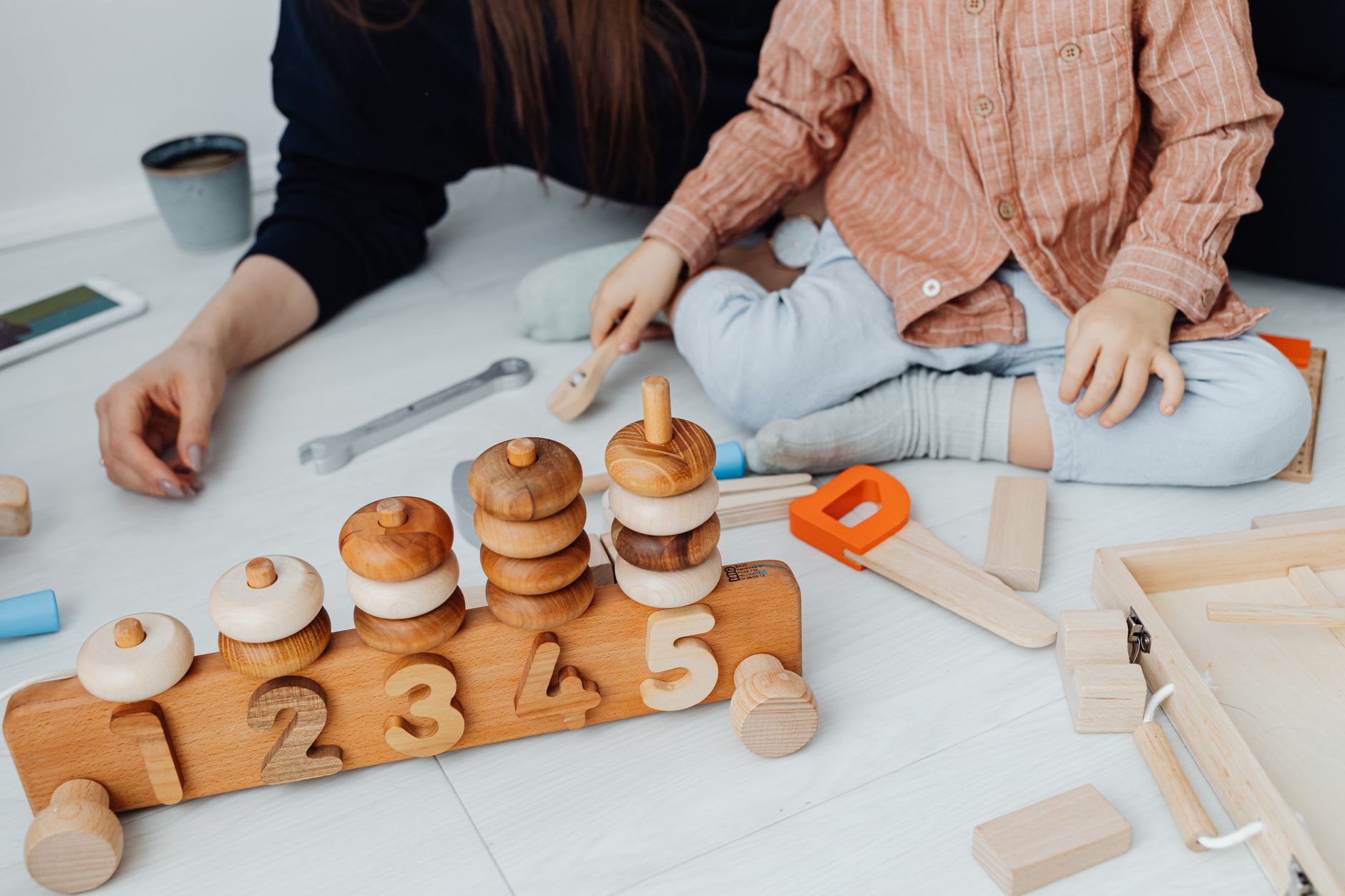
When children spend a significant portion of their time in the digital realm, they are often training their brains to expect immediate gratification. In contrast, building a tower out of wooden blocks takes time. It requires patience. If it falls, you have to start over. This is not “fun” in the same way a digital game is, but it is deeply formative. It teaches the brain how to tolerate frustration and sustain attention over a longer duration.
We aren’t saying that screens are the enemy, but rather that the balance has shifted too far. When we replace the “boredom” of a long car ride or a waiting room with a tablet, we are removing the child’s opportunity to engage in day-dreaming, which is a critical mode of brain activity. Day-dreaming is when the brain consolidates information, processes emotions, and makes creative connections between disparate ideas.
The Role of “Loose Parts” in Cognitive Development
The term “loose parts” was coined by architect Simon Nicholson in the 1970s. It refers to materials that can be moved, carried, combined, redesigned, lined up, and taken apart in multiple ways. Think pinecones, river stones, scraps of fabric, PVC pipes, or even just random kitchen utensils.
Why do these matter? Because they have no “right” way to be used. A plastic toy car can only be a car. A piece of driftwood, however, can be a phone, a sword, a spoon, or a bridge. The cognitive flexibility required to imagine these transformations is a hallmark of high-level intelligence. It encourages divergent thinking—the ability to generate multiple solutions to a single problem.
| Feature | Digital/Structured Play | Unstructured/Loose-Parts Play |
|---|---|---|
| Feedback Loop | Instant, pre-programmed | Self-generated, discovery-based |
| Goal Setting | Defined by software/adult | Defined by the child |
| Cognitive Mode | Reactive | Proactive/Constructive |
| Frustration Tolerance | Low (usually leads to rage-quitting) | High (leads to persistence) |
How to Foster Independence Without Being “Hands-Off”
For parents in their 30s and 40s, the idea of stepping back can feel counter-intuitive. We are often conditioned to be “safety-first” and “achievement-oriented.” The fear is that if we aren’t facilitating, we aren’t parenting. But there is a massive difference between neglect and “scaffolded independence.”
Scaffolding is a concept from educational psychology where you provide just enough support to help a child reach the next level of competence, then slowly withdraw that support. When it comes to play, this means setting the stage and then exiting the scene.
1. Curate the Environment, Not the Activity: Instead of telling your child what to play, provide a rotating supply of open-ended materials. Keep a “loose parts bin” accessible. It doesn’t need to be expensive; cardboard, old magazines, and nature-found items are often more engaging than high-end plastic toys.
2. Manage the “I’m Bored” Complaint: When your child comes to you with that classic line, resist the urge to entertain them. A simple, “I wonder what you could do with those blocks?” or “That sounds like a problem for you to solve” is enough. You are validating their agency, not their dependence.
3. Model Deep Work: Children mimic what they see. If you are constantly checking your phone, they will learn that the “adult” way of being is to be distracted. If you spend time reading, gardening, or fixing something around the house—showing them that you, too, can be absorbed in a non-digital task—you are setting a powerful example of focus.
The Social Dimension: Negotiating Reality
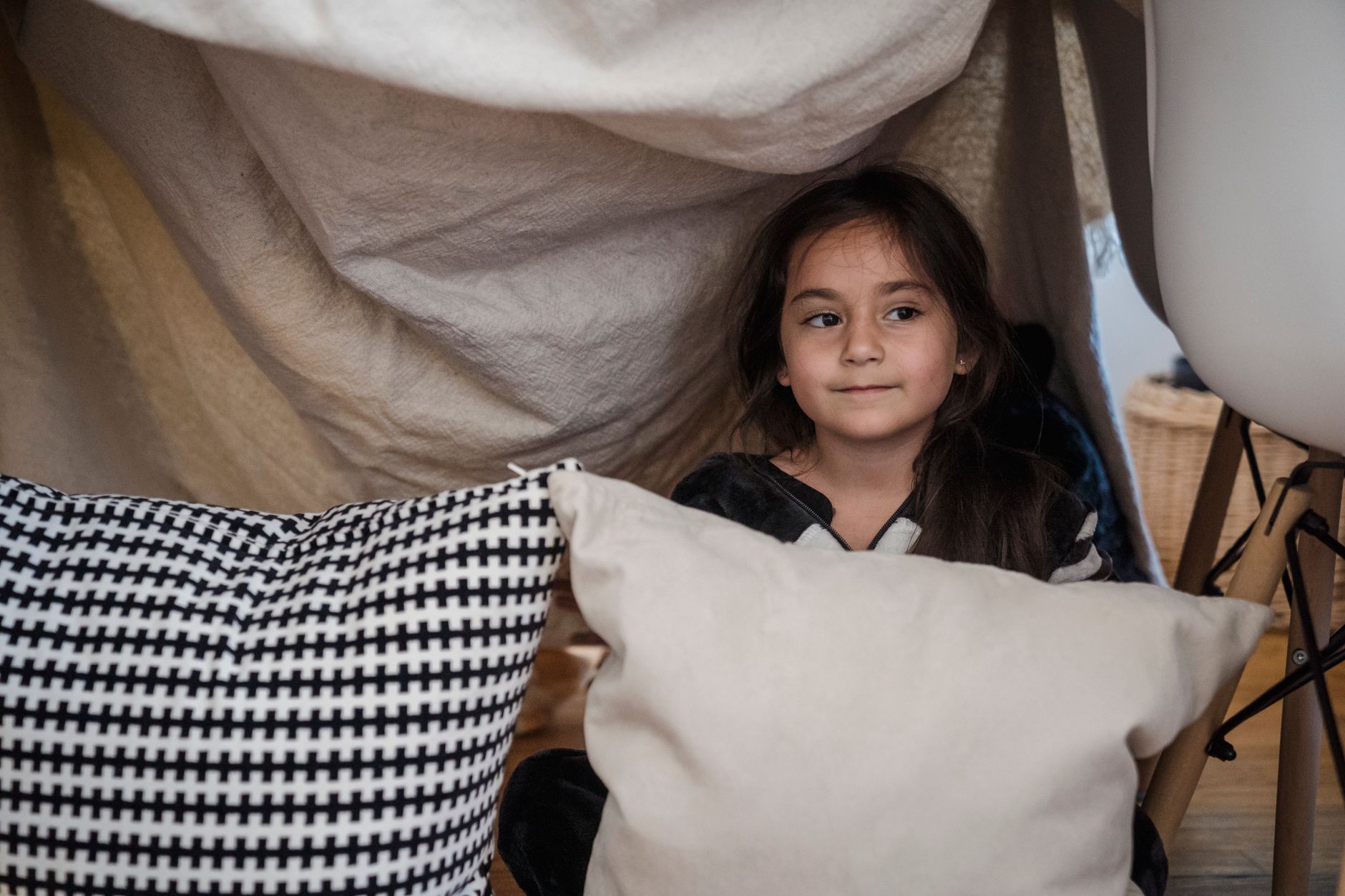
Unstructured play is rarely a solitary endeavor. When children play together, they are engaged in a sophisticated social negotiation. If two children want to build a fort, they must agree on the architecture, the layout, and the rules of who can enter. This is a microcosm of adult collaboration.
In digital games, social interaction is often mediated by a platform. There are chat filters, avatars, and game mechanics that govern how people interact. In physical, unstructured play, the rules are negotiated in real-time. If someone gets upset, they have to work it out or the game ends. This builds emotional intelligence, empathy, and the ability to read social cues—skills that are notoriously difficult to teach through a screen.
We often worry about our children being “behind” in academics, but in the long run, the ability to collaborate, negotiate, and handle conflict is what determines success in the workplace and in personal relationships. These are the “soft skills” that are becoming increasingly valuable in an era where AI can handle the technical tasks.
Addressing Common Misconceptions
There is a persistent myth that unstructured play is “wasted time” that could be better spent on enrichment activities. We have been sold the idea that every hour must be an investment in a future skill. However, research suggests that the “enrichment” we provide is often fragile. If a child learns to play the piano only through rigid instruction, they may struggle to improvise or compose. If they learn to code only through structured apps, they may struggle to debug a real-world system.
Unstructured play provides the foundational “playfulness” that allows for true innovation later in life. It allows for the “incubation period” of thought. Think of the most successful scientists, artists, and entrepreneurs—they almost all credit their success to a childhood spent tinkering, exploring, and having the freedom to fail without an audience.
Practical Steps for Busy Families
You don’t need to overhaul your entire lifestyle to make space for this. It is about small, intentional shifts in your daily routine.
- The “No-Device” Zone: Designate a specific time of day (perhaps right after school or on weekend mornings) where screens are off-limits for everyone, including parents.
- The “Yes” Space: If possible, designate a corner of the house where it is okay to be messy. Knowing they won’t be scolded for a “mess” gives children the psychological safety to experiment.
- Slow Down the Schedule: Look at your family calendar. If there is no gap between activities, consider cutting one thing. A child who is rushed from activity to activity has no time to process their day or engage in the kind of play that requires a “warm-up” period.
The Long View: Resilience and Mental Health
We are currently witnessing a mental health crisis among youth, characterized by rising levels of anxiety and a decrease in independent functioning. While the causes are complex and multi-faceted, many child development experts point to the “over-management” of childhood as a significant factor. When we solve every problem for our children, we accidentally communicate that they are not capable of solving problems themselves.
Unstructured play is an antidote to this. It is a way of saying, “I trust you to handle this.” When a child climbs a tree (within reasonable safety limits) or builds a tower that wobbles, they are building internal self-efficacy. They are learning that they have an impact on the world and that they can navigate their environment.
As parents, our goal is not to be perfect curators of our children’s lives. It is to be the “base camp” from which they explore, fail, and succeed. By stepping back and allowing for more unstructured time, we aren’t just giving them a break; we are giving them the most valuable gift of all: the ability to be the architects of their own minds.
Frequently Asked Questions
1. How much unstructured play time should my child have per day?
While there is no “magic number,” the American Academy of Pediatrics emphasizes the importance of play as a fundamental part of healthy development. Aiming for at least 60 minutes of uninterrupted, child-led play per day is a great goal. If that feels like too much, start with 20 minutes and observe how your child’s focus and mood improve.
2. What if my child keeps asking for my help or entertainment during play?
This is a habit that can be unlearned. If they ask for help, try to reflect the question back: “What do you think you should do next?” or “I’m busy right now, but I can’t wait to see what you build in 15 minutes.” You are helping them transition from being a consumer of your attention to an initiator of their own ideas.
3. Is there a risk of them playing “dangerously” if I don’t supervise?
There is a difference between “risky play” (which is vital for learning spatial awareness and physical limits) and “dangerous play.” Ensure the environment is physically safe (no sharp hazards, clear exits, etc.), but allow for “loose-part” risks, like jumping off a low stool or building a tall, wobbly tower. Monitoring from a distance is different from hovering. Stay close enough to intervene if things go truly sideways, but far enough that they don’t feel the pressure of your eyes on them.
For further reading on the science of play, visit the American Academy of Pediatrics website, which provides comprehensive resources on the benefits of play for children of all ages. Additionally, organizations like The International Play Association provide deeper insights into the global advocacy for children’s right to play.
Remember, the goal isn’t to be a perfect, hands-off parent, but to create the space where your child can grow into their own person. It’s okay if the house is a mess for an hour. It’s okay if the “spaceship” looks like a pile of cardboard. In the context of their development, this is exactly what success looks like.