If you are serious about managing the indoor air quality in your child’s nursery, an open-hardware air quality sensor is statistically more reliable and cost-effective than the high-end, proprietary smart devices currently flooding the market.
- Transparency is Safety: Open-hardware devices allow you to verify exactly what sensors are being used and how your data is processed, preventing the “black box” syndrome of commercial gadgets.
- Longevity Over Subscriptions: Unlike mass-market monitors that often push subscription-based features or cloud-dependent apps, open-hardware allows for local data storage and indefinite repairs.
- Precision Matters: By sourcing specific components like the Sensirion or Plantower laser particle counters, you can achieve professional-grade accuracy for a fraction of the cost of consumer-grade “premium” air purifiers.
You’ve likely felt that familiar, nagging anxiety: Is the air in the nursery actually clean? You’ve probably looked at those sleek, expensive air monitors that promise to track VOCs (volatile organic compounds), PM2.5 (fine particulate matter), and humidity. They look great on a nightstand, but they often come with hidden costs: mandatory app subscriptions, proprietary cloud servers that might shut down in two years, and an inability to calibrate or repair the device yourself.
This is where the “open-hardware” movement steps in. For parents who want to move beyond the marketing fluff, building or buying an open-source sensor isn’t just a hobby—it’s a way to take total control over your home’s environmental data.
What Exactly Is “Open-Hardware” in the Context of Air Quality?
In the world of tech, “open-hardware” means that the blueprint, the circuit diagrams, and the software (the “firmware”) are public. Anyone can download them, study them, and build them. When you buy a mass-market sensor from a big-box retailer, you are buying a closed system. If the company updates their firmware and breaks your app, or if they decide to sunset their cloud platform, your device becomes a paperweight.
With an open-hardware device—like those based on the ESP32 microcontroller or the Arduino ecosystem—you own the system. If a part breaks, you can buy a replacement sensor module for $10 and swap it out. You aren’t beholden to a single manufacturer’s business model.
Why does this matter for a nursery? Because nurseries are sensitive environments. You need consistent, accurate, and long-term data. You don’t want a device that stops working because a server in another country went offline during your baby’s nap time.
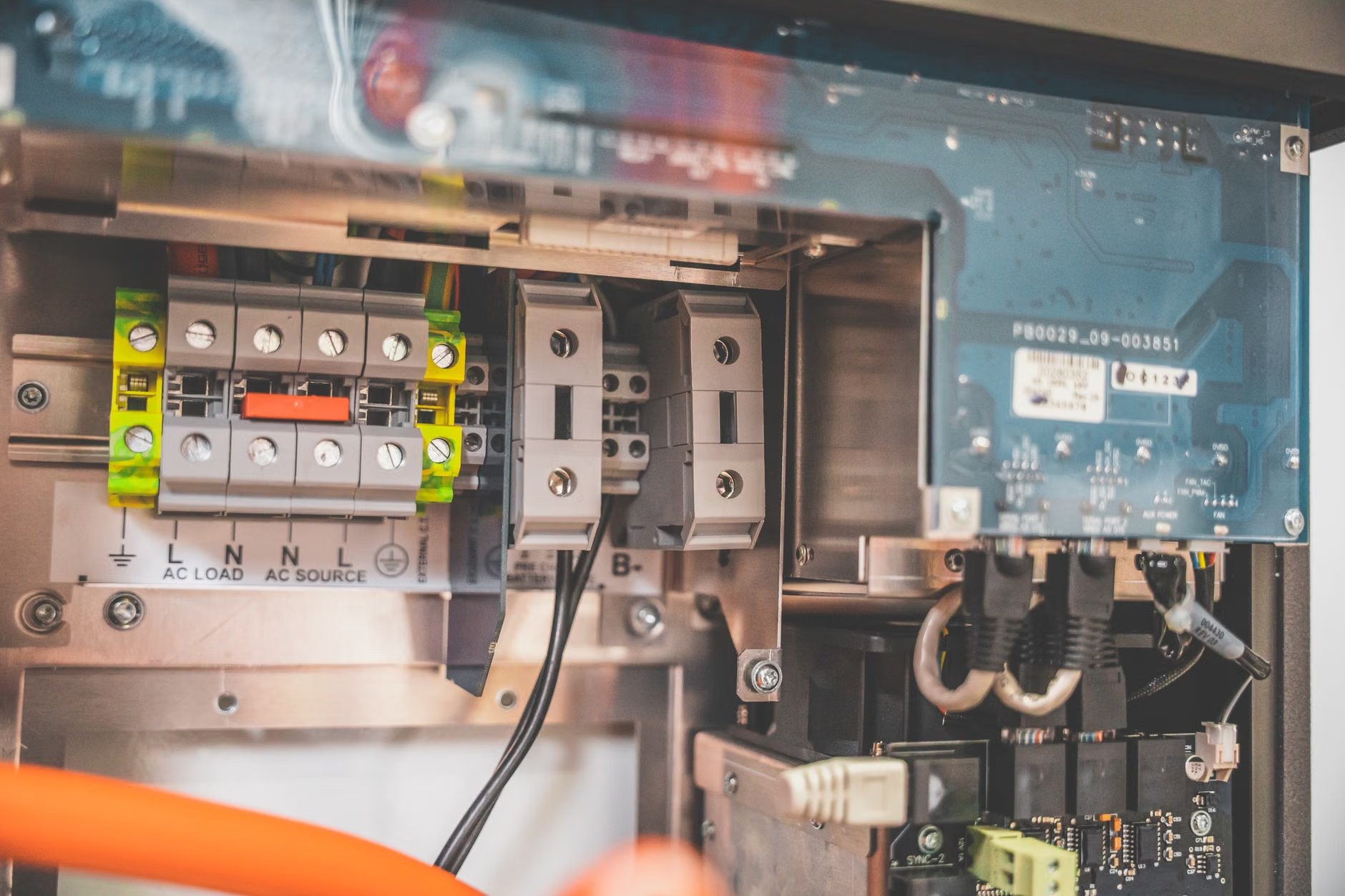
Understanding the Sensors Behind the Plastic Shell
Most consumer monitors use the same handful of high-quality sensor modules, but they hide them inside fancy plastic shells and charge a 500% markup. When you build your own or purchase an open-hardware kit, you are paying for the core technology, not the marketing budget.
Here is what you should look for in a professional-grade setup:
| Sensor Type | What it Measures | Why it’s Critical for Nurseries |
|---|---|---|
| PM2.5 (Laser Scattering) | Fine dust, smoke, pollen | Crucial for monitoring wildfire smoke or dust from nearby construction. |
| VOC/eCO2 (MOS sensors) | Chemical fumes, cleaning agents | Detects off-gassing from new furniture, paint, or harsh cleaning sprays. |
| SHT3x / BME280 | Temperature & Humidity | Essential for SIDS (Sudden Infant Death Syndrome) prevention via ideal room climate. |
The most important takeaway here is that the quality of the sensor module is what dictates your data accuracy, not the brand name on the box. When you opt for open-hardware, you can ensure that you are using top-tier components like the Sensirion SEN5x series, which is significantly more accurate than the cheaper, generic sensors found in many budget-friendly air purifiers.
The Hidden Costs of “Smart” Nursery Gadgets
Many parents in their 30s and 40s are juggling busy careers and household management. It’s tempting to click “buy now” on the most popular, highly-rated device on Amazon. However, let’s look at the hidden costs that often surface after 12 to 24 months of use.
First, there is the “Cloud Dependency Tax.” Many manufacturers move their features behind a paywall. They start by offering free data history, then switch to a subscription model where you must pay $5/month to see your baby’s air quality trends over the last week. With open-hardware, you can set up a local server (like Home Assistant or a simple Raspberry Pi) that stores your data on your own network. You own the data, forever, for free.
Second, there is the “Planned Obsolescence” factor. Proprietary devices often use non-replaceable batteries or integrated chips that cannot be serviced. If the battery dies or the sensor drifts, you have to buy a brand new unit. Open-hardware is modular. If the CO2 sensor drifts after two years, you replace the sensor module, not the whole device.

Practical Implementation: How to Get Started
You don’t need to be an electrical engineer to benefit from open-hardware. The community has made it incredibly accessible. Here is a realistic path for a busy parent:
- The Pre-Built Route: Look for platforms like AirGradient. They sell open-hardware kits that you can assemble in 15 minutes. They provide the hardware, the open-source code, and the option to use their dashboard, but you are never locked in.
- The DIY Route: If you enjoy a small project, buy an ESP32 board, a PM2.5 sensor, and a temperature/humidity sensor. Use software like ESPHome, which integrates perfectly with Home Assistant.
- The Integration Phase: Once your sensor is running, connect it to your home automation system. You can set up “automations”—for example, if the PM2.5 levels exceed a certain threshold, your smart air purifier turns on automatically, or you get a notification on your phone to close the window.
The biggest mistake people make is trying to do everything at once. Start by monitoring, not automating. Get a sense of your baseline air quality for a week before you start triggering devices based on those readings. You might find that your air is perfectly fine, or you might realize that a specific cleaning routine is causing a massive spike in VOCs that you never suspected.
Common Misconceptions About Air Quality Monitoring
There is a lot of noise in the air quality space. Let’s clear up a few myths that often lead parents astray.
Myth 1: “Higher price equals higher accuracy.” In reality, many expensive, aesthetic monitors use the exact same internal components as mid-range open-hardware kits. You are often paying for the software interface and the brand name.
Myth 2: “I need to monitor everything.” You don’t need to track formaldehyde, radon, and every trace element. For a nursery, focusing on PM2.5 (particulates) and VOCs (chemicals) covers 90% of your actual risks. Don’t let “analysis paralysis” keep you from taking action.
Myth 3: “Calibration is impossible for DIY.” While it’s true that professional lab equipment requires expensive calibration, most open-hardware sensors have self-calibration routines. By placing your sensor near an open window on a clear day, you can often “zero out” your sensors effectively enough for home use.
Data Privacy and Your Family
We often forget that “smart” devices in our homes are constantly collecting data. Where is that data going? Who owns it? When you use a proprietary nursery monitor, you are essentially inviting a corporation into your nursery to track your baby’s sleeping environment, humidity levels, and daily routines. While they claim it is for “improving user experience,” it is also a goldmine for behavioral marketing.
Open-hardware removes this concern. Because the data stays on your local network, you aren’t sending your private household habits to a server in a data center. For parents who value privacy, this is a significant, often overlooked, benefit.
Troubleshooting Your Setup
If you decide to build or buy an open-hardware sensor, you might run into a few common issues. Don’t panic; they are almost always easy to fix.
Sensor Drift: If your CO2 readings seem off (e.g., they never drop below 600ppm even when the room is empty), the sensor likely needs to be left in fresh air for 24-48 hours to recalibrate. Most modern sensors have an “Automatic Baseline Calibration” (ABC) feature that handles this, but it needs time to learn the environment.
Connectivity Issues: Since these devices often use Wi-Fi, ensure your access point has a strong signal in the nursery. If the device keeps dropping, it’s not the sensor—it’s the Wi-Fi. A simple Wi-Fi extender or a mesh node in the hallway usually solves this.
Erratic Readings: If you see sudden, massive spikes in PM2.5 that don’t make sense, check if the sensor is too close to a humidifier. Mist can often be mistaken for particulate matter by laser-based sensors. Move the sensor a few feet away from the humidifier to get a true reading.
The Real-World Impact on Daily Life
Let’s look at a hypothetical scenario to see how this changes your day. Imagine it’s a cold winter day. You notice the air quality sensor in the nursery shows a spike in PM2.5. Because you have an open-hardware system, you can check the logs. You see the spike happened at 4:00 PM—exactly when you started cooking dinner in the kitchen. You realize your kitchen exhaust isn’t clearing the air properly, and those particles are drifting into the nursery.
Now you have actionable information. You don’t just “worry” about the air; you know the source. You might decide to run the kitchen vent longer, or perhaps you realize you need to change your air purifier filter in the nursery sooner than the manufacturer’s suggested six months. This is the power of data-driven parenting: it replaces vague anxiety with clear, logical steps.
Final Recommendations for the Concerned Parent
If you are ready to move forward, my recommendation is to prioritize modularity. Look for projects that use the ESP32 chip. It is the gold standard for open-hardware home projects because it is cheap, reliable, and has an massive community of developers. If you have a problem, a quick search on the Home Assistant forums will almost certainly yield a solution from someone who has already solved it.
Don’t be intimidated by the “technical” side. If you can set up a smartphone, you can manage an open-hardware device. The peace of mind that comes from knowing your data is yours, and that your sensors are accurate, is worth far more than the convenience of a closed-system gadget that might become obsolete next year.
Start small, focus on the metrics that actually matter for your baby’s health, and remember that the best air quality monitor is the one that gives you honest, transparent data without a subscription fee attached.
Frequently Asked Questions
Q: Do I need to be a programmer to use open-hardware sensors?
A: Not at all. Most open-hardware projects for air quality, such as those from AirGradient, come as kits that require basic assembly (plugging in cables, no soldering required). The software is usually pre-flashed or can be installed via a simple web browser interface.
Q: How accurate are these compared to medical-grade monitors?
A: They are surprisingly close. Many open-hardware kits use the exact same laser-scattering and electrochemical sensors found in professional instruments costing thousands of dollars. While they may not have the formal calibration certifications required for clinical trials, they are more than sufficient for identifying trends and air quality issues in a home environment.
Q: What if I don’t want to build my own “smart home” system?
A: You don’t have to. You can use an open-hardware sensor as a standalone device. Many kits come with a simple web interface that you can access via your phone’s browser to see real-time readings, or they can report to a simple, free dashboard provided by the manufacturer without requiring a complex home automation setup.
For further reading on air quality standards and health implications, visit the official US EPA Particulate Matter Basics page to understand how different levels of PM2.5 affect human health, or check the World Health Organization’s air quality guidelines for global benchmarks.