The most critical takeaway for any international pet traveler is that your dog’s ability to enter a foreign country is governed by strict, non-negotiable health and documentation timelines; missing a single vaccination window or failing to get a seal on a specific form can result in your pet being quarantined, denied entry, or sent back home at your expense.
Key Takeaways:
- Start Early: Most international destinations require preparations to begin 4 to 6 months before departure due to titer tests and quarantine requirements.
- Paperwork is Paramount: A standard “vet note” is not enough; you need government-endorsed health certificates that meet the specific criteria of the destination country.
- Airline Matters: Your choice of airline is just as important as your destination, as every carrier has different breed restrictions, temperature policies, and cabin rules.
We’ve all seen those heartwarming photos on social media: a family walking through the streets of Paris or hiking the Swiss Alps with their golden retriever in tow. It looks effortless, chic, and like the ultimate dream for any dog-loving family. But here is the reality check: behind that one photo is likely a binder full of color-coded spreadsheets, multiple vet visits, and a level of logistical planning that rivals a military operation.
If you are in your 30s or 40s, you are likely balancing the chaos of parenting, career demands, and the desire to keep your four-legged family member involved in your adventures. The good news? It is entirely possible to travel internationally with your dog. The better news? If you treat it like a technical project rather than a spontaneous trip, you can avoid 90% of the stress.
The Architecture of Pet Immigration: Why “Rules” Are Not Suggestions
When you cross a border, you are not just moving a pet; you are moving a biological entity across jurisdictions. Countries take this very seriously to prevent the spread of diseases like rabies, parasites, and invasive species. Unlike human travel, where a passport gets you through, pet travel is a game of “proving” your dog is safe.
Every country operates under its own set of import requirements. For instance, the European Union (EU) has a different set of rules than the United States, which in turn differs significantly from Australia or Japan. You must look at the destination country’s official government website—not a random forum—to find the “Import Requirements for Dogs.”
The “Titer Test” Explained
One of the most daunting terms you will encounter is the “Rabies Titer Test.” In simple terms, this is a blood test that measures the amount of rabies antibodies in your dog’s blood after they have been vaccinated. Some countries, especially those that are rabies-free, will not allow your dog to enter unless they can prove, via a lab report, that the vaccine actually worked.
This is where the timeline becomes critical. You cannot get the vaccine and the test on the same day. Most labs require the blood draw to happen a specific number of days after the vaccination, and then you may have to wait a mandatory period (sometimes three months) before the dog is allowed to enter the destination country. If you skip this, you aren’t just looking at a minor delay; you are looking at a closed door.
Building Your Logistics Roadmap: The 6-Month Countdown
To keep your sanity, you need to work backward from your departure date. Think of this as a project management task.
| Phase | Timeframe | Key Action Items |
|---|---|---|
| Research | 6+ Months Out | Check destination import laws, quarantine rules, and breed restrictions. |
| Medical Prep | 4-5 Months Out | Microchip (ISO compliant), Rabies vaccination, Titer test if required. |
| Logistics | 3 Months Out | Book pet-friendly flights, confirm crate requirements, secure pet-friendly lodging. |
| Documentation | 10 Days Out | Official health certificate signed by a USDA-accredited (or equivalent) vet. |
If you are traveling from the US to the EU, for example, your dog must have an ISO-compliant microchip. If your dog has an older, non-compliant chip, you will need to bring your own scanner to the border or get a new chip. These are the small, overlooked details that cause the biggest headaches.

The Airline Dilemma: Cabin vs. Cargo
Your dog’s travel experience depends heavily on their size and your airline’s policy. Generally, if your dog is small enough to fit in a carrier under the seat in front of you, you are in a much better position. You can monitor them, soothe them, and ensure they are hydrated.
However, for medium and large dogs, you are looking at “checked baggage” or “manifest cargo.” This is where things get complicated. Many airlines have suspended pet travel in the hold due to temperature regulations. If the ambient temperature at any point in the flight path exceeds a certain limit (usually 85°F/29°C), the airline may refuse to load your pet for their safety. You need to check the “Pet Policy” page of every carrier you are considering, as policies change seasonally.
Is the Crate Actually a Safe Space?
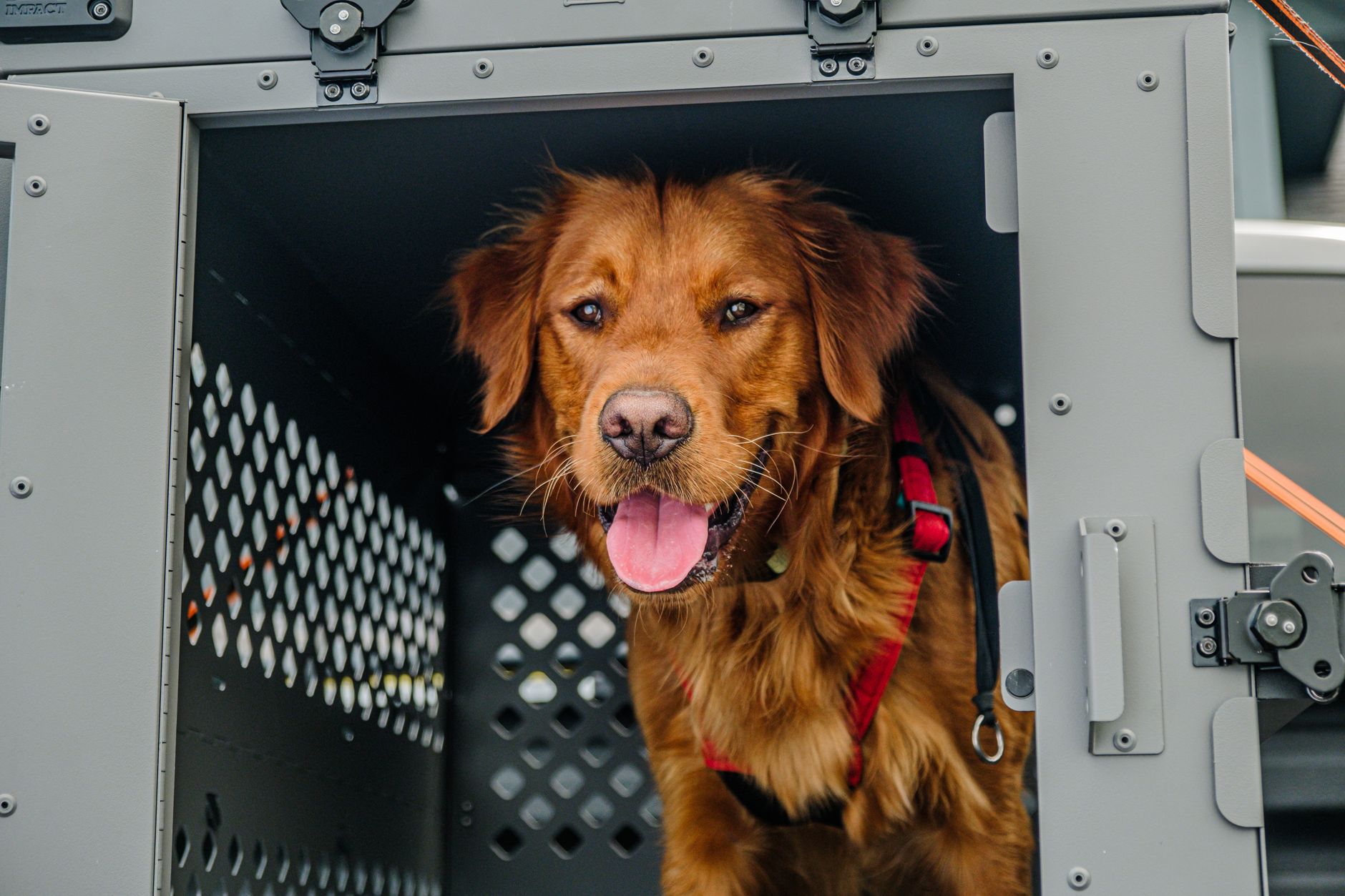
For cargo travel, your crate must be IATA (International Air Transport Association) compliant. This is not just a suggestion; if the crate doesn’t have the right ventilation, locking mechanism, or size, the airline staff will refuse to board your pet. Spend the money to buy a high-quality, reinforced crate. Add familiar bedding, but avoid soft toys that could be a choking hazard during turbulence.
Pro-tip: If you are flying with a dog in cargo, try to book a direct flight. Every connection is an opportunity for a luggage handling error or a missed connection for your pet. When you land, your first priority isn’t baggage claim; it’s finding the cargo terminal or the designated area where the airline offloads animals.
The Paperwork Maze: Government Endorsement
This is the part that intimidates most people, but it’s actually quite mechanical. After your vet fills out the health certificate, it is rarely “good to go” immediately. Most international destinations require this document to be endorsed by a government agency (like the USDA in the United States or the equivalent department of agriculture in your home country).
You have to send the original paperwork to the government office, pay a fee, and have them apply the official seal. If you show up at the airport with a vet-signed form that lacks the government stamp, you will be turned away. Period. Always double-check if your destination accepts electronic signatures or if they require the “wet signature” (the physical ink signature) and the raised seal.
Don’t forget to keep a folder—a physical, hard-copy folder—with everything. Digital copies are great, but customs agents want to see the original, stamped, wet-ink documents. Have the pet’s vaccination records, the health certificate, the titer test results, and your own travel documents clipped together.
Lifestyle Management: Keeping Your Dog (and Your Kids) Calm
If you are traveling as a family, the pressure to keep the dog calm while managing children is real. Dogs pick up on human anxiety. If you are stressed about the flight, your dog will be, too. Try to maintain a routine as close to normal as possible in the days leading up to the trip.
Exercise is your best friend. A tired dog is a quiet dog. On the day of travel, ensure your dog has had a long walk and enough time to do their business before you head to the airport. Avoid heavy meals right before the flight, as motion sickness can be a major issue for dogs, just as it can be for kids.
Once you arrive at your destination, do not expect your dog to bounce back immediately. They will be jet-lagged, dehydrated, and possibly confused by the new environment. Give them 24 to 48 hours to acclimate. Find a local park or quiet area near your accommodation as soon as you arrive so they can stretch their legs and get their bearings.
Common Pitfalls and How to Avoid Them
We see a lot of travelers make the same mistakes. Let’s break down how to avoid the “oops” moments:
- The “Last Minute” Vet Visit: Some health certificates are only valid for 10 days from the date of issuance. If your vet is booked out, you might be in trouble. Schedule this appointment the second your travel dates are locked in.
- Ignoring Breed Restrictions: Some countries have bans on specific breeds (often called “dangerous dog” legislation). Even if your dog is the sweetest soul, if they are on a banned list, you could face immediate deportation or confiscation. Always check the destination country’s specific breed laws.
- Assuming All Pet Carriers are Equal: Airlines have strict dimensions for under-seat carriers. Measure your dog standing and sitting, and compare it to the carrier dimensions. If the dog can’t stand up or turn around in the carrier, some airlines will deny boarding.
Summary: The Balance of Adventure and Responsibility
Traveling internationally with your dog is a major commitment, but for many, it is worth the effort to keep the family together. The key is to view the regulations not as obstacles, but as the framework for your trip. When you take the time to study the requirements, get the right paperwork, and prepare your dog for the journey, you turn a high-stress event into a manageable, albeit busy, process.
Remember that the goal is the safety of your pet. If at any point the logistics seem too risky for your specific dog—perhaps they are a senior pet, have health issues, or are prone to extreme anxiety—there is no shame in choosing a pet-sitter or a high-quality boarding facility. Your dog will be just as happy to see you when you return, and you will be able to enjoy your trip without the constant weight of their potential discomfort.
For those who proceed, start your research today. Check the official government portal for your destination, call your veterinarian to discuss the timeline, and keep your documentation organized. Safe travels to you and your pup.
Resources for Further Research
- USDA APHIS Pet Travel (For US-based international travel)
- European Commission: Movement of Pets (For travel within/to the EU)
- IATA Travel with Pets Guidelines
Frequently Asked Questions
Q: Can I sedate my dog for an international flight?
A: Most airlines and veterinarians strongly advise against it. Sedation can cause respiratory issues or cardiovascular problems during flight due to changes in air pressure. It is better to use natural calming aids or, if absolutely necessary, consult a vet for a specific, flight-safe protocol.
Q: What happens if my dog doesn’t pass the customs inspection upon arrival?
A: If the paperwork is incorrect or the dog fails the health check, the authorities may quarantine the dog at your expense, return the dog to the country of origin, or in extreme cases, humanely euthanize the animal. This is why strict adherence to documentation is non-negotiable.
Q: Do I need a “pet passport” for my dog?
A: The term “pet passport” is often used colloquially. In the EU, it is a specific official document. In other parts of the world, it usually refers to the collection of health certificates, vaccination records, and import permits. Always check if your destination requires a specific “passport” format or just the standard health documentation.