Teaching delayed gratification in a world where everything—from groceries to entertainment—is available at the tap of a screen isn’t just a parenting challenge; it’s a necessary life skill for long-term success and mental well-being.
- The “Now” Trap: Instant delivery and digital algorithms are designed to bypass our impulse control; recognizing this is the first step in countering it.
- Small Wins Matter: Delayed gratification is a muscle that strengthens with repetition, not a trait children are born with.
- Modeling Patience: Your own reaction to traffic, slow internet, or out-of-stock items is the most powerful lesson your children will observe.
Do you ever find yourself getting annoyed when a website takes more than three seconds to load? Or perhaps you’ve felt that slight pang of irritation when a delivery window is pushed back by an hour. We are living in an era of unprecedented convenience. For those of us in our 30s and 40s, we remember a time before high-speed fiber optics and same-day shipping. We learned to wait for our favorite songs to play on the radio or for a letter to arrive in the mail. But for our children, the “wait” is becoming an extinct concept.
This isn’t just about being grumpy about technology. It’s about the psychological shift occurring in our households. When the gap between “wanting” and “getting” shrinks to zero, the brain’s reward system changes. We are essentially training our brains—and our children’s brains—to expect immediate resolution to every desire. The question is, how do we re-introduce the value of the “long game” when the world is screaming for speed?
Understanding the Science of the ‘Marshmallow’
You’ve likely heard of the Stanford Marshmallow Experiment. Conducted in the late 1960s and early 70s by psychologist Walter Mischel, it offered children a choice: one marshmallow now, or two if they could wait for the researcher to return. The study became famous for suggesting that those who waited went on to have better life outcomes. While modern psychology has added nuance to this—pointing out that socioeconomic factors and trust in the environment play a huge role—the core takeaway remains: the ability to forgo a smaller, immediate reward for a larger, later one is a cornerstone of self-regulation.
In our modern context, the “marshmallow” isn’t a sugary treat. It’s the instant gratification of a YouTube video, the dopamine hit of a notification, or the ease of buying a toy online without ever leaving the couch. The challenge is that these digital rewards don’t require any effort. True delayed gratification, however, requires a process. It requires planning, effort, and the ability to tolerate the discomfort of the “not yet.”

When we remove the “wait,” we often remove the opportunity for development. If a child never has to wait for a toy, they never learn the planning required to save for it. If they never wait to speak in a conversation, they never develop the listening skills required for empathy. To foster this, we have to intentionally manufacture “friction” in their lives—not to be difficult, but to build their psychological resilience.
The Mechanics of Building Patience
Building patience is remarkably similar to physical training. You don’t start by running a marathon; you start by walking around the block. The goal is to create small, manageable delays that demonstrate the value of waiting. This helps the brain realize that the world doesn’t end when a desire is deferred.
The “Wait-Time” Strategy
One of the simplest ways to introduce this is through structured waiting periods. If your child asks for a snack, a game, or a show, don’t say “no.” Instead, say “yes, in five minutes.” Use a visual timer. This transforms an abstract concept of time into something concrete. You are teaching them that their desire is valid, but that it exists within a framework of time and space.
Financial Literacy as a Practical Tool
Money is the most tangible way to teach delayed gratification. Most children receive money as gifts or an allowance. The temptation is to spend it immediately on a cheap item at the store. Instead, encourage a “save-up” goal. Help them create a chart where they color in progress toward a larger, more meaningful purchase. When they finally buy that item, the satisfaction they feel is vastly different from the fleeting joy of a small impulse buy. They learn the difference between “I want it now” and “I earned this.”
| Strategy | The “Instant” Approach | The “Delayed” Approach |
|---|---|---|
| Snack Requests | Give food immediately upon request. | “Yes, let’s have a snack after we finish this activity.” |
| Purchasing | Buy items on impulse. | “Let’s put this on a list and see if you still want it in a week.” |
| Digital Media | Unlimited on-demand access. | Scheduled viewing times or “earned” screen minutes. |
The screen is the biggest hurdle to patience. Algorithms are literally designed to keep us scrolling. Every time a new video auto-plays, the brain receives a reward for doing nothing. This is the opposite of delayed gratification. It is the “endless stream” model. To counter this, we have to be the ones to break the cycle.
Start by disabling auto-play features. It sounds minor, but it forces a pause. When one video ends, the child has to choose to start the next one. That pause is a moment for them to check in with themselves: “Do I actually want to keep watching, or am I just doing this because it’s there?”
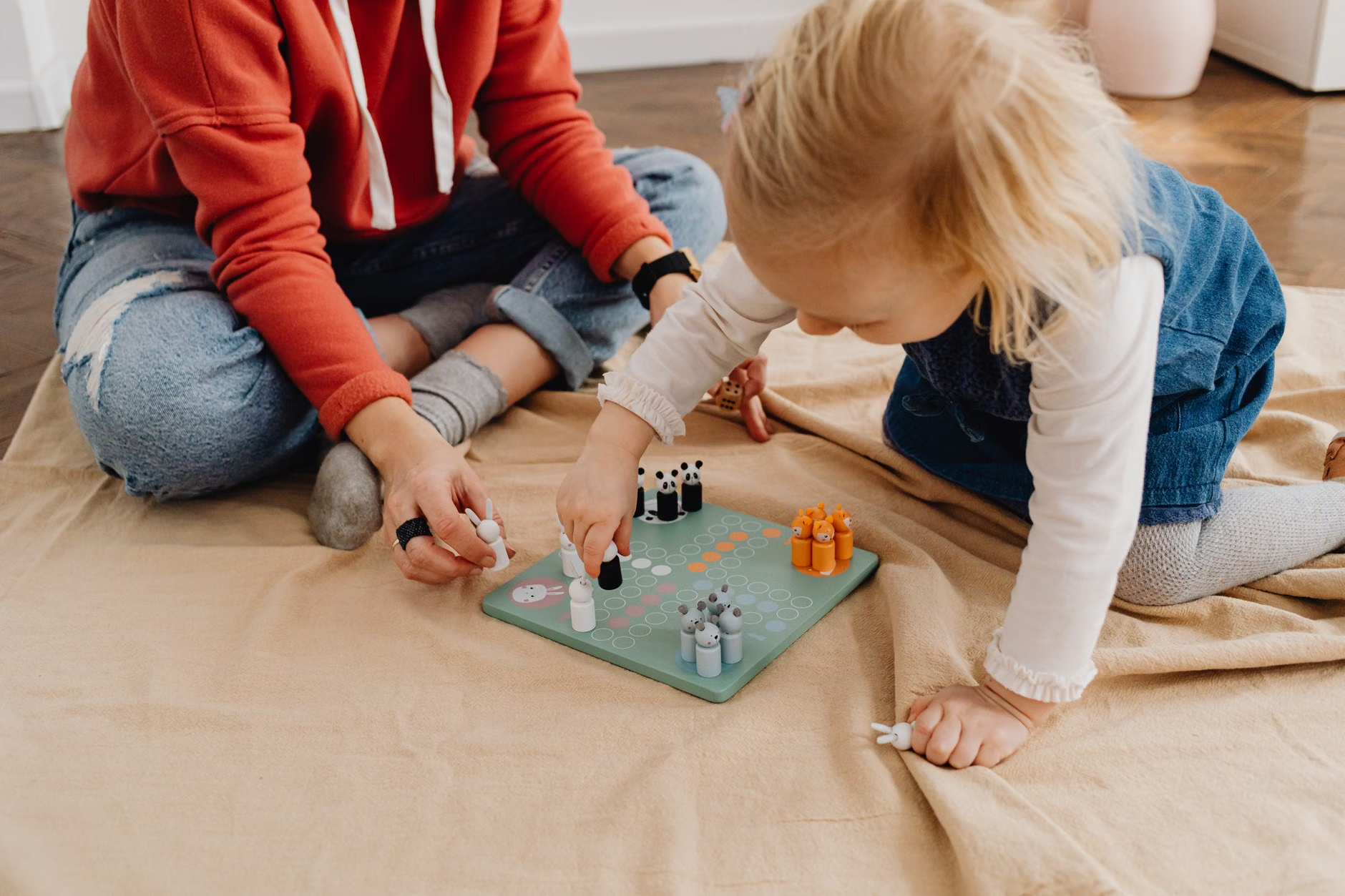
Furthermore, encourage “analog” hobbies. Activities like puzzles, building sets, or gardening require a sequence of events. You cannot complete a 500-piece puzzle in ten seconds. You cannot force a plant to grow faster. These activities provide a natural rhythm that the digital world lacks. They teach that the process is as important as the outcome. When we focus too much on the “delivery” of the reward, we miss the joy of the journey.

The Role of Parental Modeling
Your children are watching you more than they are listening to you. If you show visible frustration every time the internet lags, or if you are constantly checking your phone the moment you have a spare second, you are modeling an inability to tolerate delay. We are all prone to this; it’s a byproduct of our environment. But we can change the narrative.
Try narrating your own patience. When you are stuck in traffic, instead of complaining, say, “This is taking a while. I’m going to use this time to listen to a podcast or just enjoy the quiet.” When you are waiting for a package, talk about how you are looking forward to it and how the wait makes the arrival more exciting. You are demonstrating that waiting isn’t a negative experience—it’s just a part of life.
This also applies to how we handle our own desires. If you want something—a new coffee machine, a book, a trip—talk about the planning phase. “I really want this, so I’m setting aside a little bit of my budget every month so I can get it by summer.” This makes the process of delayed gratification visible and attainable. It shows that adults aren’t just “allowed” to have things; we plan for them.
Managing the ‘Immediate’ Expectations of the 30s and 40s
It’s not just the kids who struggle. Our generation is caught between the analog past and the digital future. We feel the pressure to be constantly productive, to respond to emails instantly, and to keep up with the pace of the world. This “urgency addiction” often leads to burnout. When we force ourselves to slow down, we are not just teaching our children; we are reclaiming our own mental space.
Consider the concept of “productive waiting.” When you are in a queue or waiting for an appointment, resist the urge to pull out your phone. Use those two minutes to observe your surroundings, breathe, or just think. This isn’t wasted time. It is a exercise in maintaining your own internal state regardless of the external pace. If we can master this, we become less reactive and more intentional.
This is especially important in family life. When we are always rushing to the next activity, we lose the spontaneous, slow moments that define childhood. By intentionally choosing to wait, we create space for connection. We move from being managers of a household to being participants in our family’s life.
Common Pitfalls and How to Avoid Them
It is easy to swing the pendulum too far. The goal is not to make life miserable or to deny children things for the sake of it. The goal is to build the capacity for patience. Here are a few traps to avoid:
- The “Punitive Wait”: Don’t use waiting as a punishment. It should be a neutral, or even positive, experience. If it feels like a chore, they will resist it.
- Inconsistency: If you say “wait five minutes” but then give in after two because they are crying, you are teaching them that persistence (in the form of whining) is the key to getting what they want. Stick to your boundaries.
- Ignoring the “Why”: Always explain why you are waiting. “We are waiting for the plants to grow because they need time to get strong.” This helps them understand the logic behind the delay.
Consistency is more important than intensity. You don’t need to implement a massive, life-altering plan. Start with one small area of your life—maybe it’s the way you handle screen time, or how you approach family shopping trips. Over time, these small shifts compound into a culture of patience within your home.
Implications for Long-Term Success
Why does this matter in the long run? Because life is rarely instant. Real success—whether in career, relationships, or personal growth—is almost always the result of compounding small, disciplined actions over a long period. The ability to endure the “boring” parts of the journey is what separates those who achieve their goals from those who give up when the novelty wears off.
By teaching our children to value the wait, we are giving them a competitive advantage. In a world that is obsessed with the “now,” the person who can focus on the “later” is a rare and valuable asset. They are the ones who can finish the degree, build the business, or nurture the relationship that takes years to flourish.
We aren’t just teaching them to wait; we are teaching them to trust the process. We are teaching them that their effort has value, that their time is precious, and that the best things in life are rarely the ones that arrive with a single click. It’s a message that feels counter-intuitive in our current culture, but it is one that will serve them for the rest of their lives.
Final Thoughts
Teaching delayed gratification is a marathon, not a sprint. There will be days when the convenience of the digital world wins, and that is perfectly okay. We are not aiming for perfection; we are aiming for awareness. Every time you pause, every time you choose to wait, and every time you encourage your child to do the same, you are building a foundation of resilience.
Stay grounded. Keep the expectations realistic. And remember that the most important thing you are teaching them is that they have control over their own reactions, even in a world that tries to convince them otherwise. The “wait” is where life happens, and it’s a beautiful place to be if you know how to look at it.
Frequently Asked Questions
1. Is it harmful to make children wait for things they really want?
Not at all, provided the wait is age-appropriate and manageable. It helps them develop self-regulation and emotional maturity. The key is to validate their desire while maintaining the boundary of the wait time.
2. How do I handle a child who has a meltdown when they have to wait?
Meltdowns are a sign that they are struggling with the discomfort of waiting. Stay calm and offer support without giving in. Acknowledge their feelings: “I know it’s hard to wait, and you’re feeling frustrated. I’m right here with you.” This helps them learn to co-regulate their emotions.
3. How does this apply to teenagers who are constantly on their phones?
For teens, the conversation needs to shift to autonomy. Discuss the “attention economy”—explain how apps are designed to steal their time. Encourage them to set their own limits and track their usage. When they understand the mechanism behind the desire, they are more likely to take charge of it themselves.
For further reading on the psychology of self-regulation and child development, visit the American Psychological Association or explore resources from Zero to Three, which offers excellent insights into early childhood development and patience.