The most effective way to keep your home garden thriving while balancing the demands of a hectic life is to transition from manual hose-dragging to a climate-responsive, automated smart irrigation system.
- Precision Matters: Smart controllers use real-time local weather data to skip watering cycles when rain is forecast, saving significant water and money.
- Set and Forget: Once properly zoned, these systems eliminate the “did I turn the sprinkler off?” anxiety that plagues busy parents.
- Plant Health: Consistent, deep watering at the root zone—rather than surface spraying—promotes stronger, more resilient plants that require less maintenance over time.
If you are anything like me, your garden was probably a passion project that slowly turned into a source of guilt. You start the season with grand visions of home-grown tomatoes and lush flower beds, but then life happens. The kids have soccer practice, a work project goes into overtime, or you simply forget to move the sprinkler for three days straight. Suddenly, those vibrant plants look more like candidates for a sad, dry compost pile.
For those of us in our 30s and 40s, time is our most limited currency. We want the aesthetic and psychological benefits of a garden, but we don’t have the bandwidth to treat it like a part-time job. This is where the “smart” revolution in home irrigation enters the conversation. It isn’t just about fancy gadgets; it’s about delegating a repetitive, resource-heavy task to a system that actually understands your environment.
Understanding the Basics: What Makes Irrigation “Smart”?
At its core, a smart irrigation system replaces your standard, “dumb” mechanical timer with a Wi-Fi-connected controller. A traditional timer works on a schedule: it turns on at 6:00 AM every Tuesday and Thursday, regardless of whether it is pouring rain or experiencing a heatwave. If it rains on Tuesday, you’ve just wasted water. If there’s a heatwave on Wednesday, your plants are parched until Thursday.
A smart system, by contrast, uses two primary methods to adjust your watering schedule:
- Evapotranspiration (ET) Controllers: These systems calculate the amount of water lost by the soil (evaporation) and the plants (transpiration). They pull in local weather data—temperature, humidity, wind speed, and solar radiation—to estimate exactly how much moisture your garden needs.
- Soil Moisture Sensor-Based Controllers: These use physical probes buried in the root zone. They act as a “gatekeeper.” If the sensor detects that the soil is already damp enough, it sends a signal to the controller to bypass the scheduled watering cycle.
Most modern residential systems use a hybrid approach, relying heavily on hyper-local weather forecasting provided by services like Weather Underground or local airport stations. It’s the difference between guessing and measuring.
Why Your Garden Needs an Upgrade (Beyond Just Saving Water)
The obvious benefit of smart irrigation is water conservation. According to the EPA’s WaterSense program, an average household can waste thousands of gallons of water annually due to inefficient irrigation practices. But for the busy parent, the benefits go deeper than the utility bill.
Consistency is the secret to plant health. Plants, much like toddlers, thrive on routine. When you water manually, you likely oscillate between “drowning” the plants because you remembered them after a week of neglect, and “starving” them because you were too busy to get outside. This yo-yo effect causes stress, which makes plants susceptible to pests and diseases. An automated system provides steady, measured hydration, allowing the roots to grow deep and strong.
The “Vacation-Proof” Garden. We all know the pre-travel routine: finding a neighbor or relative to come over and water the plants. It’s an awkward request to make, and there’s always that lingering doubt about whether they’ll actually do it or if they’ll accidentally overwater your delicate herbs. With a smart system, you can monitor your garden from your phone while you’re at the airport, on the beach, or sitting in a hotel room halfway across the world. If you see a heatwave hitting your home city, you can adjust the schedule with a single tap.
The Technical Setup: A Realistic Look at Installation
If you are thinking this sounds like a massive construction project, take a breath. It doesn’t have to be. You can implement smart irrigation at varying levels of complexity, depending on your garden’s layout and your budget.
Level 1: The Hose-End Smart Controller
If you are a renter or just starting out with a few raised beds or containers, you don’t need to rip up your lawn. You can buy a smart hose timer that screws directly onto your outdoor faucet. You connect your garden hose to it, and the device handles the timing based on your app settings. It’s the easiest, most affordable entry point.
Level 2: Replacing the Existing Controller
If you already have an in-ground sprinkler system (an “in-ground” system typically uses PVC pipes buried under the lawn), you already have the “heavy lifting” infrastructure. You simply remove the old, non-smart controller box—usually mounted in your garage or on the side of the house—and replace it with a Wi-Fi-enabled smart controller. This is generally a straightforward “wire-for-wire” swap that takes about 30 minutes.
Level 3: Drip Irrigation Integration
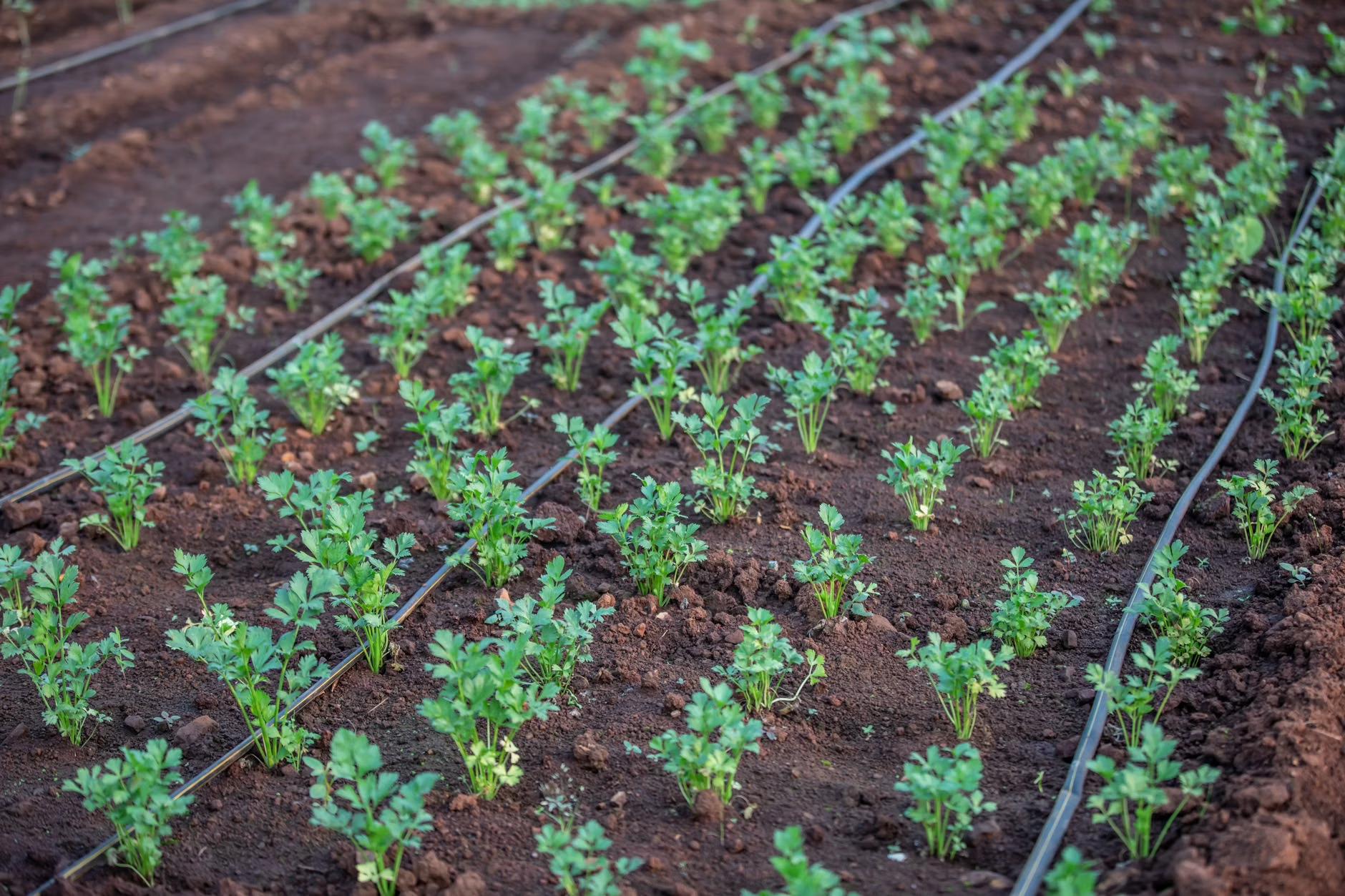
For vegetable gardens and flower beds, overhead sprinklers are often inefficient. They lose a lot of water to evaporation and can encourage fungal growth by wetting the leaves. The gold standard is to combine a smart controller with a drip irrigation kit. This involves running small, flexible tubes to the base of each plant. It delivers water exactly where it’s needed, at the root level, at a slow, steady rate. It’s the most efficient way to grow food.
Common Pitfalls: What to Watch Out For
Even with the most advanced technology, mistakes can happen. Let’s look at the “gotchas” so you don’t have to learn them the hard way.
| Issue | The Reality | The Fix |
|---|---|---|
| Over-reliance on sensors | Sensors can fail or get blocked by debris, leading to “false dry” readings. | Perform a manual check once a month. Don’t rely 100% on the sensors. |
| The “Set and Forget” Trap | Plants have different needs as they grow from seedlings to mature plants. | Schedule a “seasonal check” in your calendar to adjust zones and run times. |
| Wi-Fi Connectivity | If your controller is in a garage with thick walls, the signal might drop. | Use a Wi-Fi range extender near your garage or external wall. |
Another common mistake is ignoring your local water restrictions. Just because your smart controller can water every day doesn’t mean it should. Always configure your controller to honor your local municipality’s watering days and times. Most smart apps have a “Restrictions” tab where you can input these rules, ensuring you stay compliant with local laws.
Integrating Smart Gardening into the Parenting Routine
Gardening can be a wonderful, grounding activity for children, but it often becomes a chore when it involves heavy lifting or constant maintenance. Smart irrigation actually makes it easier to involve the kids. Instead of them seeing you stressed out with a hose, they see a “high-tech” garden that functions on its own.
Use the app to show them the data. “Look, it’s going to be hot today, so the garden is going to give the plants a little extra drink.” It’s a great way to talk about biology, technology, and conservation without it feeling like a lecture. When the garden thrives with minimal intervention, it becomes a space for play and discovery rather than just another item on your to-do list.

Evaluating Your Needs: Is Now the Time?
Before you rush to purchase, ask yourself these three questions:
- How much time am I currently spending on maintenance? If the answer is “none because I stopped watering,” an automated system is the only way to get your garden back.
- Is my water usage high? If you live in an arid climate or have high water bills, the ROI (Return on Investment) on a smart controller can be realized in just a few months of reduced water bills.
- Do I have reliable Wi-Fi? If your home network is spotty, you might want to address that first, or look for a controller with a strong, dedicated antenna or a cellular backup option.
For most suburban homeowners, the transition to smart irrigation is one of the most rewarding home improvements you can make. It’s not just about the plants; it’s about reclaiming your weekend mornings. Instead of spending two hours moving sprinklers, you can use that time to enjoy coffee with your partner or play in the yard with your children.
Final Thoughts and Practical Cautions
Technology is a tool, not a cure-all. A smart controller cannot fix poor soil quality, improper plant selection for your climate, or a lack of mulch. If you plant a desert cactus in a swampy area, no amount of smart irrigation will save it. Always start with the fundamentals of good gardening: healthy soil, appropriate plant placement, and a layer of organic mulch to retain moisture.
As you move forward, remember that the goal is to make your life simpler. Don’t over-complicate the setup. Start with a reliable controller, set your zones, and monitor the results for the first few weeks. Adjust as necessary, and then let the system do its work. Your garden should be a place of restoration, not a source of stress.
By delegating the technical task of hydration to a smart system, you aren’t removing yourself from the gardening process; you are removing the barriers that prevent you from enjoying the harvest, the flowers, and the quiet moments of nature in your own backyard.
For more information on water conservation and irrigation standards, you can refer to the EPA WaterSense program, which offers excellent guidelines on efficient water use in residential landscapes.
Frequently Asked Questions
- Do I need to hire a professional to install a smart irrigation system?
Not necessarily. If you are replacing an existing controller, it is usually a DIY-friendly task involving basic wiring. However, if you are installing a brand-new system with underground piping and drip lines, hiring a professional is recommended to ensure proper pressure and zone coverage. - What happens if the power or internet goes out?
Most smart controllers have internal memory. If they lose Wi-Fi, they will continue to run their last saved schedule. If they lose power, they will simply pause and resume once power is restored, ensuring you don’t lose your settings. - Are these systems compatible with all types of plants?
Yes, but you must configure them correctly. You should group plants with similar water needs into the same “zone.” For example, put your thirsty vegetables in one zone and your drought-tolerant shrubs in another. This allows the controller to provide the right amount of water to each group.
Disclaimer: This article is for informational purposes and is based on general best practices for home gardening. Always consult local regulations and specific product manuals before installation.