The smartest way to experience a high-end mountain resort without the crushing crowds or the premium price tag is to embrace the “shoulder season”—the quiet, often overlooked months between the peak winter ski season and the busy summer hiking period.
Key Takeaways
- Financial Relief: Off-season rates can be 40% to 60% lower than peak season, allowing for luxury stays on a mid-range budget.
- Reduced Stress: Fewer tourists mean no waiting in lines for dining, spa services, or resort activities, making the trip significantly more relaxing for parents.
- Authentic Exploration: Without the frantic pace of peak season, you can engage more deeply with the local culture, hiking trails, and regional dining spots.
If you are a parent in your 30s or 40s, you know the specific brand of exhaustion that comes with planning a family vacation. You spend months saving, only to arrive at a destination where you spend half your time waiting in lines or navigating crowds that feel just as chaotic as the morning school drop-off. We often fall into the trap of thinking that “peak season” is the only time a destination is “open” or “worth visiting,” but that is a marketing myth designed to keep prices high.
The Physics of Off-Season Travel: Why It Actually Works
When we talk about the “off-season” or “shoulder season,” we are referring to the weeks when the snow has melted but the summer heat hasn’t quite arrived, or the cool autumn period after the summer crowds have dissipated. For mountain resorts, this usually falls in May/June and October/November. During these windows, the resort isn’t “closed”—it’s simply recalibrating.
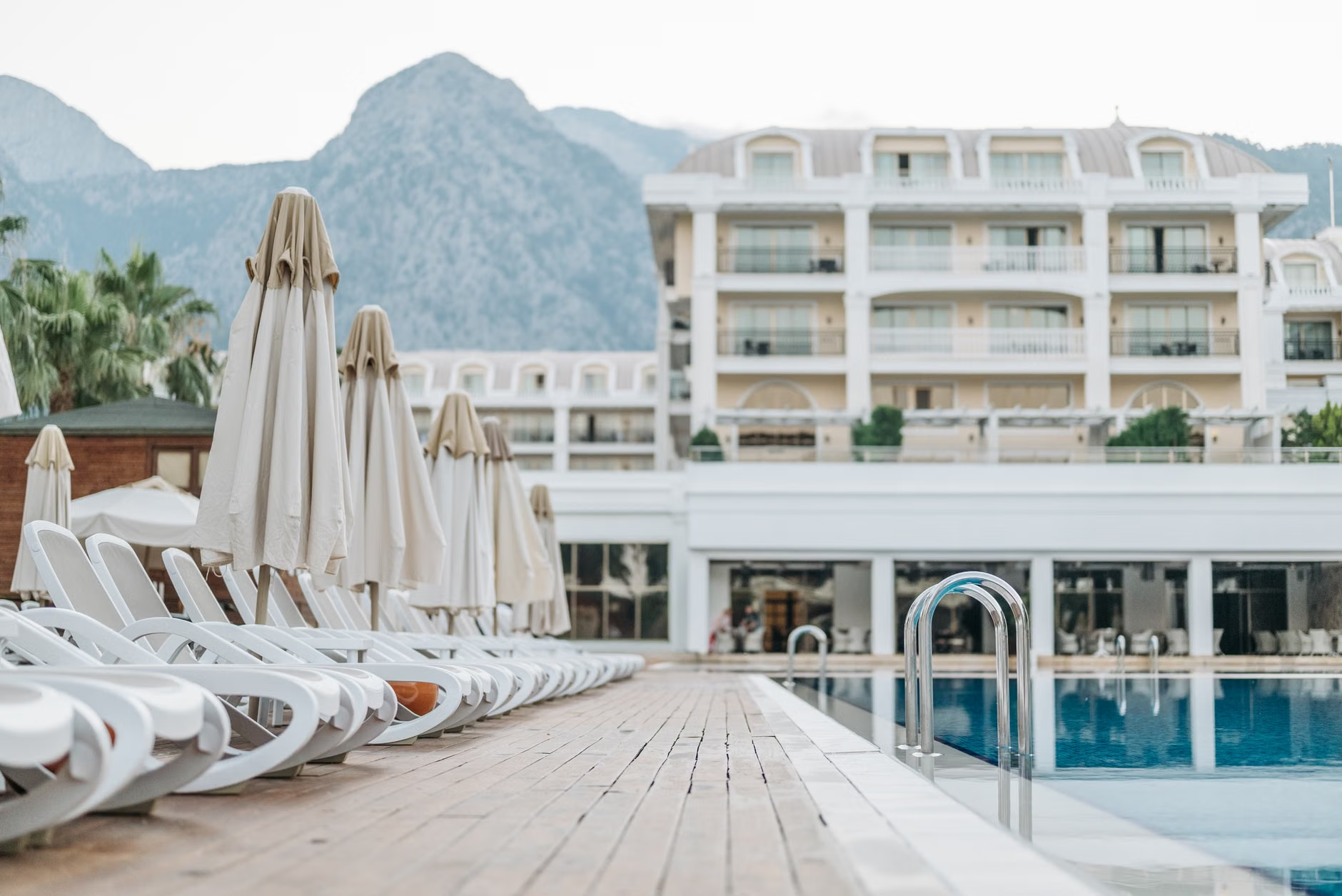
Most parents worry that if the ski lifts aren’t running or the high-altitude trails are still muddy, there will be “nothing to do.” In reality, this is when the resort becomes a private playground. The staff-to-guest ratio is at its best. If you have a question at the front desk, you get an answer instantly. If your child has a dietary restriction, the kitchen staff has the time to accommodate it properly. You are not just another room number; you are a guest.
Furthermore, the cost-benefit analysis is overwhelming. A room that costs $600 a night in February might drop to $220 in May. That price difference isn’t just “savings”—it’s the ability to upgrade your experience. You can move from a standard hotel room to a suite with a kitchen, which, as any parent knows, is the difference between a relaxing trip and a constant battle to find snacks for hungry kids.
Rethinking the “Activity Gap”
The biggest hurdle to off-season travel is the fear of boredom. We are conditioned to believe that a mountain resort needs a specific “hook”—skiing, mountain biking, or lake swimming. However, the true value of a mountain getaway is the environment itself. When the pressure to “do” the activities is removed, you are left with the luxury of time.
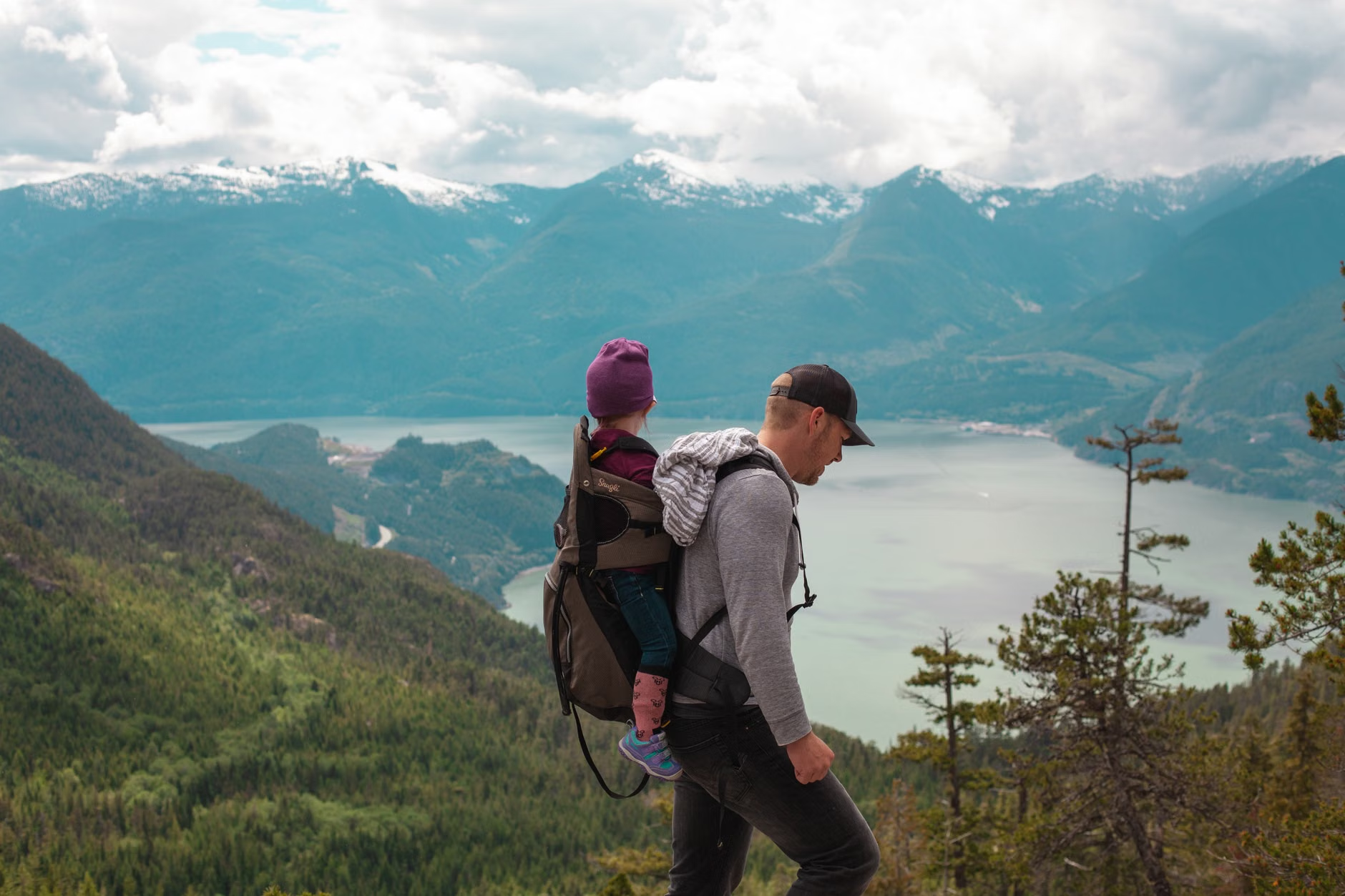
Instead of waking up at 7:00 AM to beat the lift lines, you can actually sleep in. You can take a slow breakfast. You can spend the afternoon on a nature walk where you aren’t dodging mountain bikers or other hikers. For young children, the woods are a sensory playground; they don’t need a theme park to be entertained. They need sticks, rocks, and the freedom to run without you worrying about them colliding with a fast-moving skier.
To make the most of this, you need to shift your mindset. Treat the resort as your basecamp rather than a service provider. Use the downtime to teach your children about local geography, flora, and fauna. Most mountain resorts have visitor centers or local naturalists who are much more accessible during the off-season. You might find that a private tour is actually possible during these quiet weeks, whereas it would be booked out months in advance during peak season.
Planning Your Off-Season Escape: A Practical Framework
If you are ready to pivot to off-season travel, you need a different planning strategy than your usual booking method. Because these are “shoulder” periods, some amenities—like specific restaurants or high-altitude gondolas—might have limited hours. This is not a deterrent; it is a filter.
Step 1: The “Operational Audit”
Before you book, call the resort directly. Don’t rely on the website’s generic “amenities” page, which is often outdated. Ask specific questions: “Which dining outlets will be open during our stay?” and “Are there any planned facility maintenance closures?” This simple phone call prevents the “arriving to a closed pool” nightmare.
Step 2: The Gear Check
The weather in the mountains during the off-season is unpredictable. It can be 20°C (68°F) in the sun and 5°C (41°F) in the shade. The secret to a successful trip is the “layering protocol.” Bring waterproof boots, lightweight jackets, and enough warm socks. If you are prepared for the elements, the weather becomes part of the adventure rather than a disruption.
Step 3: The Self-Catering Hedge
Even if you plan to eat out, assume that some resort restaurants might close early. Bringing a small stash of “emergency” groceries—oatmeal, fruit, healthy snacks, and perhaps a few easy lunch options—is a pro move. It removes the stress of having to find a meal at 8:00 PM when the kids are cranky and the only restaurant within ten miles is closed for the season.
| Category | Peak Season | Off-Season |
|---|---|---|
| Cost | High (Premium rates) | Low (Discounted rates) |
| Crowd Density | High (Wait times) | Low (Privacy) |
| Staff Attention | Limited (Busy staff) | High (Personalized service) |
| Flexibility | Rigid schedules | High spontaneity |
Mitigating the Risks of “Quiet” Travel
While I advocate for off-season travel, I’m not suggesting it’s without its quirks. You have to be comfortable with a certain level of isolation. If your family thrives on the “buzz” of a crowded resort, the off-season might feel too quiet. You need to be the architect of your own entertainment.
Common mistakes parents make include over-scheduling the trip. They try to replicate a peak-season itinerary during the off-season, which leads to frustration when a specific shop or trail is closed. Instead, build your schedule around the “Big Three”: one morning activity, one afternoon relaxation period, and one reliable local dining spot. Everything else is a bonus.
Another caution: check the local “mud season” conditions if you are heading to high altitudes. In many mountainous regions, the ground is soft and trails can be dangerous or closed for conservation. Always check the official regional park authority websites before heading out. They provide real-time data that is far more accurate than third-party travel blogs.
The Psychological Reset
For parents in their 30s and 40s, the mental load is often the biggest drain. We are managing work, household logistics, and the emotional needs of our children. A vacation should be a break from that load, not an extension of it. The off-season resort experience offers a “low-stimulus” environment.
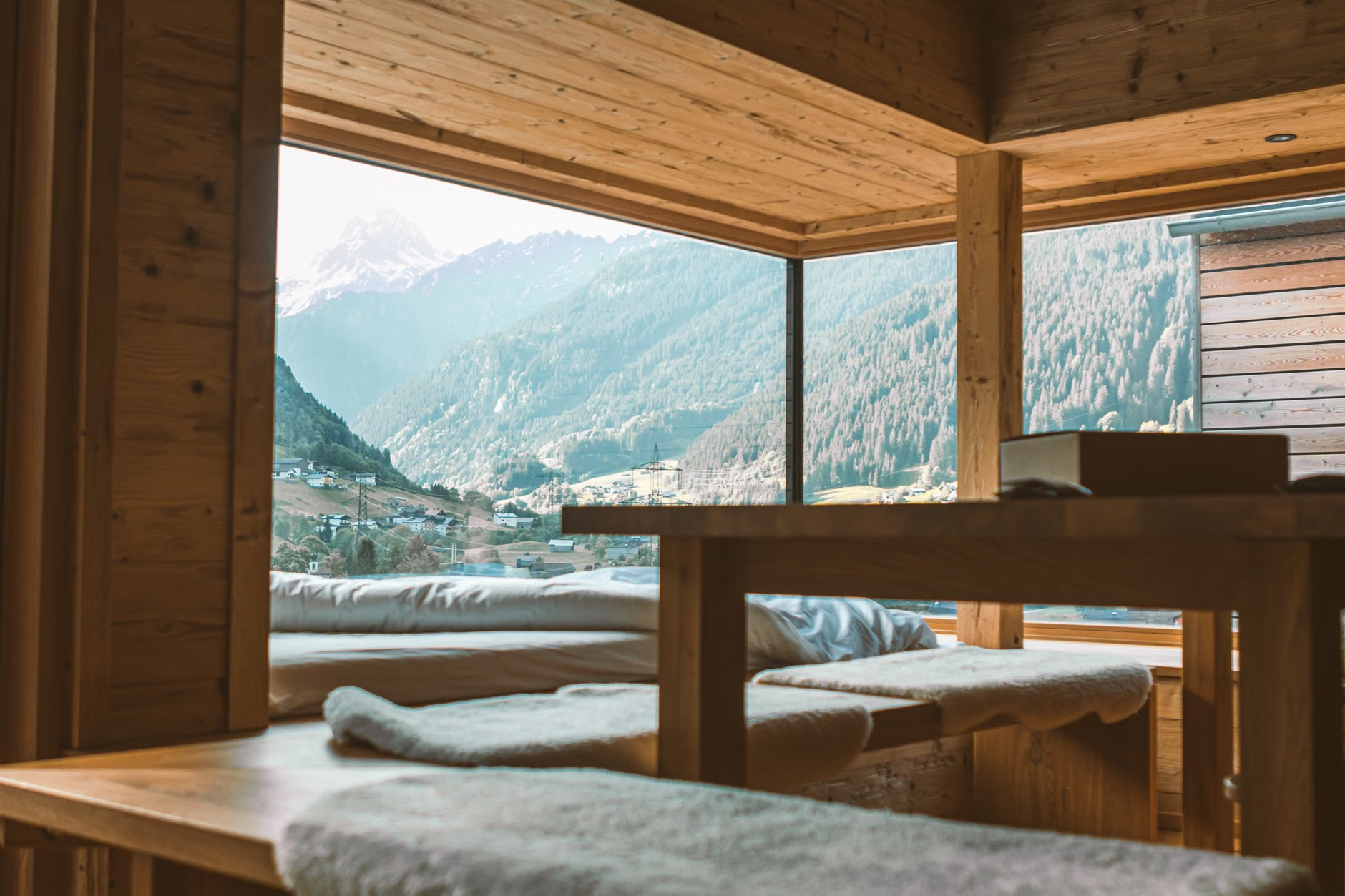
In a world of constant notifications, loud music, and frantic scheduling, the quiet of a mountain resort in the off-season is a genuine luxury. It allows for the kind of “slow parenting” that is nearly impossible at home. You can sit on a balcony, watch the clouds move over the peaks, and actually hear your own thoughts. Your children, in turn, often become more observant and creative when they aren’t being ushered from one pre-packaged activity to the next.
How to Choose the Right Destination
Not all mountain resorts are created equal for off-season travel. Look for resorts that are “year-round” communities rather than “ski-only” villages. A mountain town that has a permanent local population will have open grocery stores, cafes, and community centers even when the tourism is low. A purpose-built ski resort that shuts down entirely when the snow melts is a different story.
Use platforms like National Park Service (for US-based trips) or local tourism board websites to verify which areas remain accessible. Look for regions that have secondary attractions—like hot springs, historical towns, or local craft industries—that don’t depend on the weather.
The goal is to find a place that is “lived in” rather than “staged.” When you visit a place where people actually live, you get a much more authentic experience. You might find a local bakery that is the best in the region, or a small museum that you would have completely ignored during a busy ski trip. These are the memories that stick, not the time you spent waiting for a chairlift.
Final Thoughts for the Savvy Traveler
Choosing to travel during the off-season is a deliberate act of choosing quality over quantity. It’s an admission that you don’t need a high-octane itinerary to have a successful family vacation. It’s about recognizing that the best luxury is often just space, silence, and the ability to set your own pace.
Start small. Try a two-night trip to a nearby mountain resort during a quiet week. You might be surprised at how much more rested you feel when you aren’t fighting the crowds. You might find that your kids enjoy the freedom of the outdoors more than any organized activity. And, most importantly, you’ll find that your budget stretches much further, allowing you to focus on the things that actually matter: spending time with your family in a beautiful place, without the pressure of the peak-season rush.
Travel is often marketed as a high-stakes performance. It doesn’t have to be. Sometimes, the most memorable trips are the ones where you did very little, spent less, and simply enjoyed the quiet company of the people you love.
Frequently Asked Questions
Are all resort facilities guaranteed to be open during the off-season?
No. It is common for specific amenities like kids’ clubs, spa treatments, or certain dining outlets to operate on reduced schedules or close entirely for maintenance. Always call the resort front desk directly two weeks before your arrival to get an accurate, up-to-date schedule of what will be available during your stay.
Is the off-season weather too unpredictable for kids?
It can be, but it is manageable with the right gear. The key is to dress in layers—base layers, a fleece, and a waterproof shell. Avoid the “all or nothing” approach to outdoor time. If the weather turns, head to a local library, a museum, or enjoy the resort’s indoor amenities. Being flexible is part of the off-season strategy.
How do I find out if a mountain town is a “year-round” community?
Check the town’s local Chamber of Commerce or municipal website. Look for details on local schools, year-round grocery stores, and community events. If a town has a permanent school district and regular local government services, it is likely a year-round community that remains vibrant even when the primary tourist season concludes.
Disclaimer: This article provides general travel advice. Always check official local government and resort websites for the most current information regarding closures, safety regulations, and weather-related travel advisories before finalizing your plans.