The most effective way to secure an affordable solo retreat as a parent is to prioritize off-season travel and leverage “slow travel” tactics, which shift the focus from expensive tourist hubs to quiet, cost-effective local gems.
Key Takeaways:
- Timing is everything: Traveling during shoulder seasons (the periods between peak and off-peak) can reduce accommodation costs by up to 40%.
- Micro-trips over marathons: Shorter, closer-to-home retreats are often more sustainable for both your budget and your parental workload.
- Strategic flexibility: Using tools like Google Flights’ “Explore” feature and booking mid-week stays can significantly lower your total trip expenditure.
If you are a parent in your 30s or 40s, you likely know the feeling of “mental clutter”—that persistent hum of to-do lists, school schedules, and household management that never quite turns off. The idea of a solo retreat sounds like a dream, but it is often buried under the weight of two specific hurdles: the guilt of leaving and the fear of the price tag. Let’s be real: after paying for childcare, groceries, and the endless stream of “hidden” family expenses, a solo trip can feel like a luxury you cannot justify.
However, solo travel isn’t just about indulgence; it is a vital reset button. Research consistently suggests that short periods of solitude can improve emotional regulation and patience, which directly benefits your family life when you return. The trick is to stop viewing travel as a “vacation” that requires a massive budget and start viewing it as a “retreat” that requires strategy.
Redefining the “Retreat”: Why Small is Better
Many of us fall into the trap of thinking a retreat needs to be a week-long excursion to a remote island. This mindset is a budget-killer. When you are a busy parent, the time you have is limited, and that is actually a financial advantage. By shrinking your travel window to a 48-hour or 72-hour period, you immediately eliminate the need for expensive airfare or long-haul logistics.
Consider the “Staycation-Plus” model. Instead of flying across the country, look for a quiet cabin, a boutique hotel, or a rural guesthouse within a three-hour drive of your home. By staying local, you cut out the most volatile expense: transit. You also save precious time. If you only have two days away, you don’t want to spend 12 of those hours in airports or highway traffic.
When searching for these spots, look for “mid-week” deals. Most hotels and vacation rentals see a massive drop in occupancy from Tuesday to Thursday. If you can negotiate a mid-week break, you are not just getting a better rate; you are often getting a better experience. You will find quieter trails, shorter wait times at local cafes, and a much more peaceful atmosphere than the weekend crowd provides.

The Art of the Shoulder Season
If you absolutely must travel further afield, the “shoulder season” is your best friend. This refers to the time right before or right after the peak tourism months. For many regions, this is May-June or September-October. During these times, the weather is usually still pleasant, but the prices for accommodation and car rentals plummet because the primary family-travel demographic has either returned to work or is not yet on summer break.
Here is a breakdown of how to maximize shoulder-season savings:
| Strategy | Benefit | Action Item |
|---|---|---|
| Mid-week Booking | Lower rates, less noise | Check rates for Tue-Thu |
| Flight Alerts | Catch price drops early | Set Google Flights alerts |
| Self-Catering | Saves on dining costs | Book a place with a kitchenette |
One common mistake is searching for flights by specific dates. Instead, use the “flexible dates” calendar on travel aggregators. By shifting your departure by just one or two days, you can often find a fare that is significantly cheaper. If you are flexible with your destination, use the “Anywhere” search tool to see which locations are currently at a price floor.
Choosing the Right Accommodation for Solitude
When you are traveling solo to recharge, the environment is everything. You don’t need a resort with a kids’ club or a bustling city center with high-priced tourist traps. You need a space that facilitates rest. This is where you can save a lot of money by being selective.
Look for “Work-from-Anywhere” friendly rentals. Many hosts now offer discounts for stays longer than two days, and these properties are often equipped with decent Wi-Fi and comfortable seating, which is perfect if you want to spend a quiet morning reading or catching up on personal projects. Avoid properties that charge high “cleaning fees” for short stays; these can often make a one-night trip more expensive than a three-night trip.
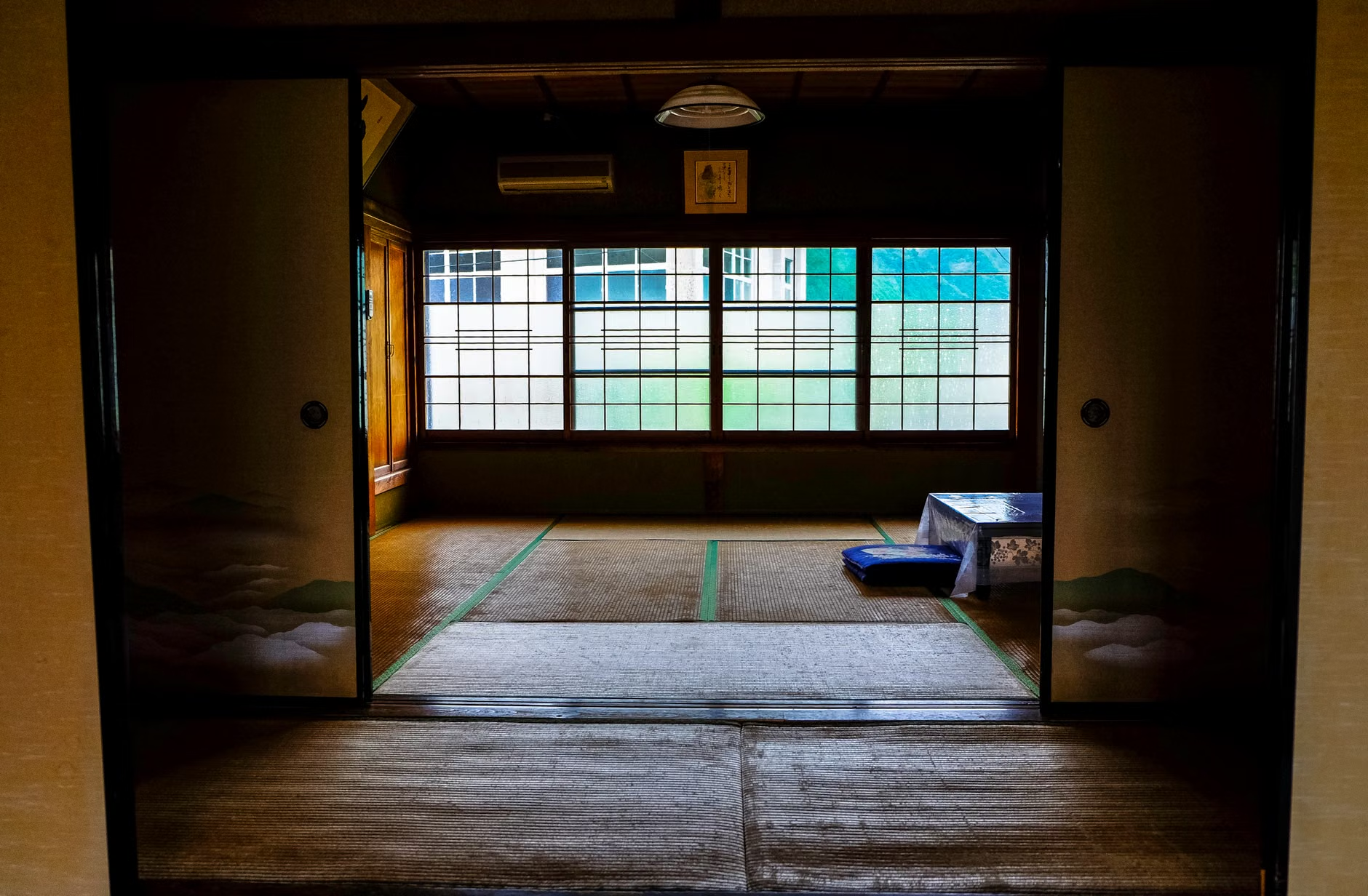
Another tip: check local university guesthouses or monastery retreats. These are often overlooked by the general public but provide safe, clean, and incredibly quiet rooms at a fraction of the cost of a standard hotel. They aren’t going to have 5-star amenities, but if your goal is quiet and solitude, they are often superior.
Managing the “Hidden” Costs of Solo Travel
Even with a cheap flight and a budget room, costs can spiral if you aren’t careful. The biggest culprit is food. When traveling alone, it is incredibly tempting to eat out for every meal. This is not only expensive but can also be exhausting, as you are constantly navigating menus and service wait times.
Try the “Grocery Store Strategy.” When you arrive at your destination, stop at a local supermarket. Pick up simple items like fruit, high-quality bread, cheese, or local snacks. If you have a kitchenette, you can prepare a simple breakfast or a light dinner. This allows you to splurge on one really nice meal out per day without feeling like you are overspending on every single bite.
Also, consider your transportation once you arrive. Do you really need a rental car? In many mid-sized cities or rural areas, a rental car plus parking fees can eat up 30% of your total budget. Look for locations that are walkable or have reliable public transit. If you are staying in a rural area, calculate the cost of a ride-share or taxi for the one or two trips you actually need to make, and compare that to the daily rate of renting a vehicle.
The Psychology of the Break: Why You Need This
It is easy to label a solo retreat as “selfish,” but let’s reframe that. You are the engine of your household. If the engine overheats, the whole car stops. A solo retreat is preventive maintenance. When you are away, you are not just “not parenting”; you are recalibrating your identity as an individual outside of your role as a caregiver.
This is why the “retreat” aspect is so important. Don’t fill your itinerary with sightseeing. If you are constantly moving, you aren’t resting. Plan to do nothing for at least 50% of your time away. If you want to spend four hours sitting in a park reading a book, do it. If you want to sleep in until 10 AM, do it. The lack of a schedule is the greatest luxury you can afford.

Common Pitfalls and How to Avoid Them
One of the biggest mistakes parents make is over-planning. You are used to managing a family schedule where every minute is accounted for. When you go solo, you might feel the urge to “make the most of it” by packing in activities. This is a trap. You will return home more tired than when you left. Instead, pick one “anchor activity”—perhaps a museum visit, a hike, or a long lunch—and leave the rest of the time entirely open.
Another pitfall is communication. If you are constantly checking in with home, you aren’t really away. Set a “check-in” schedule with your partner or family. For example, agree to a text check-in at 8 PM, and keep your phone on “Do Not Disturb” for the rest of the time. This helps you mentally disconnect and fully engage in your own space.
Finally, avoid the “comparison trap.” You might see friends on social media taking luxury vacations to exotic locations. Remember that their social media feed is not their bank account or their reality. Your retreat is not about the destination; it is about the internal space you create for yourself. A weekend in a quiet town three hours away can be just as restorative as a week in a foreign country.
Planning Your First Retreat: A Practical Checklist
If you are ready to plan your first solo retreat, follow this simple workflow to keep costs down and stress levels low:
- Set your “Absolute Max” budget: Be honest about what you can spend without feeling guilty. This number will dictate your destination.
- Pick a date 6 weeks out: Booking too far in advance can lead to cancellation anxiety, while last-minute booking is rarely budget-friendly. Six weeks is the “sweet spot” for many travel deals.
- Choose a “Low-Friction” destination: If you have to spend more than 4 hours traveling, you are likely over-committing for a short retreat.
- Book one “Anchor”: Book your accommodation and one activity. That is your baseline. Everything else is a bonus.
- Communicate clearly: Ensure your family knows you are unavailable during this time. This is key to your peace of mind.
Reframing the Cost as an Investment
If you are still struggling with the cost, look at your monthly expenses. Is there a subscription you don’t use? A habit you can pause for a month? Often, the money for a modest retreat is hidden in the “convenience” spending we do during the week—the extra takeout, the impulse buys, the streaming services we forget to cancel. Redirecting those small, invisible costs toward a dedicated travel fund can pay for a weekend away without actually changing your monthly bottom line.
Ultimately, a solo retreat is not just about the destination; it is about the permission to be yourself. When you return home, you will likely find that the same challenges remain, but your capacity to handle them has shifted. You will be more patient, more focused, and perhaps a bit more “you.” That is the real value of the trip.
Remember that this is a practice. Your first solo trip might feel awkward or even a little lonely at first. That is normal. The first time you sit in a café alone without checking your phone or worrying about a school pickup, it might feel strange. Embrace that discomfort. It is the sound of your own mind finally having the room to think.
Frequently Asked Questions
1. How do I deal with the “parental guilt” of taking a solo trip?
It helps to view your trip as an investment in your family. When you are burned out, your capacity for patience and engagement drops. By taking time to reset, you are ensuring that you can be the best version of yourself for your children. Remind yourself that you are not abandoning your family; you are recharging so you can return to them with more energy and perspective.
2. What is the best way to find truly affordable accommodation?
Beyond standard booking sites, look at platforms that specialize in unique, smaller stays. Websites like Hipcamp for rural retreats or local tourism board websites often list smaller, independent guesthouses that don’t pay the high commissions of major travel aggregators. Also, consider booking directly with the property, as they can often offer a better rate if they don’t have to pay a platform fee.
3. How long should a solo retreat for a busy parent actually be?
For your first trip, 48 hours is the perfect duration. It is long enough to fully decompress and get a sense of “being away,” but short enough that the logistics are manageable and the cost is contained. Once you are comfortable with the process, you can extend your trips, but starting small is the best way to ensure you actually go through with it.
For further research on budget travel trends and planning tools, visit Google Travel or consult Lonely Planet’s guides for tips on off-season travel destinations. Always check local travel advisories and health guidelines before booking.