Key Takeaways:
- Mandatory Removal: As of 2026, all lithium-ion power banks must be removable and carried in the cabin, regardless of suitcase size.
- Safety Standards: New global aviation standards require smart-luggage batteries to pass specific thermal runaway testing (UN 38.3 certification).
- Proactive Planning: Always check your airline’s specific policy 48 hours before departure, as individual carrier rules can be stricter than general aviation guidelines.
If you have spent the last few years relying on that “smart” suitcase with the built-in USB charger to keep your phone alive while wrangling kids at the gate, it is time for a quick reality check. The 2026 updates to international aviation security protocols have officially tightened the rules regarding lithium-ion batteries in checked baggage, and “smart” doesn’t automatically mean “permitted” anymore.
We have all been there—standing at the check-in desk, realizing that our convenient tech-integrated luggage is suddenly a liability. For those of us in our 30s and 40s balancing work, kids, and the occasional desperate need for a vacation, the last thing we need is to be forced to unpack our entire life at the curb because of a non-compliant battery. Let’s break down exactly what has changed, why it matters, and how you can keep your travel stress-free this year.
Understanding the 2026 Regulatory Landscape
The aviation industry has been moving toward stricter battery safety for years, but 2026 marks a turning point where global harmonization has finally caught up with consumer tech. The core issue is simple: lithium-ion batteries are energy-dense. While they are great for charging tablets during a long flight, they pose a significant fire risk if they are damaged or short-circuited in the cargo hold of an aircraft where they cannot be monitored.
In the past, there was a “gray area” where some smart bags with permanently installed batteries were allowed if they met certain power thresholds. That era is effectively over. The new 2026 security update mandates that if a battery cannot be removed, the entire bag is effectively prohibited from the cargo hold. This isn’t just a suggestion; it is a safety mandate enforced by major international aviation authorities to prevent thermal runaway incidents in the belly of the plane.
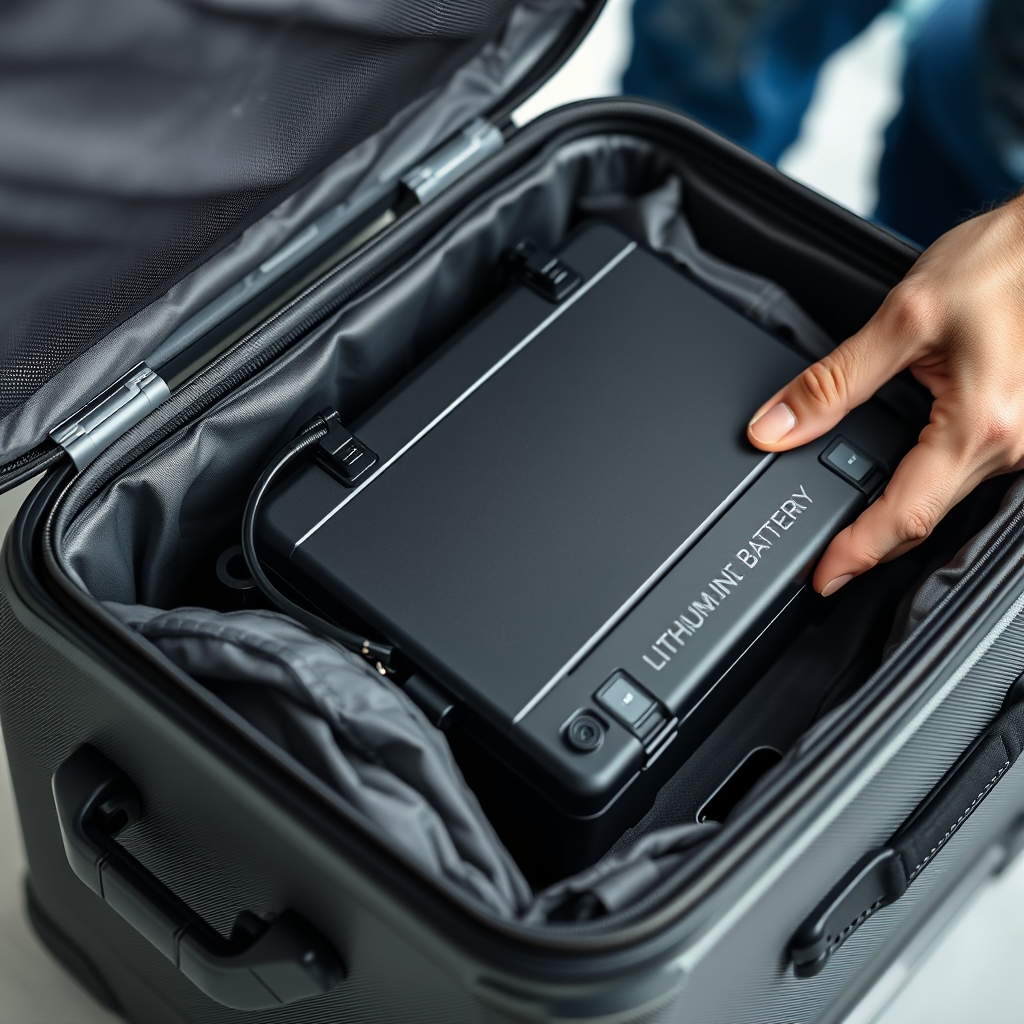
Think of it like the transition we saw with portable power banks a few years ago. We learned the hard way that those large, high-capacity bricks belong in your carry-on bag, not your checked luggage. Your smart suitcase is now subject to the exact same logic. If your bag has a battery that powers wheels, GPS tracking, or a built-in scale, that battery must be accessible and removable by the passenger.
Why Your “Smart” Features Might Be a Security Trap
It is easy to see why we fell in love with these bags. Built-in scales save us from those awkward moments at the check-in counter, and GPS trackers provide peace of mind when the airline loses our gear. However, the 2026 regulations focus heavily on the type of battery chemistry used in these integrated systems. The risk isn’t the bag itself; it’s the potential for the battery to ignite under pressure or temperature changes.
Most baggage handlers aren’t trained to dismantle your proprietary suitcase to remove a battery. If your bag is tagged for the hold and security finds an integrated battery that cannot be removed in under 30 seconds, they will either pull the bag from the flight or, in some cases, require you to surrender the bag entirely. This is a nightmare scenario when you are traveling with children and need that specific stroller or large suitcase to get through your vacation.
The “Removable” Requirement
The golden rule for 2026 is: If it powers your bag, it must be removable. This means that before you hand your bag over to the airline representative, you should already have the battery in your hand or stored safely in your personal item. If your smart bag requires a specialized tool (like a screwdriver) to remove the battery, it is likely not compliant with the new safety standards for checked luggage.
GPS and Tracking Devices
Many of us use Bluetooth or cellular trackers to keep tabs on our luggage. These are generally fine, but the 2026 update differentiates between “active” high-power trackers and “passive” low-power ones. If your tracker has a massive, high-capacity battery designed to last for months, it might fall under the restricted category. Most consumer-grade trackers using CR2032 or similar coin-cell batteries are still perfectly safe and acceptable for checked luggage.
Practical Preparation Checklist for Families
Traveling with kids is already an exercise in logistics. Adding a security hurdle about luggage batteries feels like an unnecessary layer of complexity. To avoid this, I have started using a simple pre-flight checklist. It takes about five minutes the night before we head to the airport, and it has saved me from at least two “unpleasant conversations” with gate agents over the last year.
| Checklist Item | Action Required |
|---|---|
| Battery Access | Ensure the power bank is accessible without tools. |
| Capacity Check | Verify the battery is under 100Wh (Watt-hours). |
| Power Off | Ensure all smart features are fully powered down. |
| Carry-on Slot | Designate a specific pocket for the battery in your carry-on. |
If you are traveling as a family, the biggest mistake is keeping all your tech in one bag. If that one bag gets flagged for a random security check, you are suddenly without your power banks, your tablets, and your peace of mind. Distribute your devices. Keep the kids’ tablets in your personal item, and keep your power banks in a separate, easy-to-reach pouch.
What to Do If You Are Flagged at Security
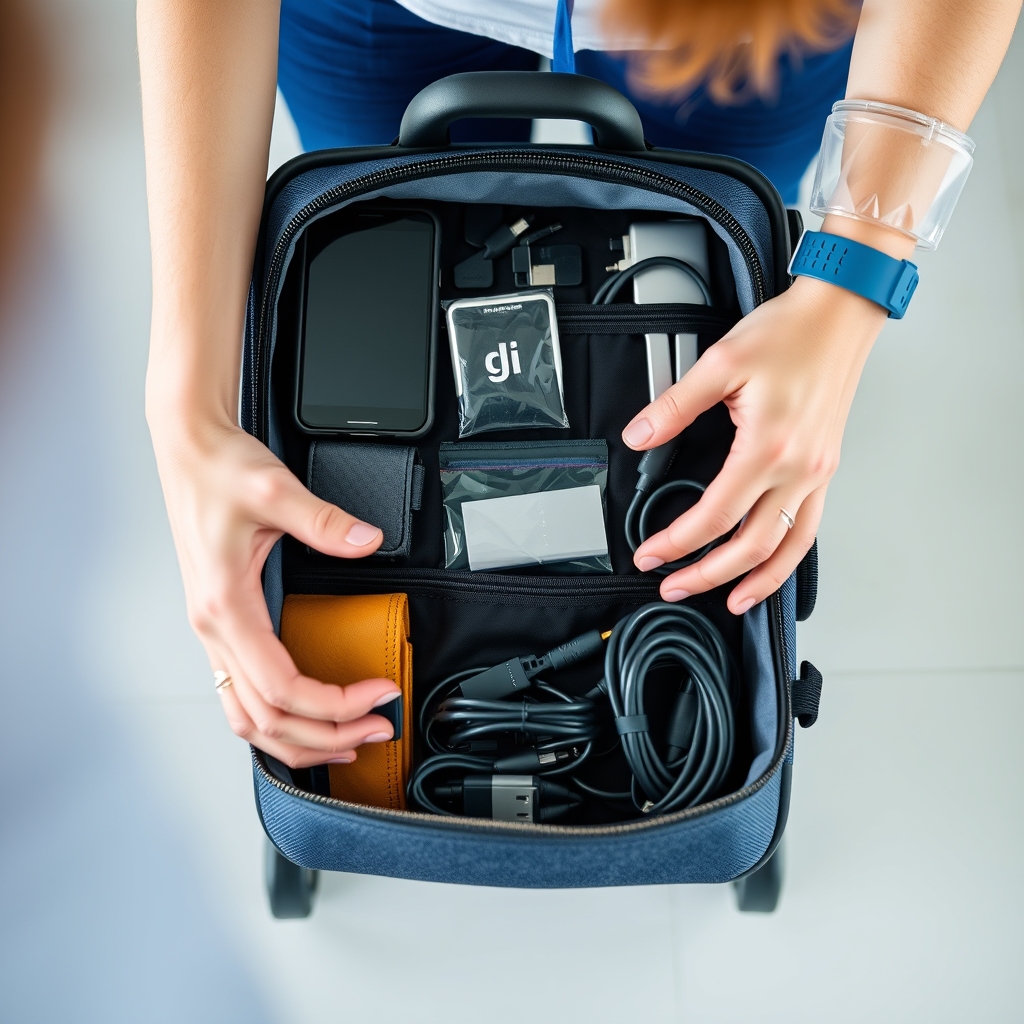
Let’s be realistic: even if you do everything right, you might still get flagged. Security scanners are sensitive, and sometimes a dense collection of electronics in your carry-on can look like a “cluttered” image that requires a manual search. If this happens, don’t panic. The key is transparency and speed.
When the security officer asks to open your bag, calmly tell them, “I have a removable power bank for my smart luggage in this pocket.” By proactively identifying the item, you show that you are aware of the regulations and are cooperating. This often changes the tone of the interaction from “investigatory” to “routine.”
If they tell you that your bag is non-compliant, ask if there is a way to remove the battery on the spot. If the answer is no, you have to weigh your options. Is the bag worth more than the cost of a last-minute replacement? Can you check the bag as a carry-on (if size permits)? These are tough calls, but having a backup plan—like a standard, non-smart suitcase—is the best insurance policy for frequent flyers.
The Evolution of “Smart” Tech
Looking ahead, we are seeing a shift in how manufacturers design these bags. We are seeing more “modular” designs where the battery is effectively a standard external power bank that happens to slide into a custom-fitted slot. This is the gold standard for 2026. If you are in the market for a new suitcase, look for these modular designs. They offer the convenience of a built-in charger without the security headache of a permanent, non-removable battery.
Also, keep in mind that airline regulations are not universal. While the IATA (International Air Transport Association) sets global guidelines, individual airlines have the right to be stricter. A budget carrier might have a different policy on lithium-ion batteries than a major flag carrier. Always, and I mean always, check the “Baggage” or “Dangerous Goods” section of your specific airline’s website 48 hours before you fly. Policies can change based on the region you are flying through, especially if you have a connection in a country with particularly stringent security protocols.
Common Misconceptions About Luggage Security
One of the most persistent myths I hear at the airport is that “if it fit on the way there, it’s fine to fly back.” This is dangerous thinking. International flights often have different security standards than domestic ones. If you are flying back from a destination with different regulations, what worked on your outbound flight might be confiscated on your return. Treat every flight as a new, independent event.
Another misconception is that “smart” luggage is banned entirely. It is not. The technology itself is fine; it is the energy storage that is the problem. You can still use your smart bag for the train, the bus, or the car. You just have to be mindful of its status when it enters the belly of an aircraft. If you are a parent, think of your smart bag like a toy that requires batteries—you wouldn’t leave the batteries in the toy if you were shipping it in a way that could cause it to accidentally turn on. Treat your bag with the same logic.
As we move further into the decade, technology will continue to integrate into our personal items. We will likely see more solar-integrated fabrics, advanced tracking, and perhaps even automated weight-sensing materials. These are exciting developments, but they all carry the same inherent risk: the need for power. The 2026 security update is not an attempt to stifle innovation; it is a necessary response to the reality of lithium-ion technology.
For those of us raising kids, the goal is always to reduce friction. We want to spend our time enjoying the trip, not arguing with a security agent about a suitcase battery. By staying informed, keeping our tech modular, and maintaining a proactive approach to packing, we can continue to enjoy the benefits of smart travel without the unnecessary stress.
Remember, the security officer’s job is to keep everyone on that plane safe. When we make their jobs easier, our travel experience becomes significantly smoother. Keep your batteries handy, keep your expectations realistic, and don’t let a small piece of tech ruin your family vacation.
Frequently Asked Questions
Can I leave my smart luggage battery in my checked bag if it is “turned off”?
No. Even if the device is powered off, the risk of accidental activation or a short circuit due to physical damage in the cargo hold remains. The 2026 regulations specifically require the battery to be removed and carried in the cabin, regardless of whether the device is on or off.
Does this rule apply to all airlines worldwide?
Most major international airlines follow the IATA guidelines, which mandate the removal of lithium batteries from checked bags. However, some regional carriers or specific countries may have more stringent rules. Always check the specific “Dangerous Goods” policy on your airline’s website before you head to the airport.
What should I do if my smart luggage battery is integrated and impossible to remove?
If your bag has a non-removable battery, it is unfortunately not suitable for checked travel on most commercial flights. You should either use it as a carry-on (if it meets size and weight requirements) or consider using a different, standard suitcase for your trip to avoid having your bag confiscated or denied boarding at the gate.
For further reading on international aviation safety and battery regulations, you can refer to the official IATA Lithium Battery Guidance and your local civil aviation authority’s guidelines. Safe travels!