The secret to ending those chaotic afternoon meltdowns isn’t necessarily better discipline or stricter rules; it’s about recognizing that your child’s nervous system is likely running on empty by the time they walk through the door.
- Sensory regulation is physiological: Afternoon meltdowns are often a physical response to sensory overload during the school day, not just “naughty” behavior.
- “Heavy work” is your best friend: Incorporating proprioceptive activities—tasks that provide deep pressure—can help ground a dysregulated nervous system quickly.
- Customization is key: A sensory diet is not a one-size-fits-all plan; it requires observing whether your child needs more stimulation (alerting) or less stimulation (calming).
You know the drill. It’s 3:45 PM. You’ve picked up the kids, you’ve navigated the traffic, and you’ve just walked through the front door. Everything was fine five minutes ago, and then, suddenly, a minor disagreement over a snack or a missing shoe triggers a full-blown emotional collapse. If this sounds like a recurring scene in your household, you aren’t alone, and it’s likely not a character flaw in your child.
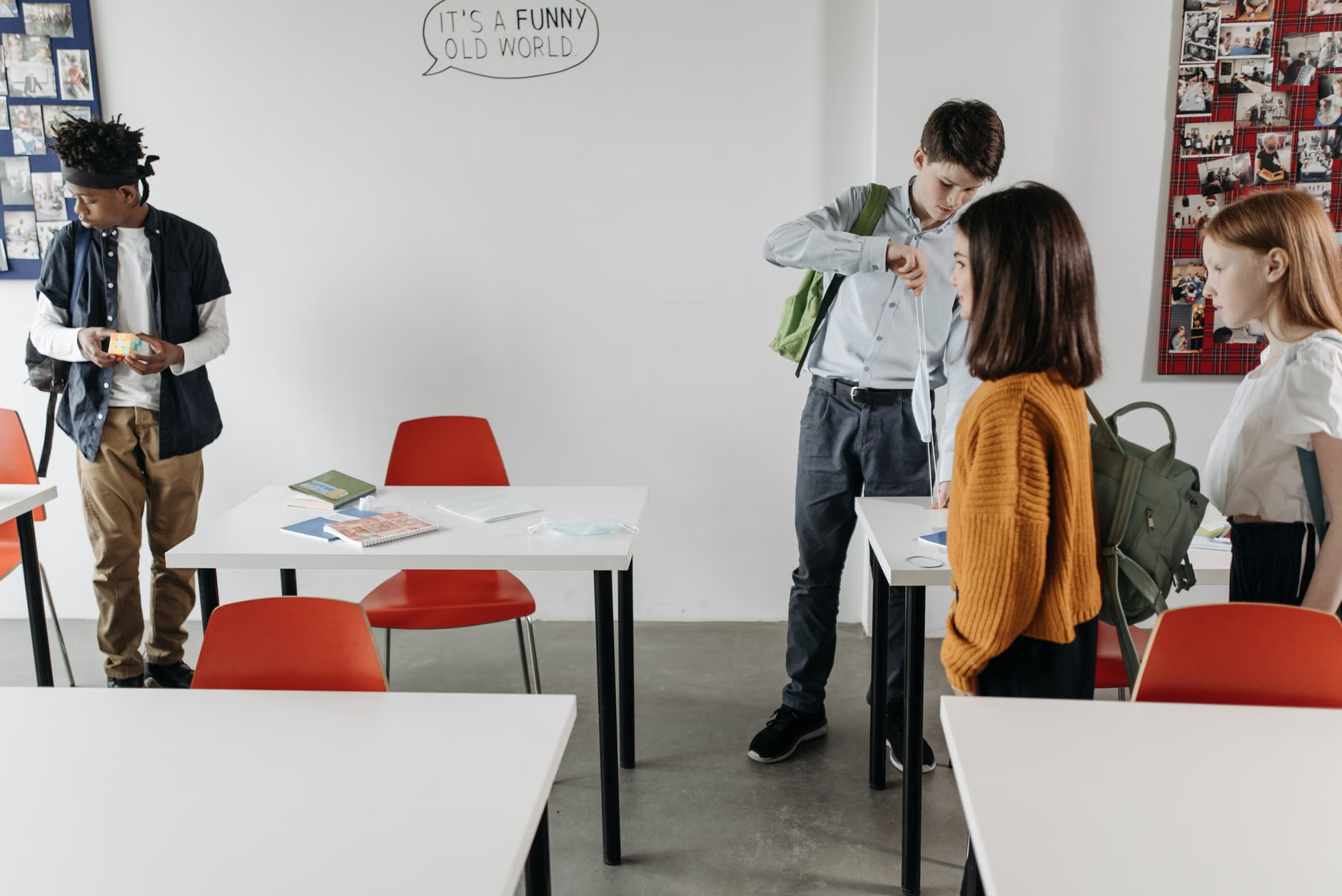
School is an incredibly demanding environment. For six or seven hours a day, children are expected to sit still, process complex instructions, navigate social hierarchies, and manage their own behavior in a room full of noise, flickering lights, and constant movement. By the time they reach home, their “sensory battery” is often completely drained. What we call a “meltdown” is often just the sound of a nervous system hitting a hard reset.
What Exactly Is a ‘Sensory Diet’?
The term “sensory diet” sounds like a wellness trend, but it’s actually a clinical concept rooted in occupational therapy. Despite the name, it has nothing to do with food. Think of it as a scheduled “menu” of sensory inputs—activities and experiences—that your child needs throughout the day to stay regulated, focused, and calm.
Just as our bodies need a balance of proteins, fats, and carbohydrates to function, our nervous systems need a balance of sensory inputs. Some children are “sensory seekers,” meaning they need more intense input to feel grounded. Others are “sensory avoiders,” meaning they get overwhelmed by too much noise, light, or touch. Most kids fall somewhere in the middle, but they all need a baseline of stability.
When we talk about a sensory diet for after-school, we are essentially building a bridge between the chaos of the school environment and the safety of home. It’s a proactive strategy, not a reactive one. By providing the right “nutrients” for their nervous system right when they get home, you can often bypass the meltdown entirely.
The Science of the Overloaded Nervous System
To understand why this happens, we have to look at the brain’s processing. Children, especially those in elementary school, are still developing their executive functions—the parts of the brain responsible for impulse control and emotional regulation. When they spend all day “holding it together” at school, they are essentially using up their entire reserve of cognitive energy.
Research into sensory processing suggests that for some children, the school environment is a constant barrage of low-level stressors: the hum of the fluorescent lights, the scratchy texture of a uniform, the unpredictable noise of the cafeteria. This leads to a state of chronic “fight or flight” activation. When they finally reach the perceived safety of home, the cortisol levels drop, and the dam breaks.
This is why the meltdown happens with you and not the teacher. You are their safe harbor. They feel comfortable enough to release the tension they’ve been carrying all day. While that’s a compliment to your parenting, it’s exhausting to deal with. Implementing a sensory diet helps them “offload” that tension in a controlled, healthy way before it turns into an explosion.
Identifying Your Child’s Sensory Profile
Before you start adding activities, you need to observe. Does your child come home and immediately seek out high-energy movement, like jumping on the couch or crashing into pillows? Or do they come home and hide in their bedroom, refusing to speak or turn on the lights? These are your clues.
| Profile Type | Common Behaviors | Goal of the Diet |
|---|---|---|
| The Seeker | Jumping, crashing, loud noises, fidgeting constantly. | Provide heavy, organized input to calm the system down. |
| The Avoider | Sensitive to light/sound, resists touch, hides in quiet spaces. | Reduce sensory input and provide a predictable, quiet environment. |
| The Low-Registrar | Seems “spaced out,” slow to react, needs high stimulation to engage. | Provide alerting input to help them connect with their surroundings. |
If your child is a seeker, they need “heavy work.” Think of heavy work as anything that provides deep pressure to the muscles and joints. This is the gold standard for nervous system regulation. If your child is an avoider, they need a “sensory retreat.” This is a space where they can control the variables—low light, minimal sound, and soft textures.
Practical ‘Heavy Work’ Ideas for Home
Heavy work is exactly what it sounds like: activities that require the muscles to work against resistance. This provides proprioceptive input—the sense of where our body is in space—which is inherently organizing and calming for the brain.
You don’t need expensive equipment for this. Your house is full of heavy-work opportunities. Here are some effective, low-prep ideas:
- The Grocery Carry: Let them carry the heaviest bag of groceries from the car to the kitchen. It’s functional, and the weight is naturally grounding.
- Wall Pushes: Have them stand facing a wall and push as hard as they can, as if they are trying to move the house. It’s a great way to release pent-up energy without causing damage.
- The Laundry Basket Drag: Put a few heavy books or toys in a laundry basket and have them push or pull it across the floor.
- Animal Walks: Crab walks, bear crawls, or “donkey kicks” are excellent for core strength and proprioception.
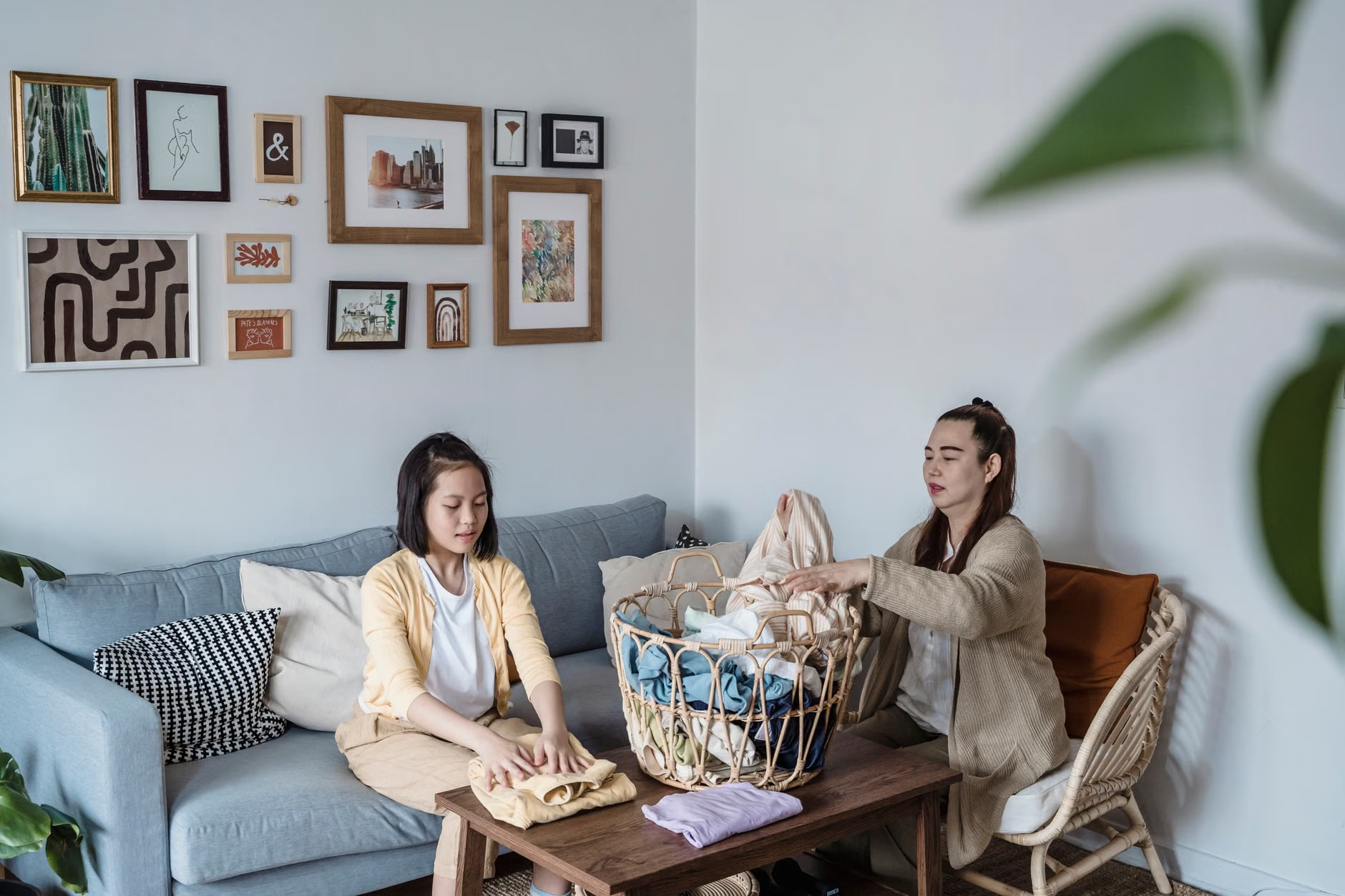
The key here is to incorporate these into the transition period. Don’t wait for the meltdown. As soon as they drop their backpack, suggest a “mission.” For example, “I really need help moving these laundry baskets to the laundry room, can you help me push them?” It’s a purposeful activity that serves a need and provides the regulation they crave.
Creating a ‘Sensory Retreat’ for the Avoider
For the child who comes home feeling like the world is “too much,” the goal is to lower the sensory threshold. When they walk in, the house might feel loud if you have the TV on or if other siblings are playing. The transition from the school’s sensory environment to the home needs to be managed.
Create a dedicated “cool-down” corner. This doesn’t have to be a permanent fixture if you don’t have the space. It can be a pop-up tent, a closet with some pillows, or a specific chair with a weighted blanket. The rules are simple: when you are in the corner, you don’t have to talk to anyone, and you don’t have to do any chores.
If your child is an avoider, consider these adjustments to the 4 PM routine:
- Dim the lights: Switch off the overheads and use lamps. Fluorescent light flicker is a known stressor for many sensitive children.
- Lower the volume: Keep the background noise to a minimum for the first 30 minutes after school. No screens, no loud radio.
- Respect the “No-Talk” Rule: Some children need a period of silence to decompress. Don’t press them for details about their day immediately. Let them initiate the conversation when they are ready.

The Power of Rhythmic and Tactile Input
Beyond heavy work and retreats, there are other types of sensory input that can help regulate the nervous system. These are often referred to as “calming” inputs. Rhythmic movement is a classic example. Think of how a rocking chair calms a baby; the same principle applies to school-aged children.
Swinging is one of the best forms of rhythmic input. If you have a swing in your backyard, let them use it for 10 minutes right after school. If not, a rocking chair or even a yoga ball can provide that gentle, repetitive motion that signals safety to the brain.
Tactile input—the sense of touch—can also be incredibly grounding. Sensory bins filled with dry rice, beans, or kinetic sand are not just for toddlers. A 9-year-old who is feeling dysregulated can find immense relief in digging their hands into a box of sensory material. The tactile feedback is calming and provides a focal point that pulls the brain away from the stress of the day.
Designing Your After-School Sensory Menu
You can create a simple, visual “menu” for your child. Laminate a piece of paper with pictures of these activities. When they get home, ask them, “What does your body need right now?”
Options might include:
- Movement: 5 minutes on the trampoline or a game of tag.
- Heavy Work: Pushing the laundry basket or helping move patio furniture.
- Quiet/Calm: Reading a book in the quiet corner or listening to an audiobook.
- Tactile: Playing with putty or a sensory bin.
By giving them choices, you are teaching them to recognize their own internal states. Eventually, they won’t need you to ask. They will walk in the door, recognize that they are feeling “wiggly” or “overwhelmed,” and choose the activity that helps them regulate. This is the ultimate goal: building self-regulation skills that will serve them for the rest of their lives.
Common Mistakes and How to Avoid Them
The most common mistake parents make is trying to “force” the sensory diet. If you make it another chore, it will fail. If you say, “You’re acting crazy, go do your heavy work,” you are framing it as a punishment. Instead, frame it as a tool for success.
Another mistake is assuming that “calm” means “sitting still.” For many children, sitting still is the hardest thing they can do. If your child is struggling, don’t demand they sit at the table for homework immediately. Let them complete their homework while standing, or while sitting on a yoga ball, or while bouncing their legs. Movement often helps the brain process information more effectively.
Be careful about “over-scheduling” the sensory diet. It shouldn’t be a rigid, hour-long program. It should be a flexible set of tools that you pull out as needed. If you try to do too much, you’ll just add another layer of stress to your day, which defeats the purpose entirely.
The Role of Nutrition and Hydration
While a sensory diet focuses on nervous system input, we can’t ignore the biological basics. A child who is hungry or dehydrated will have a much lower threshold for sensory overload. The “after-school snack” is not just about calories; it’s a vital part of the recovery process.
Try to include foods that offer sensory feedback. Crunchy foods (like carrots or apples) provide proprioceptive input through the jaw, which can be very calming. Chewy foods (like a fruit leather or a bagel) also provide this effect. If your child is a seeker, they might find comfort in the physical act of crunching or chewing.
Hydration is equally critical. Dehydration is a known trigger for irritability and poor concentration. Make sure they have a full water bottle waiting for them. It sounds basic, but you’d be surprised how many “meltdowns” are actually just symptoms of a blood sugar crash and a parched mouth.
When to Consult a Professional
Everything mentioned here is intended to help with typical after-school dysregulation. However, if you find that your child’s meltdowns are violent, last for hours, or interfere significantly with their ability to function in daily life, it might be time to look for professional support. An Occupational Therapist (OT) can perform a formal sensory profile assessment.
An OT can identify specific areas of sensory processing that are struggling—such as vestibular (balance) or proprioceptive (body awareness) systems—and provide a tailored plan that goes much deeper than what we can cover here. There is no shame in seeking help. In fact, getting support early can prevent these issues from becoming more entrenched as your child gets older.
Look for an OT who specializes in sensory integration. They can give you specific exercises and environmental modifications that are personalized to your child’s unique brain. Sometimes, a child’s sensory needs are so specific that you need an expert to help you see the patterns you are missing.
Moving Toward a Smoother Evening Routine
Transitioning from school to home is the biggest challenge of the day for many families. It requires a shift in mindset from “managing behavior” to “supporting a nervous system.” When you view the afternoon through the lens of sensory regulation, the blame and frustration start to fade. You realize that your child isn’t trying to be difficult; they are trying to cope with a world that feels a bit too loud, too bright, or too fast.
Start small. Pick one “heavy work” activity and one “calm-down” strategy. Implement them for a week and see what happens. You might find that the 4 PM meltdown doesn’t disappear entirely, but it becomes shorter, less intense, and easier to manage. And that, in itself, is a massive win.
Parenting in your 30s and 40s is already a balancing act of career, household management, and personal sanity. You don’t need another complex system to manage. Keep it simple, keep it consistent, and remember that you are the expert on your child. Observe, adapt, and give yourself grace when things don’t go according to plan.
The goal isn’t a perfect, silent child. The goal is a child who feels safe, regulated, and capable of navigating their environment. By providing the right sensory support, you are giving them the tools they need to succeed—not just at home, but in the classroom and beyond.
Frequently Asked Questions
1. Is a sensory diet only for children with diagnosed conditions like ADHD or Autism?
No. While sensory diets are a standard part of occupational therapy for children with neurodivergence, any child can experience sensory overload. School-aged children, in particular, spend their days in environments that are often over-stimulating. A sensory diet is simply a tool for helping any child maintain a regulated nervous system.
2. How long does a typical sensory activity take?
Most sensory activities for home use should be short and punchy. Aim for 5 to 10 minutes. The goal is to provide enough input to “reset” the nervous system, not to replace play or family time. Consistency—doing a little bit each day—is far more important than the duration of the activity.
3. What if my child refuses to do the activities I suggest?
Refusal usually happens when the activity feels like a chore or a demand. Try to integrate the sensory input into play or functional tasks. Instead of saying “Go do your heavy work,” try making it a game: “Let’s see if we can move these books to the shelf like a team of super-strong ants.” If they still refuse, back off and try a different type of input. The goal is to find what they naturally enjoy.
For more information on sensory processing and occupational therapy, you can explore resources from the American Occupational Therapy Association (AOTA) or the STAR Institute for Sensory Processing Disorder. These organizations provide evidence-based insights into how sensory integration affects daily life.