Co-regulation is the biological process of using another person’s calm, regulated nervous system to help soothe and stabilize your own, and when applied to exercise, it transforms a “chore” into a powerful tool for family connection and stress relief.
- Beyond Physical Fitness: Co-regulation turns exercise into a shared emotional experience that reduces cortisol levels for both you and your children.
- Low Barrier to Entry: You don’t need a gym membership; simple rhythmic movements like walking, stretching, or dancing are sufficient to trigger the nervous system’s “rest and digest” response.
- Practical Sustainability: By integrating activity into your daily routine, you stop viewing exercise as a luxury that requires “me time” and start viewing it as a shared family necessity.
If you are in your 30s or 40s, you likely know the feeling of a “split-brain” day. You are physically present at the park, but your mind is running a triage list of emails, grocery needs, and bedtime logistics. You want to work out, but you also want to be a present parent. The traditional advice—”find an hour for yourself at the gym”—often feels like a cruel joke when your schedule is already stretched to the breaking point.
This is where the concept of “co-regulation” changes the game. Instead of viewing exercise as something you must do away from your family, what if you viewed physical movement as a way to sync your nervous systems together? It’s not about intense bootcamp sessions; it’s about rhythmic, shared movement that lowers the collective stress level of your household.
Understanding the Biology of Co-Regulation
To understand why moving with your kids works, we have to look at how our nervous systems function. In psychology, co-regulation is the precursor to self-regulation. When an infant is distressed, they cannot calm themselves down; they rely on the caregiver’s steady heartbeat, calm voice, and rhythmic rocking to return to a baseline state. This doesn’t stop being true when they turn five, seven, or even fifteen.
When you are stressed—perhaps after a long day of meetings or a chaotic school pickup—your body is in a sympathetic state, or “fight or flight.” If your child is also experiencing big emotions, you are essentially two high-strung nervous systems colliding. This is why “discipline” often fails when everyone is dysregulated.
Physical activity, particularly rhythmic movement, acts as a reset button. When you move in sync with someone else—like walking, dancing, or even simple calisthenics—you are engaging in a process called “bio-behavioral synchrony.” Your heart rates may begin to align, and your breathing patterns often synchronize. This isn’t just “bonding”; it is a physiological override of the stress response.

Why Traditional ‘Me Time’ Fitness Often Fails
Many of us grew up with the idea that exercise must be a solitary, grueling endeavor. We track our steps, monitor our heart rates, and push for personal bests. While there is nothing inherently wrong with this, it creates a “zero-sum” game for parents. Every hour spent at the gym is an hour taken away from family time, which then adds a layer of “parental guilt” to your workout.
This guilt creates a cognitive load. If you are constantly checking your phone during your run to see if the babysitter or your partner is calling, you aren’t actually reaching a state of physiological recovery. You are simply moving from one stress environment to another.
The “Co-Regulation Workout” flips this script. By inviting your family into the movement, you eliminate the conflict between “self-care” and “parenting.” You are effectively multitasking in the healthiest way possible: you are maintaining your physical health while simultaneously providing emotional support to your children.
Practical Strategies for the ‘Co-Regulation’ Workout
You don’t need a PhD in kinesiology to get started. The goal is to prioritize rhythm and connection over intensity. Here are a few ways to structure these moments based on the developmental stages of your children.
1. The Rhythmic Walk (The ‘Co-Regulation’ Foundation)
Walking is the most accessible form of co-regulation. It is a bilateral, rhythmic movement that helps process stress hormones. Instead of a “power walk” where you are trying to hit a specific pace, try a “connective walk.”
- Focus on Pacing: If your child is walking, let them set the tempo. If they are in a stroller, walk at a pace that allows you to breathe deeply.
- The 10-Minute Rule: You don’t need an hour. Ten minutes of walking together is often enough to shift the mood of a household.
- Sensory Input: Encourage your child to point out things they see. This keeps them engaged and allows you to practice mindfulness by proxy.
2. Kitchen Dance Parties (The Instant Mood Regulator)
Movement doesn’t have to look like a workout to be one. If you have a chaotic evening where everyone is feeling “off,” turn on a playlist. Dancing is perhaps the most effective way to shake off the “stuck” energy of a long day.
Why it works: Dancing requires coordination and engagement, which forces you to stop ruminating on your to-do list. It also releases endorphins and oxytocin, the “bonding hormone.”
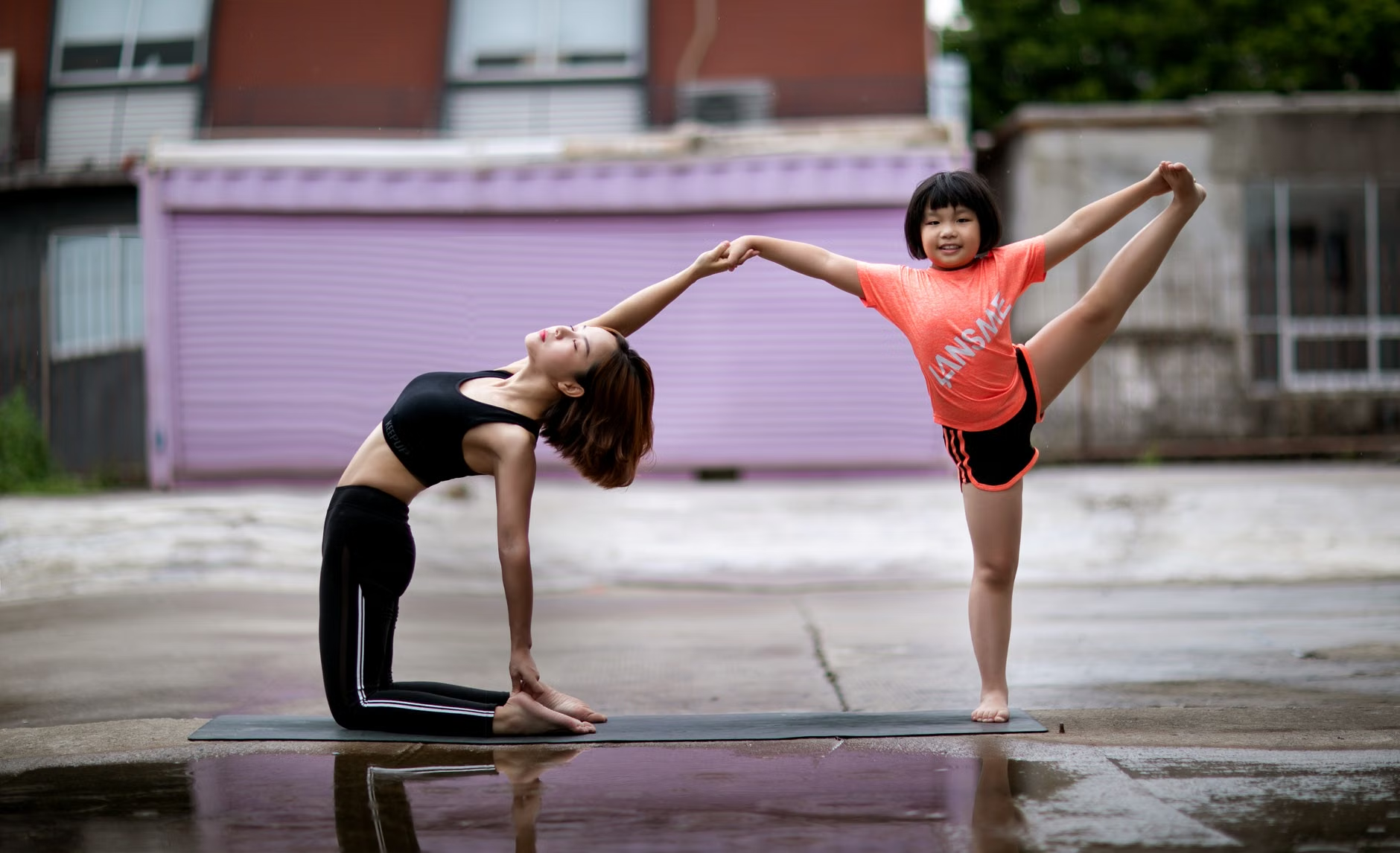
3. Bodyweight ‘Play’ Sessions
If you enjoy strength training, turn it into a game. Children are natural movers; they love to climb, jump, and crawl. You can use their natural play as the “intensity” portion of your workout.
| Movement | How to Co-Regulate | Benefit |
|---|---|---|
| Animal Crawls | “Bear walk” or “crab walk” across the living room together. | Engages core and builds shoulder stability while being silly. |
| Bodyweight Squats | Squat down to their eye level and jump back up together. | Builds leg strength and provides physical touch/proximity. |
| Stretching | Follow-the-leader yoga poses. | Slows down the heart rate and teaches mindfulness. |
Common Pitfalls and How to Avoid Them
Even with the best intentions, trying to exercise with children can be frustrating. Here is how to navigate the common roadblocks that parents in their 30s and 40s often face.
The ‘Perfectionist’ Trap
The most common mistake is trying to turn a co-regulation session into a rigid, structured class. If you try to force your child to do a “perfect” push-up, you have turned a bonding moment into a performance review. The goal is the movement, not the form. Let them do it their way. If they want to turn a lunge into a hop, let them.
The ‘Distraction’ Barrier
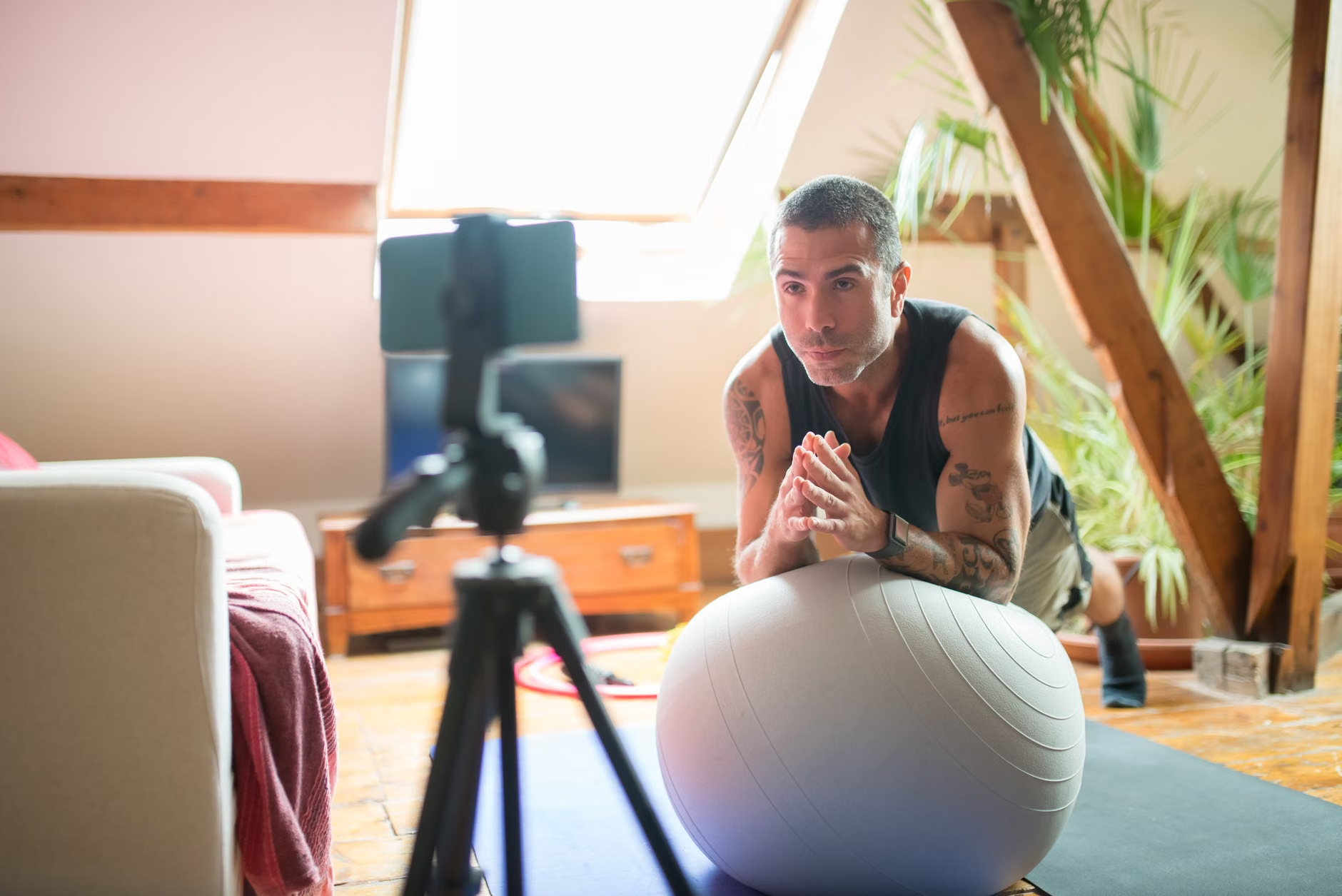
If you are wearing headphones or checking your smartwatch every 30 seconds, you are failing to co-regulate. Your child needs your presence—your eye contact, your smile, and your audible breathing. Keep the technology to a minimum. If you need music, play it on a speaker so it’s a shared experience, not a private one.
The ‘Energy Mismatch’
Sometimes you are exhausted, and your child is bouncing off the walls. This is the hardest time to start, but the most important. In this scenario, don’t try to match their energy. Instead, model the “slow down.” Do slow, deep stretches or rhythmic rocking movements. Often, the child will naturally slow down to match your pace. This is the essence of co-regulation: you are the anchor.
Building a Sustainable Habit
The key to making this last is to weave it into the fabric of your day rather than treating it as a “scheduled event.” If you try to schedule a 45-minute “Family Fitness Hour,” you will likely fail because life happens. Instead, look for the “micro-windows.”
- The Pre-Dinner Gap: Before you start cooking, do five minutes of “animal movements” or stretching in the living room.
- The School Run: If you walk to school, turn it into a game of “sprinting” between telephone poles.
- The Weekend Morning: Instead of turning on the TV, make “movement” the first thing you do as a family.
By shifting your mindset from “I need to work out” to “We need to move to feel better,” you remove the pressure. It stops being about calories burned and starts being about the emotional health of your home. You will find that on the days you do this, the “evening transition”—that notoriously difficult time between school/work and dinner/bed—becomes significantly smoother.
The Science Behind the Success
Research suggests that regular physical activity is a primary method for regulating the autonomic nervous system. When we are sedentary, our stress hormones have nowhere to go. We “hold” our tension in our shoulders, our jaw, and our digestive system. By moving, we signal to our brain that the “threat” is over.
A study published in the Journal of Sport and Health Science highlights that shared physical activity among family members leads to higher adherence to exercise and better psychological outcomes compared to solitary exercise. This is largely due to the social support and the reinforcement of positive habits within the family unit.
Furthermore, for children, watching their parents move is a powerful formative experience. You are teaching them that their body is a tool for joy and stress management, not just a vessel to be managed or critiqued. This is a critical lesson for children growing up in a world where body image and sedentary screen time are constant pressures.
Reflecting on Your Own Needs
It is important to remember that co-regulation is a two-way street. There will be days when you are the one who needs the co-regulation. On those days, it is perfectly okay to invite your children to move with you because you need to calm down. Be honest about it. “Mom/Dad is feeling a bit stressed today, let’s go for a walk to help me clear my head.” This models emotional intelligence for your children. It teaches them that it is okay to have big feelings, and that there are healthy, physical ways to process them.
This approach also helps you break the “perfectionist parent” cycle. You don’t have to be the calm, collected, perfectly regulated parent 24/7. You just need to show your children that when things get overwhelming, you have a strategy to get back to center. That is a far more valuable lesson than any specific exercise routine.
Final Thoughts: Small Movements, Big Impact
The “Co-Regulation Workout” is not about fitness metrics. It is about the subtle, profound recalibration of your family’s nervous systems. In a world that demands constant productivity, choosing to spend 15 minutes moving rhythmically with your children is a radical act of self-care and family preservation.
Start small. Don’t worry about the perfect routine. Simply prioritize the movement, the presence, and the connection. Your body will thank you, your mind will thank you, and your family dynamic will be stronger for it. You don’t need a gym; you just need to move together.
For further reading on the physiological benefits of shared movement and nervous system regulation, you can explore resources from the American Psychological Association regarding the impact of exercise on mental health, or look into the CDC’s guidelines on family-based physical activity.
Frequently Asked Questions
1. What if my child refuses to participate?
Never force it. If they don’t want to join, do the movement yourself nearby. Children are observant; if they see you enjoying the movement and becoming more relaxed, they are often naturally drawn to join in without the pressure of being “asked.”
2. Does this count as ‘real’ exercise?
If your definition of “real” exercise is high-intensity interval training, then no. However, if your goal is cardiovascular health, stress reduction, and building a sustainable lifestyle, then yes. Any movement that elevates your heart rate and engages your muscles is beneficial.
3. How do I handle this if I have very young children?
For toddlers and infants, “co-regulation” often looks like rhythmic rocking, carrying them during a walk, or doing gentle floor stretches while they play nearby. You are still providing that calm, steady presence, which is the core of the practice.