The core reality of the 2026 “Right-to-Disconnect” movement is simple: you are legally entitled to ignore work-related communications outside of your agreed-upon working hours without fear of professional retaliation.
- Legal Protection: Most modern labor frameworks now protect employees from disciplinary action if they refuse to respond to emails or calls during personal time.
- Standardized Boundaries: Employers are increasingly required to establish clear “availability windows” in employment contracts.
- Cultural Shift: Success is no longer measured by constant availability but by output and clear communication of your offline status.
If you are in your 30s or 40s, you likely remember a time when work ended the moment you walked out of the office door. Today, the “always-on” culture has blurred those lines until they’ve all but vanished. You’re trying to help your child with math homework while simultaneously checking a Slack notification, or you’re at dinner with your partner when a “quick” email request pulls your focus away. It’s exhausting, and for many of us, it has felt like an inevitable cost of doing business in the digital age.
However, 2026 marks a turning point. As global labor laws catch up with the reality of remote and hybrid work, the “Right-to-Disconnect” has moved from a theoretical HR concept to a codified legal standard in many jurisdictions. Let’s break down what this actually looks like for your daily life and how you can navigate these new rules.
What Exactly Is the Right-to-Disconnect?
At its most basic level, the right-to-disconnect is a legal principle that grants employees the right to ignore work-related communications—emails, instant messages, phone calls, and project management updates—outside of their official working hours. It is not about being “lazy” or “unproductive.” It is about the fundamental recognition that the human brain requires downtime to function effectively.
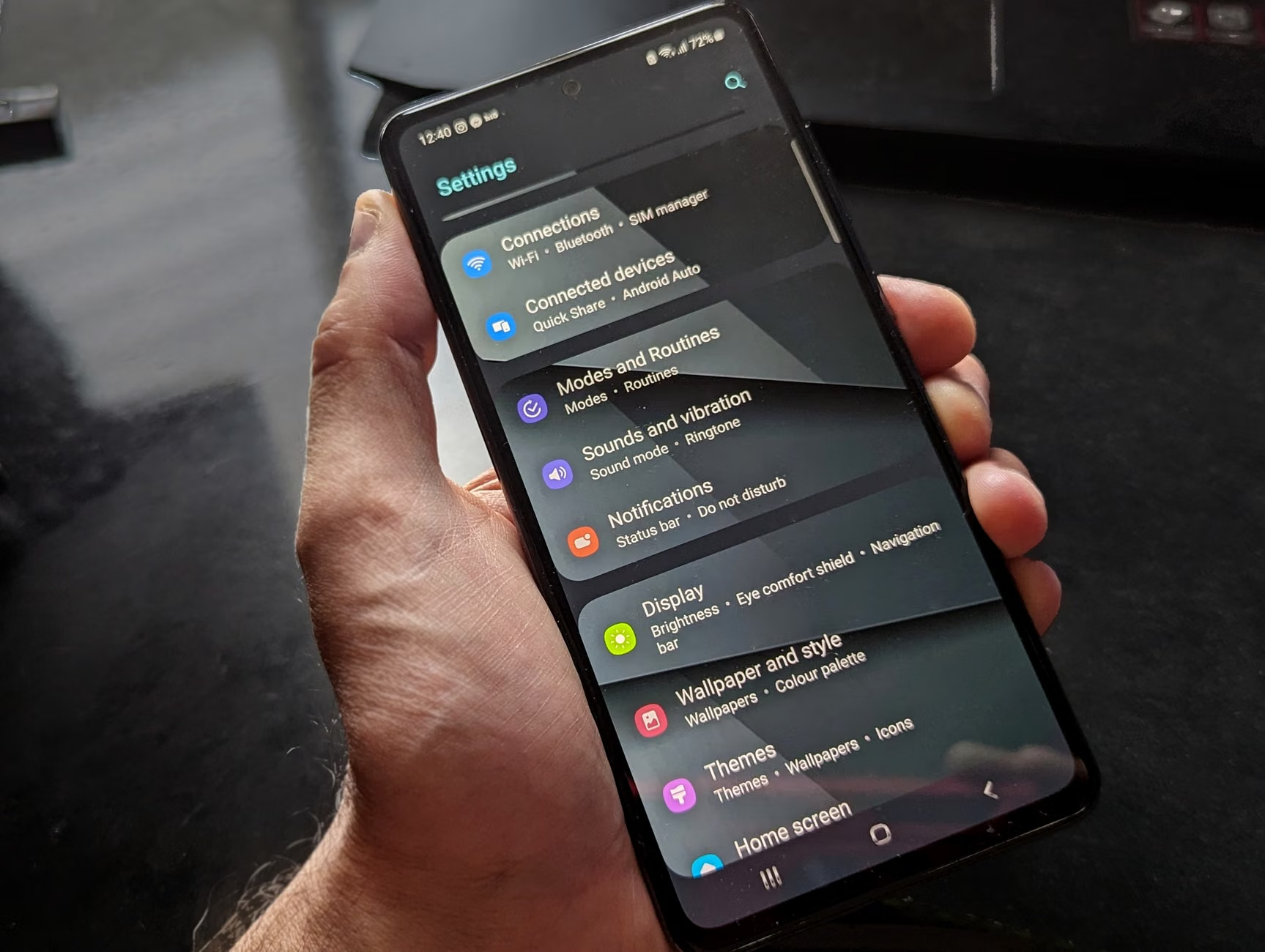
In practice, these laws often mandate that companies create an explicit policy regarding after-hours communication. If your manager sends an email at 8:00 PM, the law in many regions now stipulates that you are not obligated to read or reply until your next scheduled shift. More importantly, it creates a “no-retaliation” clause. This means your employer cannot legally penalize you for not being available during your off-hours, whether that involves a performance review dip, a subtle shift in project assignments, or outright termination.
Why 2026 Is Different
We’ve been talking about work-life balance for decades, but the legislative push has accelerated due to the “burnout epidemic” of the early 2020s. Legislators globally have realized that the mental health toll of constant connectivity is a public health issue. By 2026, the focus has shifted from “encouraging” companies to be flexible to “mandating” that they respect boundaries. Companies that fail to comply face increasing scrutiny from labor boards and potential class-action litigation from employees who have been forced into an “always-on” state.
The Impact on Your Daily Parenting and Personal Life
For parents, the right-to-disconnect isn’t just a professional perk; it’s a necessity for family sanity. When you are constantly tethered to your work phone, you are physically present but mentally absent. This “fragmented attention” can make home life feel like a secondary chore rather than your primary focus.

Consider the “Dinner Table Test.” If you find yourself checking your inbox while your kids are recounting their day, you aren’t just being distracted—you are devaluing the connection. With these new laws, you have the backing to set a firm “digital curfew.” You can communicate to your team that from 6:00 PM to 8:00 AM, you are fully offline. This isn’t a sign of weakness; it’s a professional boundary that actually improves your focus during the hours you are online.
Setting Your Own Boundaries: A Strategic Approach
Even if your local laws are still evolving, you can adopt the “Right-to-Disconnect” mindset today. Here is how to structure your boundaries:
| Action | How to Implement |
|---|---|
| Define “Core Hours” | Put your availability in your email signature and Slack status. |
| Scheduled Sends | Use the “Schedule Send” feature for late-night thoughts so you don’t trigger others. |
| Separate Devices | If possible, keep work apps on a separate device or profile. |
Common Misconceptions and Legal Realities
There is a lot of fear surrounding these laws. Many employees worry that if they exercise their right to disconnect, they will be passed over for promotions. While cultural change takes longer than legal change, the data suggests otherwise. High-performing individuals who set clear boundaries often demonstrate better long-term retention and higher-quality work because they aren’t suffering from chronic fatigue.
One major misconception is that “Right-to-Disconnect” means you can never work late. That is false. If you choose to work late to meet a deadline, that is your prerogative. The law protects you from being forced to work, not from choosing to work. It’s about agency. The goal is to ensure that work stays within the boundaries of a fair employment contract, rather than bleeding into every waking hour of your life.

What to Do If You Are Being Pressured
If you find that your employer is consistently violating these new norms, you need to document the behavior. Start by having a transparent conversation with your manager. Use language like, “I am committed to our project goals, but I am currently restructuring my availability to ensure I can maintain a high quality of output during my core working hours.” If the pressure continues, keep a log of after-hours demands and check your local labor department’s guidelines on filing a complaint.
The Psychological Benefits of “True Offline” Time
Why is this so important for those of us in our 30s and 40s? We are the “sandwich generation.” We are often caring for younger children and sometimes aging parents, while managing the peak of our career growth. This leaves very little room for cognitive recovery. When you finally stop, your brain needs time to “decompress”—this is a psychological state where the brain moves from task-oriented focus to default mode, which is essential for creativity and long-term problem solving.
When you are constantly checking emails, you are essentially “task-switching” every time a notification pings. This constant switching drains your executive function, leaving you feeling frazzled even when you aren’t doing heavy work. By disconnecting, you aren’t just saving your evening; you are protecting your ability to think clearly the next morning.
Building a Culture of Respect
If you are in a leadership position, you have the power to model this behavior. The most effective way to implement the “Right-to-Disconnect” is from the top down. If a manager sends emails at 11:00 PM, the entire team feels the pressure to respond. If that same manager makes it clear that they don’t expect a response until morning, the entire team experiences a collective sigh of relief.
Leadership in 2026 is about output, not presence. By championing a culture where downtime is respected, you build a more resilient team. You will find that employees are more engaged, less likely to quit due to burnout, and more creative when they aren’t constantly in “survival mode.”
Practical Steps to Reclaim Your Time
Reclaiming your time isn’t just about the law; it’s about your personal habits. Here are a few ways to start building your own wall between work and life:
- The 6:00 PM Handover: Create a ritual. Close your laptop, tidy your desk, and do a quick “brain dump” of tasks for tomorrow. This signals to your brain that the workday is officially over.
- Device Hygiene: If you use your personal phone for work, use “Work Profiles” (available on both iOS and Android) to hide your work apps during your personal time.
- Communicate Your Availability: Don’t assume people know when you are offline. Set your status, update your auto-reply, and be consistent. People will eventually respect a consistent boundary more than a porous one.
- Respect Others’ Boundaries: If you work late, make sure you aren’t sending emails that require immediate action from your team. Use the “Schedule Send” function to have your emails arrive in their inbox at 9:00 AM the next day.
The Future of Work-Life Integration
As we move further into 2026, the discussion around the right-to-disconnect will likely evolve into a broader conversation about “asynchronous work.” This is the idea that we don’t all need to be online at the same time to collaborate effectively. By moving towards a model where we document our work and share it for others to review on their own timeline, we can eliminate the need for real-time meetings and instant responses.
This shift is beneficial for everyone. It allows for deep work, reduces the stress of constant interruptions, and honors the fact that we all have different peak productivity hours. If you are a parent who needs to do the school run at 3:00 PM, asynchronous work allows you to do that without feeling like you are missing a crucial meeting.
Summary of Your Rights and Responsibilities
The right-to-disconnect is a powerful tool, but it requires you to be an active participant in your own boundaries. You are not a victim of your technology; you are the manager of it. Use the legal protections available to you, but also recognize that your own habits play a massive role in whether those laws are effective. By setting clear boundaries, communicating them openly, and respecting the boundaries of others, you can create a work-life balance that actually lasts.
The transition to a healthier work-life balance won’t happen overnight, and there will be times when work demands more than you want to give. That is normal. What matters is that you are building a professional life that supports your personal life, rather than the other way around. You have the right to your time. Use it well.
Frequently Asked Questions
Does the ‘Right-to-Disconnect’ mean I can never be contacted in an emergency?
No. Most legislation includes provisions for genuine emergencies. However, “emergency” is strictly defined. It generally does not include a forgotten password, a non-urgent email, or a last-minute request for a report. It usually applies to critical, time-sensitive operational failures that cannot wait until the next business day.
What if my job requires me to be on-call?
On-call work is a specific professional agreement. If your contract explicitly states that you are on-call, the right-to-disconnect laws generally do not override that agreement. However, you should ensure that your on-call shifts are clearly defined, compensated appropriately, and balanced with adequate rest periods as required by local labor laws.
How do I start setting boundaries if my company has a high-pressure culture?
Start small. Begin by setting your status to “offline” after a certain hour. Use scheduled sending for your own messages. If you are worried about pushback, frame it as a productivity move: “I’ve found that I am most effective when I can focus on deep work in the mornings, so I am going to be offline in the evenings to recharge for the next day.” Most managers, when presented with the argument of increased productivity, are more willing to listen than you might expect.
For more information on labor laws in your specific region, you can consult your local government’s labor department website or the International Labour Organization (ILO) resources for updates on international working standards: https://www.ilo.org