The “third-space” is making a comeback because our modern lives have become too binary: we shuttle between the rigid walls of our offices and the private, often isolating, confines of our homes, leaving a gaping void where community connection used to live.
- Definition: A “third-space” is a social environment separate from the home (first space) and the workplace (second space).
- The Problem: The decline of these spaces has contributed to higher rates of social isolation and a loss of “weak tie” connections that build neighborhood trust.
- The Solution: Urban planners and residents are prioritizing “placemaking”—designing areas that encourage spontaneous interaction rather than just efficient transit.
If you are in your 30s or 40s, you likely know the drill: the morning rush to get kids to school, the commute or the home-office grind, the evening chores, and the eventual collapse onto the couch. It is efficient, it is necessary, but it is also profoundly lonely. We have optimized our lives for productivity, but in the process, we have accidentally deleted the “town square”—that middle ground where you bump into a neighbor, swap a quick story, or just feel like you are part of something larger than your immediate household.
What Exactly is a Third-Space and Why Did We Lose It?
The term was coined by sociologist Ray Oldenburg in his 1989 book, The Great Good Place. Oldenburg argued that for a society to be healthy, individuals need three types of places: the home (where we live), the workplace (where we earn), and the third-space (where we socialize and recharge). Think of the classic European café, the local barbershop, the corner pub, or the neighborhood library. These are places where you are not expected to be a parent, a boss, or an employee. You are just a human being among other human beings.
In the last few decades, we have seen a steady erosion of these spaces. Why? Several factors have converged. First, the privatization of public life. Many “public” spaces now require an entry fee or a purchase, effectively pricing out those who might just want to sit and observe. Second, urban sprawl has made the car the primary mode of transit, which kills the “walkability” required for spontaneous social interaction. If you have to drive twenty minutes to reach a destination, you are not going to “pop in” to see who is around.
Finally, there is the “digital displacement.” We have replaced the physical town square with social media. While digital platforms allow us to talk to people across the globe, they do nothing to foster the kind of local, face-to-face trust that comes from knowing the person who lives three doors down. This is the “weak tie” paradox: we have thousands of “friends” online, but we do not know the name of the person who walks their dog past our house every afternoon.
The Impact of the Loneliness Epidemic on Families
For parents in their 30s and 40s, the lack of third-spaces is not just a mild annoyance; it is a significant contributor to parenting stress. When you are a parent, your social circle often shrinks to the size of your child’s school drop-off line or the playground. If there is no neutral space—a café with a play corner, a community garden, or a pedestrian-friendly main street—your social interaction becomes entirely child-focused.
Research from various global health organizations has pointed to a rise in reported loneliness among middle-aged adults. When we lack third-spaces, we lose the “bystander effect” of community. In a healthy town square, you are rarely fully alone. You see familiar faces. You hear snippets of conversation. This ambient social presence reduces the pressure to “schedule” social time. You do not have to text a friend three weeks in advance to “catch up”; you just show up at the local plaza, and the social interaction happens naturally.
Consider the difference in stress levels between a parent who feels trapped in a house with a toddler and a parent who can walk to a local park or community center where other adults are present. The latter provides a sense of respite, a change of scenery, and the possibility of adult conversation, even if it is just a quick chat about the weather. This is the physiological and psychological value of the third-space: it acts as a pressure-relief valve.
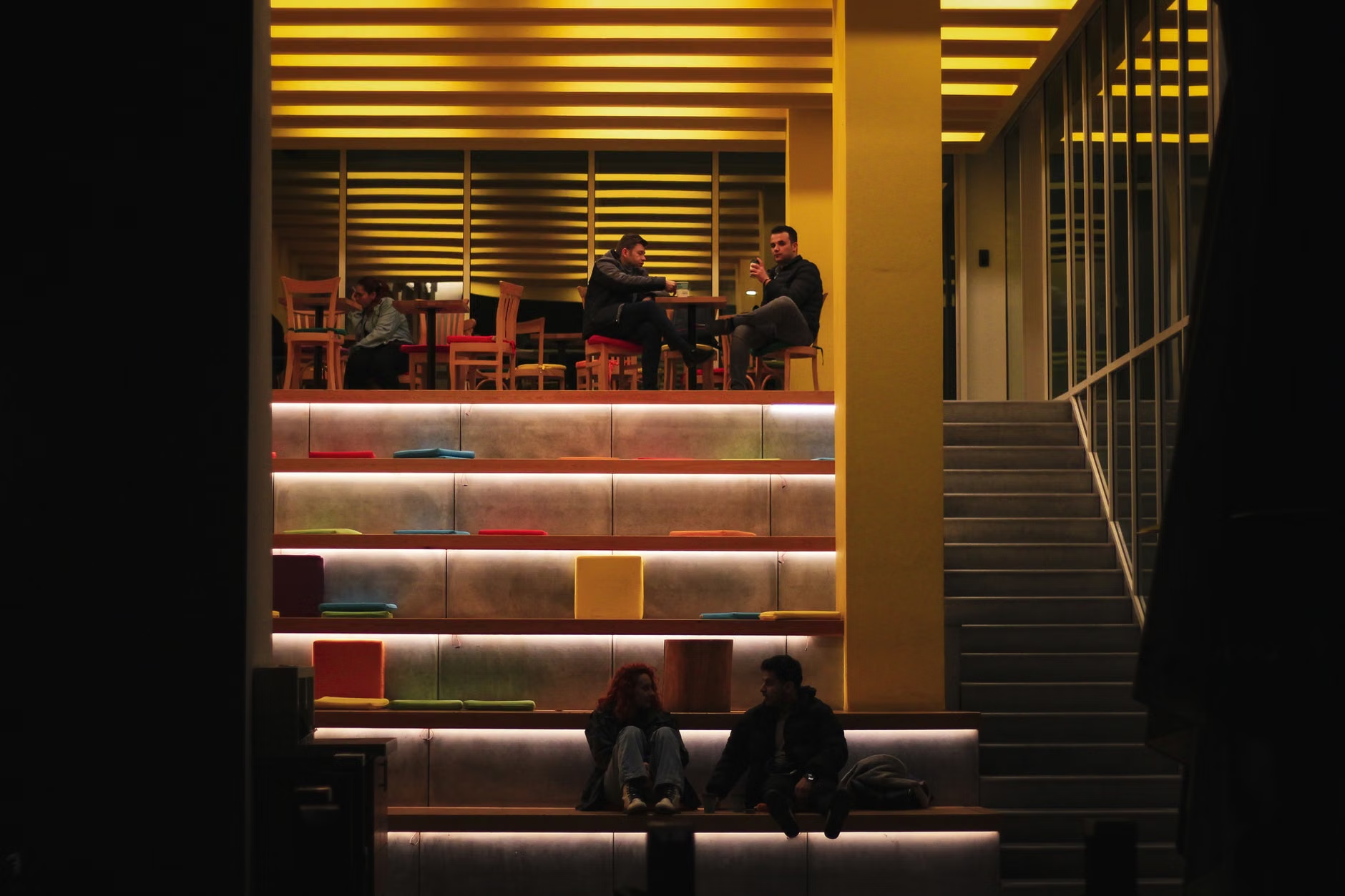
Placemaking: How Cities Are Reclaiming the Commons
The good news is that we are witnessing a global revival of the third-space. It is often referred to by urban planners as “placemaking.” Placemaking is a collaborative process by which we can shape our public realm to maximize shared value. It is not about building big, expensive monuments; it is about creating “stickiness.”
What makes a space “sticky”? It is simple: seating, shade, and safety. A park without a bench is just a field. A sidewalk without trees is just a hot concrete path. A town square that prioritizes people over cars—often through “traffic calming” measures like wider sidewalks or permanent street-side furniture—becomes a magnet for human activity.
Many cities are now experimenting with “15-minute city” concepts. The goal is to ensure that every resident can access their basic needs—groceries, schools, parks, and social hubs—within a 15-minute walk or bike ride from their home. When you reduce the friction of movement, you increase the likelihood of social interaction. This is not just about environmental sustainability; it is about reclaiming the time we currently spend sitting in traffic.
| Feature | Traditional Urban Planning | Modern Placemaking |
|---|---|---|
| Primary Focus | Traffic flow and speed | Pedestrian comfort and interaction |
| Seating | Minimal or non-existent | Abundant, varied, and free |
| Access | Car-dependent | Walkable and bike-friendly |
| Social Goal | Efficiency | Spontaneous community building |
What Can You Do to Build a Third-Space Locally?
You do not need to be an urban planner to start the revival. The third-space often starts with a change in mindset. If you are feeling the pinch of social isolation, look for the “micro-spaces” in your area. Is there a local library that has a weekend reading hour? A park that could use a neighborhood picnic? A community garden that needs volunteers?
The key is consistency. Third-spaces thrive on routine. If you visit the same coffee shop at the same time every Saturday, you will eventually become a “regular.” Regulars are the glue of any community. They are the ones who greet newcomers, notice when someone is missing, and bridge the gap between strangers. By simply showing up, you are contributing to the social fabric of your neighborhood.
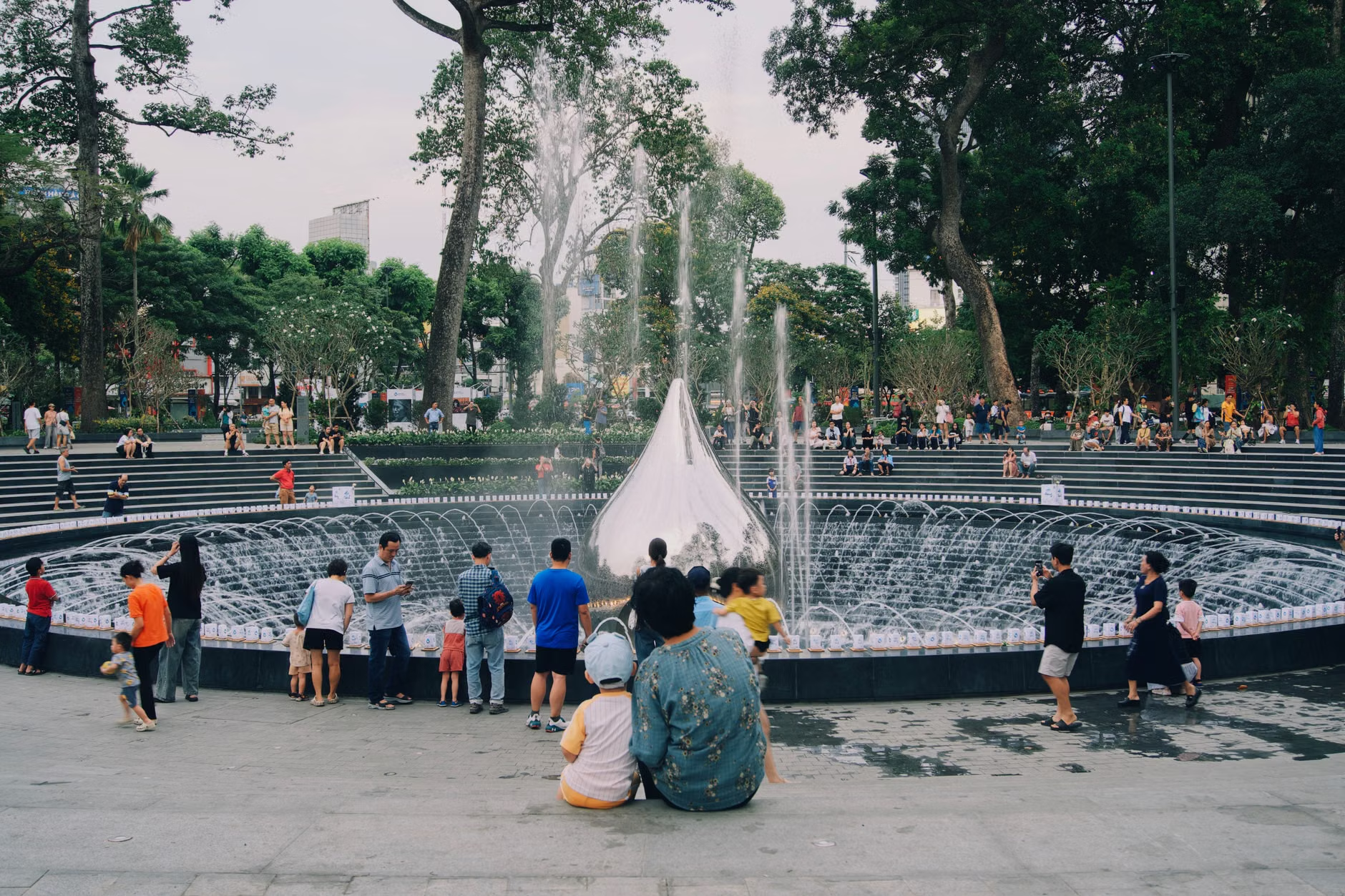
If you are a parent, look for spaces that facilitate “parallel play.” These are areas where children can occupy themselves safely while adults can sit nearby and chat. Libraries, community centers, and well-designed parks are the gold standard here. If your neighborhood lacks these, consider organizing a “block party” or a recurring neighborhood walk. These events are the seeds of long-term third-spaces.
The Challenges of the Third-Space Revival
It would be naive to ignore the challenges. Not every space can be a third-space for everyone. There are genuine concerns about safety, accessibility, and inclusivity. A space that is not welcoming to everyone—due to poor lighting, lack of accessibility for strollers or wheelchairs, or a sense of “insider” exclusivity—will fail to become a true community hub.
Furthermore, there is the “commercialization” trap. Sometimes, we mistake a commercial space (like a high-end shopping mall) for a third-space. While these places offer shelter and seating, they come with the expectation of consumption. If you are not buying a coffee or a product, you are often made to feel unwelcome. True third-spaces must have a degree of “non-commercial” accessibility. They should be places where you can exist without having to open your wallet.
Finally, we must address the issue of time poverty. Many of us are simply too exhausted to “go out.” The trend of the third-space revival is not a call to add more to your to-do list. It is a call to integrate social connection into the things you are already doing. Instead of driving to the grocery store, walk. Instead of eating lunch at your desk, eat it on a park bench. It is about reclaiming the transition moments of your day.
Why This Matters for the Next Generation
Our children are growing up in an increasingly curated and digital world. If they never see us interacting with our neighbors, if they never see us participating in the “public life” of our town, they will not learn the value of community. By modeling the use of third-spaces, we are teaching them that the world is bigger than their screen and their home.
We are teaching them that it is okay to talk to strangers, that it is important to be a member of a community, and that there is a joy in the spontaneous, unscripted moments of life. These are the skills that build a resilient and empathetic society. We are not just building parks; we are building the social infrastructure for the next generation.
Common Misconceptions About Community Spaces
There is a persistent myth that you need a “vibrant city” to have a third-space. People in suburban or rural areas often feel that they are stuck because they lack the density of a downtown core. However, a third-space is defined by its social function, not its architectural grandeur. A community board at a local post office, a shared tool shed, or even a well-maintained front porch can serve as a third-space in a less dense environment.
Another misconception is that third-spaces are only for “social” people. In reality, these spaces are perfect for introverts, too. The beauty of a third-space is that it allows for “solitude in the company of others.” You can read your book in a park or sit with a coffee in a square without needing to initiate a conversation. You get the benefits of being part of a collective without the pressure to perform social labor.
Practical Steps to Foster Your Local Third-Space
If you want to move from theory to practice, here is a simple framework for identifying or creating a third-space in your own neighborhood:
- Audit your environment: Identify the places within a 15-minute walk of your home where you can sit for 30 minutes without buying anything. If you cannot find one, look for potential candidates: a park, a library, or a public square.
- Be a regular: Pick one of these spots and make it a part of your weekly routine. Consistency is the key to becoming a recognizable face.
- Small gestures: A simple nod, a smile, or a brief “hello” to a fellow regular is the foundation of community trust. You do not need to be a social butterfly.
- Advocate for comfort: If your local park lacks benches or shade, reach out to your local council. These are low-cost, high-impact improvements that significantly increase the “stickiness” of a space.
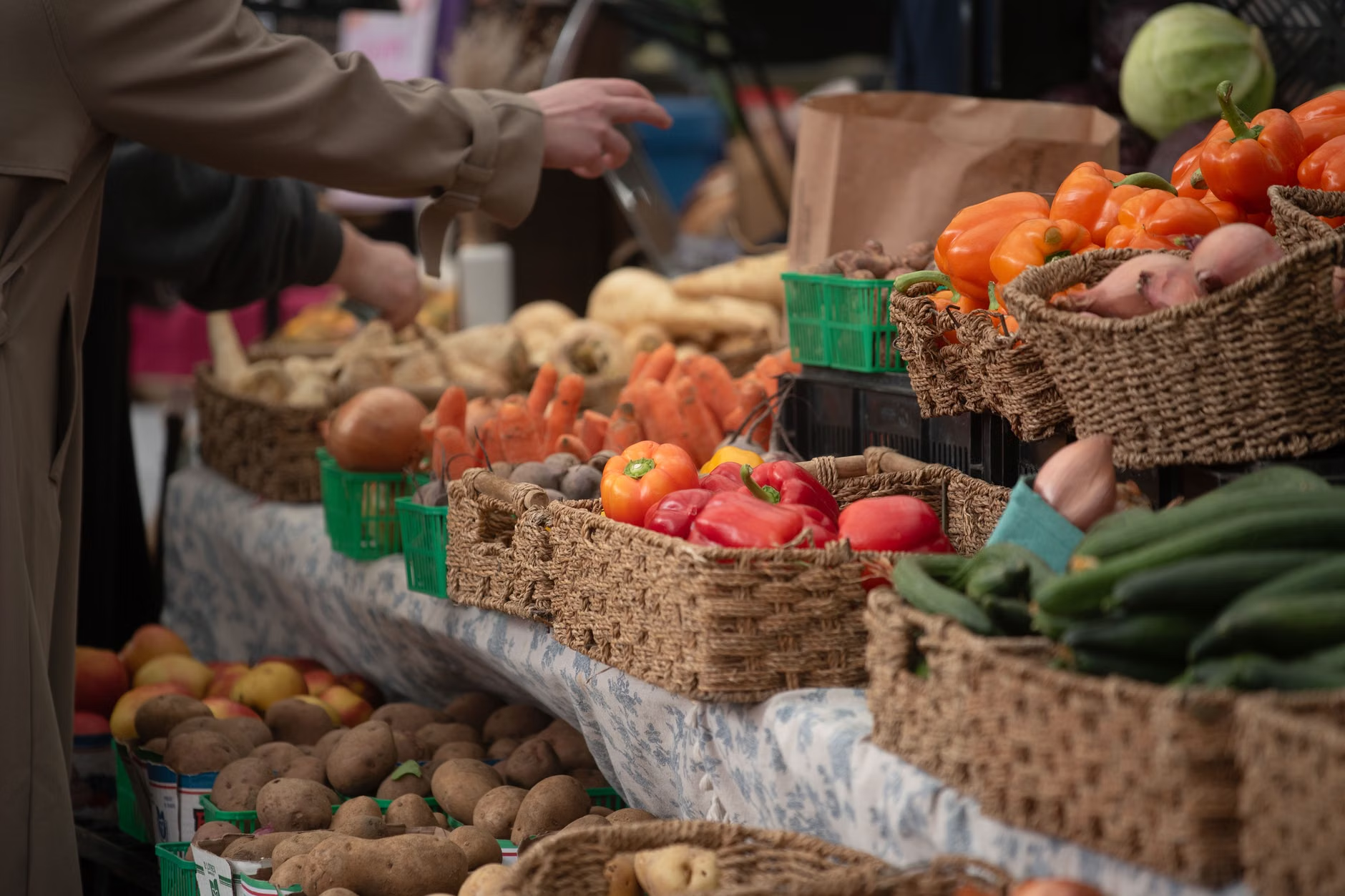
- Support local, non-commercial events: Attend the farmers’ market, the local school fair, or the community cleanup day. These events turn a “space” into a “place” by filling it with shared activity.
The Long-Term Implications of Re-Publicizing Our Lives
When we invest in third-spaces, we are investing in a form of insurance against the stressors of modern life. A robust social network, built on the “weak ties” formed in these spaces, provides a safety net. When you know your neighbors, you are more likely to share resources, look out for one another’s children, and feel a greater sense of security.
The revival of the third-space is not a return to the past; it is a necessary evolution of our future. We are learning that the “efficiency” we chased in the early 2000s came at too high a cost. We are now realizing that the most productive, happy, and resilient communities are those that make space for the messy, unscripted, and beautiful chaos of human interaction.
So, the next time you have a spare thirty minutes, do not just scroll through your phone. Step outside. Find your square. Sit on a bench. Be a part of the world that is happening right in front of you. It might seem like a small act, but when multiplied by a whole neighborhood, it is the most radical thing we can do.
Frequently Asked Questions
1. Can a coffee shop really be a ‘third-space’ if I have to buy something?
While coffee shops are often the most accessible third-spaces, they do lean toward the commercial side. A “true” third-space ideally offers a non-transactional element. However, in the modern world, a local café where the staff knows your name and you feel comfortable lingering is a perfectly valid third-space. The key is the social atmosphere, not just the price of admission.
2. What if my neighborhood is entirely car-dependent and has no walkable areas?
This is a common frustration, but it is not a dead end. Look for “destination” third-spaces—places you drive to once and then spend several hours in, like a large public library, a community center, or a local museum. While not as convenient as a 15-minute walk, these spaces still provide the social and psychological benefits of being in a “third” environment.
You don’t need to force a deep conversation. The beauty of third-spaces is that they facilitate “low-stakes” interaction. A simple greeting, a comment on the weather, or a compliment about a dog or a child is more than enough. The goal isn’t to make a new best friend every time; it’s to build the ambient familiarity that makes a neighborhood feel like a community.
For further reading on the importance of public spaces and urban planning, you can explore resources from organizations like the Project for Public Spaces, which provides extensive research on how to turn community spaces into vibrant hubs of activity.