The most effective way to save money on your family’s clothing budget while reducing household clutter isn’t to find a better sale, but to master the art of repairing what you already own. By shifting your mindset from “replace” to “repair,” you aren’t just saving fabric from a landfill; you are reclaiming control over your household consumption and teaching your children a valuable, lost life skill.
- Economic Sense: Simple repairs can extend the life of a garment by years, effectively lowering your cost-per-wear to near zero.
- Visible Mending: Modern repair isn’t about hiding flaws; it’s about celebrating them with creative, visible stitches that add character.
- Educational Value: Involving children in the repair process helps them understand the value of resources and the labor behind the items they wear.
How many times have you tossed a pair of your toddler’s trousers or your own favorite work shirt into the donation bin—or worse, the trash—simply because of a missing button, a small snag, or a split seam? It’s a common frustration. We live in an era of “fast fashion,” where clothing is produced so cheaply that the cost of professional repair often exceeds the price of a replacement. This economic reality has conditioned us to view clothing as disposable, one-season assets. But as a parent in your 30s or 40s, you know the cycle: you buy, it wears out, you buy again, and the cycle repeats, costing you thousands of dollars over a decade.
The Hidden Costs of Our “Replace-First” Culture
The fast-fashion industry thrives on the assumption that you don’t have time to fix things. They rely on the fact that your weekends are consumed by soccer practice, grocery runs, and the endless mental load of managing a household. When a zipper breaks on a jacket, the “efficient” choice seems to be logging onto an app and ordering a new one. But let’s look at the actual cost. Beyond the financial drain, consider the environmental impact and the sheer volume of “stuff” that enters your home every year.
According to data from the Environmental Protection Agency (EPA), textile waste has grown significantly over the last two decades. Much of this is due to the rapid turnover of low-quality garments. When you choose to repair, you are effectively opting out of a system that views you merely as a consumer of disposable goods. You are choosing durability over convenience. This isn’t about being a martyr for the planet; it’s about being a smarter, more intentional manager of your family’s resources.

What is the “Slow-Fashion” Repair Movement?
The slow-fashion movement is a reaction against the breakneck speed of modern garment production. At its core, it advocates for buying better-quality items, supporting ethical labor, and—most importantly for the home user—maintaining what we already have. Repair is the ultimate “slow” act. It requires slowing down, assessing the damage, and choosing to value the item’s history over its brand-new status.
Within this movement, there is a sub-trend known as “visible mending.” Unlike traditional tailoring, which aims to make a repair invisible, visible mending uses contrasting threads, patches, and sashiko (a Japanese embroidery technique) to turn a tear into a design feature. It’s a way of saying, “Yes, this item had a life, and it continues to have a life.” For parents, this is a fantastic way to handle the inevitable holes in knees and elbows that kids seem to collect like souvenirs.
Equipping Yourself: The Minimalist Sewing Kit
You don’t need a professional sewing machine or a degree in fashion design to start. In fact, the best repairs are often done by hand. To get started, you need a basic kit that lives in a central, accessible drawer. Avoid the cheap, pre-packaged kits from big-box stores; they often contain low-quality needles and thread that will only frustrate you.
| Item | Why You Need It | Pro-Tip |
|---|---|---|
| Sharps Needles | For general hand sewing and mending. | Get a variety pack to handle different fabric weights. |
| High-Quality Thread | Cheap thread snaps; polyester-cotton blends are versatile. | Keep a reel of grey or navy; they blend into almost anything. |
| Fabric Scissors | Dedicated shears for fabric only. | Never cut paper with these; it dulls the blade instantly. |
| Seam Ripper | Essential for undoing mistakes. | Use it gently to avoid tearing the fabric itself. |
Keep these items in a dedicated tin. When you see a loose thread or a small hole, don’t wait for “someday.” Keep the kit near your favorite spot to relax, perhaps near the couch where you might otherwise scroll through your phone. Mending is a rhythmic, meditative task that can actually lower your stress levels after a long day of juggling family logistics.
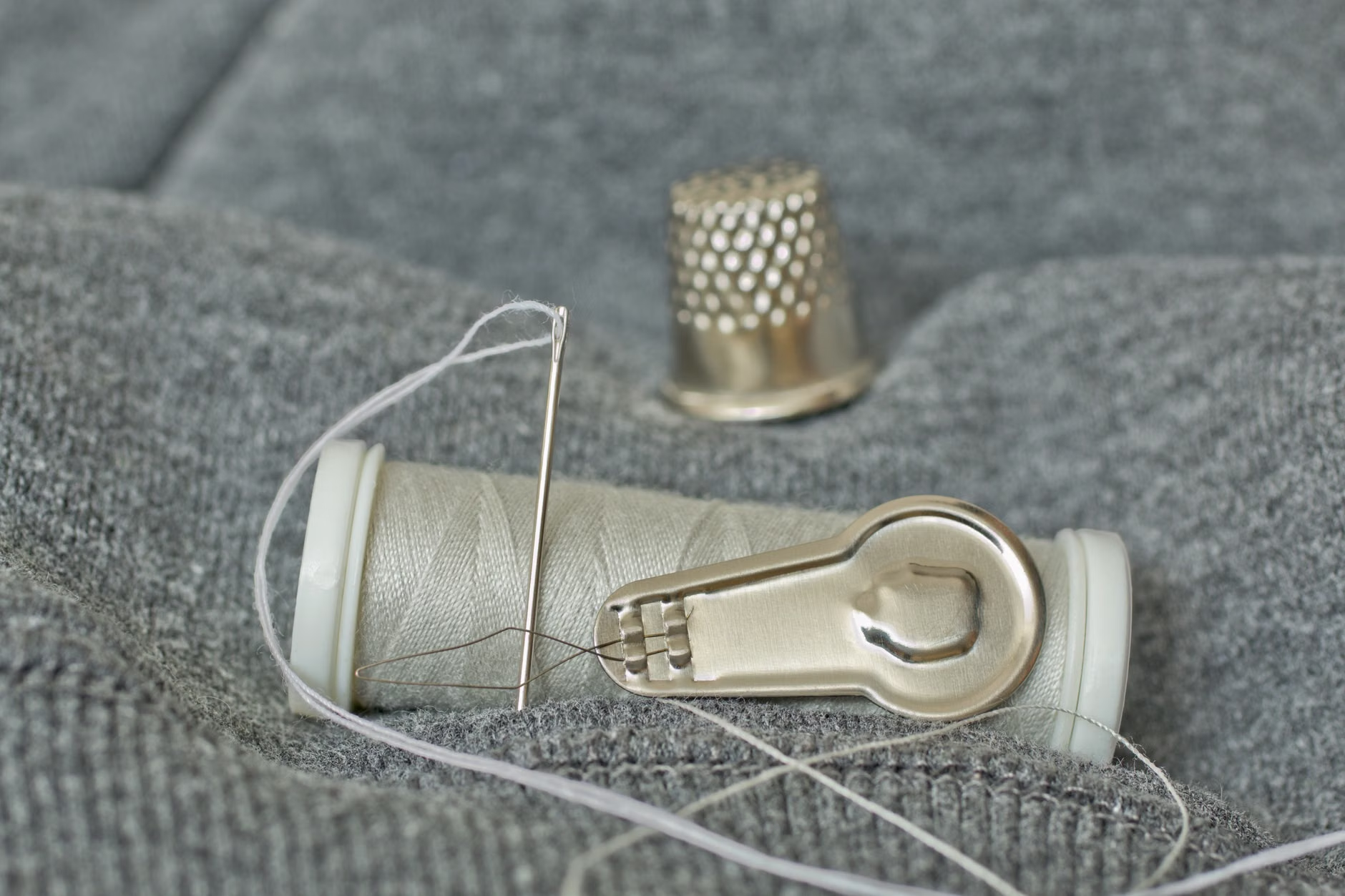
Step-by-Step: Fixing Common Household Wear and Tear
Let’s look at the most common issues you’ll encounter as a parent. These are the “Big Three” of clothing repair: the missing button, the split seam, and the knee hole.
1. The Missing Button
Buttons are the most common casualty of laundry cycles. The key here is to use a double-threaded needle for strength. If you’ve lost the original button, check the inside seam of the garment—many manufacturers sew an extra button there. If not, don’t sweat it; a mismatched button can actually look like a deliberate style choice if you commit to the aesthetic.
2. The Split Seam
Usually happening under the arm or along the inner thigh, this is the easiest fix. Turn the garment inside out, align the edges of the original seam, and use a “backstitch.” A backstitch is essentially going one step forward and two steps back with your needle. It creates a chain-like strength that is often more durable than the original machine-sewn seam.
3. The Knee Hole
This is where visible mending shines. If your child has worn a hole in their jeans, don’t try to hide it. Take a piece of scrap fabric—an old flannel shirt or a patterned cotton square—and place it behind the hole. Use a simple running stitch to secure it. If you want to get fancy, use a contrasting color of embroidery floss to create a grid pattern over the area. It looks cool, it’s personalized, and it’s virtually indestructible.
The Parenting Advantage: Teaching Sustainability by Doing
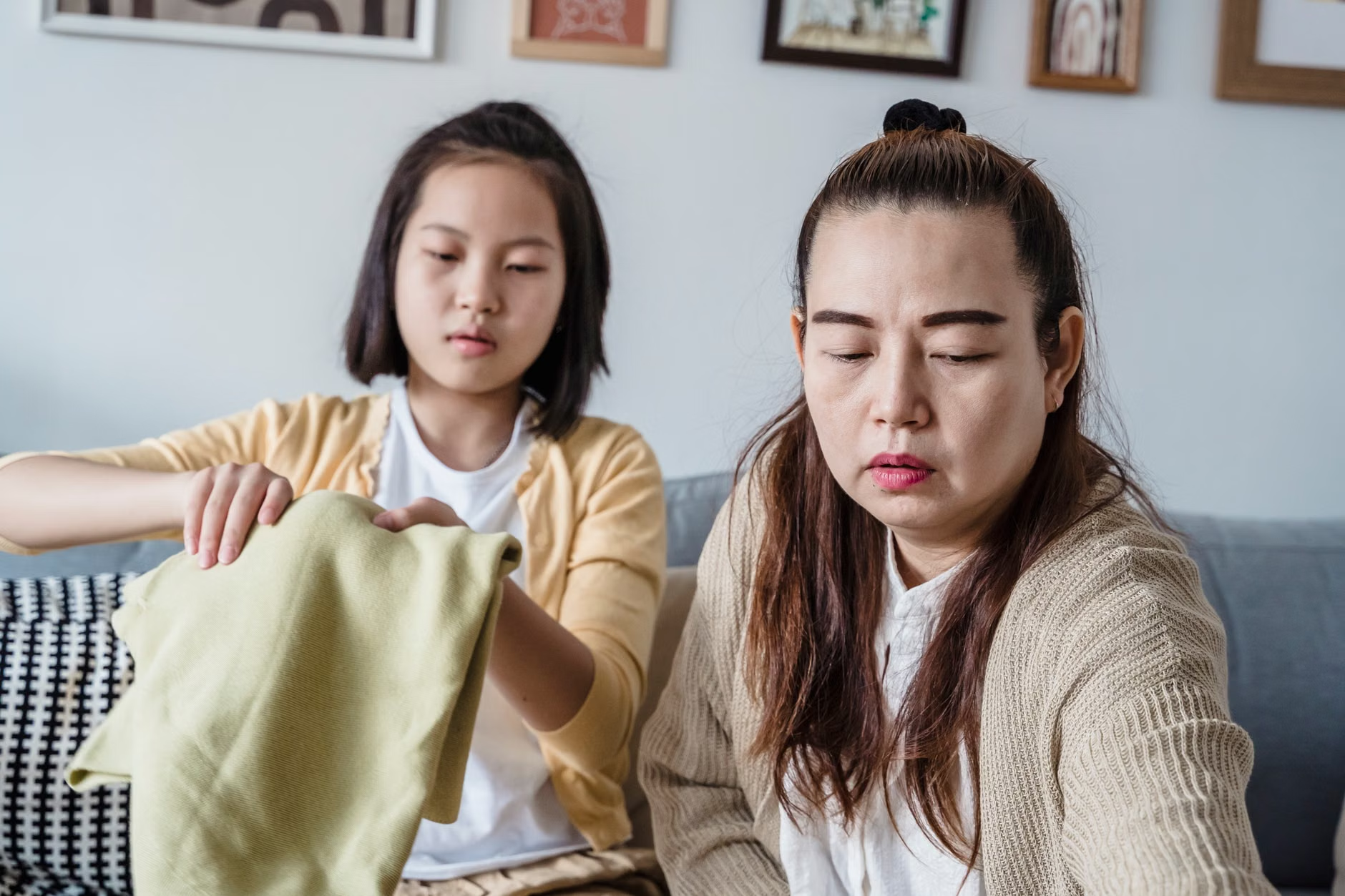
Beyond the practical benefits, there is a profound psychological lesson here for your children. We often tell our kids to “take care of their things,” but we rarely show them how. When you sit down with a needle and thread, you are demonstrating that materials have value and that labor is required to maintain them. You are shifting the narrative from “it’s broken, throw it away” to “it’s broken, how can we fix it?”
Involve them. Even a five-year-old can help you choose the color of the thread or hold a piece of fabric in place while you pin it. As they get older, they can learn to sew on their own buttons. This isn’t just about mending clothes; it’s about raising children who are resourceful, patient, and less reliant on the instant gratification of consumer culture.
Common Mistakes and How to Avoid Them
The most common mistake is trying to be perfect. If you are aiming for factory-grade invisible repair, you will likely quit after your first attempt. Accept that your stitches might be a bit wonky, especially at first. The goal is functionality and longevity, not professional tailoring standards.
Another pitfall is “repair paralysis”—waiting until a hole is so large that the garment is beyond saving. As soon as you notice a thinning spot or a fraying hem, address it. A tiny reinforcement stitch takes thirty seconds; fixing a giant gaping hole can take an hour. Treat your clothing like you treat your car—regular maintenance prevents catastrophic failure.
Also, beware of the “I need a sewing machine” trap. While machines are great for large projects, they are often overkill for small repairs. Setting up a machine takes time, threading it is a chore, and finding space for it is a hurdle. Hand sewing is portable, quiet, and requires zero setup time. It is the true secret to consistent mending.
Building a Sustainable Wardrobe for the Long Haul
Repairing is only half the battle. To truly embrace slow fashion, you must also consider the quality of the items you bring into your home. When shopping, look for natural fibers like cotton, wool, and linen. These fabrics are significantly easier to repair than synthetic blends. Synthetic fabrics, like polyester or nylon, tend to fray when torn and are difficult to patch effectively because they don’t hold stitches the same way natural fibers do.
Check the seams before you buy. If the stitching is loose or the fabric is already thin, it’s going to be a maintenance nightmare. Teaching yourself to assess garment quality is a skill that takes time, but it pays dividends in the form of a wardrobe that actually lasts. You aren’t just buying a shirt; you’re buying a garment that you intend to own for the next five years.
The Mental Shift: Why This Matters Now
We are living through a period of extreme “convenience fatigue.” Everything is fast, everything is disposable, and everything is designed to be replaced. This creates a subtle but constant anxiety—the feeling that we are constantly managing a tide of goods that are slowly falling apart. By choosing to repair, you are opting out of that anxiety. You are deciding that your time and your items have enough worth to be preserved.
It’s a small act of rebellion against a system that wants you to keep spending. And for parents, who are constantly bombarded with the need to buy the “next big thing” for their children, this provides a quiet, grounded alternative. You are showing your kids that you don’t need to be a slave to trends to look good or be functional. You are showing them that you have the power to fix your world, one stitch at a time.
Frequently Asked Questions
Is hand-sewing really strong enough to hold up for kids’ active play?
Yes, if you use the right technique. The “backstitch” is incredibly strong, and for high-friction areas like knees, using a patch with a “running stitch” or “sashiko” technique actually reinforces the fabric, making it stronger than it was when it was new.
What if I don’t have time to learn how to sew?
You don’t need to learn “sewing” in the traditional sense. You only need to learn three stitches: the running stitch, the backstitch, and the whip stitch. There are thousands of 60-second tutorials online that show exactly how to do these. You can learn in the time it takes to drink a cup of coffee.
Is it really worth the effort compared to buying cheap clothes?
If you look at the total cost of ownership—including your time and the environmental impact—yes. Cheap, low-quality clothes have a high “cost-per-wear” because they are discarded so quickly. By repairing, you are doubling or tripling the lifespan of a garment, which effectively halves or thirds its cost over time. Plus, you get the satisfaction of a job well done.
The slow-fashion repair movement isn’t about being perfect; it’s about being present. It’s about recognizing that the items we use to clothe ourselves are extensions of our lives and our resources. When a seam rips or a button pops, don’t view it as a failure of the garment or a signal to upgrade. View it as an opportunity to practice a bit of care, to slow down, and to keep something useful in your life for a little longer. It’s a simple shift, but it’s one that changes how you interact with the world around you, one thread at a time.
For further reading on sustainable textiles and global repair standards, you can explore resources like the Fashion Revolution, which provides excellent guides on garment care and the ethics of the clothing industry. Remember, your wardrobe is a reflection of your values—make it a durable one.