A “green lease” is essentially a rental agreement that includes specific clauses to ensure both landlords and tenants work together to minimize the environmental impact of a home, which often translates into significantly lower monthly utility bills for you.
- Shared Responsibility: Green leases align the interests of the landlord (property value) and the tenant (lower utility bills).
- Data Transparency: These agreements often prioritize the sharing of energy usage data, allowing for better efficiency upgrades.
- Negotiation Power: You don’t always need a formal “green” contract to implement these principles; you can negotiate specific energy-saving clauses into standard renewals.
If you are in your 30s or 40s, you are likely at a stage where you are balancing the rising costs of childcare, groceries, and housing. The idea of “going green” often sounds like an expensive luxury reserved for homeowners who can install solar panels or replace windows. But what if your rental contract itself could be a tool to lower your overhead? That is where the concept of the green lease comes in.
What Exactly Is a Green Lease and Why Should Renters Care?
Traditionally, rental agreements are purely transactional: you pay rent, the landlord provides a space, and you both go your separate ways. The problem is that this creates what economists call a “split incentive.” If a landlord pays for a new, energy-efficient HVAC system, the tenant gets the benefit of lower electricity bills, but the landlord doesn’t see a direct return on their investment. Conversely, if a tenant wants to install smart lighting or weather stripping, they may be hesitant to spend money on a property they don’t own.
A green lease bridges this gap. It is a contract that codifies the commitment to resource efficiency. While these were originally designed for commercial office spaces, the principles are increasingly bleeding into residential property management. For a renter, this might mean a clause that allows for the installation of smart appliances, an agreement on how to split the cost of energy-efficient retrofits, or even a commitment from the landlord to provide energy-usage data.
Why should you care? Because energy efficiency is essentially a form of financial security. A drafty apartment in the winter or a poorly insulated home in the summer can cost you hundreds of dollars in unnecessary utility fees every year. By pushing for a green lease—or at least green-leaning clauses—you are turning your home into a more cost-effective machine.
The Anatomy of a Green Lease: What to Look For
You probably won’t find a standard “Green Lease” form at your local stationery store. Instead, you need to look for specific language within your existing contract or propose amendments. Here are the components that actually move the needle:
1. The Energy Data Sharing Clause
You cannot manage what you cannot measure. Many green leases include a requirement for the landlord to provide historical energy usage data or for the tenant to share their usage trends. When you have this data, you can identify if your heating system is malfunctioning or if your insulation is failing. It turns a “my bill is high” complaint into a data-backed conversation with your property manager.
2. The “Alteration and Improvement” Provision
Most standard leases strictly forbid any permanent changes to the property. A green lease modification might explicitly allow for “reasonable energy-efficiency improvements,” such as installing a smart thermostat, swapping light fixtures, or applying window film. This protects you from losing your security deposit when you try to make the home more efficient.
3. The Cost-Sharing Agreement
This is the “golden ticket.” If you propose an upgrade—like installing high-quality weather stripping or upgrading to LED lighting throughout—a green lease clause can outline how the cost is split. If the landlord pays for the materials and you provide the labor (or vice versa), the long-term savings on your utility bills essentially pay back the investment over time.
Approaching a landlord about changing lease terms can feel intimidating. The key is to frame the conversation around property value and tenant retention. Landlords are generally risk-averse; they don’t want to hear about “saving the planet” as much as they want to hear about protecting their asset.
When you sit down to negotiate your next lease renewal, try this approach:
- Focus on Maintenance: Mention that upgrading the weather stripping or sealing gaps around windows will prevent moisture buildup, which protects the property from mold.
- Propose “Value-Add” Upgrades: Offer to pay for a smart thermostat if they allow you to install it. Remind them that it makes the unit more attractive to future tenants.
- Use the “Professional” Angle: If you are a long-term, reliable tenant, use that leverage. “I’d love to stay here for another two years, but I’d like to work with you on making the utility usage more efficient so the unit remains affordable for me.”
Practical Energy Hacks for Renters Today
If your landlord isn’t interested in changing the contract, you can still apply green lease principles on your own. You don’t need a formal agreement to change your habits or make non-permanent, reversible upgrades.
| Project | Difficulty | Potential Impact |
|---|---|---|
| Smart Thermostat | Medium | High (Automated savings) |
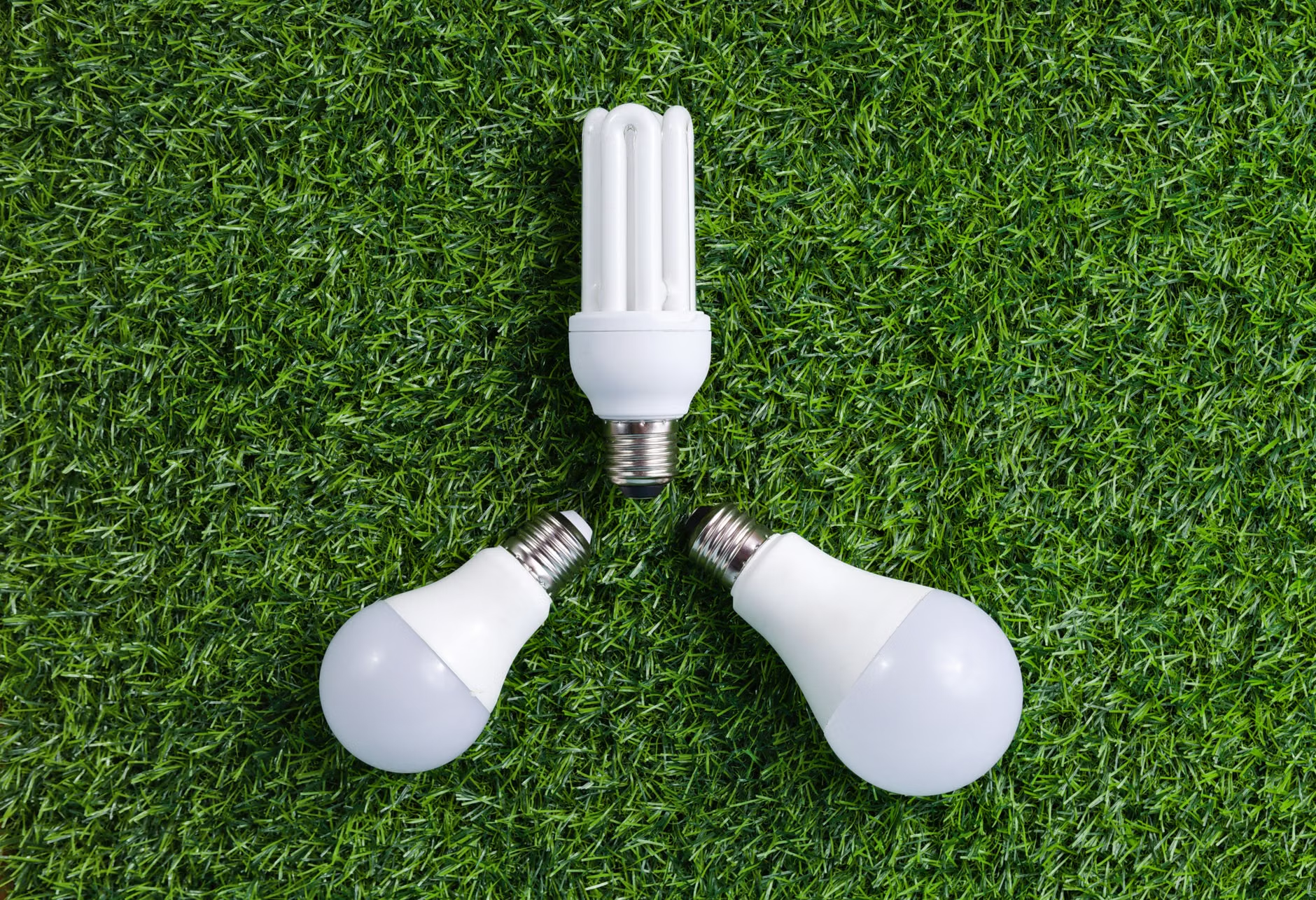
| LED Bulb Swap | Low | Medium (Immediate reduction) |
| Window Insulation Film | Medium | High (Draft reduction) |
| Door Draft Stoppers | Low | Medium (Comfort improvement) |
The beauty of these projects is that they are all “renter-friendly.” If you move out, you can take your smart thermostat with you, swap the LED bulbs back to the old ones (if you really wanted to, though most landlords will thank you for leaving the LEDs), and remove the door stoppers. You are not losing your investment; you are simply taking it with you.
Common Misconceptions About Green Renting
One of the biggest myths is that green renting is only for those with high incomes. In reality, it is often a necessity for those on tight budgets. The “green” aspect is just a label for being efficient with resources. When you stop wasting electricity, you stop throwing away money. It is not about buying expensive organic bamboo furniture; it is about stopping the heat from escaping through your window frames.
Another misconception is that you need a brand-new, modern apartment to be sustainable. Older buildings, while often draftier, actually have a lower “embodied carbon” footprint because they have already been built. Retrofitting an old apartment with simple, low-cost seals and modern energy-efficient habits can often outperform a poorly managed “luxury” building in terms of actual monthly energy consumption.
The Role of Technology in Modern Renting
We are living in an era where technology makes efficiency effortless. Smart plugs, for example, allow you to cut power to “vampire electronics”—devices like TVs and game consoles that draw power even when turned off. For a family with children, this is a game-changer. You can set schedules to ensure that devices are off while the kids are at school or while the house is asleep.
Consider the impact of a smart power strip. By grouping your computer, monitor, and printer, you can ensure they are fully disconnected from the grid with a single click. This isn’t just about the environment; it’s about the psychology of a home. A house that is “smart” about its energy use is often a house that feels more organized and less chaotic.
When to Walk Away: Red Flags in Rental Contracts
Sometimes, the “green” potential of a property is non-existent. If you are looking for a new place, pay attention to the energy rating of the building. In many regions, landlords are required to provide an Energy Performance Certificate (EPC) or equivalent. If a property has a poor rating, ask specifically why. Is it the windows? The heating system? The insulation?
If a landlord is unwilling to discuss energy efficiency or actively pushes back against minor, non-permanent improvements, it may be a sign of a difficult landlord-tenant relationship. A landlord who doesn’t care about the efficiency of their building often doesn’t care about the comfort of their tenants. It is a subtle but effective way to screen for property management that will be responsive to your needs.
Building a Sustainable Future, One Lease at a Time
Transitioning to a more sustainable lifestyle doesn’t require buying a plot of land and moving off the grid. It starts with the small, practical choices we make in the places we call home. By understanding the potential of a green lease—or at least the principles of energy efficiency—you are taking control of your monthly expenses and reducing your family’s footprint.
Remember, the goal is not perfection. You don’t need to turn your apartment into a net-zero research facility. The goal is to optimize what you have, communicate clearly with those who own your space, and make decisions that favor long-term savings over short-term convenience. In your 30s and 40s, when time is the most valuable commodity, these systems (like smart thermostats or automated lighting) do the work for you, giving you back a little bit of time and a little bit of money every month.
If you find yourself stuck with a lease that feels rigid, start with the small things. Focus on the drafts, the lighting, and the energy-wasting habits. Over time, these small changes compound into significant savings. It is a quiet, grounded way to manage your life, one that respects your bank account and the world around you.
Frequently Asked Questions
1. Can I install a smart thermostat if my apartment has a central boiler system?
Often, no. If you have a central system where the landlord controls the heat for the whole building, you cannot install a smart thermostat. In these cases, focus on “smart” radiator valves if your radiators have manual dials. These can be replaced with smart versions that allow you to schedule heating room-by-room, which is incredibly effective for saving money.
2. What if my landlord refuses to allow any changes?
If you cannot make physical changes, focus on behavioral changes and non-invasive tools. Use thick curtains to block heat loss in winter, use draft snakes (fabric tubes) at the bottom of doors, and ensure your electronics are on power strips. These require zero modification to the property and are entirely under your control.
3. Are there legal protections for tenants wanting to improve energy efficiency?
This varies wildly by country and state. In some jurisdictions, there are “right to repair” or “right to improve” laws that prevent landlords from unreasonably withholding consent for minor improvements. Check your local tenant union or government housing website to see if there are specific provisions for energy-efficiency upgrades in your area.
For more information on energy efficiency standards and tenant rights, you can consult these resources:
- International Energy Agency (IEA) – Insights on Residential Efficiency
- ENERGY STAR – Home Improvement Guidance
- Habitat for Humanity – Resources on Affordable and Efficient Housing
Disclaimer: This article provides general information and does not constitute legal or financial advice. Always review your specific lease agreement and consult with local housing authorities before making modifications to your rental property.