The most rewarding travel experiences don’t require a passport, a long-haul flight, or a massive budget; they often begin just outside your front door when you commit to a “hyper-local” history walk.
- Micro-Exploration: You can find layers of history in any neighborhood by focusing on architecture, street names, and local legends.
- Low-Stakes Parenting: History walks turn “boredom” into a scavenger hunt, making them perfect for children who need engagement without the stress of a major trip.
- Digital Tools for Physical Discovery: Use online archives and GIS maps to curate a route that reveals the hidden stories behind familiar street corners.
How many times have you walked past that old brick building on the corner or the park with the slightly odd-looking statue without actually knowing why they are there? When we live in our 30s and 40s, we are often trapped in a cycle of “efficiency.” We walk from the car to the office, the school drop-off to the grocery store, and the gym to the home. We view our neighborhood as a utility—a place to get things done—rather than a place with a narrative.
But what if you treated your own zip code like a foreign city? This isn’t just about nostalgia; it’s about grounding yourself. By understanding the layers of history beneath your feet, you change your relationship with your environment. You stop being a resident who just “lives” there and become an active participant in the story of your community.
The Philosophy of the Micro-Journey
There is a growing trend in urbanism called “hyper-localism.” It rejects the idea that adventure is something you must travel to find. Instead, it posits that the depth of an experience is determined by the quality of your attention, not the distance traveled. For parents, this is a lifesaver. You don’t need to pack a week’s worth of clothes or deal with airport security to get a sense of wonder.
The history walk is the perfect entry point. It requires almost zero investment, can be stopped the moment a toddler hits a meltdown, and provides a genuine sense of accomplishment. It’s a way to reclaim your weekend from the endless loop of household chores and screen time.
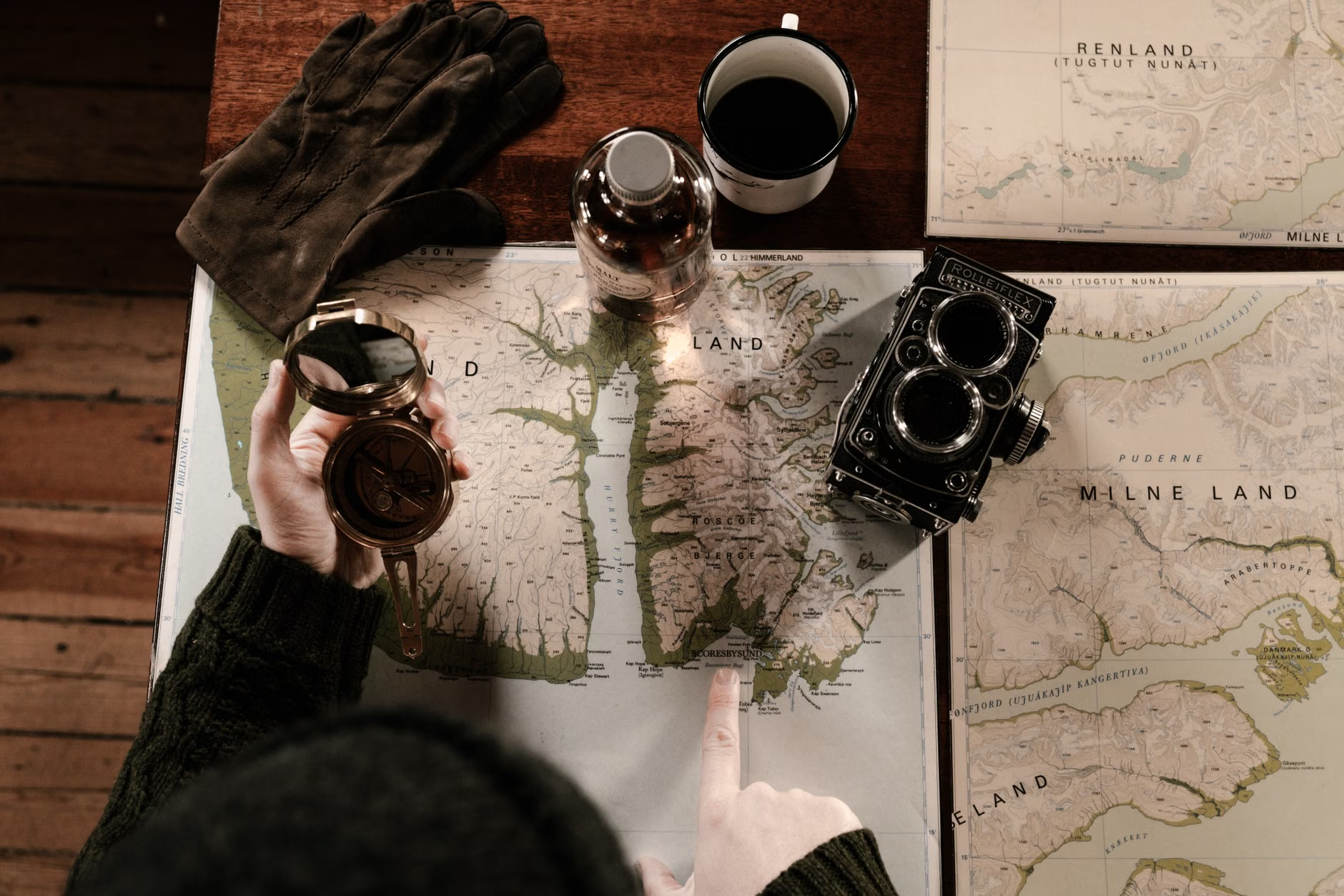
Step 1: Curating Your Route (The Digital Archive Method)
You don’t need to be a professional historian to find the history. In fact, the research is half the fun. Start by looking for primary sources that are often hidden in plain sight. Most local libraries have digitized their archives, including historical photos, land surveys, and newspaper records from the early 20th century.
Tools to get you started:
- Local Historical Society Websites: Almost every town or city has one. They are goldmines for obscure facts about buildings.
- Google Earth/Maps (Historical Imagery): Use the toggle features to see how your neighborhood looked 10 or 20 years ago. Sometimes the shifts in landscape tell a more interesting story than the buildings themselves.
- National Archives or Census Maps: These allow you to see who lived in your area during specific eras, providing a human element to the architecture.
When planning your walk, keep it to a 1.5-mile radius. Any further and it starts to feel like a commute. The goal is to find three to five “anchors”—specific points of interest that have a story to tell. Maybe it’s the site of an old train station that was converted into a library, or a street name that honors a local figure from the 1800s.
Step 2: Engaging the Family (Without the “Boredom” Factor)
If you are bringing children along, the “lecture” method will fail. Instead, frame the walk as a mystery that needs solving. Use a gamified approach to keep them moving and interested.
| Activity | How to execute | Goal |
|---|---|---|
| The Detective Sheet | Create a list of 5 things to find (e.g., a date carved in stone, a specific architectural style). | Encourage observation |
| Then vs. Now | Print photos from the library and ask them to stand where the photographer stood. | Visual comparison |
| The “Time Traveler” Log | Bring a notebook and have them draw one “old” thing they saw vs. one “new” thing. | Reflective thinking |
By giving them a role—the “Navigator” or the “Lead Photographer”—you shift their internal focus from “Are we there yet?” to “What are we looking for next?” This is the secret to successful family outings: shared agency.

Step 3: The Art of the “Slow Walk”
The most common mistake people make on a history walk is rushing. We are conditioned to move from A to B as quickly as possible. To truly experience a hyper-local walk, you must intentionally slow your pace. This is where you notice the details that tell the real story: the ironwork on a gate, the fading ghost sign on the side of a brick warehouse, or the way the sidewalk materials change from concrete to historic stone.
When you slow down, you start to see the “sediment” of the city. You see how different generations have layered their needs onto the same physical space. A building might have been a livery stable in 1900, a speakeasy in 1925, a hardware store in 1950, and a boutique coffee shop today. That’s not just a building; it’s a living timeline.
If you find yourself getting frustrated because you can’t find the “history,” remember that the absence of history is also a story. Why was this area developed later? Why is this street wider than the others? These questions are just as valid as looking at a plaque on a wall.
Common Pitfalls and How to Avoid Them
Even the best-planned walks can go sideways. Here are a few things to keep in mind to ensure your weekend remains restorative rather than stressful:
1. Over-planning: Don’t try to visit 20 sites. You will burn out, and your kids will be miserable. Choose three sites and leave room for “serendipity”—the unexpected discovery that happens when you take a wrong turn.
2. Ignoring Physical Needs: A history walk is still a walk. Ensure you have snacks, water, and comfortable footwear. If you’re walking in a city, check for public restroom availability on your route beforehand. Nothing kills the vibe of a historical exploration faster than an urgent bathroom search.
3. The “Expert” Trap: You don’t need to be an authority. If you don’t know the answer to a question, say, “I don’t know, but let’s look it up when we get home.” This models curiosity for your children and takes the pressure off you to be a walking encyclopedia.
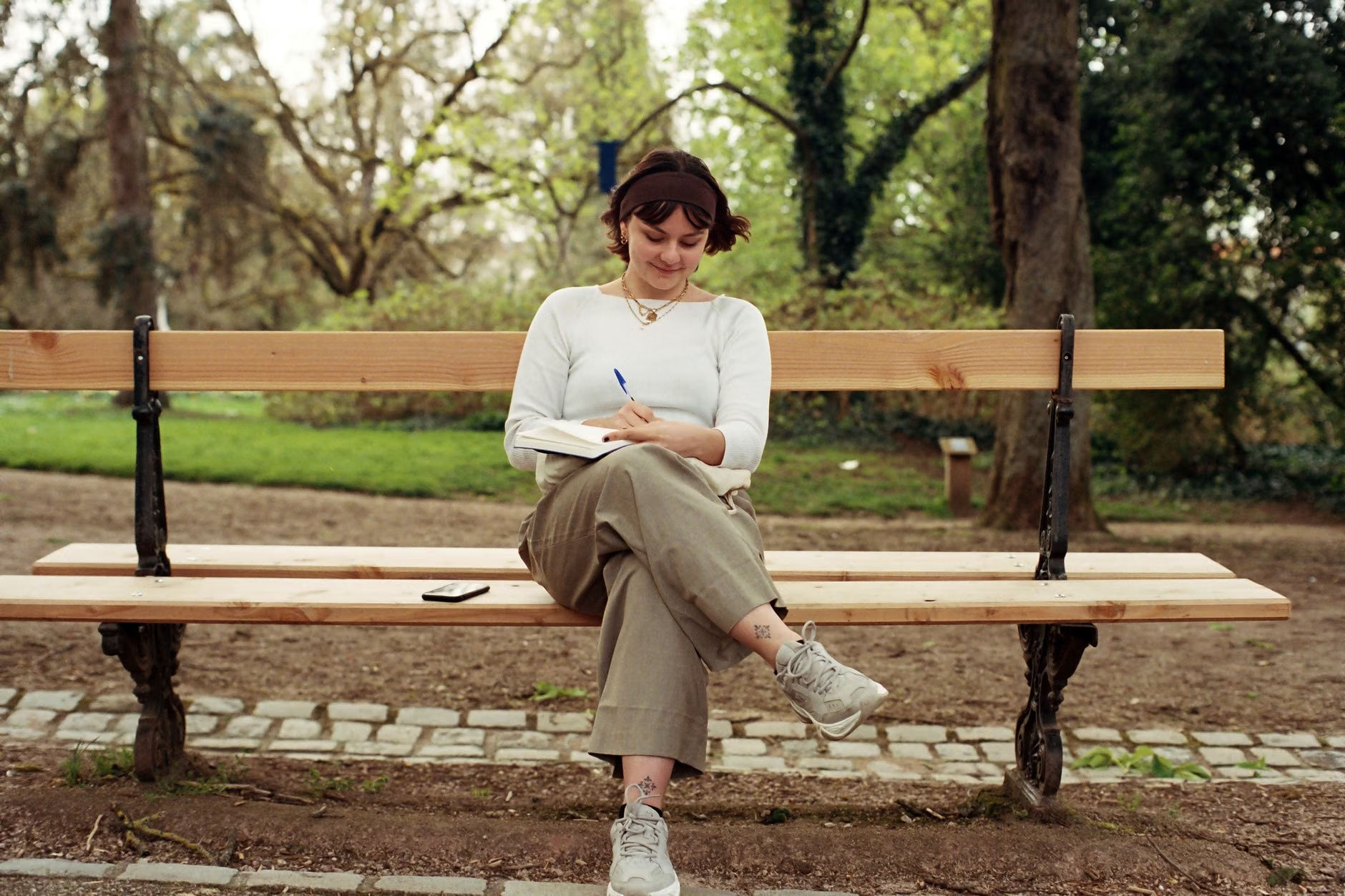
Why This Matters in Your 30s and 40s
In our middle years, we often feel like we are just managing the logistics of existence. We manage the household, the career, the school schedule, and the social calendar. We are rarely just “in” our environment. A hyper-local history walk is a form of mindfulness. It forces you to look up from your phone and engage with the physical world.
It also fosters a sense of stewardship. When you know the history of your neighborhood—the struggles of the people who lived there before, the way the neighborhood evolved through economic cycles—you feel more connected to the place. You aren’t just passing through; you are part of the continuum.
This practice can also lead to more sustainable habits. When you start walking your neighborhood, you begin to notice local businesses you might have driven past before. You see the gaps in your community—the lack of green space, the neglected corners—and you might even feel inspired to advocate for them. It’s a small, manageable way to become a better neighbor.
Adapting the Walk for Different Seasons
The beauty of the hyper-local walk is that it changes with the seasons. A winter walk is perfect for architectural study; without the leaves on the trees, you can see the bones of the buildings and the intricate rooflines that are hidden in the summer. A spring walk is ideal for looking at local gardens and the way the landscape has been managed over the decades.
If you live in a climate with harsh winters or extreme heat, don’t feel like you have to be outside for hours. A 30-minute “micro-walk” to a specific historical marker is just as valuable as a two-hour trek. The point is the consistency of the practice, not the duration.
Consider keeping a log. You don’t need to write an essay. Just note the date, the route you took, and one thing that surprised you. Over the course of a year, you will have created a personal map of your neighborhood that is unique to you and your family.
Final Thoughts on Urban Discovery
The goal of the hyper-local history walk is not to reach a destination, but to change your perspective on the space you occupy. It’s a humble, grounded, and highly effective way to reclaim your weekend. By treating your neighborhood as a site of discovery, you move from being a passive resident to an active observer.
Don’t wait for the “perfect” weekend or the “perfect” weather. Start with the block you live on. Look at the sidewalk, the trees, and the buildings with fresh eyes. You might be surprised by how much life has been lived exactly where you are standing right now. It’s a quiet, profound way to keep your curiosity alive amidst the demands of adult life.
Frequently Asked Questions
Q: What if my neighborhood is relatively new and doesn’t have much “history”?
A: Every place has a history. If your area was built in the 1980s, research what was there before—was it farmland? A forest? A factory? The history of the land itself is often more fascinating than the buildings, and finding out what the geography looked like before development can be a great lesson in local ecology.
Q: How can I keep my kids interested if they find history boring?
A: Focus on the “human” stories rather than dates and architectural styles. Tell them about the people who lived there. Did a famous person visit? Was there a fire? Did a specific event happen on that street? Children are naturally drawn to narratives and mysteries, so framing your walk as a search for hidden secrets is much more effective than a history lesson.
Q: Do I need special equipment to start these walks?
A: Not at all. A smartphone for navigation and quick research is helpful, but a simple notebook and a pen are all you really need. If you want to get more serious, a local map or a historical guide from a library can add depth, but keep it simple to ensure you stay flexible and stress-free.
For further research on local history, you can explore resources like the Library of Congress Digital Collections or your regional National Register of Historic Places database to see if any sites in your vicinity are officially recognized.