The most effective way to keep your garden alive while juggling a career and parenting is to stop watering on a schedule and start watering based on real-time soil needs.
- Sensor-Driven Irrigation: Move away from “timer-based” watering to “sensor-based” watering to slash water waste by up to 50%.
- Low-Energy Hardware: Prioritize Zigbee or Thread-based smart controllers that run for years on a single set of batteries, avoiding complex wiring.
- Zone Management: Group your plants by their specific water needs (hydro-zoning) to ensure your succulents aren’t drowning while your ferns are parched.
If you are anything like me, your garden is usually a casualty of the “busy season.” You start the spring with grand ambitions of a lush vegetable patch and perfectly manicured flower beds. Then, reality hits. Between school runs, work deadlines, and the general chaos of keeping a household running, the garden is often the first thing to lose out. We’ve all been there: staring at a patch of brown, crispy grass or wilting hydrangeas, feeling that distinct pang of guilt while holding a hose at 10:00 PM.
The traditional solution—a mechanical timer—is often more trouble than it’s worth. They are notoriously inflexible. If it rains, the timer keeps running, wasting water and potentially rotting your roots. If there is a heatwave, the standard two-minute morning cycle isn’t enough. Enter the low-energy smart irrigation system. It isn’t just about “tech for the sake of tech.” It is about reclaiming your weekends and actually keeping your plants alive without turning your utility bill into a financial disaster.
Understanding the Shift: Why “Smart” Beats “Mechanical”
To understand why smart irrigation is a game-changer, we have to look at the flaw in the old ways. Traditional timers are binary: they are either “on” or “off.” They don’t know if the humidity is 90% or if the temperature is 40°C. They don’t know if your neighbor’s sprinkler is currently soaking the soil in the adjacent flower bed. They just follow the clock.
Smart irrigation introduces a feedback loop. By integrating soil moisture sensors and local weather data, your system starts to “think.” If the forecast calls for rain, the system skips the cycle. If the soil moisture sensor detects that the roots are still damp, it holds off. This is the definition of low-energy management: you put in the setup time once, and the system maintains the ecosystem on your behalf.
From an energy perspective, we aren’t talking about systems that suck power from your main grid. Modern smart controllers are incredibly efficient. Many use low-power wireless protocols like Zigbee or Z-Wave, which allow devices to operate for months or even years on a couple of AA batteries. This means you don’t need an electrician to run wires out to your shed or fence line. It is a plug-and-play solution that fits into the gaps of a busy life.

The Architecture of an Efficient System
Before you rush out to buy the first smart controller you see on a discount site, take a moment to map out your space. Not all gardens are created equal. A smart system is only as good as its zoning. Hydro-zoning is the practice of grouping plants with similar water needs together. If you mix drought-tolerant lavender with water-hungry tomatoes on the same irrigation line, one of them is going to suffer no matter how “smart” your controller is.
The Controller: Your System’s Brain
The controller is the hub. Look for one that supports local API control if you are a tech-savvy user, or one with a robust, intuitive app if you just want it to work. The key feature to look for is “weather-based adjustment.” This is often marketed as “Evapotranspiration (ET) data.” It’s a fancy term for calculating how much water your plants lose to the sun and wind. Your controller pulls this data from the nearest weather station to adjust your watering schedule dynamically.
Sensors: The Ground Truth
While weather data is great, it’s an estimate. Soil moisture sensors are the “ground truth.” These small probes sit in the dirt and report the actual percentage of moisture in the root zone. When you are starting out, you don’t need a sensor in every single pot. Start with the most sensitive areas—your vegetable garden or the expensive perennials—and let the rest be handled by the weather-based algorithms.
Valves and Tubing: The Delivery
For most residential setups, a drip irrigation system is the gold standard for water efficiency. It delivers water directly to the base of the plant, minimizing evaporation and keeping the leaves dry (which prevents many fungal diseases). If you are retrofitting an existing garden, consider using “soaker hoses” for beds or “emitter lines” for rows. They are relatively easy to install and require very little maintenance once they are buried under a layer of mulch.
| Component | Function | Maintenance Frequency |
|---|---|---|
| Smart Controller | Manages logic and scheduling | Check firmware/app yearly |
| Moisture Sensor | Provides real-time soil data | Calibrate/Battery change 1x/year |
| Drip Lines | Delivers water to roots | Flush lines 2x/year |
| Filter | Prevents clogging | Clean every 3 months |
Common Pitfalls and How to Avoid Them
In my research, I’ve found that most “smart irrigation failures” aren’t due to the technology being bad; they are due to poor installation or unrealistic expectations. Let’s look at the three most common ways people get this wrong.
1. Over-Complicating the Setup
You do not need to automate every single square inch of your property. If you have a small patch of grass that is easy to reach with a hose, don’t bother setting up a complex sprinkler zone there. Focus your smart infrastructure on the high-maintenance areas: the vegetable patch, the hedge that needs consistent watering to thrive, or the hanging baskets that dry out by noon. Start small. A two-zone system is perfectly adequate for most suburban homes.
2. Ignoring the Filter
This is the most common reason for system failure. Drip irrigation lines have tiny holes that can easily become clogged with sediment or mineral deposits. If you don’t install a filter at the start of your line, you will eventually find that half your garden isn’t getting any water. A simple screen filter is cheap and takes five minutes to clean. Make it a part of your seasonal cleanup routine.
3. “Set and Forget” Mentality
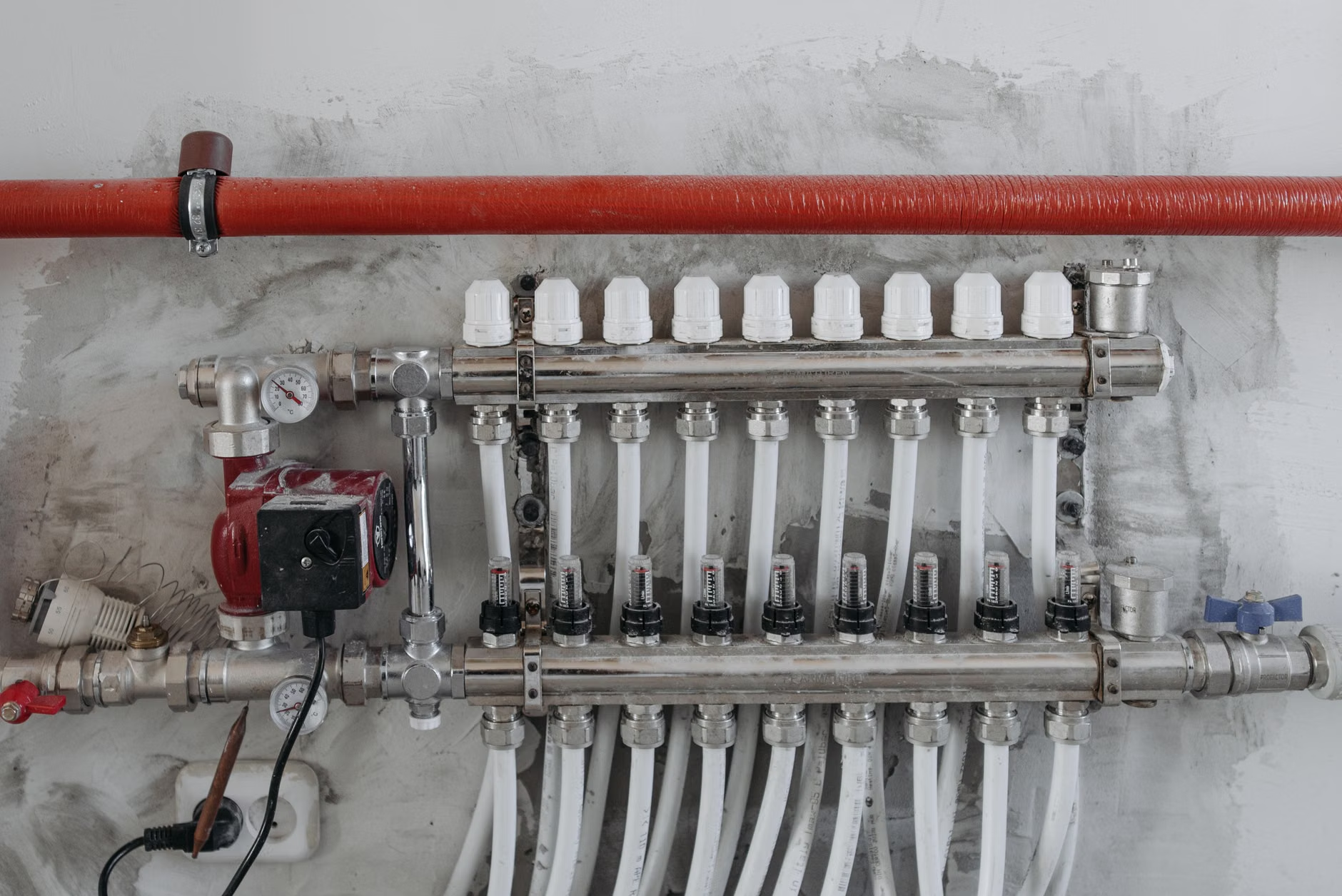
Even the best systems need a sanity check. Once a month, take a walk through the garden while the system is running. Look for leaks, check that the emitters aren’t buried under debris, and verify that the soil actually feels damp. Technology is an assistant, not a replacement for your eyes and ears. Think of it as a tool that handles the 80% of the work, leaving the final 20% for your occasional oversight.
Integration into Your Busy Life
You have kids, a job, and a social life. The last thing you want is another app that demands your attention. The beauty of a “low-energy” irrigation setup is that it should be invisible. Once you have configured your preferences—such as “water only between 5:00 AM and 7:00 AM” or “do not water if it rained in the last 24 hours”—the system should effectively disappear into the background.
Most modern controllers offer “push notifications” for critical events. If there is a leak, the system detects a drop in pressure and alerts your phone. If the controller loses internet connectivity, it will usually revert to a safe, pre-set schedule so your plants don’t die while you are on vacation. This “fail-safe” mode is a non-negotiable feature. If a device doesn’t have a local schedule backup, don’t buy it.
Consider the psychological benefit of this. Knowing that your garden is being cared for even when you’re stuck in a late-afternoon meeting or helping with homework takes a weight off your shoulders. It transforms gardening from a chore into a hobby again. Instead of spending your Saturday morning moving a hose around, you can spend it pruning the roses or harvesting the vegetables, knowing the hydration part is already taken care of.
Choosing the Right Hardware
When you are looking at products, look for terms like “Open Protocol” or “Works with Home Assistant.” This ensures that you aren’t locked into a single manufacturer’s ecosystem. If that company goes bust or decides to start charging a monthly subscription for basic features, you want the ability to migrate your hardware to a different platform.
Battery life is another critical metric. Many newer devices use the “LoRa” (Long Range) protocol or “Thread,” which are designed specifically for low-power IoT (Internet of Things) devices. These are vastly superior to Wi-Fi-based sensors, which can drain their batteries in a matter of weeks and struggle with range through brick walls or dense foliage. If you have a large garden, prioritize these long-range, low-power protocols.
Finally, look at the physical durability. Your controller will likely be exposed to the elements. Ensure it has an IP65 or higher rating (Ingress Protection). This means it is dust-tight and protected against water jets. A cheap plastic box might look fine in the store, but after one winter of freezing temperatures and summer UV exposure, it will become brittle and crack. Spend a little extra on a housing that is built to last.
Sustainability and Water Conservation
Water scarcity is a growing concern globally. Using a smart irrigation system isn’t just about convenience; it’s a responsible way to manage a precious resource. By applying water only when and where it is needed, you reduce runoff and evaporation. This is particularly important if you live in a region with strict water restrictions during the summer months.
Many smart controllers allow you to set “Watering Budgets.” You can tell the system, “I only have an allotment of X gallons per week.” The controller will then prioritize the most important plants and cut back on the others. This is a level of precision that is impossible to achieve with a mechanical timer. It turns your garden into a sustainable ecosystem rather than a water-hungry vanity project.
Furthermore, by deep-watering your plants—rather than giving them a light, shallow sprinkle every day—you encourage deeper root growth. This makes your plants more resilient to heatwaves and droughts. A plant with a deep root system is a healthier plant, and a healthier plant is less prone to pests and diseases, which in turn reduces your need for chemical interventions. It is a virtuous cycle that starts with the right irrigation strategy.
Advanced Troubleshooting: When Things Go Wrong
Even with the best planning, you will encounter the occasional hiccup. Here is how to handle the most common issues without calling a professional.
The “Ghost” Watering: If your system turns on when it shouldn’t, check your “Smart Schedule” settings. Sometimes, an update to the weather data provider can cause the system to misinterpret a forecast. If this happens, reset your local weather station link in the app. It’s almost always a software sync issue, not a hardware failure.
Wireless Range Issues: If your sensor is too far from the hub, it will drop its connection. Don’t try to force it to work. Use a “Range Extender” or a “Smart Plug” that acts as a signal repeater. Many Zigbee-based smart plugs double as range extenders for other sensors. This is a cheap and effective way to mesh your garden’s network.
Mineral Buildup: If you live in an area with “hard” water, your valves might get stiff. Once a year, unscrew the solenoid (the electrical part of the valve) and check for calcium deposits. A quick wipe with a damp cloth or a soak in white vinegar is usually all it takes to get things moving smoothly again. It sounds technical, but it’s essentially the same as descaling a coffee machine.
Final Thoughts on Smart Gardening
Automating your irrigation is one of the most high-impact changes you can make for your home. It saves time, saves water, and gives you the peace of mind that your garden is thriving even when your life is at its busiest. Don’t try to make it perfect on day one. Start with the basics: a solid, weather-aware controller and a few key moisture sensors in your most important zones. From there, you can expand as your needs grow.
Remember, the goal isn’t to create a perfectly robotic environment. The goal is to provide a reliable foundation so that you can enjoy the parts of gardening you actually like. Whether that’s the smell of fresh soil, the sight of blooming flowers, or the taste of a home-grown tomato, these systems are here to help you keep those joys alive amidst the daily grind. Take it slow, keep your filters clean, and enjoy the extra time you’ve just bought yourself.
For those looking to dive deeper into the technical standards of water conservation, you can check out the EPA WaterSense program, which provides excellent resources on efficient irrigation practices and certified product lists. Additionally, the Irrigation Association offers comprehensive guides on best management practices for residential systems. For specific hardware compatibility and setup, always consult the Home Assistant documentation if you are building an open-source, vendor-agnostic network.
Frequently Asked Questions
Q: Will a smart irrigation system work if I don’t have a strong Wi-Fi signal in my garden?
A: Most modern smart controllers use mesh networking (like Zigbee or Thread) rather than direct Wi-Fi. These protocols allow devices to pass the signal from one to another, creating a robust network even if your main router is inside the house. If you are worried about range, look for devices that specifically mention “long-range” or “mesh” capabilities.
Q: How much water can I actually save with these systems?
A: Studies suggest that moving from a standard mechanical timer to a weather-based smart controller can reduce outdoor water use by 30% to 50%. This is primarily because the system stops watering during rain events and adjusts for seasonal temperature shifts, which are the two biggest causes of water waste.
Q: Is it difficult to install these systems if I am not tech-savvy?
A: If you can operate a smartphone app, you can manage a smart irrigation system. The physical installation involves connecting a few low-voltage wires (usually just a click-in terminal) and mounting the controller. Most manufacturers provide excellent step-by-step video guides that make the process straightforward for a weekend DIY project.