The secret to surviving a long-distance train trip with children isn’t just patience; it is having the right gear that turns a cramped carriage into a functional, mobile living room. When you shift your mindset from “surviving the journey” to “optimizing the environment,” the train becomes the most stress-free way to travel with a family.
Key Takeaways
- Modular Packing: Use packing cubes and dedicated “activity bags” to ensure you only pull out what you need, rather than dumping your entire suitcase.
- Tech & Power: Prioritize high-capacity power banks and noise-canceling headphones; a dead tablet or a loud environment is the quickest route to a meltdown.
- Comfort Engineering: Invest in compact, foldable items like inflatable footrests or neck pillows to help kids sleep in upright seats.
If you have ever spent four hours on a regional express train with a toddler who has suddenly decided that the aisle is their personal racetrack, you know that the “romance of the rails” can quickly feel like a high-stakes endurance sport. Many parents gravitate toward air travel for the sheer speed, but the airport experience—security lines, boarding gates, and the infamous “no-movement” seatbelt sign—is often far more taxing than the slow, rhythmic hum of a train.
The train offers something the airplane cannot: space. You can walk, you can stretch, and in many modern rail systems, you can even visit a dining car. However, that freedom comes with the responsibility of managing your own gear. If you are unprepared, you are essentially carrying your household on your back. If you are prepared, you are the conductor of your own mobile sanctuary.
The Architecture of the ‘Train-First’ Packing Strategy
Most travelers make the mistake of packing for the destination and ignoring the journey. When you are on a train, your luggage is your lifeline. The “Train-First” philosophy dictates that you divide your gear into three specific categories: The Accessible Essentials (the day bag), The Bulk Storage (the suitcase), and The Comfort Zone (the small wearables).
The biggest mistake parents make is placing their “emergency kit”—snacks, extra layers, and charging cables—at the bottom of a large suitcase that is shoved into an overhead rack. When the train is moving, getting that suitcase down is a logistical nightmare. Your primary day bag needs to be a backpack, not a tote or a shoulder bag. It must leave your hands free to hold a child’s hand or navigate a narrow train corridor.
When selecting your main backpack, look for “clamshell” opening designs. Unlike top-loading bags that require you to dig through layers of sweaters to find a pack of crackers, a clamshell bag opens flat. This allows you to see everything at once, making it significantly easier to grab a specific item without disrupting the entire bag’s contents.
Why Modular Organization Wins
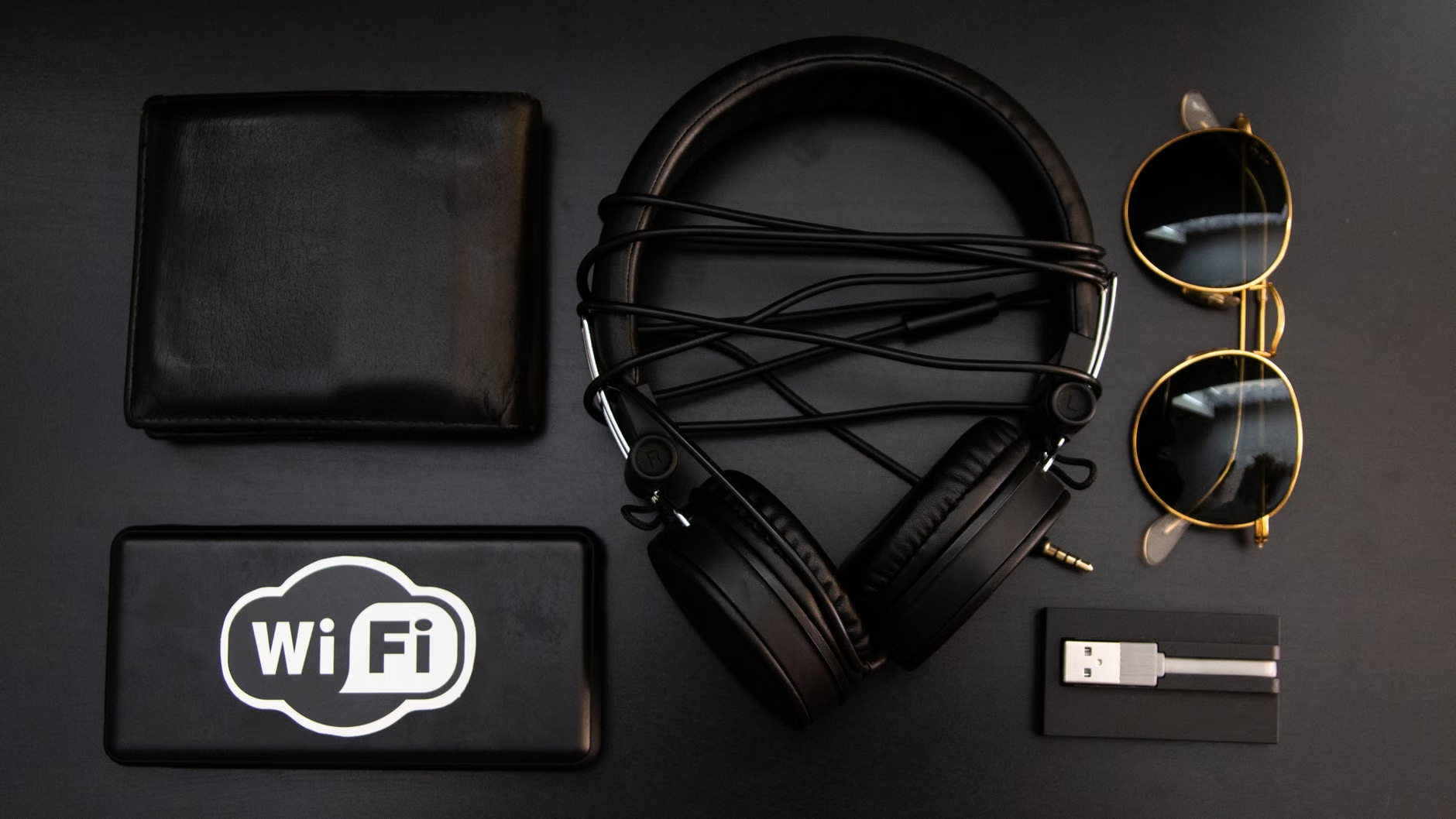
Packing cubes are not just for clothes; they are for sanity. Use one small, brightly colored packing cube for “Tech/Entertainment,” another for “Snacks,” and a third for “Emergency Hygiene.” If you are traveling with two children, give them each their own dedicated pouch. This prevents the “Who took my headphones?” argument before it even starts. By keeping items in these pods, you can pull a single pouch out of your backpack and hand it to your child, rather than letting them rifle through your personal belongings.
Consider this a mini-table of your essential kit:
| Category | Essential Item | Why it matters |
|---|---|---|
| Tech | Multi-port GaN charger | Trains have limited outlets; one plug needs to charge everything. |
| Comfort | Inflatable footrest | Helps younger children create a flat surface for sleeping. |
| Hygiene | Extra-large wet wipes | Train bathrooms are rarely stocked with enough soap or towels. |
| Activity | Magnetic drawing boards | No loose markers or paper scraps to clean up after the trip. |
Managing the ‘Tech-Tantrum’ Without Losing Your Mind
Let’s be honest: screens are a parenting tool, and on a six-hour train ride, they are often a survival tool. However, the train environment is not like your living room. Lighting changes, the train rocks, and the glare from the window can make tablet screens impossible to see. A “Train-First” approach to tech involves a few specific adjustments.
First, invest in a dedicated tablet stand. Most train seat-back trays are flimsy or angled in a way that makes viewing difficult for kids. A small, foldable stand that grips the tray or sits securely on the seat-back allows for a stable viewing angle. If you don’t have one, even a simple roll of duct tape or a strategically placed neck pillow can prop up a device, but a dedicated stand is a game-changer for long-term comfort.
Second, address the power issue. While many modern trains offer power outlets, they are often located in awkward spots—under the seat or between passengers. Bring a 6-foot (2-meter) charging cable. A short cable limits where you can sit; a long cable gives you the flexibility to move your device to a more comfortable position. Furthermore, ensure your power bank is fully charged before you leave home. Relying on the train’s electrical supply is a gamble; some older carriages have temperamental outlets that cut out when the train draws too much power.
The Art of the ‘Snack-Station’
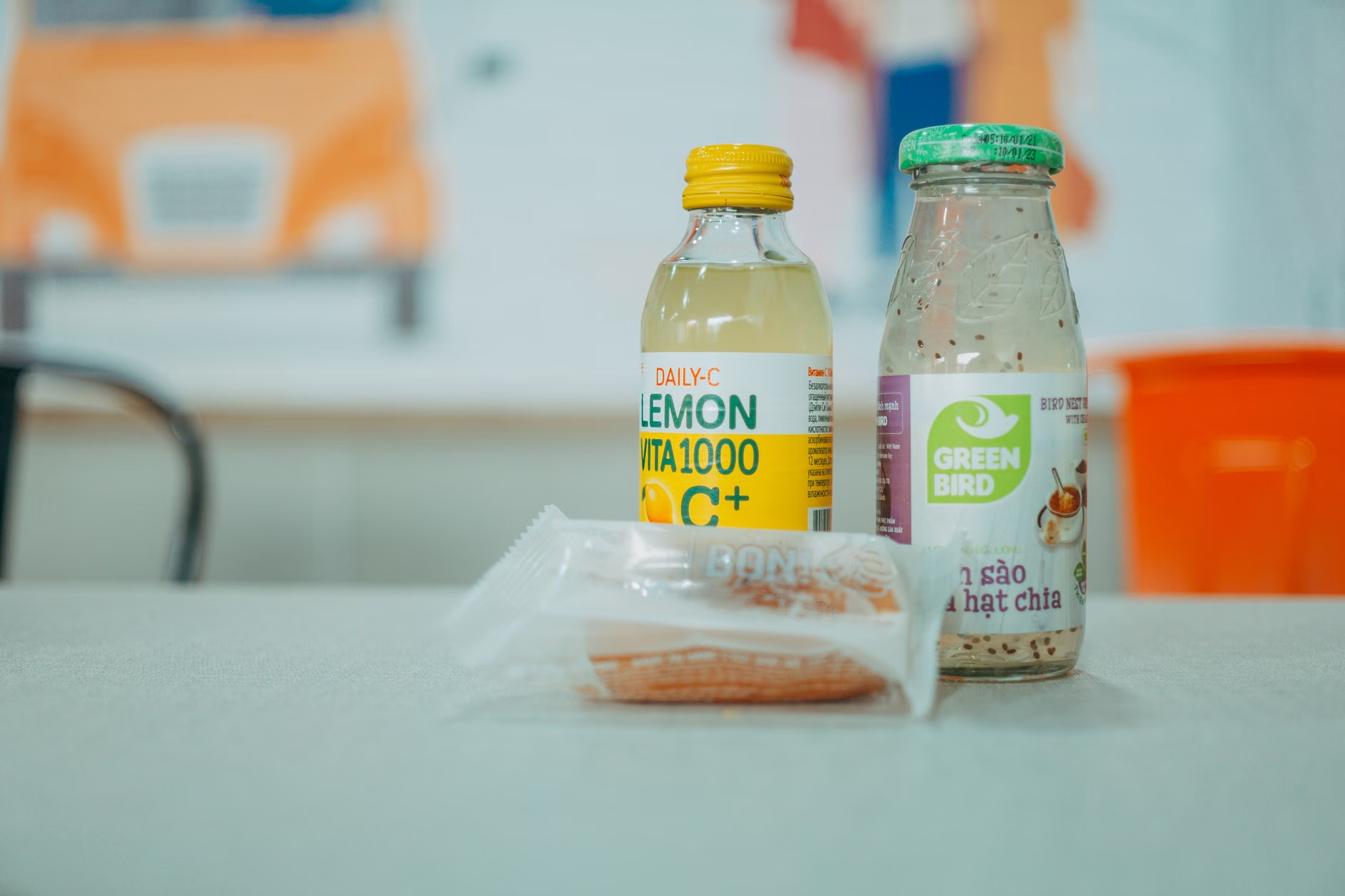
Food on trains is famously expensive and often underwhelming. Even if you plan to visit the dining car, you need a backup supply of snacks. The goal here is “low-mess, high-satisfaction.” Avoid anything that crumbles, melts, or leaves a sticky residue on the upholstery. Train seats are notoriously hard to clean, and you don’t want to be that family that leaves a trail of crumbs for the next passenger.
Focus on “composed snacks.” Think cheese sticks, pre-cut fruit (in a sealed container, not a bag), and protein-heavy bars. Avoid anything that requires a knife or a complex setup. If you have younger kids, consider the “snack-a-thon” method: pack several small, separate containers rather than one large bag. This creates a sense of variety and helps pace the snacking throughout the journey.
Don’t forget the water. Train air is notoriously dry, similar to air travel, though slightly better. Bring reusable, leak-proof bottles. While many trains have water fountains, they are often located in the vestibule between carriages, which can be difficult to reach during peak times. Bringing enough water for the entire trip ensures you don’t have to navigate the train during a crowded period.
Comfort Engineering: Helping Kids Sleep on the Move
The biggest challenge of rail travel is the lack of a horizontal sleeping surface. For adults, a good neck pillow usually suffices. For kids, the gap between the seat and the floor is a cavern of discomfort. This is where “comfort engineering” comes into play.
Inflatable footrests are the gold standard for long-distance family rail travel. They fill the space between the seat and the floor, effectively turning the seat into a small bed or a flat platform. They are incredibly lightweight, deflate to the size of a paperback book, and can be tucked away in seconds when the ticket inspector comes around or you need to exit the train.
Another often overlooked item is a lightweight blanket. Train carriages are notorious for inconsistent temperatures—it might be freezing near the air conditioning vent and stifling near the window. A travel-sized, microfiber blanket is perfect because it packs down to almost nothing but provides enough warmth to keep a sleeping child comfortable. Avoid heavy wool or fleece blankets that take up half your suitcase.
The journey begins long before you board. The “Train-First” mindset requires a specific approach to the station experience. When you arrive at the platform, don’t just stand in the crowd. Identify your carriage number well in advance. Most rail systems post a carriage diagram on the platform. Find your number, and stand precisely where your carriage will stop. This saves you from the “train-sprint”—the frantic dash down the platform when the train arrives and you realize your seat is at the far end of the train.
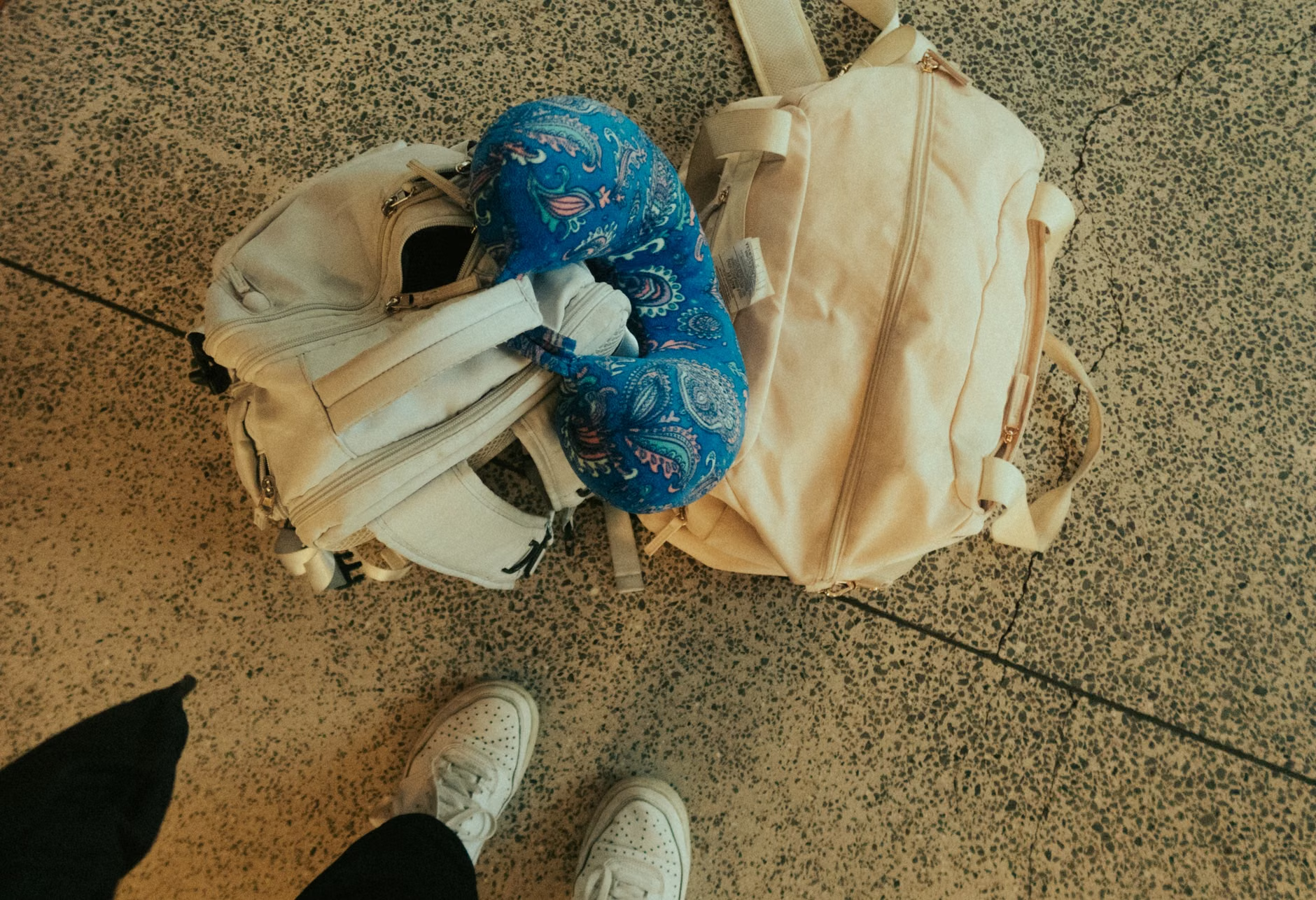
Once on board, your priority is securing your bags. If you are traveling with a stroller, check if your train requires it to be folded. Most modern high-speed trains have designated luggage areas at the end of each carriage. If you have a large suitcase, put it there. Keep only your “day bag” at your seat. This keeps your immediate area clear and prevents the “overstuffed seat” syndrome that makes a three-hour trip feel like a six-hour ordeal.
If you are traveling with a young child who needs a stroller, consider a “travel stroller” that fits into an overhead rack. While not strictly necessary for every trip, it makes the transition from the station to the train seamless. You can wheel the child right up to the carriage door, fold the stroller, and step on without missing a beat.
Common Mistakes to Avoid
Even the most seasoned travelers fall into the trap of over-packing. The most common mistake is bringing “activity sprawl”—too many toys, books, and gadgets. When you have too much, you spend your entire trip cleaning up. Limit each child to one “activity bag.” If they want to switch to a different toy, they must put the current one away first. This keeps the carriage tidy and prevents the loss of small items.
Another mistake is failing to account for the “transition time.” When the train pulls into a station, the stop might only last two minutes. Don’t wait until the train stops to start packing up. Set a timer on your phone for 15 minutes before your scheduled arrival. This is your “pack-up window.” Use this time to gather your trash, put the electronics back in their pouches, and deflate the footrests. If you wait until the train has stopped, you will inevitably leave something behind in the seat pocket.
Finally, avoid the “bathroom rush.” Train bathrooms are busiest just before arrival. If you have young children, take them to the bathroom 30 minutes before your stop. Trying to navigate a swaying train to the bathroom while the train is decelerating is a recipe for a spill or a fall.
The Psychological Aspect of Rail Travel
Why do we choose the train? Because it is a middle ground between the chaos of the airport and the isolation of the car. On a train, you are together, but you are not confined to a single row of seats. Use this. If the kids are getting restless, don’t just stay in your seat. Take a walk to the dining car or simply stand in the vestibule for a few minutes. The change of scenery is often enough to reset a child’s mood.
Remember that the train is a shared space. While you want your kids to be comfortable, be mindful of the noise level. Noise-canceling headphones are not just for the kids; they are for your fellow passengers. If your child is watching a movie, ensure they are using headphones. It’s a small courtesy that makes the journey more pleasant for everyone, including you, as you won’t be constantly worrying about whether you are disturbing the person in the next seat.
Ultimately, the “Train-First” gear is about removing the friction from the journey. When you have the right tools, you stop worrying about the “what-ifs” and start enjoying the “what-is.” You are moving through the landscape, you are together, and you are reaching your destination without the stress of security lines or the fatigue of driving. That is the true value of rail travel.
Frequently Asked Questions
What is the most important piece of gear for a long train journey with kids?
Without a doubt, it is a high-capacity, multi-port power bank and a set of quality noise-canceling headphones. These two items solve the most common sources of stress: dead devices and sensory overload. When kids are entertained and the noise is managed, the train environment becomes much more manageable.
How do I handle luggage on a train when I have young children?
Use the “day bag” system. Keep one large backpack (the clamshell design is best) that contains all your essentials for the trip. Put all other suitcases in the dedicated luggage racks at the end of the carriage. This keeps your seating area clear and allows you to move freely without being buried under bags.
Is it worth buying a dedicated travel stroller for train trips?
If you travel by train frequently, yes. A compact, “travel-sized” stroller that can be folded quickly and placed in an overhead rack or a small luggage space makes a massive difference. It allows you to navigate the station, the platform, and the train boarding process with your hands free for other bags or your child’s hand.
Official Resources and Further Reading:
- The Man in Seat 61: The ultimate guide to global train travel – A fantastic resource for navigating rail systems worldwide.
- Eurail: Tips for traveling with children on European trains – Practical advice for specific regional rail networks.
- Amtrak: Traveling with children guide – Useful information for North American train travelers.
Traveling by train with your family is a skill, not a chore. By investing in the right gear and adopting a modular approach to your packing, you transform the journey from an obstacle into part of the adventure. Keep your essentials accessible, your tech charged, and your expectations realistic. The rails are waiting; enjoy the ride.