Choosing the train over a plane as your primary mode of family travel is the single most effective way to eliminate the “travel day” burnout that plagues parents in their 30s and 40s. By adopting a “Rail-First” strategy—where you prioritize train routes for any journey under six hours—you trade the high-stress, security-heavy environment of airports for a mobile living space that allows for movement, snacks, and actual quality time with your children.
- The Six-Hour Rule: For journeys up to six hours, the total travel time—including airport transit and security wait times—favors the train, making it the more efficient choice.
- Regulatory Ease: Unlike air travel, trains have minimal liquid restrictions and no “seatbelt sign” duration, allowing children to move freely, which is critical for long-term emotional regulation.
- The City-Center Advantage: Train stations are typically located in the heart of cities, saving families the cost and logistical headache of long, expensive airport transfers.
If you have ever spent two hours in a security line with a toddler who decided that was the exact moment they needed a nap, or paid a premium for an Uber with a car seat just to get to a city center, you know that the “fastest” way to travel isn’t always the most efficient. The Rail-First strategy isn’t about being anti-flight; it is about recognizing that parenting involves a unique set of logistical constraints. When you fly, you are a passenger in a high-security, low-autonomy environment. When you take the train, you are in a mobile lounge.
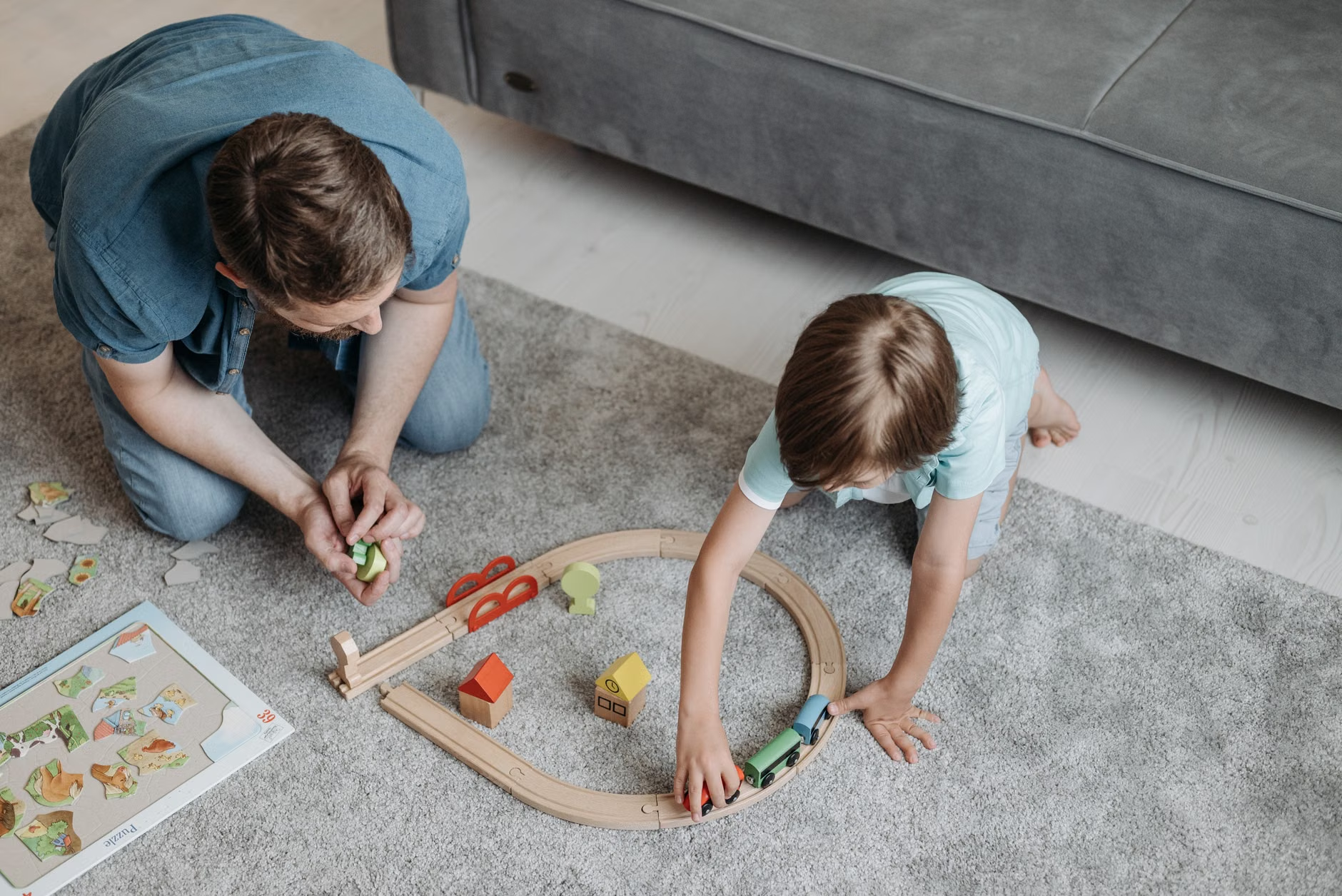
Why the ‘Rail-First’ Strategy Outperforms Aviation for Families
The primary reason the Rail-First strategy works is the reduction of “transition friction.” In aviation, a three-hour flight is rarely three hours. It is 90 minutes of transit to the airport, two hours of security screening, 45 minutes of boarding, the flight itself, and another hour of deplaning and baggage claim. That is a six-hour commitment for a “short” trip. With a train, the “transition” is a ten-minute walk from the ticket gate to your seat.
For parents in their 30s and 40s, the mental load of travel is often the heaviest part of the journey. Keeping track of passports, boarding passes, liquids, electronics, and small children in a crowded airport is a recipe for exhaustion. On a train, you arrive at the platform, board, and sit down. There is no requirement to remove shoes, no liquid limits, and if your child needs to stand up and walk the aisle, they can. This freedom of movement is a game-changer for behavior management.
Consider the cost-to-value ratio. While budget airlines often advertise lower base fares, once you factor in checked bags, seat selection, and the exorbitant cost of airport ground transportation (especially for families requiring multiple seats or specialized car-seat-compatible transport), the train is frequently cheaper. Furthermore, train tickets often allow for more flexibility; many operators allow you to change your reservation for a small fee or even for free, whereas airline change fees can exceed the cost of the ticket itself.
Evaluating the Six-Hour Threshold: A Decision Framework
To implement the Rail-First strategy, you need a clear decision rule. We use the “Six-Hour Threshold.” If the total door-to-door time of a train trip is six hours or less, it is the default choice. If it exceeds six hours, we look at the alternatives, but often stick with the train if a sleeper car option is available.
Why six hours? Research into travel fatigue suggests that after about four hours of transit, the cognitive load on parents increases significantly. By choosing the train, you are essentially “buying back” that stress. You can eat a meal, play board games, or even get some work done while the train is in motion. You aren’t “losing” time; you are repurposing it.
Here is how to calculate the true cost of your journey to decide if it fits the Rail-First model:
| Factor | Air Travel | Train Travel |
|---|---|---|
| Pre-arrival time | 2–3 hours | 20–30 minutes |
| Security/Boarding | Strict/High Stress | Minimal/Low Stress |
| Movement | Restricted | Unrestricted |
| Ground Transport | Expensive/Far | Inexpensive/Central |
| Connectivity | Often Paid/Unreliable | Usually Free/Stable |
When comparing these, look beyond the ticket price. If you have to spend $150 on an airport transfer, that is a hidden cost of the flight. If the train ticket is $50 more than the flight but drops you off two blocks from your hotel, you have already broken even.
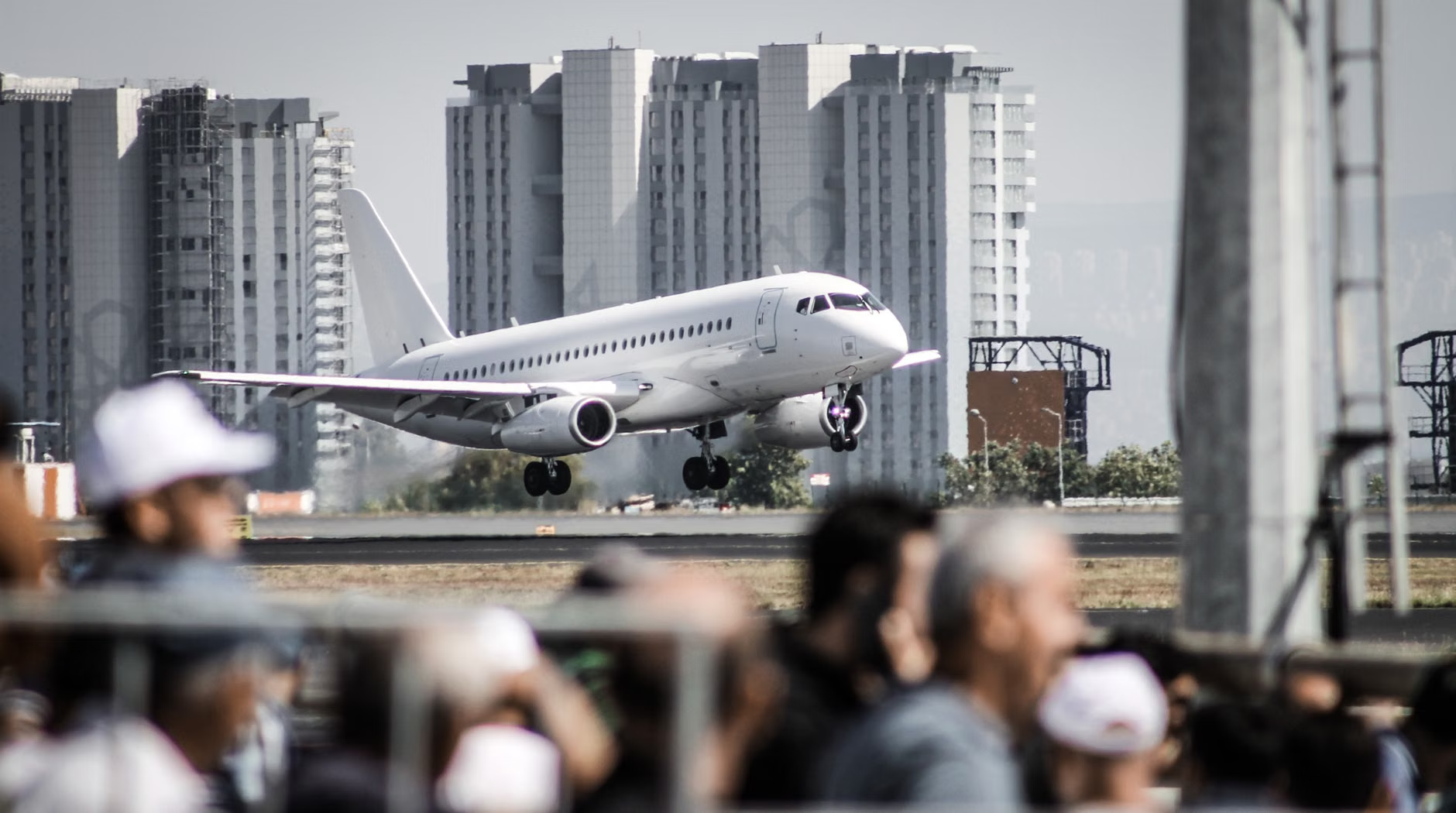
The Hidden Benefits of Slowing Down
Beyond the logistics, there is a psychological shift that occurs when you travel by rail. We live in an era where “getting there” is treated as an obstacle to be overcome. By choosing the train, you normalize the journey as part of the vacation experience. For children, the train is inherently more interesting than a plane. They can look out the window at changing landscapes, walk to the dining car, and engage with the environment.
For parents, this removes the pressure to “keep the kids quiet” at all costs. The ambient noise level of a train is higher than that of a plane, which actually makes it easier for parents to relax, knowing that a restless child isn’t disrupting a silent cabin. This is a significant, often overlooked variable that changes the entire mood of the trip.
Another crucial insight is the “luggage freedom” that rail travel provides. Because there are no strict weight limits or complex carry-on rules, you can pack more comfortably. You don’t have to stress about the size of your liquids or whether your stroller counts as a carry-on. You can bring the “extra” toys or the larger diaper bag that makes life easier, knowing it will sit right next to you for the duration of the trip.
Practical Implementation: How to Execute a Rail-First Trip
To successfully execute this strategy, you need to prepare differently than you would for a flight. First, always book your tickets in advance. Unlike airlines that use dynamic pricing that fluctuates wildly, many national rail services have tiered pricing where early booking guarantees a significant discount. Use platforms like Trainline or national operator websites (such as Amtrak in the US or Eurail/national rail operators in Europe) to track pricing trends.
Second, prioritize seat selection. If you are a family of four, look for “club” or “table” seating configurations. These seats face each other with a table in the center. This is the “base camp” of your journey. It allows the children to color, play with tablets, or eat a meal without the constant need for parental intervention. If you are traveling on a long-distance route, look for family cabins or sleeper cars. While more expensive, they provide a private, lockable space where you can manage naps and diaper changes with total privacy.
Third, bring a “Rail Kit.” This should include a portable power bank, a small selection of snacks that aren’t available on the train (to avoid the premium price of the dining car), and a dedicated bag for “transit essentials.” Unlike flying, you don’t need to worry about the 3-1-1 liquid rule, so you can bring larger water bottles and more substantial food, which saves money and keeps everyone hydrated and fed.
Common Misconceptions About Rail Travel
One common misconception is that “the train is too slow.” In many cases, this is factually incorrect when you account for the total journey time. If you are traveling between major cities—like London to Paris, Tokyo to Kyoto, or New York to Washington D.C.—the high-speed rail is often faster than the equivalent air travel once all variables are included. The perception of slowness comes from the fact that you are visually aware of the distance, whereas flying hides the distance behind clouds.
Another myth is that train travel is “unreliable.” While delays do happen, they are rarely as catastrophic as airline delays. If a train is delayed, you are still in a comfortable seat with access to a bathroom and food. If a flight is delayed, you are often trapped in a cramped gate area with limited resources. Furthermore, rail systems are often more resilient to weather conditions that would ground an entire fleet of aircraft.
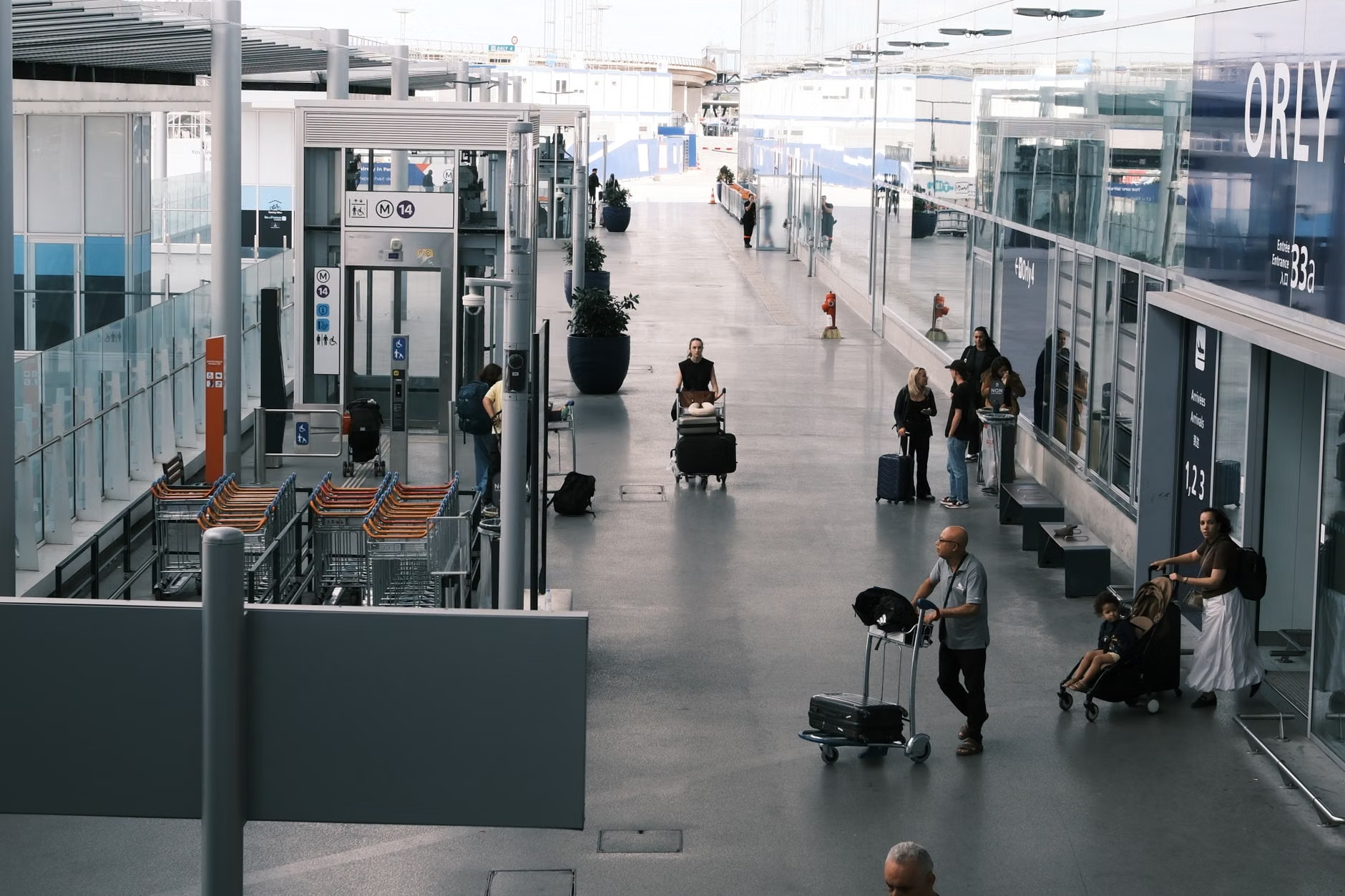
A final point of caution: always check the station facilities at your destination. Before you book, pull up a map of the station. Is it near public transit? Is it walkable to your accommodation? Most modern train stations have integrated baggage storage lockers or services, which is a lifesaver if you arrive before your check-in time. Knowing where the nearest elevator is located within the station is also a pro-tip for parents with strollers or heavy luggage.
The Future of Family Travel
As we move toward more sustainable travel habits, the Rail-First strategy aligns perfectly with both environmental consciousness and the need for parental sanity. You are significantly reducing your carbon footprint compared to short-haul flights. This is a great conversation to have with older children, helping them understand the impact of their travel choices without the lecture.
The most important takeaway for any parent considering this shift is to start small. Don’t plan a cross-continental rail adventure for your first trip. Pick a weekend getaway, a route you know is serviced by reliable high-speed rail, and test the system. You will likely find that the lack of “airport stress” makes the rest of your trip feel longer, more enjoyable, and significantly more relaxed. When you remove the friction of the journey, you have more energy for the destination itself.
If you encounter a route that is truly inconvenient by train, don’t force it. The goal is to make travel easier, not to make a point. However, you will find that as you get better at planning with the Rail-First mindset, you will naturally gravitate toward destinations that are accessible by rail, naturally shifting your travel habits toward a more sustainable and less frantic lifestyle.
Frequently Asked Questions
Q: Is the Rail-First strategy viable for families with infants?
A: Absolutely. In fact, it is often superior. Most trains have more space for strollers and are much quieter than aircraft cabins. You can walk the aisles to soothe a crying baby without needing permission from a flight attendant, and you have the space to bring all the supplies you need without worrying about strict carry-on luggage limits.
Q: How do I handle transfers between different train lines?
A: The best approach is to build in a “buffer” of at least 45 to 60 minutes for any transfer. Unlike flights, where a missed connection can mean a 24-hour delay, a missed train connection usually just means waiting for the next scheduled train. Always check the station map in advance to ensure the transfer doesn’t require a complex change of platforms with heavy gear.
Q: Is it really cheaper than flying for a family of four?
A: It depends on the distance and the booking lead time. While individual tickets might seem comparable, the savings come from the elimination of airport transfer costs (taxis, shuttles, parking) and the ability to bring your own food. For a family of four, these “hidden” savings often result in a lower total trip cost compared to flying.
For further resources on planning rail journeys, you can consult official operator guides such as The Man in Seat 61, which is widely considered the gold standard for navigating international rail travel, or the specific operator websites for your target region.