By 2026, the way your household interacts with the national power grid will shift from a passive “plug-and-play” model to an active, real-time participation system known as the Global-Energy-Grid demand alert framework. The most critical takeaway for you as a homeowner is that you will no longer be just a consumer; you will be a grid participant, where shifting your heavy appliance usage by even two hours during peak alert windows can significantly reduce your monthly utility bill and prevent localized brownouts.
- Dynamic Pricing is the New Normal: Demand alerts are tied to real-time pricing; running your dishwasher or EV charger during “Red Alert” periods can cost up to 3x more than during off-peak hours.
- Automation is Essential: You cannot manually manage these alerts; integrating smart plugs and energy-managed appliances is the only way to effectively respond without sacrificing your daily routine.
- Grid Stability is a Shared Responsibility: Your participation directly impacts the frequency of load-shedding in your neighborhood, making individual compliance a community-wide benefit.
Understanding the Shift: Why the Grid is Changing in 2026
If you have noticed your utility bills fluctuating more aggressively or received “flex-alert” notifications from your provider recently, you are already seeing the early stages of the 2026 Global-Energy-Grid rollout. Historically, power grids were designed as one-way streets: power plants generated electricity, and it flowed to your home. Simple, reliable, and mostly invisible.
However, the rapid adoption of electric vehicles (EVs), heat pumps, and intermittent renewable sources like wind and solar has made that simple model obsolete. In 2026, the grid is becoming a “smart” two-way network. When demand spikes—like on a sweltering July afternoon when everyone turns on their AC simultaneously—the grid now sends out automated digital signals to connected devices to throttle back consumption.
Why does this matter to you in your 30s or 40s? Because you are likely the primary manager of a high-energy household. Between school runs, remote work, and managing the laundry, your home is likely the biggest consumer of electricity in your personal life. Understanding these alerts isn’t just about saving a few dollars; it’s about ensuring your home remains operational when the grid is under stress.
The Mechanics of Demand Alerts: What They Look Like in Real Life
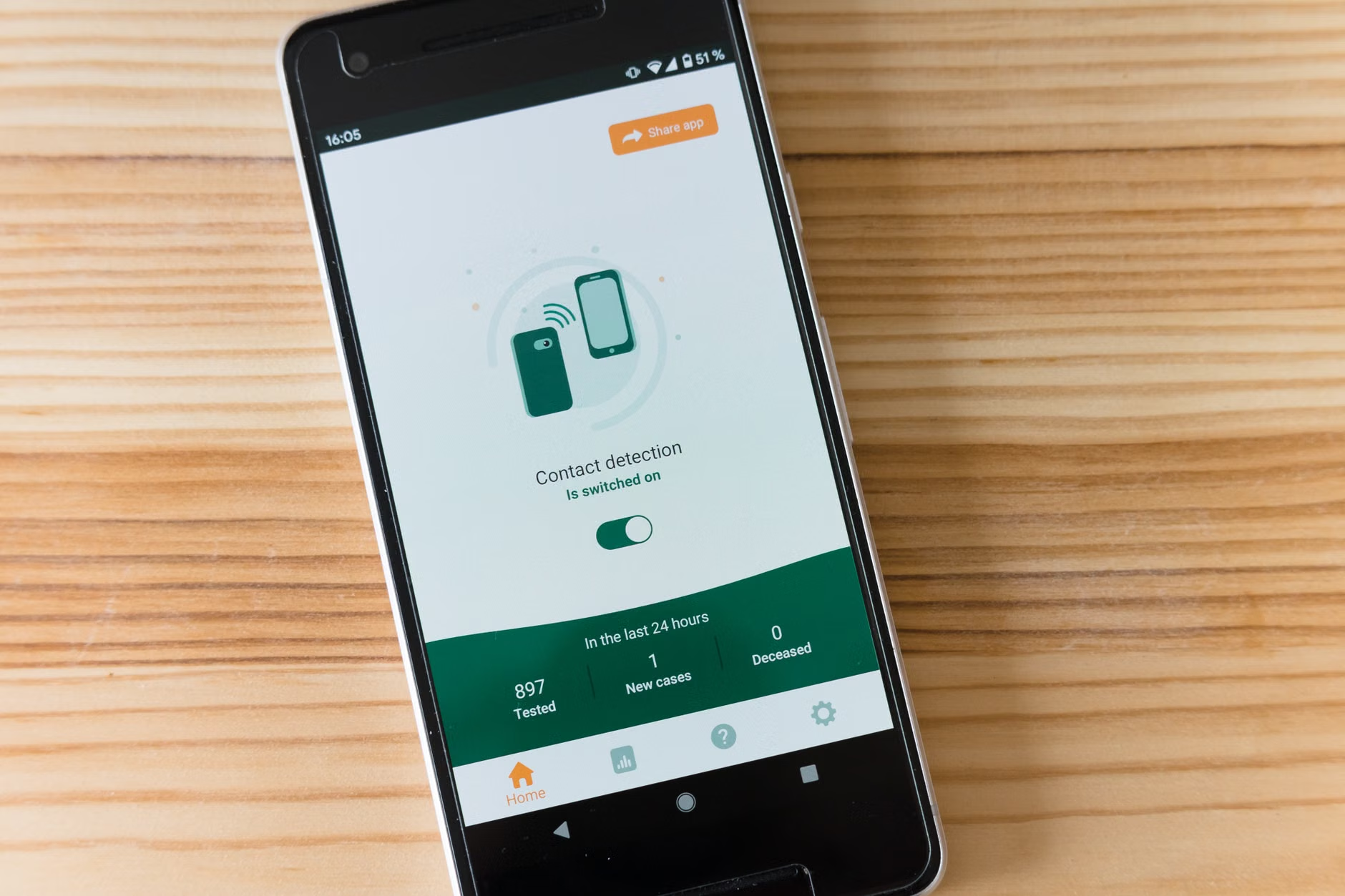
Demand alerts are not just generic warnings anymore. They are now tiered, usually categorized by colors or numerical levels that dictate your home’s automated response. In most regions transitioning to this model, the alerts function through your smart meter or a dedicated utility app.
Let’s look at a hypothetical scenario: It is Tuesday, 5:30 PM. You just got home from work, the kids are starting homework, and dinner needs to be cooked. Suddenly, your phone pings with a “Grid Level 2” alert. This means the grid is under moderate stress. If you ignore it, your smart thermostat might automatically nudge up by two degrees, and your EV charger might pause its charging cycle for 30 minutes. If you are not prepared, this feels like an intrusion. If you are prepared, you won’t even notice the change.
The goal of these systems is to avoid “load-shedding”—a fancy term for rolling blackouts. By shaving off the “peaks” of energy usage, the grid operator keeps the system stable without needing to fire up expensive, high-pollution “peaker” power plants.
The Comparison: Manual vs. Automated Response
| Feature | Manual Management | Automated/Smart Management |
|---|---|---|
| Response Speed | Slow (requires user intervention) | Instant (millisecond response) |
| Cost Impact | High (missed savings opportunities) | Low (optimizes for lowest rates) |
| Reliability | Prone to human error/forgetfulness | Consistent and data-driven |
| User Effort | High (daily monitoring) | Minimal (set-and-forget) |
As the table above suggests, if you try to manage these alerts manually, you are setting yourself up for frustration. The key to navigating 2026 is automation. You should be looking for appliances that feature “OpenADR” (Open Automated Demand Response) capability. This protocol allows your utility company to communicate directly with your smart home hub.
Equipping Your Home for the 2026 Grid
To thrive under these new systems, your home needs to be “grid-aware.” This doesn’t mean you need a million-dollar smart home setup; it means making strategic upgrades to the appliances that consume the most power.
1. Smart Thermostats: These are the “low-hanging fruit.” Devices like the Nest or Ecobee are already integrated with most demand response programs. In 2026, they will be the primary tool for grid balancing. Ensure yours is registered with your local utility’s “demand response” or “smart energy” program.
2. EV Charging Management: If you drive an electric vehicle, your charger is likely the single largest load in your house. Ensure your charger is a “smart” model that can be scheduled to charge only during off-peak hours. Many 2026-compliant chargers will automatically sync with grid alerts to pause charging during “Red Alert” periods.
3. Energy-Efficient Appliances: When replacing your dishwasher or dryer, look for the “Smart Grid Enabled” label. These units can delay cycles automatically. If you start a load of laundry at 4:00 PM, the machine might wait until 9:00 PM to start when electricity prices are lower and the grid is stable.
The Hidden Costs and Overlooked Variables
One common misconception is that participating in these programs is purely altruistic. In reality, it is a financial strategy. However, there are hidden trade-offs. For example, if you opt into an automated program, you might lose some control over your environment during extreme heat waves. There is also the issue of data privacy—you are essentially giving your utility company a window into your daily habits.
The “Override” Trap: Most smart thermostats allow you to override an alert. However, be aware that frequent overrides can disqualify you from the financial incentives or rebates offered by your provider. Before you hit “cancel” on an alert, check your utility’s terms of service. Sometimes, it is cheaper to endure a slightly warmer living room for an hour than to lose your monthly bill credit.
Common Mistake: Many people think they should turn off their main breakers during an alert. Do not do this. Modern smart grids are designed to handle gradual load reduction, not sudden total cutoffs. Abruptly cutting power can cause surges that may damage sensitive electronics like your home computer or television.
Step-by-Step: How to Register and Optimize
If you want to get ahead of the 2026 changes, follow this checklist to ensure your home is optimized for the new grid dynamics:
- Check with your utility provider: Visit their website and search for “Demand Response” or “Smart Energy Programs.” Most major providers now offer enrollment incentives, sometimes paying you just for letting them manage your thermostat during peak events.
- Audit your smart home ecosystem: Are your devices compatible with your utility’s platform? If you have a fragmented setup (e.g., a smart thermostat from one brand and a smart charger from another), look for a central hub like Home Assistant or a platform that can aggregate these devices.
- Set “Time-of-Use” (TOU) pricing: If your utility offers a TOU plan, sign up for it immediately. This is the most effective way to lower your bill. It essentially charges you based on the time of day, rewarding you for using power when the grid is least stressed.
- Establish a “Grid-Down” Routine: Talk to your family. If an alert occurs, what is the protocol? Perhaps turning off unnecessary lights or postponing a screen-time hour is a simple, effective contribution.
Looking Toward the Future: Microgrids and Storage
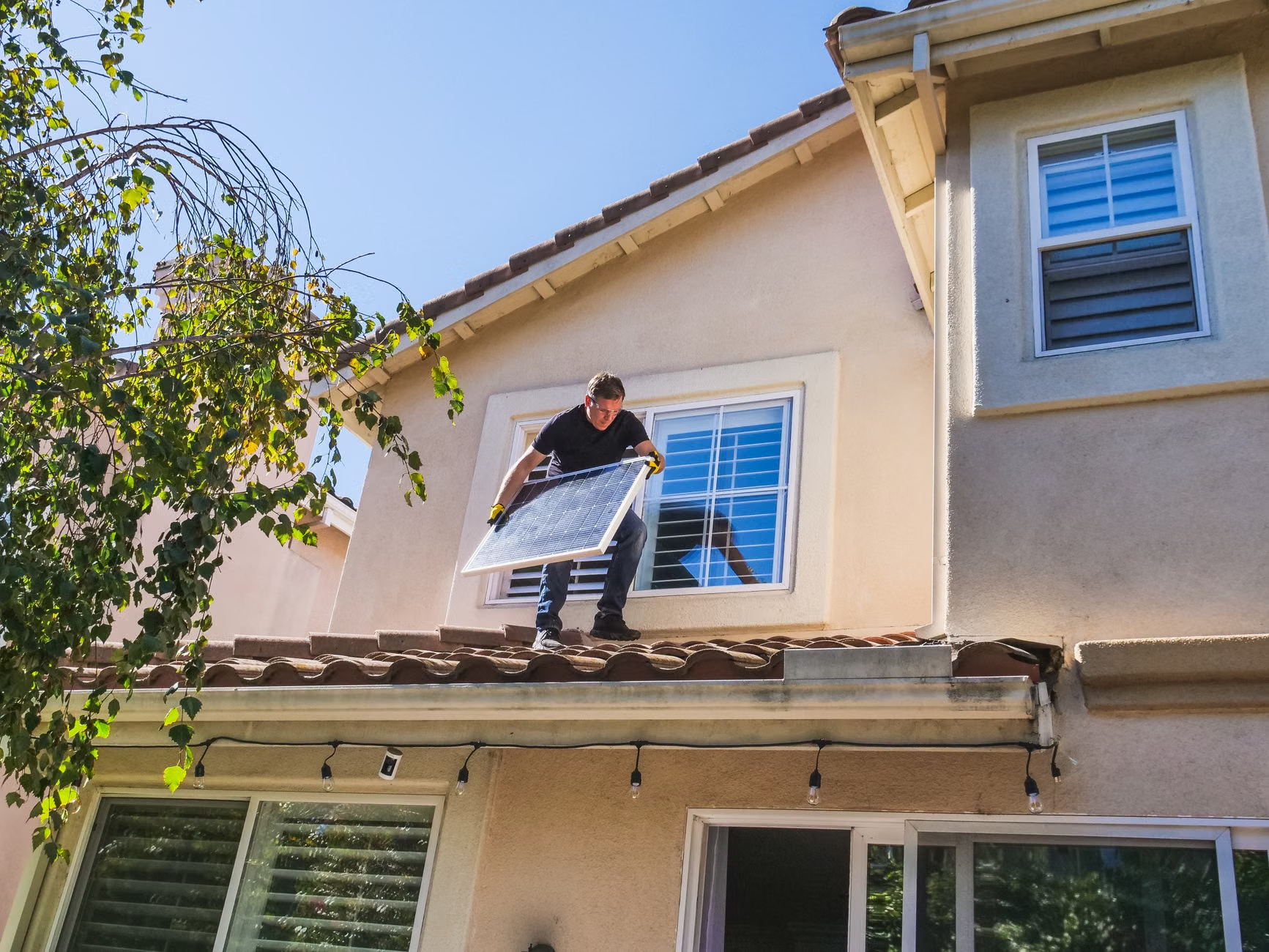
The next evolution of this technology is the “Virtual Power Plant” (VPP). This is where your home, combined with your neighbors’ homes, acts as a collective battery. If you have solar panels and a home battery system (like a Tesla Powerwall or similar), you can actually sell energy back to the grid during these high-demand alerts. This turns the frustration of a grid alert into a revenue-generating opportunity.
While this is not yet the standard for every household in 2026, it is the direction the industry is moving. If you are planning a home renovation or looking at solar installations, prioritize a system that is “VPP-ready.” It is a future-proofing measure that will likely pay for itself within five to seven years through grid participation incentives.
Final Thoughts for the Modern Household
The 2026 Global-Energy-Grid demand alert system is not a sign of a failing infrastructure; it is a sign of an evolving one. We are moving away from the era of “unlimited, cheap, and mindless” energy consumption toward a model of “conscious, efficient, and collaborative” energy use. For a busy parent, this might feel like just another thing to manage. However, by setting up the right automated systems now, you can turn this potential headache into a hands-off way to save money and contribute to a more stable, sustainable community.
Don’t wait for the first major heat wave of 2026 to figure out your energy strategy. Take ten minutes this weekend to log into your utility’s portal, check your current plan, and see if you are signed up for any demand response incentives. Your future self—and your monthly budget—will thank you.
For more information on specific regional standards and to see if your local utility participates in these programs, you can refer to resources like the Federal Energy Regulatory Commission (FERC) for policy updates or your local utility company’s specific “Smart Grid” portal.
Frequently Asked Questions
1. Will my lights turn off during a demand response event?
No. Demand response alerts are designed to reduce the load from high-energy appliances like air conditioners, pool pumps, and EV chargers. They are almost never used to cut power to essential lighting or safety equipment.
2. Can I opt out of these alerts if I don’t want my devices to change?
Yes, most programs are voluntary. However, opting out usually means you will not receive the bill credits or rebates associated with the program. Check your specific provider’s agreement to see if there are penalties for frequent opting out.
3. How do I know if my current appliances are “smart grid” compatible?
Look for the Energy Star “Connected” label on your appliance or check the manual for “Wi-Fi enabled” or “Demand Response” features. Many newer appliances manufactured after 2024 come with this functionality built-in as a standard feature.
Note: This article is for informational purposes and reflects current trends leading into 2026. Always consult your local utility provider for specific programs available in your region, as policies and technology support vary significantly by location.