By 2026, many regional power grids are projected to face their most significant peak-load stress tests in decades, which means your household energy strategy needs to shift from passive consumption to active management to avoid rising costs and potential service interruptions.
- The 2026 Squeeze: A combination of extreme weather volatility, the rapid scaling of data centers for AI, and aging infrastructure is creating a perfect storm for grid instability during peak hours.
- Beyond Conservation: Simply turning off lights is no longer enough; the new standard involves “load shifting”—using high-energy appliances during off-peak windows to avoid premium pricing and grid strain.
- Financial Resilience: Investing in home energy storage or smart-grid-compatible appliances is transitioning from a “green” luxury to a necessary hedge against volatile utility pricing and potential supply-side surcharges.
If you have been noticing your electricity bills creeping upward even when your usage habits remain relatively static, you are not imagining it. We are living through a period where the global demand for electricity is decoupling from traditional growth models. For those of us in our 30s and 40s, juggling school runs, remote work, and household maintenance, the “energy grid” has historically been a background utility—something that just works when you flip the switch. That reliability is currently under a quiet, intense pressure that is expected to peak in 2026.
Why 2026? It isn’t a date pulled out of thin air. It represents a convergence point where the retirement of legacy coal and gas plants is finally meeting the full-throttle expansion of data centers and the electrification of heating and transportation. For the average family, this means the grid is becoming less of a bottomless well and more of a managed marketplace.
Understanding the Mechanics of the 2026 Peak-Load Warning

When utility companies issue “peak-load warnings,” they are essentially saying that the difference between the electricity they can generate and the electricity the public is demanding has shrunk to a dangerous margin. In 2026, this is being driven by three primary factors that affect your daily life.
First, there is the “AI and Data Center” factor. The sheer amount of electricity required to power the global shift toward generative AI and cloud infrastructure is immense. While these facilities are often built in remote areas, they draw from the same regional grids that supply our homes. Second, we are seeing a massive increase in “electrification.” We are moving away from gas boilers and internal combustion engines toward heat pumps and electric vehicles (EVs). While this is great for the environment, it puts a massive, concentrated load on local transformers that were designed decades ago.
Finally, there is climate volatility. We are experiencing more frequent extreme heat and cold events. When everyone turns on their AC at the same time during a heatwave, or their electric heating during a polar vortex, the grid hits a wall. For you, this translates to “Time-of-Use” (TOU) pricing. If you aren’t on a TOU plan yet, you likely will be by 2026. This means electricity costs significantly more during peak hours—usually between 4:00 PM and 9:00 PM—than it does in the early morning or middle of the night.
The Hidden Costs of Modern Household Consumption
In our 30s and 40s, we are the demographic that owns the most “smart” devices, runs the most laundry, and manages the most complex home schedules. We are also the demographic most susceptible to “peak-time penalties.” Consider the standard evening routine: the kids are home, dinner is being prepared, the dishwasher is running, and perhaps an EV is plugged into the garage charger.
If your utility provider charges premium rates during these hours, you are essentially paying a “convenience tax” on your lifestyle. A common mistake is assuming that energy efficiency is just about buying LED bulbs or an energy-efficient fridge. In the context of 2026, efficiency is about timing. A high-efficiency dishwasher running at 6:00 PM is often more expensive than an older, less efficient model running at 11:00 PM.
| Activity | Peak-Time Cost Impact | Strategy for 2026 |
|---|---|---|
| Electric Vehicle Charging | High (Often triggers tier-2 pricing) | Use a smart charger to schedule charging for after midnight. |
| Dishwasher/Laundry | Moderate (Adds to evening base load) | Use “delay start” functions for early morning cycles. |
| Climate Control (AC/Heat) | Very High (Significant energy draw) | Pre-cool or pre-heat the home during off-peak hours. |
This table illustrates the trade-off. It is not necessarily about using less energy, but about using it smarter. If you can automate your appliances to shift their energy draw outside of the 4:00 PM to 9:00 PM window, you insulate your household budget from the volatility we expect to see in 2026.
Practical Steps to Future-Proof Your Home Energy
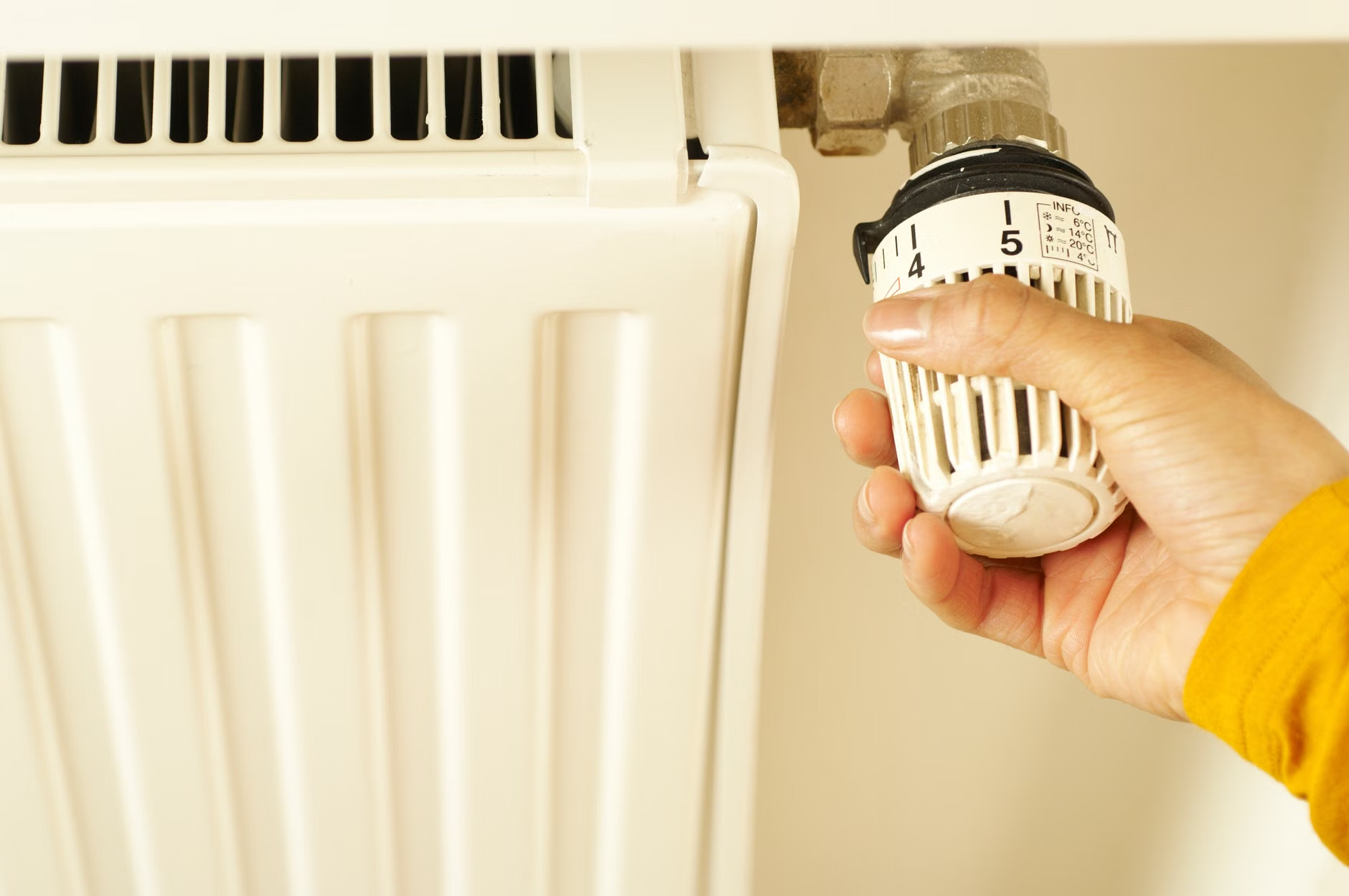
So, what should you actually do? You don’t need to become an electrical engineer to navigate this. The first step is to log into your utility provider’s online portal. Most modern providers now offer a “Usage Dashboard.” Don’t look at the total dollar amount; look at the hourly graph. Where are your spikes?
If you see a massive spike at 6:30 PM every day, that is your target. You don’t need to change your lifestyle, just your automation. Most modern dishwashers, washing machines, and even smart thermostats have built-in scheduling features. If your appliances are older, a simple smart plug (costing around $15-$20) can allow you to control when a device draws power. This is the most cost-effective way to “load shift.”
Another overlooked variable is the “thermal battery” of your home. If you have a smart thermostat, you can program it to cool your home by two or three extra degrees before 4:00 PM and then let the temperature drift upward during the peak period. The home’s insulation acts as a buffer, keeping you comfortable while the AC unit stays off during the expensive, high-demand hours. This is a common strategy used in commercial buildings that is now becoming essential for residential living.
When to Consider Investing in Hardware
If you are planning home renovations or appliance upgrades, 2026 grid constraints should be a factor in your decision-making. We are seeing a rise in “Grid-Interactive” appliances. These are devices that can communicate with the utility company to automatically pause or slow down during grid stress in exchange for lower rates or rebates.
When shopping for a new heat pump, water heater, or EV charger, look for “Demand Response” capability. While the upfront cost might be slightly higher, the long-term utility savings and potential local government incentives make them a much more attractive proposition. For families, the “set it and forget it” nature of these systems is the real value—you don’t have to manually manage your power consumption because the device does it for you.
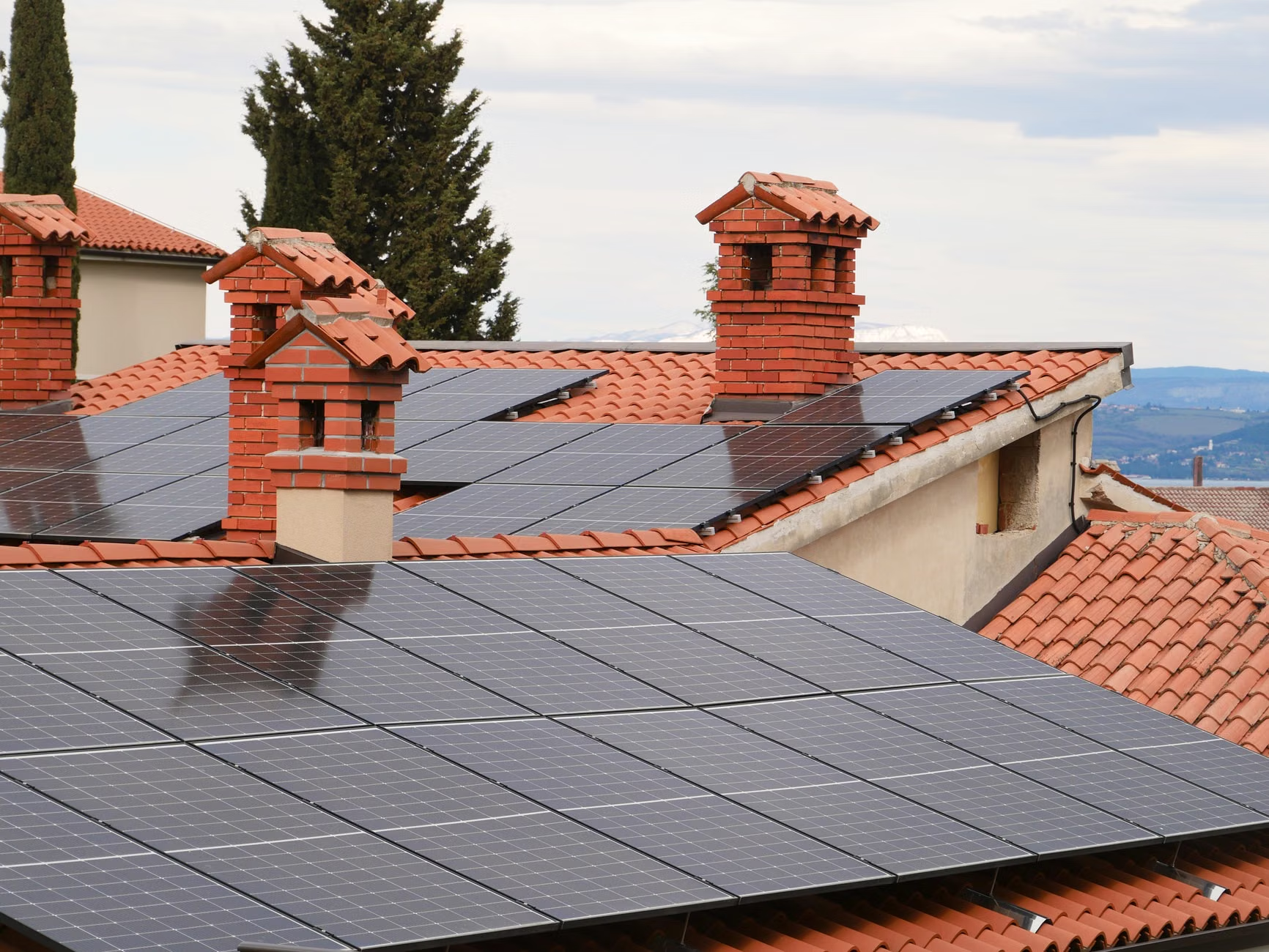
Solar and storage (batteries) are the final frontier. While they are a significant investment, the return on investment is changing. In a world where grid prices are becoming more volatile, the ability to store your own power—or power generated by your solar panels—and use it during the most expensive hours of the day is a massive hedge against inflation. If you live in an area with high utility rates, the payback period for a battery system is shrinking significantly.
It is important to recognize that grid regulations vary wildly by region. In some parts of the United States, you might be on a “Net Metering” plan that pays you well for the power you export to the grid. In others, those rates have been slashed. Before you commit to any major investment like solar panels or home batteries, check your local utility’s “Interconnection Agreement.”
Furthermore, look for local “Demand Response” programs. Many utilities offer cash back or bill credits if you allow them to briefly cycle your AC or water heater during emergency grid events. This is a voluntary program, and it is a great way to put money back into your pocket while helping your community avoid blackouts during peak-load days.
Don’t be afraid to call your utility provider. Ask them specifically: “What is the best rate plan for a household with an EV?” or “Are there any time-of-use discounts I am not currently enrolled in?” Most people stay on the default “flat rate” plan, which is almost always the most expensive option for a modern, active household.
The Psychological Shift: Moving from Consumer to Manager
The most significant change for us in our 30s and 40s is the psychological one. We grew up in an era of “always-on” abundance. The idea that we should think about when we run a load of laundry feels slightly regressive, like we are going back in time. However, the reality is that our homes are becoming more complex, energy-hungry ecosystems.
Think of your home energy like your family’s budget. You wouldn’t ignore your bank statement, so why ignore your energy usage? By treating electricity as a variable cost that you can manage rather than a fixed utility bill, you regain control. This shift in mindset is the single most effective way to prepare for 2026. You aren’t just saving a few cents; you are building the infrastructure for a more stable and cost-effective household future.
As we approach 2026, the grid will continue to be a topic of discussion in news cycles. You will likely see more headlines about “grid instability” or “capacity shortages.” Instead of letting these headlines cause anxiety, view them as a signal that the system is evolving. The households that adapt now—by optimizing their schedules, investing in smart infrastructure, and understanding their specific utility plans—will be the ones that remain unaffected by the inevitable price hikes and supply-side pressures.
Ultimately, the goal isn’t to live in the dark or sacrifice your comfort. It is about aligning your energy habits with the reality of a modern, strained power grid. Small, consistent changes in how and when you use your high-draw appliances will compound into significant savings and peace of mind. Keep an eye on your local utility’s announcements, take advantage of the smart-home tech you likely already have, and you will navigate the 2026 peak-load period with confidence.
Frequently Asked Questions
1. Will I face rolling blackouts in 2026?
While grid stress is increasing, local utilities typically use “demand response” programs and peak-pricing to incentivize reduced usage before resorting to forced outages. These measures are designed to prevent blackouts by balancing the load. By participating in your utility’s off-peak programs, you actively help reduce the risk to your local area.
2. Is it worth buying a home battery if I don’t have solar panels?
It can be, depending on your local utility’s rate structure. This is known as “load shifting.” You can program the battery to charge from the grid during the night when electricity is cheap and discharge it during the day during peak hours when electricity is expensive. Calculate your “peak vs. off-peak” rate spread to see if the savings justify the cost of the unit.
3. How can I tell if my appliances are “Grid-Interactive”?
Check the user manual or the manufacturer’s app for the appliance. Look for terms like “Demand Response,” “Smart Grid Ready,” or “OpenADR” (Open Automated Demand Response) compatibility. If you are shopping for new appliances, these terms will often be highlighted in the product specifications under “connectivity” or “smart features.”
For further reading on grid reliability and your rights as a consumer, you can visit the U.S. Department of Energy’s Office of Electricity or your local national energy regulatory body’s website.