The secret to surviving a multi-generational trip is not packing for every possible emergency, but packing specifically for the different rhythms of children, parents, and grandparents. If you try to pack for a singular “family” unit, you will inevitably end up with three overflowing suitcases and a forgotten essential for the person who needs it most.
- Categorize by persona, not by item: Use color-coded packing cubes to separate gear for toddlers, adults, and seniors rather than grouping all clothes together.
- Prioritize “bridge” items: Focus on shared technology, universal chargers, and a centralized document folder to minimize the mental load of managing multiple people.
- The 24-hour buffer rule: Always pack a full day’s worth of essentials—medication, a change of clothes, and snacks—in a carry-on for every family member, regardless of their age.
The Psychology of Packing for Three Generations
When you are in your 30s or 40s, you are often the “trip lead.” You are managing the logistics for the kids, keeping your partner on track, and ensuring your parents (or in-laws) are comfortable. The biggest mistake most of us make is treating the packing process as one giant inventory list. This leads to “decision fatigue” before you even arrive at the airport.
Instead, view your luggage as three distinct ecosystems. A six-year-old needs accessibility for snacks and entertainment. A senior traveler needs accessibility for medication, mobility aids, and comfort items. You and your partner need accessibility for documents and tech. When you frame your packing this way, you move from “trying to fit everything” to “ensuring everyone has their baseline needs met.”
The “Persona-Based” Packing Framework
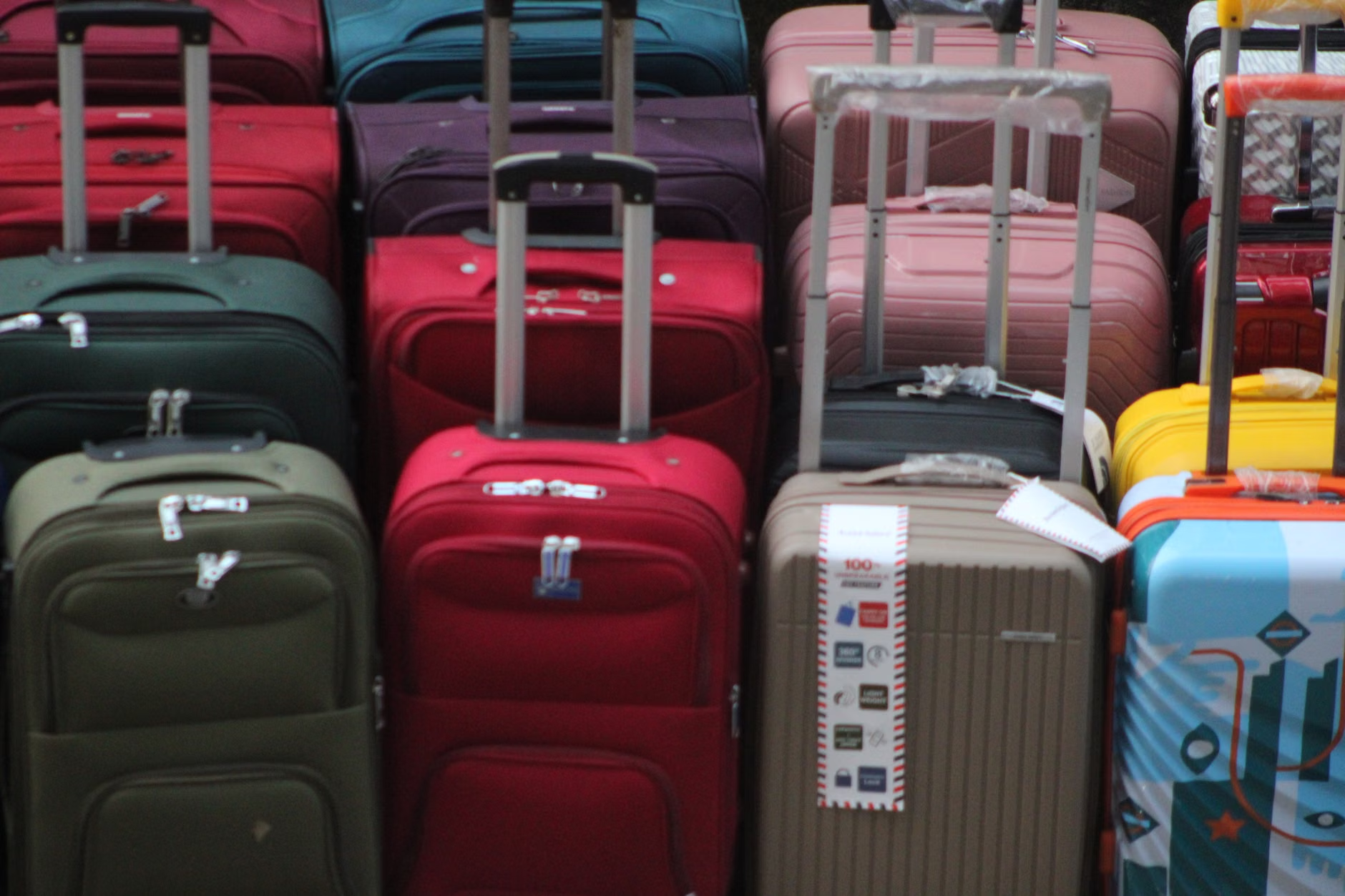
Stop packing by category (all shirts here, all socks there). Start packing by persona. By using distinct packing cubes for each family member, you avoid the chaos of digging through a communal suitcase to find your father’s blood pressure medication or your child’s favorite comfort toy. Here is the breakdown:
| Persona | Packing Priority | Must-Have Item |
|---|---|---|
| The Child | Distraction & Comfort | Noise-canceling headphones |
| The Adult | Logistics & Connectivity | Universal power adapter |
| The Senior | Health & Mobility | Hard-copy medical history |
This structure matters because it creates accountability. If you are responsible for the “Senior” cube, you know exactly what is inside. If your child is old enough, they can even be responsible for their own cube. This distributes the mental load and makes the inevitable airport security scramble much faster.
The Tech Infrastructure: Avoiding the “Cord Jungle”
In a multi-generational group, everyone has a device. The kids have tablets, the adults have smartphones, and the grandparents might have a digital camera or an e-reader. If you pack a chaotic bag of mixed cables, you will spend your entire vacation untangling wires. This is a classic “hidden stressor” that ruins the mood of a travel day.
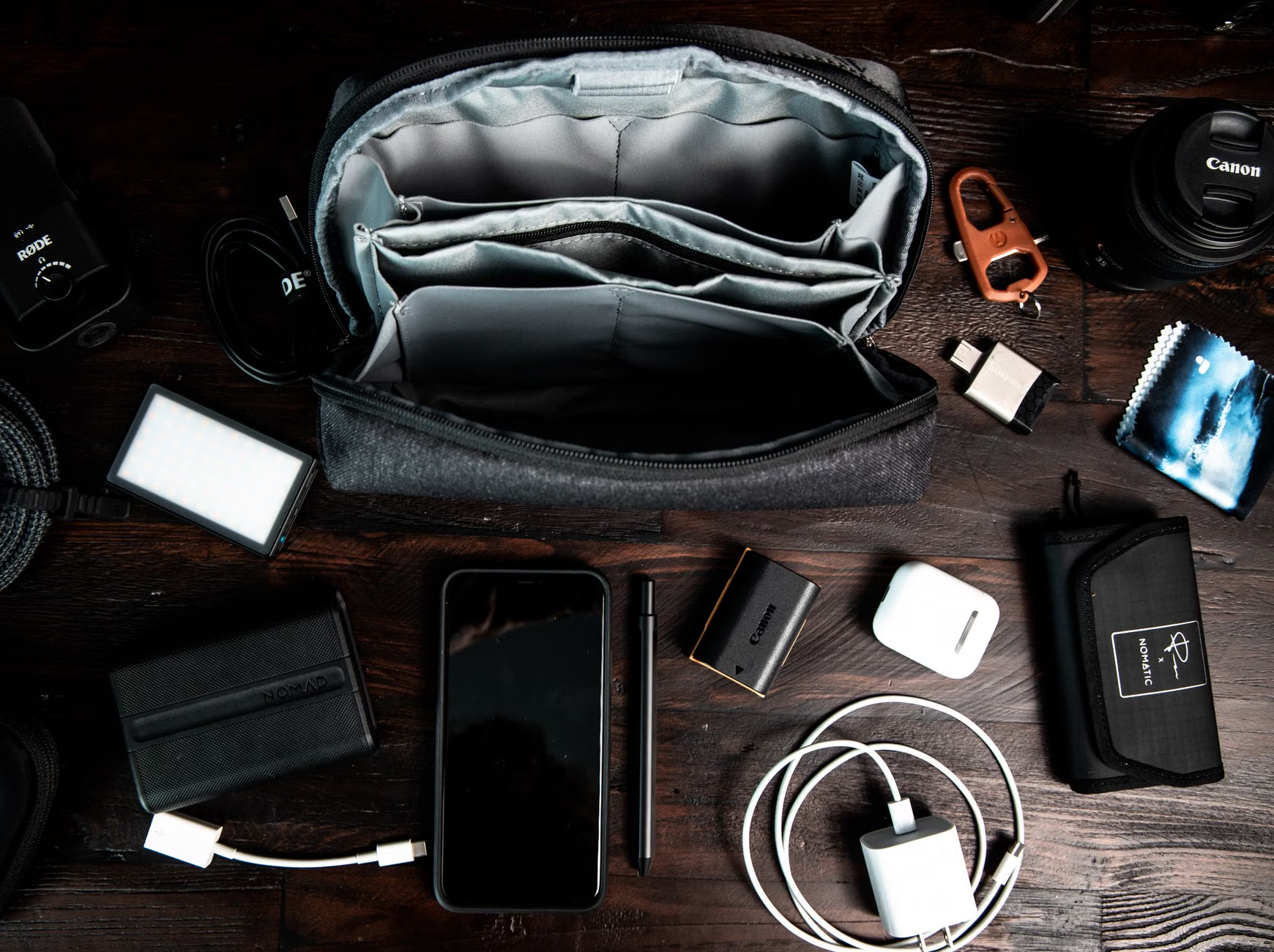
The solution is a centralized “Tech Hub.” Designate one person as the “Tech Lead.” This person carries a single, dedicated tech organizer bag. Inside, you don’t need a cable for every single device. Instead, look for multi-port chargers that offer at least 65W of power via USB-C. This allows you to charge a laptop, a tablet, and a phone simultaneously from a single wall outlet.
Pro Tip: Before you leave, label every charging brick with a small piece of masking tape and a Sharpie. Grandparents often have different charging cables than younger generations; labeling prevents the “Who took my charger?” argument that happens in hotel rooms at 11:00 PM.
Health and Documentation: The “Safety Net” Folder
When traveling with seniors and children, the most critical items are the ones you hope you never use. Never rely solely on digital versions of documents. In many countries, such as when navigating the EU’s health systems or local clinics, physical copies are often requested for verification or insurance processing.
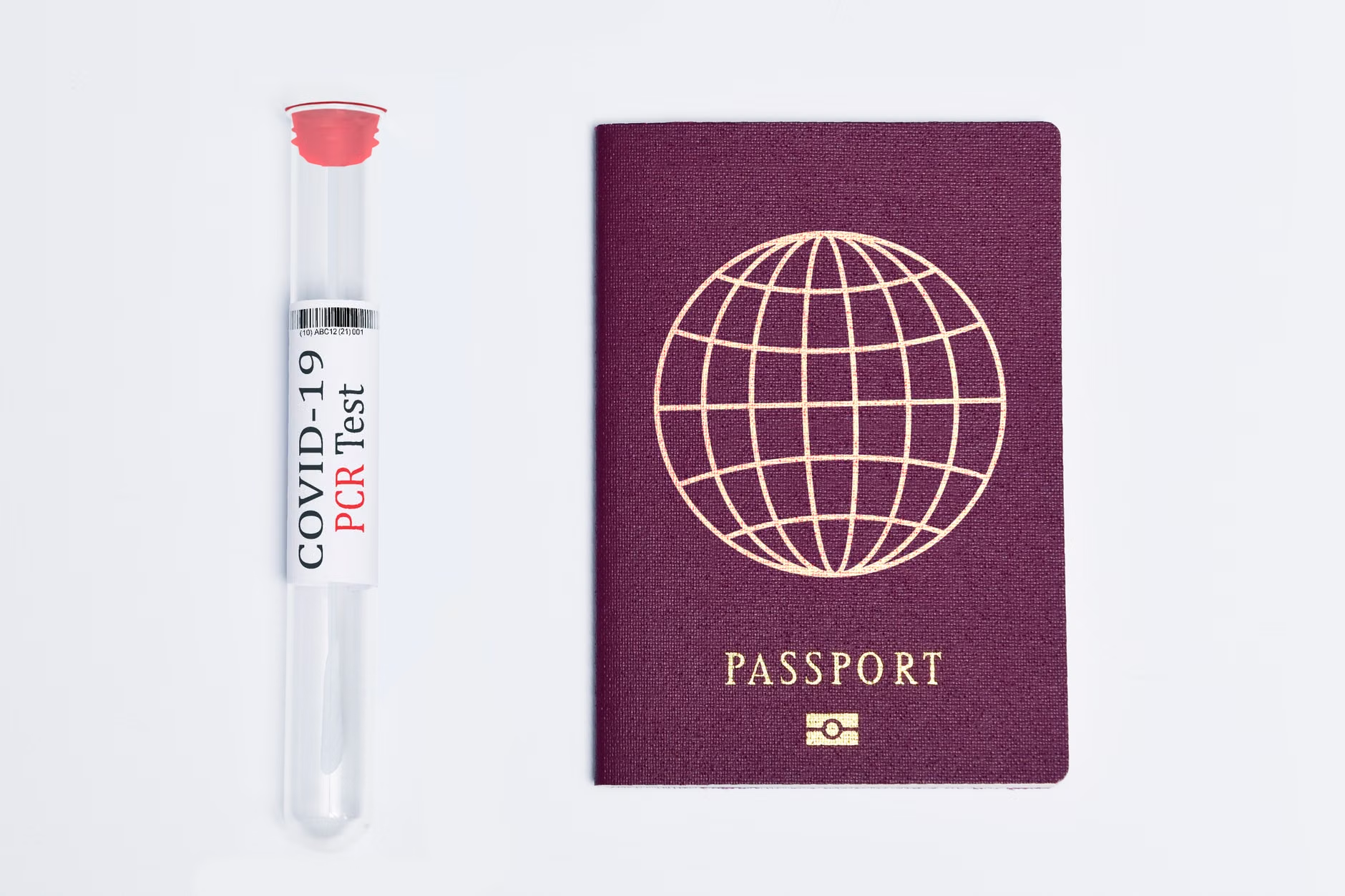
Create a “Safety Net” folder. This should be a physical, waterproof document sleeve that contains:
- Medical Summaries: A printed list of all medications, dosages, and known allergies for each person.
- Insurance Details: The contact number for your international travel insurance and the policy number.
- Identification: Photocopies of passports for everyone.
- Emergency Contacts: Local embassy numbers and the contact info for your primary care physician back home.
Why does this matter? If a medical situation occurs in a foreign country, you will be stressed. Trying to remember the exact dosage of your father’s medication or searching through an email app with spotty Wi-Fi is a recipe for error. Having this folder makes you an effective advocate for your family in a high-pressure moment.
The 24-Hour Buffer Rule: Expecting the Unexpected
The “24-hour buffer” is the golden rule of multi-generational travel. It means that if your checked luggage is lost, delayed, or stolen, every single person in your group can survive for 24 hours without returning to their main suitcase. This is not about being pessimistic; it is about being practical.
For the kids, this means a change of underwear, a clean shirt, and their essential comfort item (like a small plush toy). For the adults, it means a change of clothes and basic toiletries. For seniors, it means 48 hours of prescription medication. Never, under any circumstances, check your medication. Always keep it in your personal carry-on item that stays under the seat in front of you.
Common mistake: Many people pack their meds in their carry-on suitcase, which might be gate-checked if the flight is full. Always have a “Personal Item” (like a backpack or tote) that you keep with you at all times. This is your “Go Bag.” If the airline loses your main bag, you aren’t stuck at a pharmacy counter in a foreign country trying to explain a prescription you don’t have the documentation for.
Travel is physically taxing, but the strain hits different generations in different ways. Kids get overstimulated; seniors often deal with joint pain or fatigue from long periods of sitting. Your packing list should include “comfort mitigators.”
For seniors, consider packing a lightweight, foldable walking stick or a neck pillow with extra support. If you are traveling to a region with high humidity or intense sun, pack cooling towels. These are small, non-obtrusive items that make a massive difference in how much ground you can cover in a day. If your parents are hesitant to walk because of discomfort, they are less likely to participate in the day’s activities, which changes the entire dynamic of the trip.
For children, comfort is about sensory regulation. Noise-canceling headphones are not just for movies; they are for the sensory overload of an airport or a loud train station. If a child feels overwhelmed, they are more likely to have a meltdown. By giving them a “quiet zone” via headphones, you are essentially packing peace of mind for yourself.
Choosing the Right Luggage for Diverse Mobility
When traveling as a group, you will move as fast as your slowest member. If you have a senior who uses a cane or a toddler who refuses to walk, your luggage choice dictates your speed. Avoid “four-wheel spinner” bags if you are going to be walking on cobblestone streets or in areas with poor infrastructure. They are great in airports but terrible on uneven pavement.
Instead, prioritize luggage with high-quality, larger wheels, or hybrid duffel-backpacks. If you are in a situation where you need to carry your own bag and perhaps help a senior with theirs, a backpack-style suitcase allows you to have your hands free. This is a game-changer for safety and convenience.
Also, consider the weight of the bags. As we hit our 40s, we might be stronger, but we shouldn’t be throwing out our backs. Keep each bag under 15kg (approx. 33lbs). This is the “sweet spot” for most international travel requirements and ensures that if you have to lift a bag into a train overhead compartment, you can do so without needing help or risking an injury.
The “Hidden Costs” of Over-Packing
We often pack “just in case” items. “What if we go to a fancy dinner?” “What if it rains?” “What if I want to read three books?” In a multi-generational context, these “what-ifs” add weight that limits your mobility. Every extra kilogram you pack is a kilogram you have to manage while also looking after a child or assisting an elderly parent.
The best heuristic for deciding what to leave behind is the “Use It or Lose It” rule. If you haven’t used an item in the last three trips, it stays home. If the item is easily replaceable at your destination (like basic toiletries, sunscreen, or cheap umbrellas), do not pack it. Buy it there. This saves space and allows you to support local businesses.
Furthermore, consider the “return trip” factor. You will almost certainly buy souvenirs or gifts. If your suitcase is 100% full on the way there, you are going to have a stressful time on the way back. Aim for 80% capacity on your departure. That 20% buffer is for the things you pick up along the way.
Finalizing Your Packing Strategy
The goal of this packing list isn’t to be a minimalist—it is to be a strategist. You are the conductor of this family orchestra. By focusing on persona-based packing, securing your tech, creating a physical “Safety Net” folder, and respecting the “24-hour buffer,” you reduce the friction of the journey. This allows you to focus on the actual reason you are traveling: spending time with the people you care about.
When you finish your final check, ask yourself: “If everything goes wrong, do I have the essentials to stabilize the situation?” If the answer is yes, you are ready. Don’t worry about the “what ifs.” Focus on the “what is.”
Start your packing process at least three days before your departure. This gives you time to identify what you’re missing without the last-minute panic. And remember, the most important thing you bring on a multi-generational trip isn’t in your suitcase—it’s your patience. Everything else is just gear.
Frequently Asked Questions
Q: Should I pack medications in their original bottles, or can I combine them into a pill organizer?
A: Always keep prescription medications in their original packaging with the pharmacy label clearly visible. Many international customs agents require this to verify that the medication is legally yours and prescribed to you. Using a pill organizer is fine for the daily routine once you reach your destination, but it should not be your primary method of transport.
Q: Is it better to check one large suitcase for the whole family or individual carry-ons?
A: Individual carry-ons are far better for multi-generational travel. If an airline loses a bag, you only lose one person’s items rather than the entire family’s wardrobe. It also forces each person to take responsibility for their own gear, which is a great way to manage the logistics of a group.
Q: How do I handle souvenirs when traveling with a group?
A: Pack a single, high-quality, foldable duffel bag inside your main suitcase. On the way back, this bag can be used as a secondary checked item or a large carry-on to hold all the extra items you’ve acquired. It keeps your main luggage organized and prevents the “overflow” stress on the return leg.
For further information on international travel regulations and health requirements, check the official World Health Organization (WHO) travel advice portal or your local government’s foreign travel advisory office.