The secret to a successful multi-generational trip isn’t a perfect itinerary, but rather a packing strategy that accounts for the vastly different physiological and psychological needs of toddlers, working parents, and grandparents.
- The “One-Bag-per-Role” Rule: Assign specific packing categories (e.g., medical, entertainment, documents) to specific adults rather than splitting items by family member.
- Digital Consolidation: Use a shared cloud folder for all insurance, vaccination records, and local emergency contacts to prevent “document panic” at border control.
- The 48-Hour Buffer: Pack 48 hours’ worth of essential items (medications, spare clothes, chargers) in your carry-on to mitigate the risk of lost luggage ruining the entire trip.
Planning a trip with three generations—you, your kids, and your parents—is often less of a “vacation” and more of a complex logistical operation. You are essentially balancing the high-energy, high-maintenance requirements of children with the specific comfort and health needs of the older generation, all while trying to maintain your own sanity. The most common mistake? Packing for each person individually. When you pack for the family as a unit, you end up with redundant items and forgotten essentials. Instead, you need to shift to a functional, role-based packing system.
Categorizing by Function: Why Individual Packing Fails Families
When you pack by person—”this is Timmy’s bag, this is Grandma’s bag”—you create silos of information and gear. If Grandma’s bag gets lost, she has no clothes, but if you pack by function, her medications and essential documents are likely in your carry-on or a shared “essential” bag. This is the first step in moving from a passive packer to a logistical manager.
The goal here is to reduce the “decision fatigue” that sets in when you are at the airport or checking into a hotel. Divide your items into four functional buckets: Medical/Health, Documentation, Entertainment/Distraction, and Essential Transition Gear.
1. The Medical and Health “Command Center”
For a multi-generational group, the medical kit is the most critical component. Seniors often have specific prescription requirements, while children require different dosages for common ailments. Do not rely on local pharmacies to have the exact brand or formulation you are used to.
Common Mistake: Relying on a single, massive first-aid kit that stays in the checked luggage. If your flight is delayed or you are stuck in transit, you are effectively stranded without critical supplies.
The Strategy: Create a two-tier system. Tier 1 is the “In-Flight/On-Person” kit. This includes a 48-hour supply of all daily medications (for everyone), basic pain relief, rehydration salts, and any specific emergency inhalers or EpiPens. Tier 2 is the “Base Camp” kit, which stays in your main luggage and contains a broader supply of bandages, thermometer, antiseptic, and enough medication for the entire duration of the trip plus a three-day buffer.
Why this matters: If you are in a foreign country and a child develops a sudden fever at 2:00 AM, you do not want to be searching for a pharmacy in a language you don’t speak. Having your own thermometer and familiar fever reducers allows you to manage the situation calmly before deciding if a clinic visit is necessary.

The Documentation Strategy: Centralized vs. Decentralized
In a group setting, one person usually ends up as the “de facto” travel lead. However, relying on one person to hold every passport, boarding pass, and reservation confirmation is a high-risk strategy. If that person misplaces their bag, the entire group is grounded.
The “Shared Cloud” Framework:
- Digital Copies: Scan every passport, visa, and travel insurance policy. Upload them to a secure, encrypted cloud folder (like Google Drive or iCloud) that everyone in the group can access.
- Physical Redundancy: Carry a physical copy of insurance contact numbers and hotel addresses in your wallet, not just in your phone. Phones can die, be stolen, or lose signal.
- The “Emergency Card”: Create a simple card for each person that includes their name, age, medical conditions, and a contact number for the group lead. For children, this is non-negotiable.
When traveling with seniors, ensure you have a physical copy of their “Medication List” signed by their doctor. Some countries have strict regulations regarding the import of certain controlled substances. Having a formal document can save you hours of interrogation at customs.
Entertainment and Distraction: Managing the “High-Energy” Gap
The gap between a toddler’s need for constant stimulation and a grandparent’s need for downtime is the most common friction point in multi-generational travel. Packing for this requires a “boredom mitigation” strategy.
For the Children: Focus on “low-friction” entertainment. Avoid toys with small, loose parts that will inevitably end up under a hotel bed or on the floor of a crowded train. Think in terms of digital tablets with pre-downloaded content, magnetic drawing boards, and “new” items that you reveal only during peak frustration moments (like the last hour of a long flight).
For the Seniors: The “distraction” here is often about comfort. A portable, lightweight power bank (10,000mAh is usually enough for a day) is essential. If they use a tablet for reading or audiobooks, ensure it is set up with large-font accessibility settings before you leave. Bringing a lightweight, foldable travel cushion can also be the difference between a pleasant train ride and a painful one.
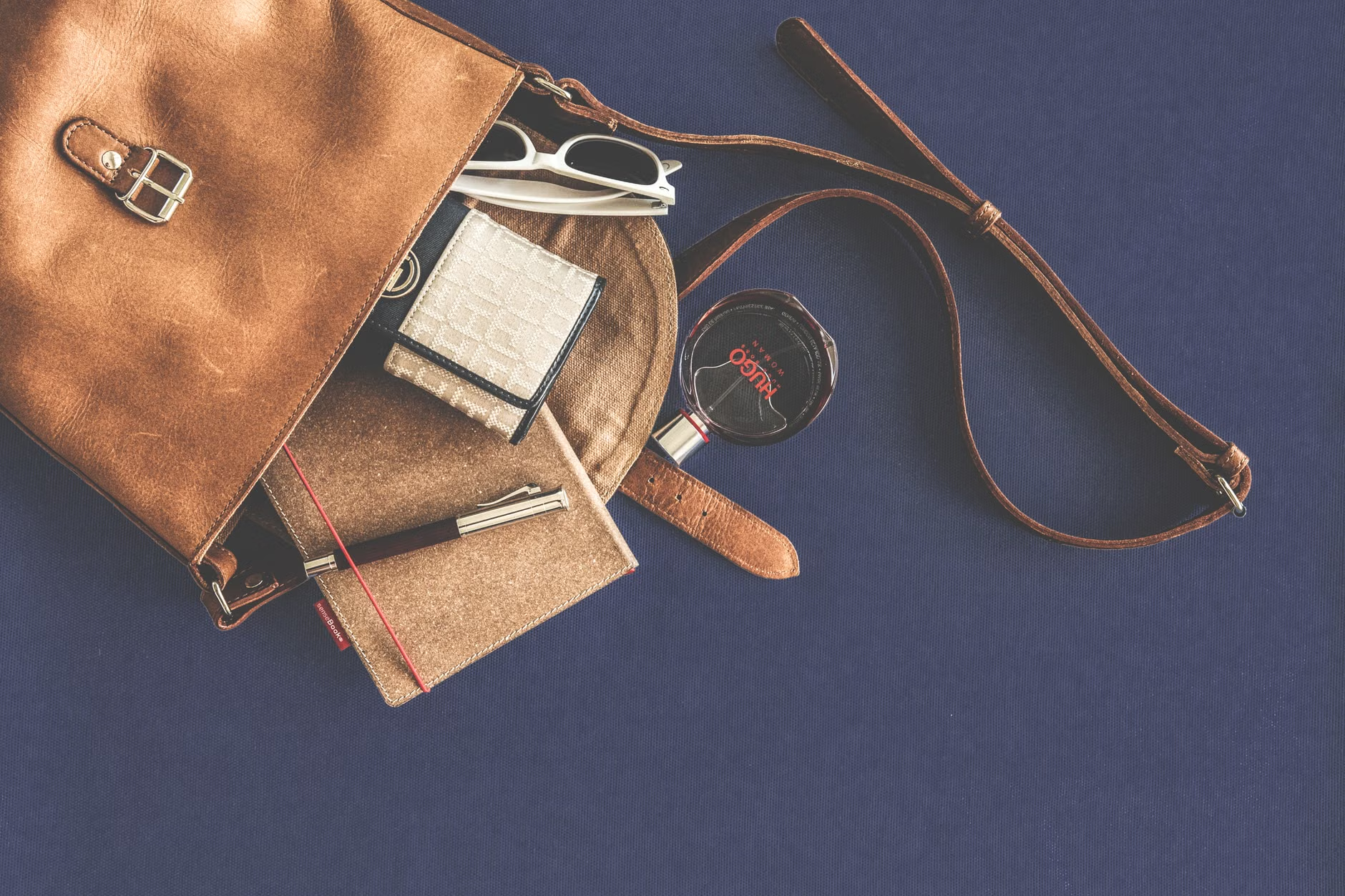
Luggage Logistics: The “Hardshell vs. Softshell” Debate
When traveling with multiple generations, you are likely managing more bags than you would on your own. The choice of luggage matters more than you might think.
Hardshell Suitcases: These are superior for durability and security, especially if you are checking bags. They protect fragile souvenirs and, more importantly, they can serve as a makeshift seat for a tired child or an exhausted adult in a pinch. However, they are inflexible. If you are trying to squeeze your luggage into a tight trunk or a crowded overhead bin, you have no wiggle room.
Softshell/Backpacks: These are better for mobility. If your trip involves multiple transfers, cobblestone streets, or narrow hotel hallways, a high-quality backpack or a soft-sided duffel with wheels is significantly easier to maneuver than a bulky hardshell spinner.
| Luggage Type | Best For | Trade-off |
|---|---|---|
| Hardshell Spinner | Long-haul flights, protecting electronics | Difficult to fit in tight car trunks |
| Softshell/Duffel | Train travel, frequent transfers | Less protection for fragile items |
| Anti-Theft Backpack | City exploration, daily carry | Limited volume, weight on shoulders |
Decision Rule: If you are moving between cities every two days, prioritize light, soft-sided gear. If you are staying in one location for a week or more, hardshell is the better choice for organization and security.
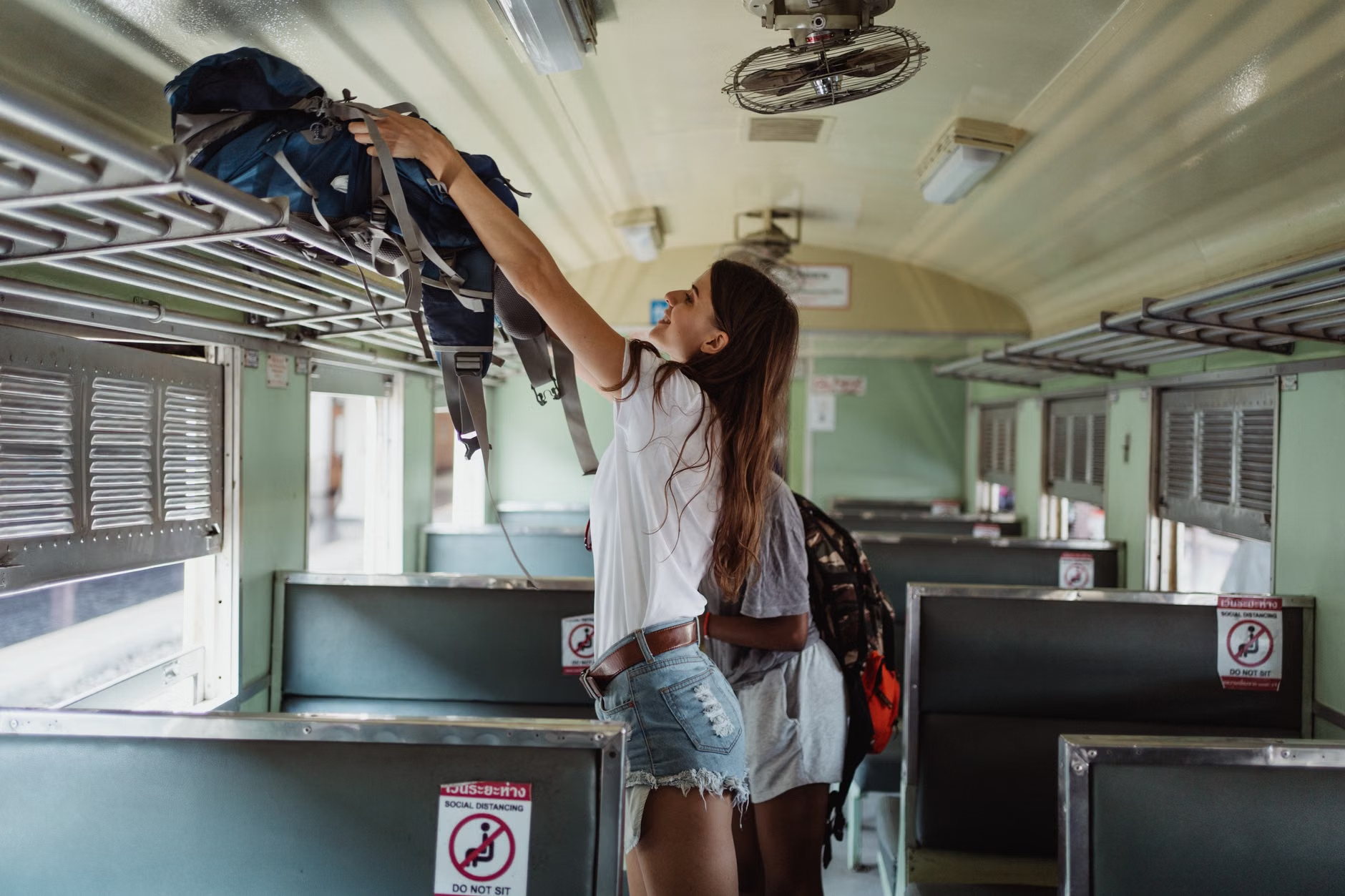
The Hidden Costs of Over-Packing
We often pack for the “what ifs”—what if it rains, what if we go to a fancy dinner, what if the kids have three accidents in one day? While these are valid concerns, they lead to the “over-packing trap.”
The 80/20 Rule of Travel Clothing: You will wear 80% of your clothes 20% of the time, and the other 20% will sit in your suitcase. For a week-long trip, aim for a capsule wardrobe. Stick to a neutral color palette so everything matches. If you are traveling with children, focus on layers rather than bulky individual outfits. A light jacket over a hoodie is more versatile than a heavy winter coat that occupies half your suitcase.
The Laundry Reality: In almost every major tourist destination, you can find a laundry service or a laundromat. Instead of packing 10 days of clothing for a 10-day trip, pack for 5 days and plan one morning for laundry. This significantly reduces the weight you are dragging through train stations and airports, which is crucial when you are also responsible for the gear of your parents and children.
Managing the “Senior Comfort” Factor
Traveling with parents in their 60s, 70s, or 80s requires a shift in how you view “essentials.” It’s not just about what they need to survive, but what they need to thrive.
Comfort vs. Convenience: Older travelers often feel like they are “burdening” the younger generation. To combat this, ensure they have the tools to be self-sufficient. This includes a dedicated, small bag for their personal use that contains their glasses, a small water bottle, a snack, and their contact information. If they feel empowered, they are less likely to experience the anxiety that often comes with international travel.
Footwear: This is a non-negotiable. Ensure they have broken-in, supportive walking shoes. Do not let them wear new shoes on a trip that involves significant walking. If they have mobility issues, look into collapsible walking sticks that meet airline carry-on regulations. These can provide immense psychological and physical security on uneven terrain.
Technological Preparedness: The “Connectivity Gap”
Technology is a major stressor in multi-generational travel. You might be comfortable with eSIMs and ride-sharing apps, but your parents may not be. If you get separated in a crowded city, the lack of a common communication platform is a disaster waiting to happen.
The “Unified Tech” Strategy:
- Universal Adapters: Don’t rely on one adapter. Pack one for every adult in the group. There is nothing more frustrating than having to trade off charging duties at 11:00 PM.
- Shared Location: Use a simple location-sharing feature (like Google Maps or Apple’s “Find My”) to track the group. Explain how to use it to your parents before you leave. It’s not about surveillance; it’s about safety.
- Offline Maps: Download offline maps for your destination. Signal is never guaranteed, and relying on real-time data is a recipe for getting lost when you are already tired and frustrated.
Refining Your Packing Workflow: A Step-by-Step Approach
To avoid the last-minute scramble, implement a “rolling packing” system. Do not leave your packing until the night before. Multi-generational travel requires a staggered start.
One Week Before: Check the weather forecast and the specific requirements of your accommodation. Does the hotel provide towels? Is there a kitchenette? This dictates whether you need to pack travel soap or specific snacks.
Three Days Before: Lay out everything. This is the stage where you look at your “over-packing” pile and ruthlessly eliminate items. Ask yourself: “Can I buy this there if I absolutely need it?” If the answer is yes, take it out.
One Day Before: The “Dry Run.” Pack the bags, weigh them, and make sure they are manageable. If you find yourself struggling to lift your own bag, you have packed too much. Remember, you will be navigating stairs and crowded terminals—if you can’t lift it, you shouldn’t bring it.
The Psychological Aspect of Multi-Generational Logistics
Beyond the physical gear, you are the emotional anchor of the trip. If you are stressed, everyone is stressed. Packing effectively is one of the best ways to reduce your own stress levels. When you know where the passports are, when you know the emergency meds are in your side pocket, and when you know the kids’ tablets are charged, you can focus on the actual purpose of the trip: spending time together.
Common Misconception: “Everything will go according to plan if I pack well enough.” This is false. No matter how well you pack, a flight will be delayed, a toddler will have a meltdown, or a grandparent will get tired. The goal of packing isn’t to prevent these things—it’s to give you the tools to manage them without a total breakdown.
Dealing with Unexpected Variables
What if you are traveling to a region with different voltage or unique safety regulations? Always check the official travel advice from your home country’s government. For instance, the U.S. Department of State provides excellent country-specific information regarding health and safety. Similarly, if you are a UK citizen, the Foreign, Commonwealth & Development Office (FCDO) offers detailed guidance. These resources aren’t just for “emergencies”; they often contain practical tips on local customs that can save you from social faux pas or legal trouble.
For example, in some countries, it is customary to remove shoes before entering a home or certain temples. Knowing this ahead of time allows you to pack slip-on shoes for your parents, making their experience much more comfortable and respectful.
The “Just-in-Case” Trap: A Final Word
The most important piece of advice regarding multi-generational packing is to let go of the “just-in-case” mindset. You cannot pack for every possible disaster. If you try, you will end up with bags that are impossible to move, which in itself becomes a safety hazard. Focus on the essentials, prioritize the comfort of the most vulnerable members of your group, and keep your logistics as simple as possible.
If you find yourself packing something “just in case,” ask yourself if that “case” is actually likely to happen. If you are visiting a major city, you don’t need a portable water filtration system. If you are going on a hike, you probably don’t need three different pairs of formal shoes. Trust your ability to solve problems on the ground rather than trying to solve them all before you leave home.
Frequently Asked Questions
1. How do I balance the weight limit for a group of five or more?
Use a shared luggage strategy. If one person has a lighter bag, they can take on the heavier, denser items (like books or extra toiletries) to balance the load across the group. Never let one person carry the “heavy” bag while another carries the “light” one; distribute the weight so everyone is comfortable.
2. Should I pack snacks for the whole group?
Yes, but pack “universal” snacks. Avoid anything that might trigger allergies (like peanuts) and stick to shelf-stable, non-messy items like granola bars, dried fruit, and crackers. These are lifesavers during airport delays or long drives when you can’t stop for a proper meal.
3. How do I handle medications for seniors when flying internationally?
Always keep medications in their original packaging with the prescription label intact. If the medication is liquid (above the 100ml limit), carry a note from the prescribing physician. Most security checkpoints have specific lanes for medical supplies; do not hesitate to ask a staff member for assistance if the process seems overwhelming for your parents.
Traveling with multiple generations is a challenge, but it’s also an opportunity to build memories that last long after the suitcases are unpacked. By organizing your gear logically and focusing on the needs of the group rather than the individual, you can spend less time managing logistics and more time enjoying the journey. Remember, the best travel gear is the kind that makes your life easier, not the kind that makes your suitcase heavier. Keep it simple, stay flexible, and prioritize communication above all else.