The most critical factor in determining whether a second-hand electric scooter is a bargain or a paperweight is the remaining capacity of its lithium-ion battery, which often accounts for up to 50% of the vehicle’s total replacement cost.
- Voltage Drop is Key: A battery that charges to 100% but drops rapidly under load (the “voltage sag” test) is nearing the end of its life, regardless of what the screen says.
- The 500-Cycle Rule: Most standard lithium-ion scooter batteries begin to degrade significantly after 300 to 500 full charge cycles; always ask for the odometer reading to estimate cycle count.
- Visual Inspection Matters: Signs of battery trauma—such as bulging casings, melted plastic near the charging port, or oxidized terminals—are non-negotiable red flags that demand you walk away.
If you are looking to shave a few miles off your morning commute or simply want a fun, portable way to run errands around the neighborhood, the second-hand market for electric scooters is tempting. However, unlike a bicycle, where a bent frame is obvious, a dying battery is a “hidden” defect. You might test ride it for five minutes, find it responsive, and then discover three days later that its effective range has plummeted from a promised 20 miles to a frustrating four.
Understanding the Lifecycle of Lithium-Ion Power
To make an informed purchase, you need to understand that the battery is not just a fuel tank; it is a complex chemical factory. Lithium-ion batteries function through the movement of lithium ions between a cathode and an anode. Every time you charge and discharge the battery, microscopic structural changes occur within these materials. Over time, these changes limit the battery’s ability to hold a charge and, more importantly, its ability to deliver power efficiently.
When assessing a used scooter, the “mileage” of the battery is rarely just about the number of miles displayed on the dashboard. A scooter that has sat in a hot garage for two years with a 100% charge is often in worse condition than a scooter that has been ridden daily but stored properly. This is because high-state-of-charge storage at high temperatures accelerates electrolyte decomposition.
What the “Cycle Count” Actually Means: A charge cycle is one full discharge and recharge. If you use 50% of your battery today and recharge it, then do the same tomorrow, that counts as one cycle, not two. Most consumer-grade scooters use cells rated for 300 to 500 cycles before they drop to 80% of their original capacity. If the scooter has 1,500 miles on it, and the average range is 15 miles per charge, it has likely seen 100 cycles. That is well within the “healthy” zone. If it has 5,000 miles, you are approaching the threshold where internal resistance will start to cause noticeable performance degradation.
The “Load Test” Protocol for Prospective Buyers
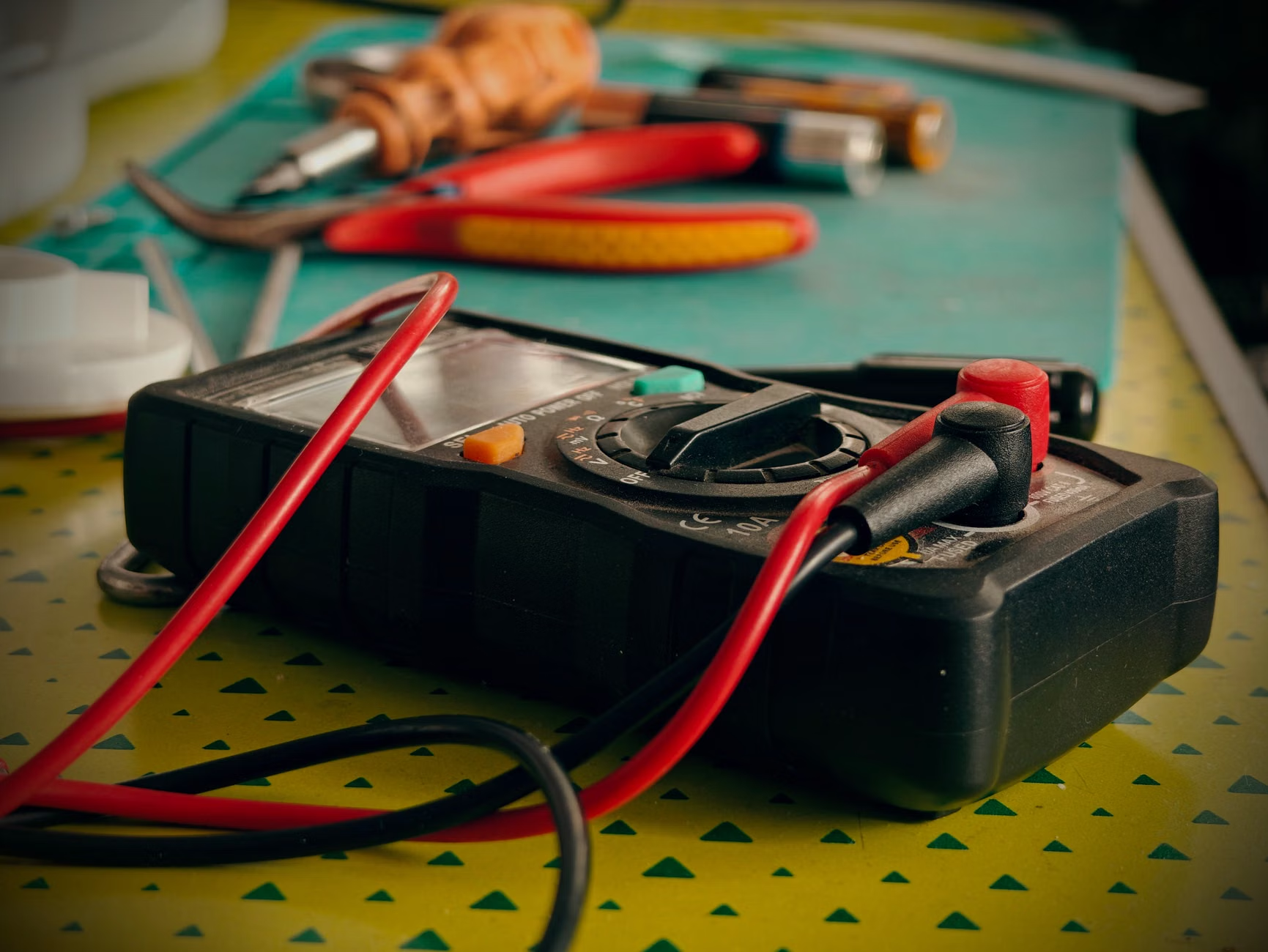
Never buy a second-hand electric scooter without performing a physical load test. A static voltage reading (using a multimeter) only tells you if the battery can hold a charge while idle. It does not tell you if the battery can handle the high-current draw required to climb a hill or accelerate from a stop.
Step-by-Step Field Testing:
- Check the Resting Voltage: Bring a portable digital multimeter. Ask the seller to charge the scooter to 100%. Check the voltage at the charging port or accessible terminals. Compare this to the manufacturer’s nominal voltage (e.g., 36V, 48V). It should be at or slightly above the manufacturer’s “fully charged” specification.
- The Short-Ride Stress Test: If the seller permits, take the scooter for a test ride that includes at least one incline. Pay attention to the battery percentage indicator on the display. If the indicator drops significantly (e.g., from 100% to 80%) after just a few minutes of moderate riding, the battery has high internal resistance.
- Monitor Voltage Sag: If you have the technical skill, measure the voltage immediately after the test ride while the battery is still “warm.” A healthy battery will recover its resting voltage relatively quickly. A dying battery will remain at a lower voltage for an extended period, indicating that the cells are struggling to maintain chemical stability.
If the seller refuses a test ride, do not complete the purchase. The risk of inheriting a battery that requires a $200–$400 replacement is simply too high. Transparency is the default requirement for any reputable private seller.
Identifying Red Flags: When to Walk Away
Visual inspection is your first line of defense. Because lithium-ion batteries are volatile, they often leave “telltale signs” when they have been abused or are nearing the end of their life. You do not need to be an electrical engineer to spot these issues.
| Indicator | What It Looks Like | Risk Level |
|---|---|---|
| Bulging/Swelling | The battery pack or the underside of the deck looks slightly bowed or uneven. | Critical: Fire hazard; do not buy. |
| Corrosion | White or green powdery residue on the charging port or internal terminals. | High: Indicates water ingress; likely short-circuiting internals. |
| Melted Plastic | Discoloration or warping around the charging port or battery connector. | High: Shows signs of previous overheating or poor-quality third-party chargers. |
| Inconsistent Charging | The charger light flickers or the battery refuses to reach 100%. | Moderate: Likely a BMS (Battery Management System) failure or dead cell group. |
The most common mistake buyers make is ignoring the “smell” test. A battery that has been internally damaged or has suffered from water ingress will often emit a faint, sweet, or acrid chemical odor. If you open the deck (with the seller’s permission) and the battery pack smells strange, or if you see signs of moisture or rust inside the compartment, that scooter is essentially a project bike, not a daily commuter. Treat it accordingly regarding the price.
The Hidden Variable: BMS and Cell Balancing
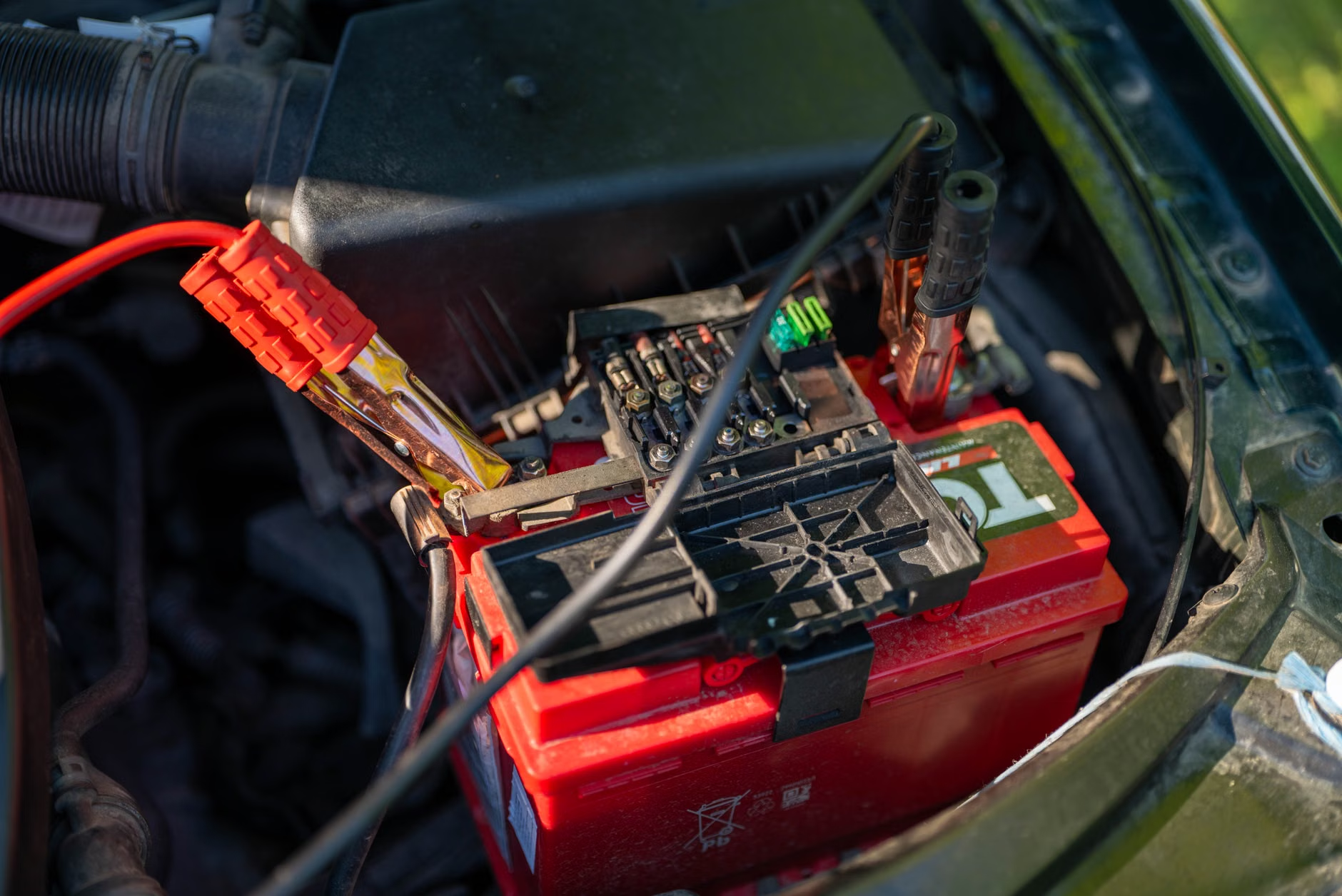
Every modern electric scooter battery is equipped with a Battery Management System (BMS). The BMS is the “brain” of the battery pack. Its job is to balance the charge between individual cells so that one weak cell doesn’t drag down the performance of the entire pack.
When you buy a used scooter, you are not just buying the cells; you are buying the health of that BMS. If the previous owner frequently drained the battery to 0% and left it there for weeks, the BMS may have entered a “protection mode” or, worse, the cells may have become so unbalanced that the charger can no longer “see” the full capacity of the pack.
Why this matters for your 30s/40s lifestyle: You likely don’t have the time to disassemble a battery pack to manually balance the cells or replace a faulty BMS board. If the battery is unbalanced, you will find that the scooter dies at 30% or 40% on the display. This is a common symptom of a “lazy” battery. If you encounter this, you are looking at a repair cost that often outweighs the value of an older, entry-level scooter.
Maintenance Habits That Extend Your Battery Life
Once you have purchased a reliable second-hand scooter, how you treat it determines whether that battery lasts another year or another five. Many users fall into the “set it and forget it” trap, which is the fastest way to kill your investment.
The 80/20 Rule: Lithium-ion batteries love being kept between 20% and 80% charge. Charging to 100% and leaving it there for days creates high voltage stress on the cells. If you know you are not going to ride the scooter for a week, try to leave the battery at approximately 50-60%. This is the “Goldilocks zone” for chemical stability.
Temperature Sensitivity: Never charge your scooter in a freezing cold garage or a scorching hot car. Lithium-ion chemistry is highly sensitive to temperature extremes. Charging below 0°C (32°F) can cause “lithium plating,” where metallic lithium forms on the anode, permanently reducing capacity and creating a safety risk. Conversely, charging above 45°C (113°F) accelerates degradation significantly.
Storage Strategy: If you live in a region with distinct seasons, store your scooter in a climate-controlled area. If you must store it in a shed, bring the battery inside if it is removable. If it is not removable, ensure the scooter is covered to prevent moisture condensation on the internal electronics, which can lead to slow, parasitic drains that kill your battery over the winter.
Financial Implications: When to Repair vs. Replace
At some point, every battery will reach the end of its life. When that happens, you have three choices: buy a new pack from the manufacturer, use a third-party refurbishment service, or buy a new scooter.
Manufacturer-direct packs are the safest, but they are often priced at a premium—sometimes 40% of the cost of a new scooter. Third-party refurbishment services can be more affordable, but they are only as good as the cells the technician uses. If they use cheap, “no-name” cells, you will find yourself back in the same position in 12 months.
The Decision Rule: If the cost of a new battery pack exceeds 50% of the current market value of your scooter, it is almost always more economical to sell the scooter (disclosing the battery state) and upgrade to a newer model with a warranty. The secondary market value of “rolling chassis” scooters is surprisingly high, as many hobbyists buy them to modify or convert into custom builds.
Common Misconceptions
There is a persistent myth that “fast charging” or “quick charging” is better for the battery because it gets the job done faster. In reality, the opposite is true. While most modern scooters are designed to handle specific charging currents, slow charging is almost always gentler on the cells. If you have the luxury of time, use the standard charger provided by the manufacturer rather than an aftermarket “fast” charger, which generates more heat and puts more stress on the BMS.
Another misconception is that you need to “cycle” the battery (drain it completely and charge it fully) to “calibrate” it. This is a legacy practice from the era of Nickel-Cadmium (NiCd) batteries. Doing this to a modern lithium-ion battery actually causes it unnecessary wear. The BMS calculates capacity based on voltage curves; it does not need a full discharge to “learn” its capacity.
Final Recommendations for the Savvy Buyer
Buying second-hand is a smart way to enter the world of micromobility without the steep depreciation of a new unit, provided you treat the battery as the most important component of the transaction. Always prioritize a seller who can provide the original charger, evidence of regular usage, and a clean history of storage.
If you are buying from a private party, ask them, “How often did you charge it to 100%?” A seller who says, “I only charged it to 80% unless I had a long ride planned,” is a seller who understands battery health. A seller who says, “I always kept it plugged in when I wasn’t using it,” has likely accelerated the degradation of the pack.
Ultimately, your goal is to find a machine that has been used, not abused. A scooter that has been ridden 1,000 miles by a careful commuter is a much better prospect than a scooter with 100 miles that has been left to sit in a damp shed for a year. Trust your eyes, use the load test, and don’t be afraid to walk away from a “deal” that feels off. A battery is not just a part; it is the heart of your ride.
Frequently Asked Questions
1. How do I know if my scooter battery is “swollen”?
A swollen battery often manifests as a slight “bowing” of the plastic casing on the underside of the scooter deck. If you notice the deck feels uneven, or if the screws holding the battery cover in place seem tight or misaligned, it may be a sign of internal pressure. If you suspect swelling, do not charge the scooter and seek professional inspection immediately, as this is a fire risk.
2. Can I use a different charger if I lose the original one?
You must use a charger with the exact same voltage and connector type, and a current (amperage) rating that is equal to or less than the original. Using a charger with the wrong voltage can destroy the BMS or cause the battery to catch fire. Always check the output specifications on the original charger’s label before purchasing a third-party replacement.
3. Is it safe to leave my scooter plugged in overnight?
Most modern scooters have a “cut-off” feature in the charger that stops the flow of power once the battery is full. However, leaving it plugged in indefinitely can keep the battery at 100% state-of-charge, which, as discussed, accelerates degradation. It is best practice to unplug the charger once the cycle is complete, or use a smart plug to automatically cut power after a set number of hours.
Official Resources for Further Research:
- Battery University: In-depth guides on Lithium-ion chemistry and longevity.
- CPSC Micromobility Safety Information: Official guidance on battery safety and fire prevention.
Note: This guide is intended for informational purposes and does not replace professional technical advice. When in doubt, consult your manufacturer’s manual or a certified local repair shop.