True restorative travel for those of us juggling careers and the relentless demands of parenting isn’t found on a crowded beach or a jam-packed sightseeing tour; it is found in the deliberate, quiet stillness of a mountain retreat.
Three Key Takeaways for Your Next Escape:
- Intentional Inactivity: Quiet tourism isn’t just about location; it is a commitment to removing scheduled activities, which is essential for cortisol levels to drop.
- The 48-Hour Rule: It typically takes 48 hours for the nervous system to shift from “survival mode” to “restorative mode” when entering a quiet environment.
- Digital Detox is Non-Negotiable: You cannot achieve a restorative break while maintaining your usual notification stream; set strict boundaries before you leave.
Why Your Current Vacation Model is Keeping You Exhausted
If you are in your 30s or 40s, you likely approach a vacation the same way you approach your work week: with a to-do list. We treat travel like a project to be optimized. We research the top ten restaurants, map out the “must-see” viewpoints, and stress over the logistics of airport transfers. By the time we return home, we often feel like we need a vacation from our vacation.
This is the “optimization trap.” When we treat rest as a productivity goal, we fail to actually disconnect. The brain, accustomed to constant stimulus—slack notifications, school drop-offs, grocery inventory, and email threads—doesn’t know how to shut off just because you are sitting on a beach in Bali. It keeps scanning for the next task. This is why many parents return from a week away feeling just as frayed as when they left.
Quiet tourism represents a radical shift. It is the practice of choosing destinations and activities that prioritize low sensory input, slow movement, and the absence of a schedule. For a parent or a high-functioning professional, this isn’t just a luxury; it is a necessary physiological intervention to combat chronic stress.
The Physiology of Stillness: Why Mountains Work
Why choose a mountain retreat over, say, a city break or a resort? It comes down to sensory architecture. Cities are designed to demand your attention. They are full of bright lights, constant noise, and “must-see” landmarks that trigger your brain’s reward-seeking pathways. This keeps your sympathetic nervous system—the “fight or flight” side—engaged.
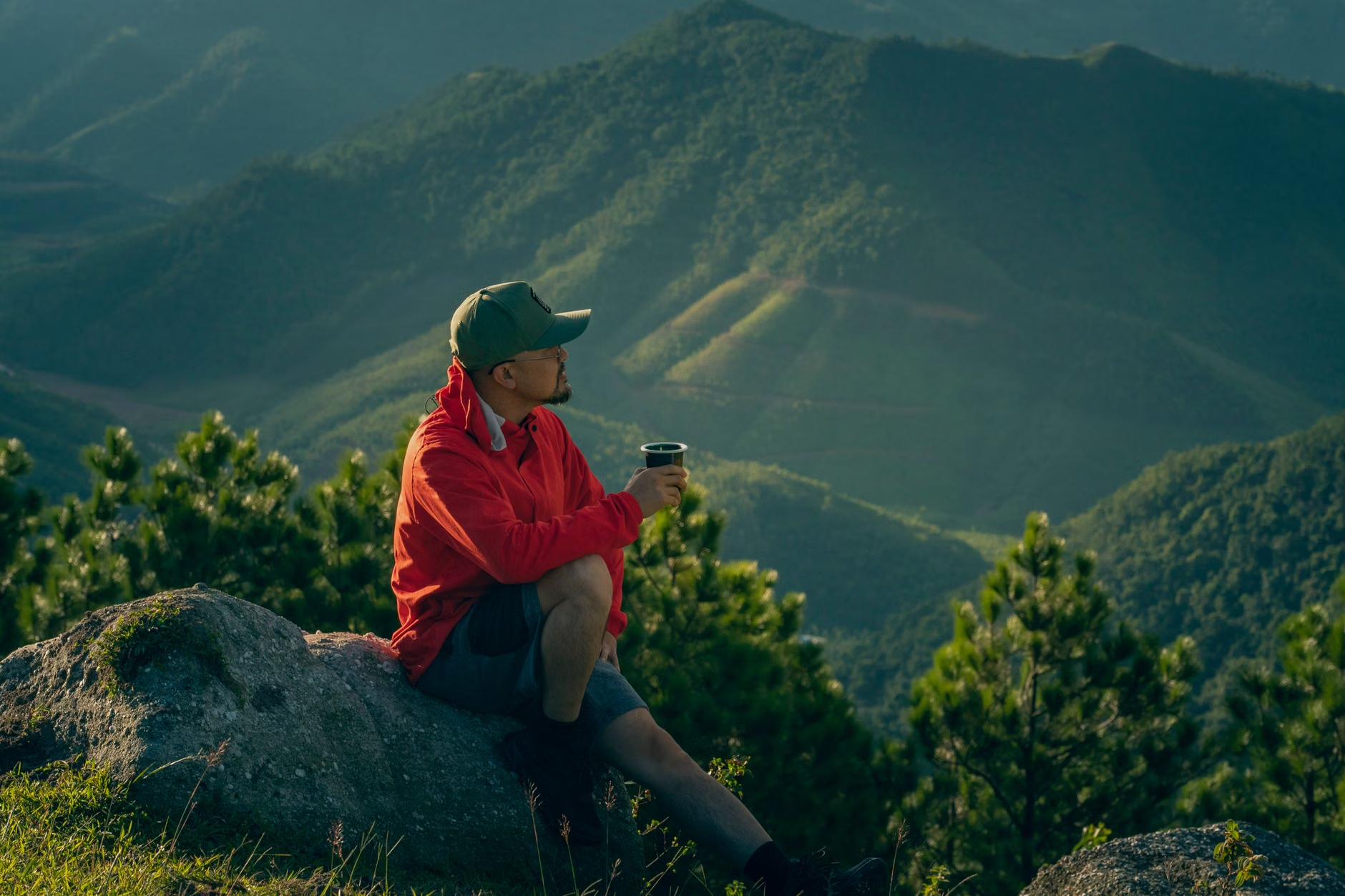
Mountain environments provide what researchers call “soft fascination.” This is a state where the environment captures your attention without effort. Looking at a mountain range, a forest canopy, or a moving cloud formation allows your directed attention—the part of the brain you use to manage spreadsheets or negotiate with a toddler—to rest. This is the physiological equivalent of a deep breath for your prefrontal cortex.
When you place yourself in a mountain environment, you are also physically removing yourself from the “cues” of your daily life. You aren’t walking past your local coffee shop or seeing your neighbor’s car. The lack of familiar triggers allows your brain to stop running the background programs of your daily routine. This is why the first 48 hours of a mountain retreat are often the hardest; you might feel restless, bored, or even anxious. This is your nervous system adjusting to the silence. Do not mistake this for a sign that you should be “doing more.” It is actually the sign that the healing process has begun.
Designing Your Quiet Retreat: A Strategic Framework
Planning for a quiet retreat requires a different mindset than booking a standard trip. You aren’t looking for “amenities”; you are looking for “absence.” Here is how to evaluate a potential location for a restorative break.
1. The “Distance to Threshold” Rule
When selecting a property, look at the distance from the nearest major town. If you are within 20 minutes of a busy tourist hub, you will feel the pull to “go out and see things.” Aim for a location that requires a deliberate effort to reach, but isn’t so remote that the travel stress outweighs the benefit. A 45-minute to one-hour drive from a grocery store or airport is the “Goldilocks zone.”
2. The Architecture of Rest
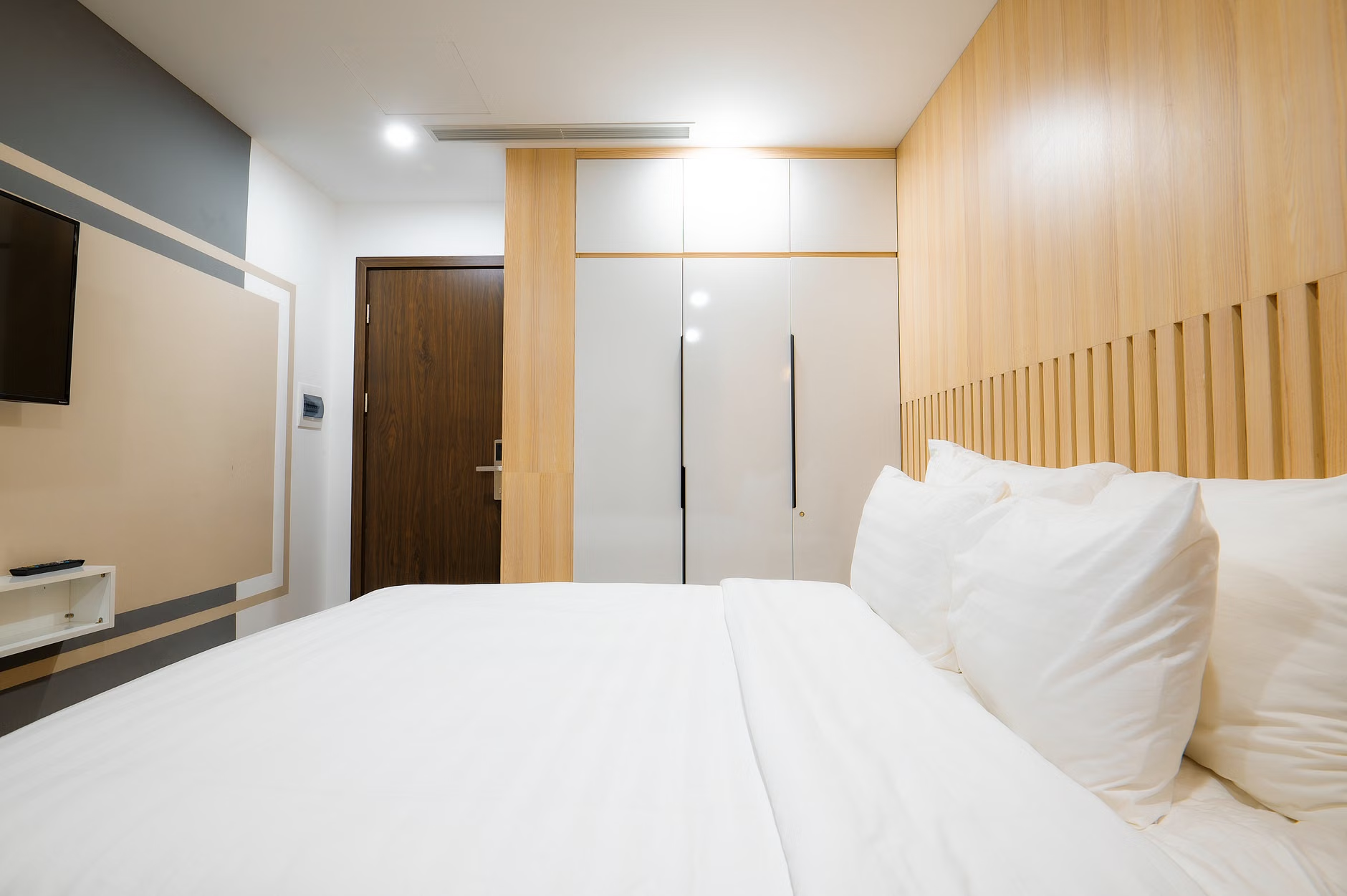
In your 30s and 40s, physical comfort is directly tied to mental recovery. Look for rentals that prioritize high-quality bedding, soundproofing, and a view that doesn’t require you to stand up to see. If you are a parent who has been sleeping in short, interrupted bursts for years, a high-quality mattress and total darkness (think blackout curtains) are more important than a fancy coffee machine or an infinity pool.
3. Managing the “Digital Tether”
This is where most people fail. You arrive at your beautiful, silent cabin, and the first thing you do is check your work email or scroll through social media to show others how “relaxed” you are. This destroys the purpose of the trip. Before you leave, set a “vacation protocol.”
| Protocol Level | What it Means | Best For |
|---|---|---|
| Total Blackout | No phone, no laptop, no social media. | Severe burnout or those in high-pressure roles. |
| The 15-Minute Window | One 15-minute check-in per day (e.g., 5 PM). | Parents needing to check on kids/sitters. |
| Emergency Only | Phone is on, but notifications are muted. | Those who cannot fully disconnect due to work. |
Common Pitfalls to Avoid
Even with the best intentions, it is easy to accidentally turn a quiet retreat into a chore. Here are the most common mistakes that ruin the restorative potential of a mountain getaway.
The “Hiking Marathon” Mistake
Many people treat a mountain retreat as a chance to “get fit.” They plan 15-kilometer hikes every day. While movement is great, physical exhaustion is not the same as mental rest. If you return to your cabin with aching muscles and a need for a nap, you are focusing on physical output rather than mental recovery. Instead, aim for “mindful movement”—a short, slow walk where you observe the flora, not a trek where you are checking your heart rate monitor.
The “Over-Provisioning” Trap
Bringing your entire work setup, piles of unread books, and a complex meal plan creates clutter. The goal of quiet tourism is to minimize the number of decisions you have to make. If you spend your retreat deciding what to cook, cleaning up dishes, and managing a complex itinerary, you are just moving your household labor to a different zip code. Opt for simple, pre-prepped meals or a location that offers basic dining services.
The “Guilt of Inaction”
This is the most significant hurdle for parents. You will feel guilty for not “doing” things with your time. You will feel like you should be researching the local history or taking photos for your family album. Recognize this as a cognitive bias. Your job during a quiet retreat is to be, not to do. If you find yourself feeling guilty, acknowledge the thought, label it as “productivity conditioning,” and then let it pass without acting on it.
The Role of Sensory Deprivation in Recovery
We live in an era of “sensory overload.” From the blue light of our screens to the constant hum of traffic and the persistent pinging of notifications, our brains are in a state of high-alert 24/7. This is particularly true for parents. You are constantly monitoring for danger, for needs, for schedules. This is “vigilance fatigue.”
Quiet tourism works because it provides a form of sensory deprivation. When you are in a quiet mountain cabin, the ambient noise level drops significantly. The constant visual clutter of a modern home—the pile of laundry, the stack of mail, the blinking router—is replaced by the steady, unchanging patterns of nature. This allows your brain’s “default mode network”—the part of the brain responsible for creativity, self-reflection, and emotional regulation—to come back online.
Research published in the journal Frontiers in Psychology suggests that even short exposures to nature can significantly lower levels of cortisol, the body’s primary stress hormone. However, the key is the *duration* of the exposure. A quick walk in the park is helpful, but a sustained period (3-5 days) in a low-stimulus environment is required for the nervous system to actually reset its baseline.
Actionable Steps: Preparing for Your First Quiet Retreat
If you have never done this, don’t try to make it perfect. Start by setting the stage for success. Here is a step-by-step guide to preparing for your first, truly quiet break.
- The “No-Agenda” Agreement: If you are traveling with a partner, have a conversation before you leave. Agree that there is no pressure to “do” anything. If one person wants to sit and read for six hours, the other agrees not to view that as “wasted” time.
- Simplify the Logistics: Do not choose a place that requires a complex check-in process or requires you to bring your own supplies. Choose a place where everything you need is already there, or where you can easily order essentials.
- The “Exit Strategy”: On the night before you leave, spend 30 minutes organizing your home and your work email. Clear the decks so that you aren’t returning to a “crisis” that was created while you were away.
- The 48-Hour Buffer: If possible, book at least three nights. The first night is for arriving, the second is for “decompressing” (you will likely feel restless here), and the third is for actual rest. A two-night trip is often too short to get past the initial adjustment phase.
The Overlooked Variable: Why “Doing Nothing” is Hard
We often talk about “work-life balance,” but we rarely talk about the “rest-life balance.” Many of us are actually afraid of silence. In the absence of external noise, we are forced to listen to our own thoughts. If you have been suppressing stress or avoiding difficult emotions by staying busy, a quiet retreat will bring those things to the surface.
This is not a failure of the retreat. It is the success of it. When you are finally still, you might feel a rush of sadness, frustration, or anxiety. This is just the “mental debris” of the last few months finally being cleared out. Do not try to solve these problems while on your retreat. Simply allow them to exist. Write them down in a journal if you need to, then close the book. The goal isn’t to solve your life; it’s to give your mind the space to heal so that you are better equipped to solve your life when you return.
If you find that the silence is too loud, introduce a very low-impact activity. Listen to instrumental music, do a simple craft, or practice basic stretching. But keep the threshold low. If you find yourself “achieving” or “improving,” you are drifting back into productivity mode. Pull yourself back to center.
The Long-Term Impact on Your Parenting and Career
You might wonder if taking this kind of time is selfish. It is the opposite. A parent who is chronically stressed is a parent who is reactive, impatient, and easily overwhelmed. A professional who is burnt out is a professional who is making errors, losing creativity, and struggling to collaborate.
By engaging in quiet tourism, you are essentially “servicing” your most important asset: yourself. When you return, you will find that your patience threshold for your children is higher. You will find that you are more capable of handling complex work problems because your mind is no longer cluttered with the noise of daily survival. This isn’t just about feeling better for a week; it’s about creating a more sustainable way to live for the next decade.
Think of it as a recurring maintenance schedule for a car. You wouldn’t drive your car for 50,000 miles without an oil change and expect it to run perfectly. Yet, we expect our brains to handle decades of high-stress parenting and professional life without any structured downtime. A quiet mountain retreat is that essential maintenance.
Final Thoughts: Just Start Small
You don’t need to book a week-long stay in the Swiss Alps to start practicing quiet tourism. You can start by finding a local cabin, a quiet state park, or even a secluded room in a nearby town for a weekend. The geography matters less than the intention. The goal is to create a space where you are not required to be productive, where you are not required to be “on,” and where you are free to simply exist in the quiet.
If you are feeling the weight of your 30s and 40s, stop trying to fix it with more “activities.” Fix it with silence. The mountains are waiting, but the real change happens in your own mind when you finally decide to turn off the noise.
For more on the science of nature and mental health, you can explore resources from the American Psychological Association on the psychological benefits of time spent in natural environments.
Frequently Asked Questions
1. Is it possible to practice quiet tourism with children?
While the purest form of quiet tourism is solitary or with a partner, it is possible to adapt it for families. The key is to shift the goal: instead of “entertaining” the kids, focus on “shared stillness.” Choose locations with easy access to nature where the kids can play independently, and prioritize low-stimulation activities like building forts, reading, or slow nature walks. The goal is to reduce the “managing” aspect of parenting.
2. How do I handle the “guilt” of taking time for myself?
Reframe it as an investment in your family. Remind yourself that a regulated, calm parent is a better parent. You are not “abandoning” your responsibilities; you are strengthening your capacity to handle them. If the guilt persists, try scheduling a specific “reconnection” activity for when you return, which can help ease the transition back into your daily role.
3. What if I can’t afford a mountain retreat?
Quiet tourism is a philosophy, not a price point. If a mountain cabin isn’t in your budget, create a “quiet zone” at home. This could mean a weekend where you turn off your phone, remove the TV, and spend the time reading or walking in a local park. The benefit comes from the removal of stimulus and the commitment to stillness, not the luxury of the destination.
For further reading on the importance of rest, consider researching the “Rest Test” study conducted by Durham University, which highlights the various ways in which people find true psychological restoration.