- Wearables don’t measure “stress” directly; they measure physiological markers like Heart Rate Variability (HRV) and skin conductance that correlate with stress.
- The primary value of these devices is not in the data itself, but in the “nudge”—the alert that forces you to pause and acknowledge a physical stress response.
- For parents in their 30s and 40s, the most effective devices are those that prioritize “recovery scores” over raw activity metrics, helping you decide when to push through and when to rest.
If you are a parent in your 30s or 40s, your “stress” probably isn’t a single, catastrophic event. It is a slow, persistent hum—the sound of a toddler throwing a tantrum while you try to finish a work email, the mental load of managing a household calendar, and the chronic sleep debt that never seems to fully clear. You don’t need a gadget to tell you that you are stressed; you need to know how to manage it before it burns you out.
Wearable technology has pivoted from counting steps to tracking “readiness” and “recovery.” But can a piece of plastic on your wrist actually help you lower your cortisol, or is it just another notification adding to your digital clutter? Let’s look at the reality of stress-tracking tech.
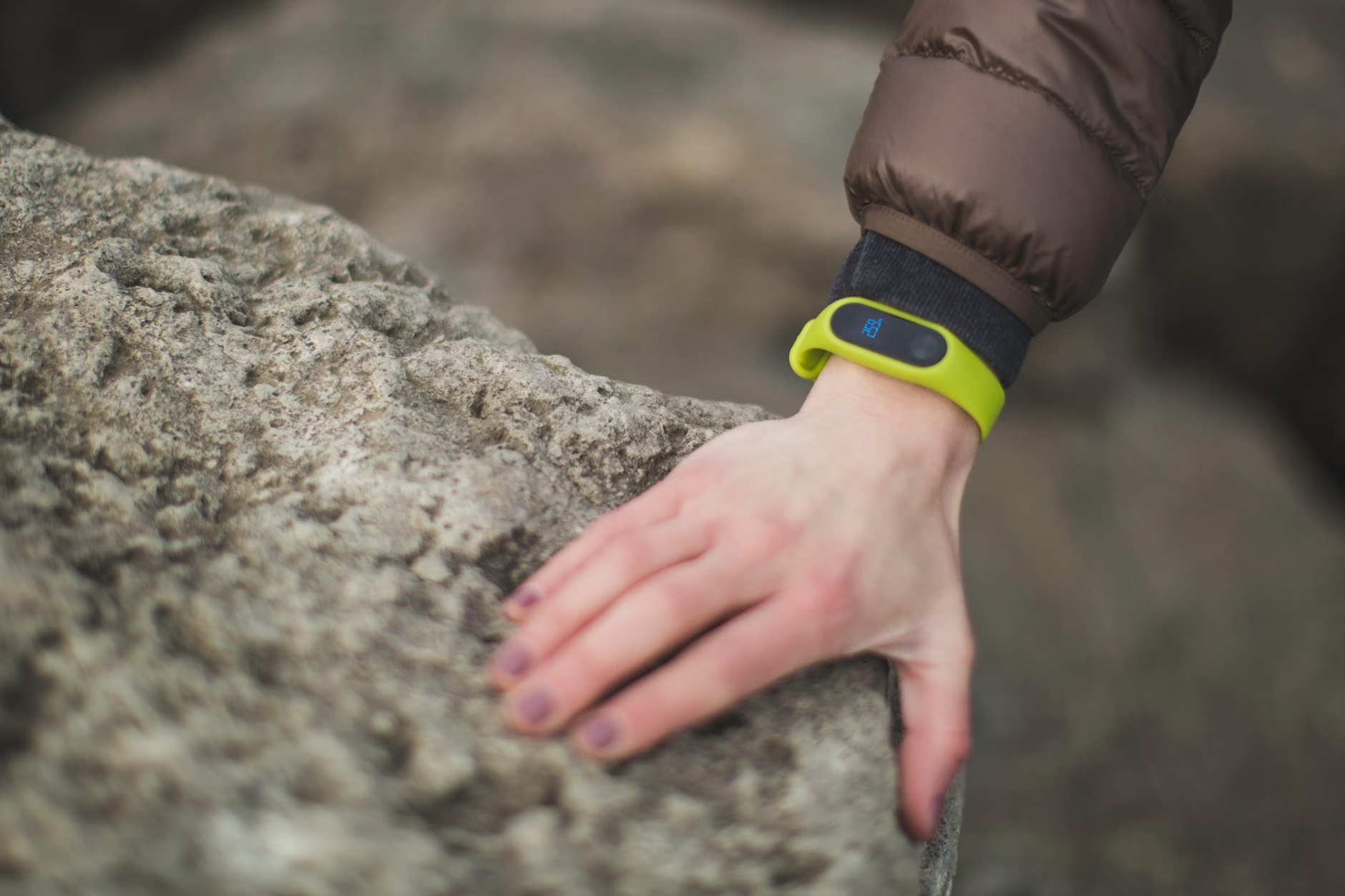
How Your Watch “Sees” Your Stress
To understand whether a wearable can help, you first have to understand what it is actually doing. Most smartwatches and rings do not have a “stress sensor.” Instead, they rely on a metric called Heart Rate Variability (HRV). In simple terms, HRV is the variation in time between each heartbeat. If your heart beats like a metronome, your nervous system is likely under stress. If there is a healthy, variable gap between beats, your body is generally more resilient.
When your body enters a “fight or flight” mode—triggered by a looming deadline or a difficult conversation—your sympathetic nervous system kicks in, and your HRV typically drops. Some modern devices also use Electrodermal Activity (EDA) sensors. These measure tiny changes in the electrical conductivity of your skin caused by sweat gland activity, which is a direct proxy for emotional arousal or stress.
For the average busy parent, this data is useful only if you know how to interpret it. If your device tells you your “stress score” is high at 2:00 PM, ask yourself: Is it because of the workload, or because you haven’t had a glass of water since breakfast? The data is a mirror, not a diagnosis.
The Trap of Data Overload
One of the biggest mistakes users make is obsessing over the numbers. If you wake up and your app tells you your “readiness score” is low, you might feel a sense of dread, thinking, “Oh no, I’m not recovered, I shouldn’t go to the gym.” This is a phenomenon known as orthosomnia or health anxiety, where the technology intended to help you actually creates more stress.
When choosing a device, look for one that provides contextual insights rather than just raw data. A good device should offer you “actionable recovery.” Instead of saying “You are stressed,” it should say, “Your HRV is low; consider a 5-minute breathing exercise or an earlier bedtime tonight.” If the app doesn’t give you a clear path forward, the notification is just noise.
Comparing Common Wearable Approaches
| Device Type | Primary Benefit | Best For |
|---|---|---|
| Smart Rings | Non-intrusive, excellent sleep tracking, low profile. | Parents who want data without the distraction of a screen. |
| Sport-Focused Smartwatches | High-frequency data, GPS, advanced recovery metrics. | Parents who prioritize physical activity as a stress-relief tool. |
| Wellness-Focused Bands | Focus on EDA sensors and mindfulness prompts. | Those who want to actively practice stress regulation techniques. |
As you can see from the table, the best device depends on your lifestyle. If you are a runner, a sport-focused watch might be best. If you are a parent who finds screens stressful, a ring or a simple band is likely to be less intrusive.

Why “Nudging” Beats Tracking
The real value of these devices is the nudge. We often live in a state of “low-grade chronic stress” where we don’t realize our shoulders are up to our ears until we get a headache. A wearable that gently vibrates when it detects a spike in your physiological stress levels can act as a circuit breaker. It forces you to stop, take a breath, and evaluate your state.
This is where the “why it matters” comes in. If you can catch your stress levels before they hit a peak, you are more likely to respond to your child’s behavior with patience rather than frustration. It’s not about the device managing your stress; it’s about the device giving you the self-awareness to manage it yourself.
However, be aware of the “False Positive” trap. If you are playing with your kids or running to catch a bus, your heart rate will rise. Some devices may interpret this as “stress.” If you find yourself constantly correcting your device’s interpretation of your life, the cognitive load of using the tech might eventually outweigh the benefits. The goal is to use the device as a tool, not a master.
Practical Steps to Implementing Wearable Stress Management
If you’ve decided to use a wearable to help manage your daily stress, follow this three-step workflow to ensure it remains a help, not a hindrance:
- Calibrate your baseline: Wear the device for at least two weeks without trying to change your habits. You need to see what your “normal” looks like. Everyone has different resting heart rates and HRV baselines; don’t compare yours to a fitness influencer.
- Identify your triggers: Use the app to log when you feel stressed and compare it to when the device flags high stress. You might notice patterns—perhaps your stress spikes every day at 4:30 PM when the “after-school transition” happens.
- Create “Micro-Interventions”: Once you identify a trigger, pair it with a 60-second intervention. If your watch alerts you at 4:30 PM, make that your signal to do a simple box-breathing exercise (inhale 4, hold 4, exhale 4, hold 4) before you walk through the door.
This approach transforms the technology from a passive tracker into an active coaching tool. You aren’t just looking at a graph; you are using the graph to change your behavior.

The Overlooked Variable: Sleep Quality
If you are a parent, you likely already know that sleep is the foundation of stress management. However, many people forget that sleep quality is the biggest predictor of your next-day stress resilience.
If your wearable shows that your “Resting Heart Rate” is elevated, it is a very strong signal that your body is still processing stress or hasn’t fully recovered from the previous day. Instead of pushing yourself to be more “productive,” that is the day to prioritize easier tasks or delegate household chores. This is the “hidden cost” of ignoring your data. If you see elevated resting heart rates for three days in a row, you are essentially running on a deficit. No amount of meditation or breathing exercises will replace the physical recovery your body needs.
Common Misconceptions
There is a common belief that these devices will “fix” your stress. They won’t. They are like a dashboard in your car; they tell you how much fuel you have left and if the engine is getting hot, but they don’t steer the car. If you are experiencing genuine burnout or chronic anxiety, a wearable is not a substitute for professional support.
Another misconception is that more data is always better. In reality, simpler metrics are often more actionable. A simple “Readiness Score” that combines your sleep, HRV, and activity is much easier to process in the middle of a busy day than a deep dive into your sleep stages or oxygen saturation levels. Don’t fall for the “more features” marketing trap.
Final Thoughts: The “Good Enough” Approach
The goal of using wearable tech for stress management is to reach a point where you no longer need the device to tell you when you are stressed. You want to cultivate the internal awareness to recognize the signs of tension in your body—the clenched jaw, the shallow breathing, the racing thoughts—before your watch even vibrates.
Start by choosing a device that fits your lifestyle, not your ego. Focus on one or two metrics (like HRV and sleep quality) and ignore the rest. If you find yourself checking your stats more than five times a day, take a break. The most important tool for stress management isn’t on your wrist; it’s the ability to step back, recognize when your capacity is full, and give yourself permission to recover.
If you are feeling overwhelmed, remember that the technology is there to support your intuition, not replace it. Start small, be consistent, and don’t let the data dictate your self-worth.
Frequently Asked Questions
Q: Can a wearable device tell me if I am having a panic attack?
A: While some wearables can detect a rapid increase in heart rate and skin conductance, they cannot medically diagnose a panic attack. If you feel you are having one, rely on your physical symptoms and established grounding techniques rather than waiting for a device to confirm it.
Q: Is it worth buying a expensive watch if I only want to track stress?
A: Not necessarily. Many entry-level smartwatches and fitness bands now include HRV tracking and stress monitoring features. Unless you need specific athletic features like GPS or advanced running metrics, you can get the same stress-tracking benefits from a much more affordable, minimalist device.
Q: Why does my stress score look high when I’m just sitting at my desk?
A: Stress is cumulative. If you had a poor night’s sleep, consumed high amounts of caffeine, or are mentally processing a difficult task, your body may be in a state of high physiological arousal even if you are physically still. Your device is picking up on that internal effort, which is a good reminder to take a break.
For more information on the science of HRV and stress, you can visit the American Heart Association or research studies available via PubMed regarding “Heart Rate Variability and Psychological Stress.”