The most effective way to handle a picky eater is to stop trying to force a “balanced meal” onto a single plate and instead pivot to a deconstructed, low-pressure system where the child chooses their own combination from a set of pre-prepared, neutral options.
- The Deconstruction Rule: Serve components separately rather than mixed in stews or casseroles to lower the barrier of “suspicious” textures.
- The “One Safe Bet” Policy: Always include one high-likelihood food (a “safe” food) on the table so the child never feels forced to go hungry, which reduces anxiety-based rejection.
- Predictability Over Variety: Picky eaters find comfort in consistency; prep a rotating cycle of 5-6 familiar items rather than trying a new recipe every night.
If you have ever spent forty minutes meticulously preparing a healthy, nutrient-dense stir-fry only to watch your child push it away with a look of genuine betrayal, you aren’t alone. It is the classic parental trap: we equate “good parenting” with “getting them to eat what I eat.” But for a child with sensory sensitivities or a strong need for autonomy, a mixed-together meal often looks like a chaotic, unsafe landscape of hidden textures.
The “Mindful-Meal” prep isn’t about becoming a short-order cook. It is about shifting your prep strategy to prioritize sensory safety and autonomy. By changing how we store, present, and offer food, we can lower the temperature in the room and turn dinner from a battlefield into a neutral space.
The Psychology of the “Suspicious” Plate
Why do they eat plain pasta and toast at school but refuse your perfectly roasted salmon at home? It usually isn’t about the taste; it’s about the predictability of the sensory experience. When a child sees a mixed casserole, they cannot identify the components. They don’t know if a hidden piece of onion will have a crunch, a slime, or a mushy texture. For a child who is sensitive to sensory input, that lack of predictability is a legitimate source of anxiety.
When we “deconstruct” meals, we are performing a form of emotional regulation for the child. If you are serving tacos, don’t serve them assembled. Prep the meat, the cheese, the lettuce, and the tortillas in separate glass containers. This allows the child to approach the meal with a sense of control. They aren’t being asked to “eat a taco”; they are being asked to “choose if they want cheese or meat today.”
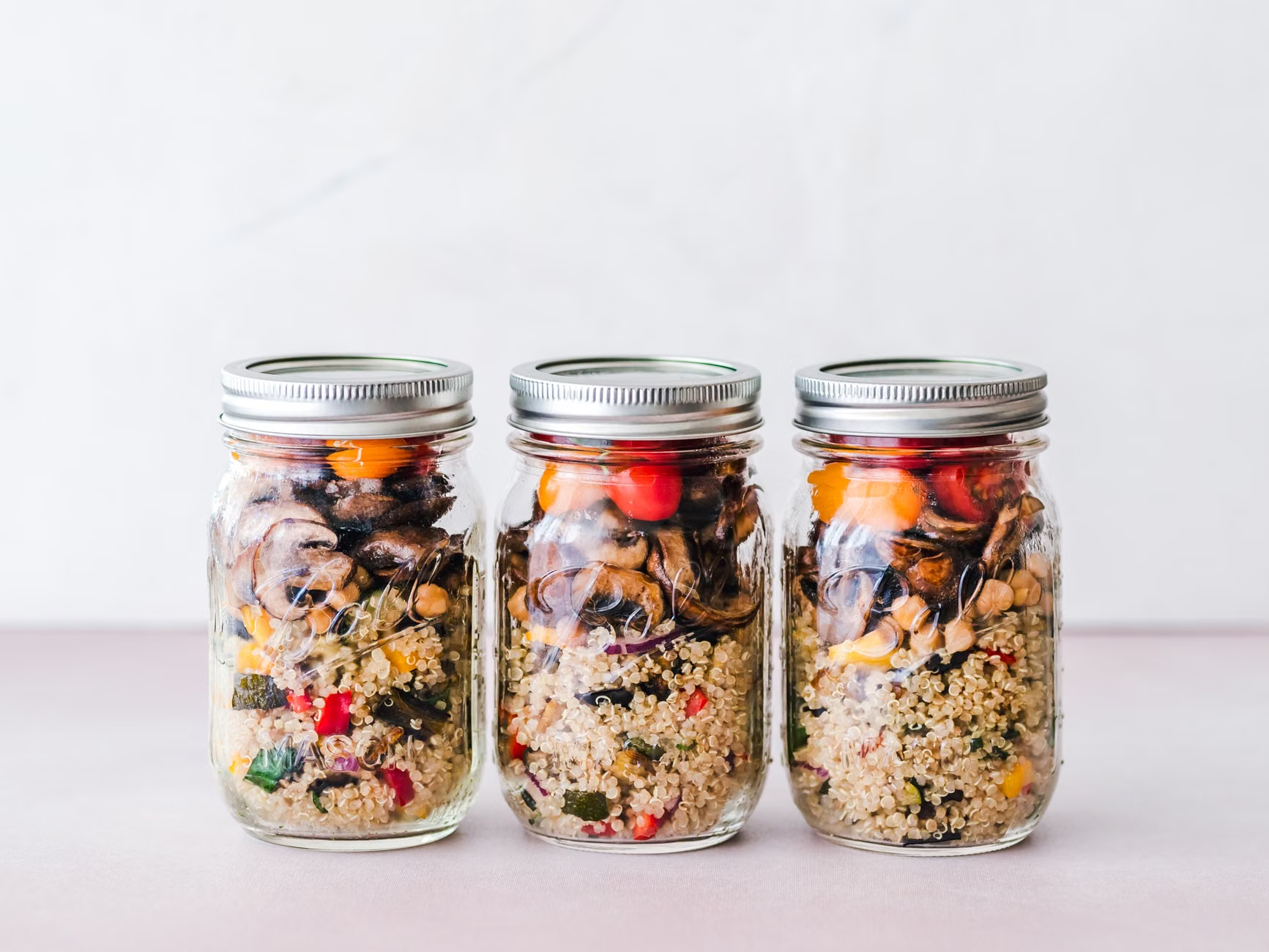
This shift requires a change in your Sunday prep routine. Instead of batch-cooking complex dishes, you are batch-cooking ingredients. Think of it as a “build-your-own” bar that stays in the fridge all week. This reduces your mental load because you aren’t cooking from scratch every night—you are simply assembling from pre-portioned, familiar, and separate components.
Building the “Safe” Foundation
The biggest mistake parents make is trying to force “progress” by pushing a wide variety of new foods at once. This triggers the “neophobia” response—the biological fear of new or unfamiliar foods. To move past this, you need to categorize your meal prep into three specific types of items.
| Category | Purpose | Example |
|---|---|---|
| The Anchor | A “safe” food you know they will eat. | Plain pasta, buttered bread, plain rice. |
| The Bridge | A food similar to the anchor but slightly different. | Pasta with a tiny drop of olive oil, toast with a thin scrape of butter. |
| The Explorer | A new or previously rejected food. | Steamed broccoli, sliced bell pepper, grilled chicken. |
The “Anchor” is your secret weapon. Without it, the child enters the meal in a state of high alert, wondering if they will be forced to eat something they find repulsive. When they know a safe food is present, their nervous system calms down. This is the “Mindful” part of Mindful-Meal prep: acknowledging that your child’s emotional state is the primary factor in whether they will eventually try a new food.
Common Mistake: Thinking the “Anchor” must be unhealthy. It doesn’t. A piece of plain grilled chicken is a high-protein anchor. A bowl of plain, steamed peas is a high-fiber anchor. The goal is neutrality, not nutrition content for that specific bite. You are playing the long game here.
Step-by-Step Execution: The Sunday Reset
If you are trying to overhaul your kitchen routine, don’t try to change everything in one week. Start by dedicating one hour on Sunday to the “Component Prep” method. This will save you hours of cleanup and stress during the work week.
Step 1: The Component Inventory. Choose 3 proteins, 3 vegetables, and 2 starches that your child currently tolerates. These are your “base” items. Wash, chop, and cook them until they are just tender. Avoid heavy sauces, glazes, or complex spice rubs during this phase. If you want to add flavor, do it at the table with individual dips or seasonings.
Step 2: The Airtight Storage. Invest in uniform, clear glass containers. There is a psychological benefit to seeing the food clearly. When food is hidden in opaque plastic or metal containers, it loses its “identity” in the fridge, making it harder for a child to mentally prepare for what they are going to eat.
Step 3: The “Learning Plate” Presentation. At dinner, take a small portion of each component and put it on a “learning plate”—a small side plate separate from their main meal. The rule is simple: They don’t have to eat it; they just have to tolerate its presence. They can move it to the side, touch it, or even look at it. This is “food exposure,” and it is the only scientifically proven way to increase food acceptance over time.

There will be nights when the child refuses the “Explorer” and barely touches the “Anchor.” This is where most parents fail by resorting to “short-order cooking”—making something entirely different like a bowl of cereal or a separate meal. This creates a “learned behavior” where the child realizes they can hold out for their preferred, highly processed food.
The solution is to keep the meal consistent. If they don’t eat the dinner you prepared, they don’t have to. But you do not provide an alternative. This is not about being cruel; it is about being consistent. If they wake up hungry, they will be more likely to engage with the food the next morning. However, always ensure the “Anchor” is something you know they generally like, so they aren’t going to bed on an empty stomach unless they choose to.
Crucial Insight: Picky eating is often a way to exert power in a life where children have very little control. By giving them the “power of the plate”—the ability to choose which of the pre-prepped items they want to eat—you satisfy their need for autonomy. You are saying, “I choose what is available; you choose what goes in your mouth.”
The Hidden Variables of Sensory Processing
Sometimes, “picky eating” is a symptom of something more complex, such as sensory processing sensitivities. If your child gags at the sight of certain textures, this is a physiological response, not a behavioral one. For these children, the “Mindful-Meal” prep is even more critical because it removes the “surprise” factor of food.
When you prep components, you control the texture. You can ensure that your carrots are always steamed to the exact same level of softness. You can ensure that your chicken is never overcooked and stringy. By standardizing the texture of the “Explorer” foods, you create a baseline that the child can eventually learn to trust.
If you suspect your child has severe sensory issues, consult with a pediatrician or a pediatric occupational therapist. They can help you determine if your child needs specific feeding therapy or if they are simply in a developmental phase that requires patience and structural support.
Refining Your Workflow for the 30-40s Schedule
As a parent in your 30s or 40s, you are likely balancing a career, household management, and perhaps other children. You don’t have time for complex culinary experiments. The beauty of component prep is that it fits into the “assembly” model of cooking. You aren’t cooking dinner; you are assembling it. If you have pasta, a jar of pesto, a container of pre-cooked chicken, and a container of pre-steamed broccoli, you can “assemble” a meal in three minutes.
Decision Rule: If you are feeling overwhelmed, simplify even further. Reduce your prep to just 2 proteins and 2 vegetables. Rotate them every two days. The goal is to reduce your cognitive load so that you have the patience to handle the mealtime interaction. If you are stressed, your child will sense it, and that tension will become part of the mealtime experience, making them less likely to eat.
Addressing the “Food Waste” Guilt
A common barrier to this method is the fear of throwing away food. “If I prep all these components and they don’t eat them, I’m just throwing money in the bin.” This is a valid concern. The way to mitigate this is to use the “leftover” components in your own meals. If the child doesn’t eat the broccoli, add it to your morning omelet or a lunchtime salad. If the chicken isn’t touched, blend it into a soup or use it for a sandwich.
When you view the components as your food that you are sharing with your child, rather than “the child’s food,” the guilt of waste diminishes. You are simply preparing a high-quality ingredient list for the week. If it doesn’t get used for them, it gets used for you.
Long-term Strategy: The “Exposure” Cycle
Research from organizations like the Mayo Clinic emphasizes that it can take 10 to 15 exposures to a new food before a child is willing to try it. This is why the “Learning Plate” is so vital. It removes the pressure of consumption. If the child is exposed to the same piece of bell pepper for 10 days, they are slowly desensitizing their brain to the sight and smell of it.
Do not track the progress daily. Track it monthly. Look back at what they were eating a month ago versus today. Small, incremental shifts—like moving from “refusing to look at it” to “touching it with a fork”—are massive victories. Celebrate these small wins internally, and keep the external atmosphere light and neutral.
Practical Summary for Immediate Action
To implement this starting today, follow this checklist:
- Audit your pantry: Identify 5 “safe” foods (Anchors) that you can always have on hand.
- Prep the components: Use your next grocery trip to buy 3-4 “Explorer” foods. Prep them into clear containers.
- Set the table: Use small side plates for “Learning” portions.
- Adopt the “Neutral Stance”: During the meal, talk about anything except the food. Discuss their day, a movie, or a project. Make the dinner table a place of connection, not a place of surveillance.
The transition to a mindful meal prep system is not about changing your child’s personality. It is about changing the environment so that they feel safe enough to explore. It takes time, it requires patience, and it demands that you let go of the need for an immediate “win” at every meal. But over time, as the pressure drops, the palate will naturally expand.
Frequently Asked Questions
1. What should I do if my child eats nothing but the “Anchor” foods for weeks?
It is common for children to go through “food jags” where they only want one or two things. Continue to offer the Anchor as a reliable source of energy, but persist in placing a small, non-threatening portion of the Explorer food on the table. Do not make a big deal out of it. The key is to keep the exposure present without the pressure of consumption.
2. Does this method work for toddlers or only older children?
This method is highly effective for toddlers who are entering the “picky” phase (usually starting around age 2). For toddlers, the portions should be even smaller—sometimes just a single pea or a tiny slice of carrot. The goal is to normalize the presence of the food on their plate without it being an overwhelming amount.
3. How do I handle family gatherings or restaurants where I can’t control the “deconstruction”?
When you are outside the home, relax the rules. Bring an “Anchor” snack if you are truly worried about them going hungry, but otherwise, let them choose whatever they want from the available options. The “Mindful-Meal” prep is a home-based strategy to build skills; you don’t need to apply the same level of strictness to social situations where the goal is enjoyment and connection.
Ultimately, the goal of this system is to reclaim your peace of mind. You are the architect of the environment. By providing safety, predictability, and autonomy, you are giving your child the best possible foundation for a healthy relationship with food—one that is built on curiosity rather than conflict.