- Prioritize Off-Peak Timing: To experience true “Quiet Tourism,” aim for mid-week travel or shoulder seasons, which can reduce your accommodation costs by up to 40% while avoiding peak crowds.
- Focus on Ambient Immersion: Quiet tourism isn’t about reaching the highest peak; it’s about selecting locations that prioritize soundscapes and natural stillness over high-intensity tourist infrastructure.
- The “One Activity” Rule: For parents, the key to a successful quiet trip is limiting your daily itinerary to one primary activity, leaving the rest of the day for unstructured, low-stimulation exploration.
If your idea of a mountain vacation involves standing in a queue for a cable car or navigating a crowded visitor center, it is time to rethink your approach. The “Quiet Tourism” movement is gaining momentum precisely because most of us are exhausted by the “checklist” style of travel. For parents in their 30s and 40s, the goal of a getaway is rarely to tick off famous landmarks; it is to recover from the relentless noise of digital notifications, school runs, and professional deadlines.
Quiet tourism is not about visiting boring places; it is about choosing destinations where the primary attraction is the absence of noise and the presence of space. It is a shift from consuming a destination to inhabiting it. When you visit a mountain region with this mindset, you stop looking for the “top 10 things to do” and start looking for the “top 10 places to sit and breathe.”

Why the Mountain Silence Matters for Your Mental Load
In our daily lives, we are subjected to constant sensory input. Between the ping of Slack messages, the demands of parenting, and the ambient city noise, our brains rarely get a chance to enter a “restorative state.” Mountain environments are unique because they offer a natural acoustic dampening effect. Large-scale mountain ranges naturally absorb sound, creating pockets of silence that are becoming increasingly rare in our urbanized world.
Research suggests that exposure to “natural silence”—which is different from the total absence of sound—lowers cortisol levels significantly more than a standard vacation spent in a city or a high-traffic resort. For the parent in their 30s, this is not just a luxury; it is a necessary reset for your executive function. When you move away from the high-stimulation environment of a theme park or a crowded beach resort, you are actually lowering the cognitive load on your brain. You aren’t just “resting”; you are actively repairing your ability to focus.
However, the mistake most people make is choosing a “quiet” location but filling it with “loud” activities. If you head to a remote mountain village but spend your entire time trying to reach five different waterfalls in three days, you have merely transferred your city-based stress to a mountain setting. The environment has changed, but the pressure has not.
How to Identify a Genuine Quiet Tourism Destination
Not every mountain town is created equal. Some have leaned into “adventure sports” and “extreme tourism,” which bring noise, crowds, and high-intensity infrastructure. To find a true quiet destination, you need to look for specific markers that indicate a focus on slow, sustainable interaction with the landscape.
Look for regions that emphasize “dark sky” status or “quiet zones.” Many mountain regions in Europe and North America have begun designating specific areas where motorized vehicles are restricted or where noise pollution is actively managed. When browsing for a stay, skip the large resort hotels. Instead, look for independent lodges or rentals that are located at least 20 minutes away from the main town center. That distance is your buffer against the tourist traffic.
| Feature | High-Intensity Tourism | Quiet Tourism |
|---|---|---|
| Transport | Frequent cable cars, shuttle buses | Walking paths, local hiking trails |
| Accommodation | Large resorts, central hubs | Remote lodges, eco-cabins |
| Schedule | Fixed, packed itineraries | Flow-based, minimal planning |
When evaluating these options, consider the “Accessibility-to-Crowd Ratio.” If a location is easily accessible by a major highway, it will likely be crowded regardless of its natural beauty. If you are willing to drive an extra 45 minutes on a winding mountain road, you will often find that the density of tourists drops by 80%. That extra hour of travel is the price you pay for silence.
Practical Steps for Parents: Planning Without the Overwhelm
Planning a trip is often the most stressful part of the experience. For parents, the temptation is to over-plan to avoid “boredom” or “meltdowns.” However, quiet tourism requires a different approach: the minimalist itinerary. Instead of planning your days around destinations, plan them around rhythms.
Step one is to define your “anchor activity.” This is the only thing you must do in a day. It could be a simple walk to a lake, a visit to a local farm, or even just a long breakfast on the balcony. Everything else is optional. If the kids are happy playing in the woods behind your cabin, do not force them into a planned museum visit or a long hike just because it’s on your list.
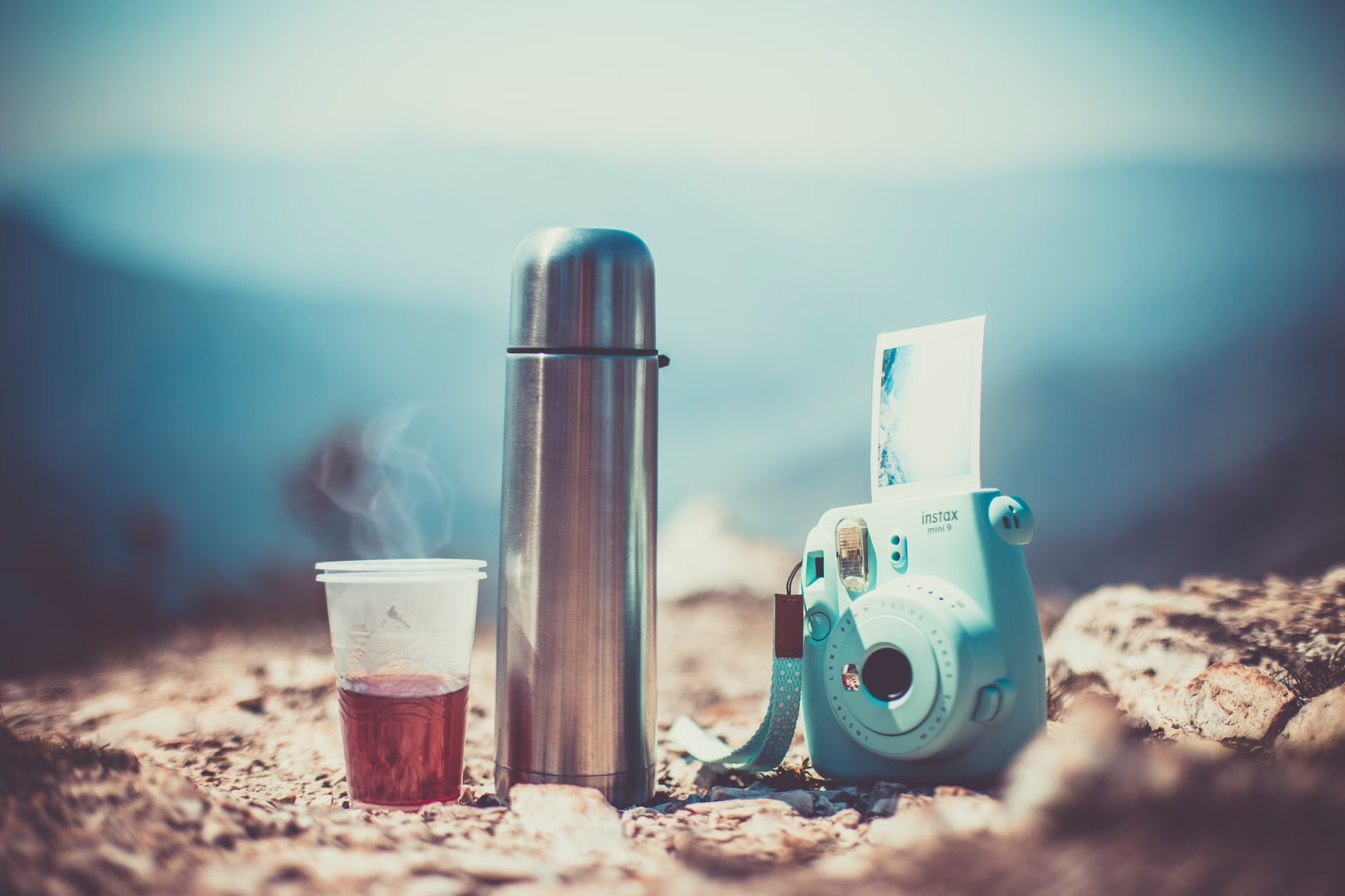
Step two is the “Digital Sunset.” If you are in a remote mountain region, use it as an opportunity to test a low-tech environment. Bring physical maps and books. When your children see you engaging with the physical environment rather than a screen, they are much more likely to follow suit. This isn’t about forbidding technology; it’s about shifting the focus to the tactile experience of the mountains—the smell of the pine, the texture of the rocks, and the temperature of the air.
A common mistake is forgetting the logistics of “quiet” locations. If you are staying in a remote cabin, you are responsible for your own supplies. Ensure you have a detailed list of grocery needs before you head up the mountain. Running out of diapers or basic food supplies in a remote area can turn a “quiet” trip into a logistical nightmare. Use a checklist, buy in bulk, and treat the preparation as part of the slow-travel experience.
The Hidden Costs and Trade-offs
Quiet tourism sounds idyllic, but it comes with specific trade-offs. The first is convenience. When you choose to stay away from the main tourist hubs, you lose the convenience of immediate access to restaurants, medical services, and grocery stores. You are trading convenience for autonomy. For a parent, this means you need to be more prepared.
Another factor to consider is the “isolation factor.” If you are traveling with young children, total isolation can sometimes be challenging. If a child gets sick or if you have a medical emergency, being an hour away from a hospital is a significant risk. Always check the distance to the nearest urgent care center before you book. You want to be “quietly remote,” not “dangerously isolated.”
Cost is another variable. While remote, off-the-beaten-path locations can be cheaper, they can also be more expensive if you are forced to rely on limited local services. For instance, dining out in a remote mountain village might be more expensive because of the limited number of establishments. However, because you are less likely to be tempted by tourist traps and souvenir shops, your total trip expenditure often ends up being lower than a trip to a major ski resort or a popular mountain town.
Creating Your Own “Quiet” Environment Anywhere
You don’t always need to travel to a remote mountain range to practice the principles of quiet tourism. You can apply the same logic to a local park or a nearby hill station. The key is in the intentionality of your presence. Even in a semi-popular area, you can find silence if you change your timing.
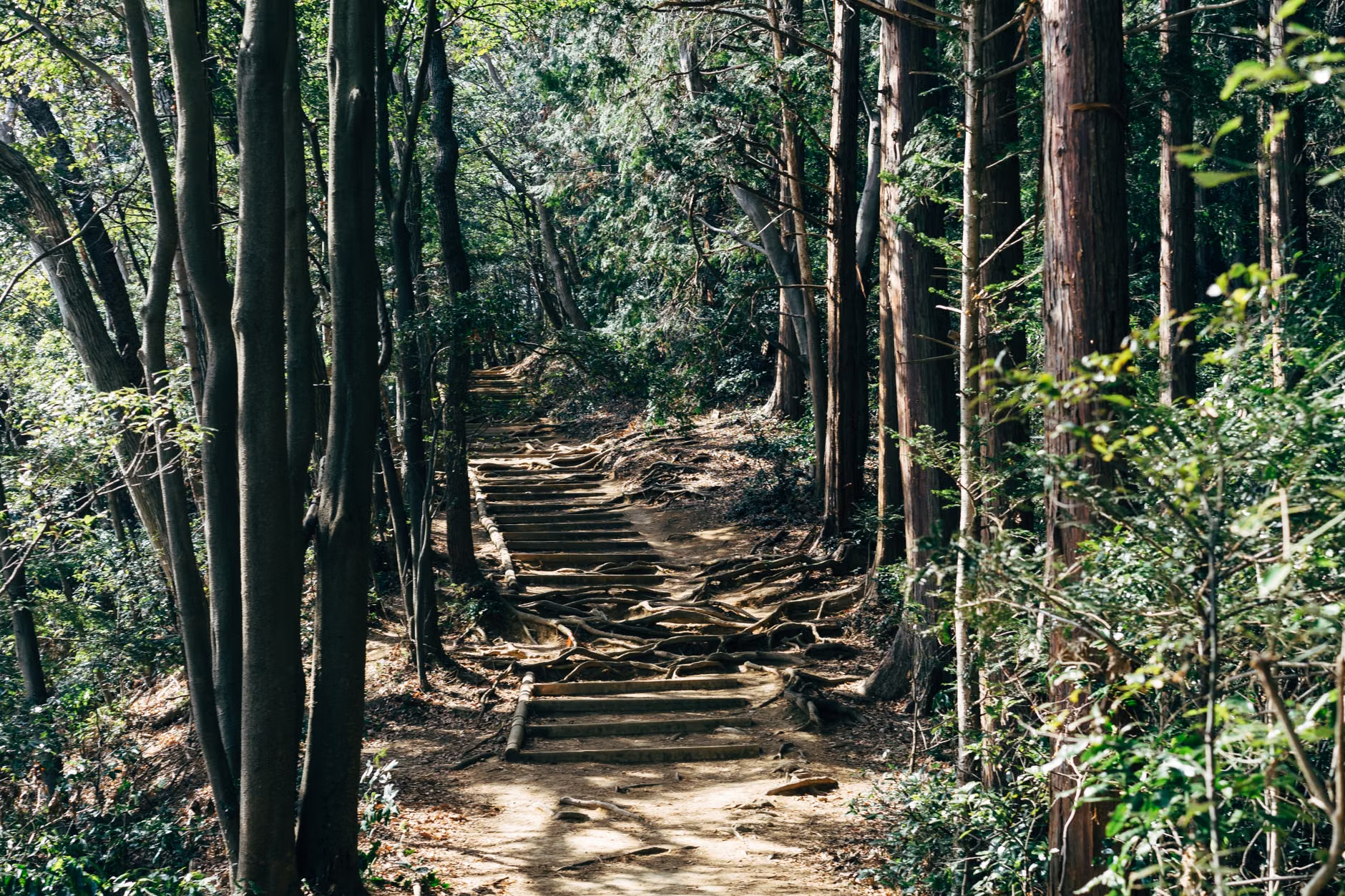
Most mountain trails follow a “9-to-5” rhythm. People arrive at the trailhead at 10:00 AM and leave by 4:00 PM. If you are a parent, this might be your window of activity, but if you have flexibility, try the “early bird” or “late afternoon” strategy. Arriving at a trail at 7:00 AM allows you to experience the mountain before the crowds arrive. By the time the busloads of tourists show up, you are already finished with your hike and heading back to your accommodation for a quiet lunch.
This is the “Decision Rule” for quiet tourism: If you are following the crowd, you are doing it wrong. If you see a parking lot that is full, skip that destination. There is almost always a secondary, less-frequented trail or viewpoint nearby that offers the same natural beauty without the congestion. Trust your instinct to move away from the noise.
Refining Your Expectations for the Family
One of the biggest challenges for parents is managing the expectations of children who are used to high-stimulation environments. If your kids are accustomed to tablets, theme parks, or constant social interaction, a “quiet” mountain trip might feel boring to them at first. This is perfectly normal and, in fact, the goal.
Boredom is the precursor to creativity. When you remove the constant stimulation, children will inevitably start to engage with their surroundings. They will start picking up rocks, looking at bugs, or making up games based on the forest. Do not rush to fill the silence with an activity. Let them sit in that boredom for a while. It is in those moments that they learn to observe and appreciate the environment.
To help with this transition, bring a few “low-tech” tools: a magnifying glass, a simple sketchbook, or a pair of binoculars. These tools turn a walk into an investigation. Instead of “hiking,” you are “exploring.” The shift in vocabulary changes the entire experience. It turns the mountain into a laboratory rather than a treadmill.
The Long-Term Impact of Quiet Travel
Why should you care about this movement? Because the way we travel reflects the way we live. If we spend our vacations rushing from one point to another, we are reinforcing the habit of constant movement and consumption. By choosing quiet tourism, you are modeling a different way of being for your children—one that values stillness, reflection, and the environment.
This isn’t just about one vacation. It’s about building the resilience to handle the noise of everyday life. When you return home, you will find that the “silence” you cultivated in the mountains stays with you. You become better at identifying when you need to step back, better at managing your own sensory input, and more selective about where you direct your energy.
The mountain does not care if you reach the summit. It does not care if you take a photo. It just exists. And by simply being there, you learn to exist as well, without the need to perform, produce, or keep up with the pace of the world. That is the ultimate lesson of quiet tourism.
Frequently Asked Questions
Is quiet tourism suitable for families with toddlers?
Absolutely, provided you adjust your expectations. Toddlers thrive in nature when they have the freedom to move at their own pace. The key is to choose “base-camp” style accommodation where you have a safe outdoor space (like a porch or a fenced garden) so you don’t have to be on high alert every single second. Focus on short, flat loops rather than steep summit hikes.
How do I find truly quiet areas without getting lost?
Use topographical maps and satellite views on platforms like Google Earth to identify areas with fewer roads and infrastructure. Look for regions that are categorized as “National Parks” or “Protected Wilderness Areas.” These areas usually have limited development, which naturally restricts the number of visitors and the amount of noise pollution.
What if I end up in a crowded area by mistake?
It happens to the best of us. If you arrive at a location and find it crowded, don’t force it. Have a “Plan B” ready—a less popular trail, a nearby valley, or even a local library or quiet cafe in a small village. The most important thing is to avoid the “sunk cost fallacy,” where you feel you must enjoy a place just because you traveled there. If it doesn’t feel right, move on.
Final Thoughts: The Choice is Yours
The quiet tourism movement isn’t a trend; it’s a correction. We have spent decades optimizing our travel for maximum efficiency, and in the process, we have lost the very thing we were looking for: peace. By choosing to prioritize silence, space, and slowness, you are doing more than just taking a trip; you are reclaiming your time and your mental clarity.
The next time you plan a getaway, ask yourself: “Am I going here to see things, or am I going here to feel things?” If it’s the latter, put down the guidebooks, ignore the “must-see” lists, and find yourself a quiet corner of the world. The mountains are waiting, and they are, quite literally, the best place to find your voice again.
For more information on sustainable and low-impact travel, you can check out the World Travel & Tourism Council for insights on responsible tourism practices, or explore local government tourism boards that focus on “slow travel” initiatives in your intended region.