Key Takeaways
- Transparency is now quantifiable: The 2027 Index moves beyond marketing buzzwords, assigning a hard numerical score to brands based on their factory-level disclosure and worker welfare data.
- Look for the ‘Verified Tier’ label: Products scoring above 85/100 on the index are subject to third-party audits, providing the highest level of assurance that your goods aren’t linked to forced labor or environmental negligence.
- The ‘Price-to-Ethics’ Trade-off: High-transparency goods typically carry a 15–20% price premium, but this investment often correlates with a 30% longer product lifespan, making it a sound long-term household budget decision.
You’ve likely stood in a home goods store, holding a sleek coffee table or a set of organic cotton sheets, wondering: “Who actually made this, and what does ‘sustainably sourced’ even mean?” For a long time, the answer was hidden behind a wall of corporate jargon and complex global logistics that even the retailers didn’t fully understand. That changed with the implementation of the 2027 Supply-Chain-Transparency Index. This isn’t just another industry report; it is a standardized, global metric that forces manufacturers to put their cards on the table.
As someone balancing the chaotic schedule of work and family, you don’t have time to conduct a private investigation into every item you bring into your home. The 2027 Index is designed to do that legwork for you. By assigning a clear score to brands, it turns the murky waters of global trade into a readable, actionable guide. Let’s look at what this index actually tracks, why it matters for your wallet, and how you can use it to make better decisions for your household.

Understanding the 2027 Index: Beyond the Greenwashing
In the past, “sustainability” was a self-reported status. A brand could claim to be eco-friendly because they used recycled packaging, while ignoring the fact that their primary furniture factory was operating under unsafe labor conditions. The 2027 Index changes this by mandating disclosure across four critical pillars: Tier 1 (final assembly), Tier 2 (material processing), Tier 3 (raw material extraction), and Tier 4 (raw material origin). This is known as “Full-Depth Transparency.”
For a parent in their 30s or 40s, this matters because it impacts the safety and longevity of your home environment. When you purchase an item with a high transparency score, you aren’t just voting with your dollar for better labor practices; you are often buying higher-quality goods. Manufacturers that are transparent about their supply chain are inherently more accountable for the materials they use, which often translates to fewer toxic chemicals, better adhesives, and more durable finishes.
The index uses a 0–100 scoring system. Brands scoring below 40 are considered “Opaque,” meaning they provide little to no information about their suppliers. Brands in the 70–85 range are “Transitional,” showing progress but lacking full third-party verification. The “Verified Tier,” which scores 85 and above, represents the gold standard. When you see this score, it means the brand has allowed independent auditors to trace their product back to the very farm or mine where the raw materials were sourced.
How to Read a Transparency Score in Real-Time
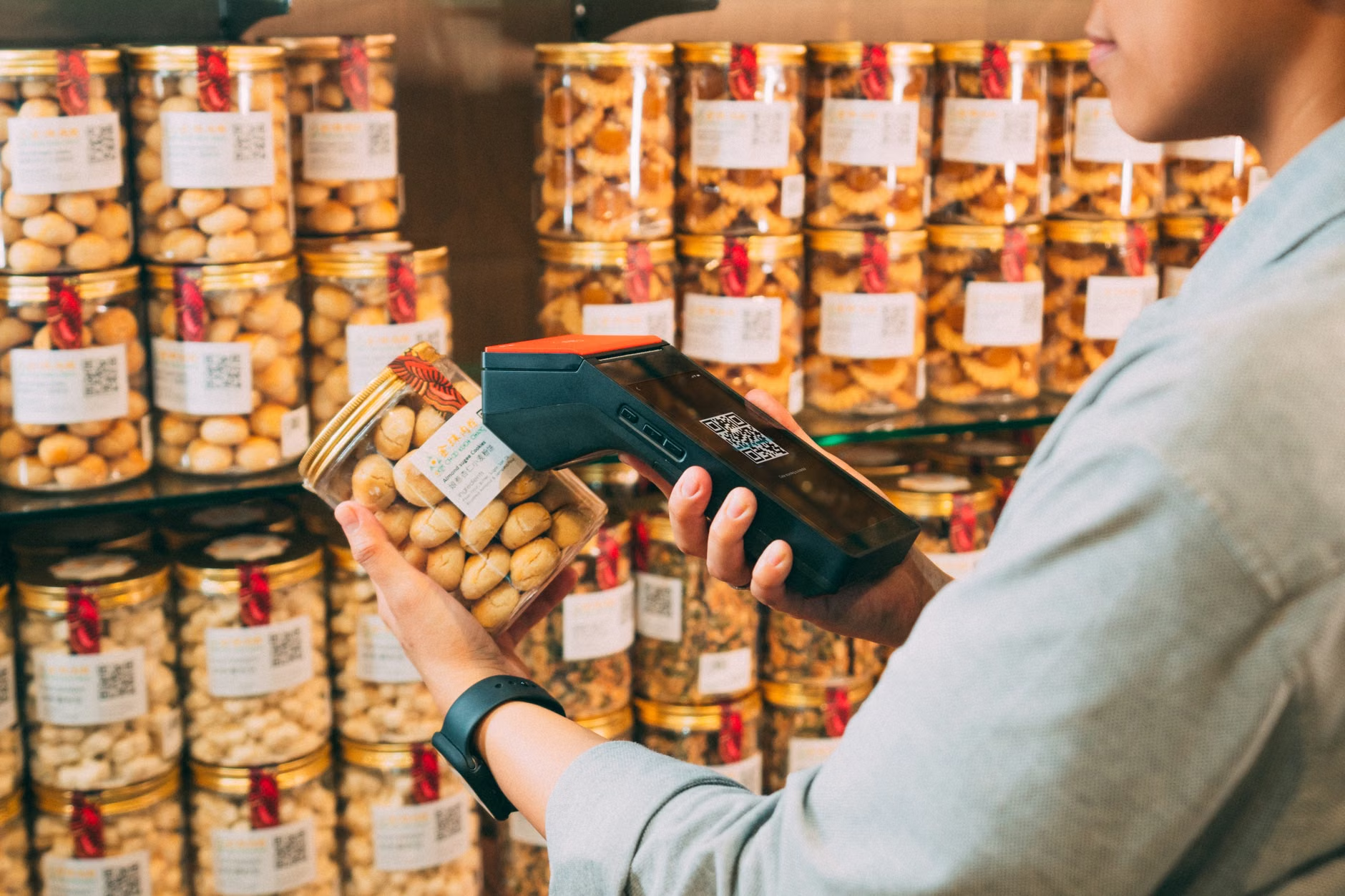
You don’t need a degree in supply chain management to use this data. Most major retailers have integrated the Index scores directly into their online product pages. If you are shopping in a physical store, keep an eye out for the “Transparency QR Code” on the product tag. Scanning this code will typically pull up a simplified dashboard showing the factory location, the date of the last third-party audit, and a breakdown of the material origin.
Here is a quick decision matrix for when you are browsing for home goods:
| Score Range | Classification | Recommended Action |
|---|---|---|
| 85–100 | Verified Transparent | Safe to buy; highest ethical and quality standards. |
| 60–84 | Progressing | Acceptable, but check for specific material certifications (e.g., FSC for wood). |
| Below 60 | Opaque | Proceed with caution; high risk of hidden labor or environmental issues. |
The most common mistake consumers make is assuming that “expensive” equals “transparent.” There are luxury brands with massive marketing budgets that rank poorly on the Index because they keep their supply chains intentionally obscured to protect profit margins. Conversely, several mid-market, direct-to-consumer brands have embraced high transparency as a core competitive advantage. Always check the score, regardless of the price point.
The Hidden Costs and Benefits of Transparency
Let’s talk about the elephant in the room: the price tag. Yes, items from brands that invest heavily in supply chain mapping tend to cost more. If you are furnishing a new home or replacing old items, this can feel like an unnecessary burden. However, consider the “Cost-per-Use” (CPU) metric. A chair that costs $200 but breaks in two years because of poor materials and exploitative manufacturing has a much higher CPU than a $300 chair that lasts for a decade.
Transparency acts as a proxy for quality control. When a brand knows that their factory in Vietnam or their textile supplier in India is being audited for transparency, they are less likely to accept low-grade materials. This is a subtle but vital benefit for your home. You are essentially paying for the brand’s willingness to be held accountable, which almost always results in a better, safer, and longer-lasting product for your family.
One overlooked variable is the “End-of-Life” impact. Brands that track their supply chain are often better at implementing circular economy initiatives. Many of the high-scoring brands in the 2027 Index now offer take-back programs or have designed their products for easier disassembly and recycling. This saves you from having to deal with bulky, non-recyclable waste when it’s time to upgrade your furniture.
It is important to note that the 2027 Index is a global initiative, but the baseline expectations vary by region. For example, EU-based manufacturers are currently operating under the Corporate Sustainability Due Diligence Directive (CSDDD), which sets a much higher floor for transparency than what is currently required in many parts of North America or Southeast Asia. If you are shopping internationally, you might notice that a product from a European brand consistently scores higher than a similar product from a North American counterpart.
This isn’t necessarily a failure of the North American brand; it’s a reflection of the regulatory environment. When comparing two similar products, if one is from a highly regulated region, you have a higher baseline of legal protection. If you are buying from a region with lower regulatory oversight, look for brands that voluntarily participate in the 2027 Index to show they are operating above the local legal minimums.
A common pitfall is relying on certifications like “Fair Trade” or “Organic” as a total substitute for supply chain transparency. While these certifications are excellent for specific aspects (like fair wages or chemical usage), they don’t always cover the entire supply chain. A product might be “Organic Cotton” but still be manufactured in a factory with poor safety records. The 2027 Index is the umbrella that encompasses these individual certifications, providing a more comprehensive view of the product’s journey.

Step-by-Step: How to Integrate Transparency into Your Shopping Routine
You don’t need to change your entire lifestyle overnight. Start by applying these steps to your next major home purchase, whether it’s a new sofa, a dining table, or even a set of curtains.
- Identify your priority: Are you looking for health safety (low VOCs/non-toxic), environmental impact (carbon footprint), or labor ethics? While the Index covers all, some brands excel in one area more than others.
- Search the Index Database: Before you head to the store or browse online, check the brand’s score on the official Supply-Chain-Transparency Index portal. This saves you from being swayed by clever marketing at the point of sale.
- Look for the “Audit Date”: A score is only as good as its last update. If a brand hasn’t updated its transparency data in over 18 months, treat that score with skepticism. High-performing brands update their data annually.
- Check for the “Tier 4” disclosure: This is the gold standard. If a company can tell you exactly where the raw cotton or timber for your product was sourced, they are doing the work that most other brands are ignoring.
- Ask the retailer: If the information isn’t available, ask. Retailers are increasingly sensitive to consumer demand. If enough of us ask, “What is the transparency score for this product?”, they will begin to demand that data from their suppliers.
Remember, the goal isn’t perfection. It’s about making informed choices that align with your values. If you find yourself in a situation where you need to buy a product from a lower-scoring brand—perhaps due to budget constraints or urgent need—don’t beat yourself up. Use the Index to identify which categories you are comfortable compromising on, and where you want to hold the line.
Common Misconceptions About Supply Chain Transparency
There are a few myths that frequently circulate in consumer forums. Let’s clear them up. First, the idea that “transparent brands are all small, niche boutiques.” This is no longer true. Several global home goods giants have started participating in the 2027 Index to stay relevant in a market that increasingly values ethical consumption. Don’t assume that a big brand is automatically opaque.
Second, the myth that “transparency means the product is perfect.” Transparency is about visibility, not moral infallibility. A transparent brand might be honest about their struggles—for instance, acknowledging that they are still working to improve conditions at a specific supplier’s facility. In many ways, this honesty is more valuable than a brand that claims to be “perfect” but offers no data to back it up.
Finally, the belief that “if it’s not on the Index, it must be bad.” Not every company has the resources to participate in the formal 2027 Index. Some smaller, local artisans may be producing highly ethical goods but lack the administrative capacity to map their entire supply chain to the Index’s standards. In these cases, look for direct communication. If you can talk to the maker, you have a level of transparency that no index can provide.
Final Thoughts: Your Role in the Supply Chain
The 2027 Supply-Chain-Transparency Index is a powerful tool, but it is ultimately just a tool. It works best when paired with your own judgment and priorities. As a consumer, you have more power than you think. Every purchase is a signal to the market. When you choose to prioritize products with higher transparency scores, you are actively participating in a shift toward a more ethical and accountable global economy.
Start small. The next time you need to buy something for your home, take five minutes to check its transparency. You will likely find that you start to notice patterns—which brands are consistently open, which ones are hiding behind buzzwords, and which ones are actually improving. It’s a habit that, over time, changes the very fabric of your home environment. Keep asking questions, keep scanning those tags, and don’t be afraid to demand more from the brands that want your business. It’s not just about the furniture; it’s about the kind of world we are building for ourselves and our families.
Frequently Asked Questions
- Can I trust a brand if they aren’t on the 2027 Index?
Not necessarily. Some brands are simply not yet part of the index, while others may be avoiding it because they have supply chains they don’t want to disclose. If a brand isn’t listed, look for other third-party certifications like B-Corp status or Fair Trade, and reach out to their customer service to ask about their supply chain policies. - How often is the Index updated, and should I care about old scores?
The Index is updated annually, with rolling audits for high-ranking brands. A score that is more than two years old is essentially useless. Always look for the “Last Audit Date” on the product’s transparency dashboard to ensure the data reflects current operational practices. - Does a high transparency score guarantee the product is eco-friendly?
Not exactly. Transparency means the brand is open about their processes. While this usually correlates with better environmental practices because the brand is being watched, it is not a direct measure of carbon footprint or material sustainability. Always check for specific environmental labels alongside the transparency score.
For more information on the methodology and to view the full list of participating brands, please visit the official Supply-Chain-Transparency Index portal.