The secret to affordable, stress-free European travel with children isn’t a hidden loyalty program or a secret hack—it is simply choosing the right time to board the train. By intentionally booking off-peak rail journeys, you can often cut your ticket costs by more than 50% while avoiding the frantic rush of commuter crowds and the logistical headache of maneuvering strollers through packed aisles.
- Time is money: Traveling mid-week (Tuesday/Wednesday) or during mid-day gaps (10 AM – 3 PM) consistently yields the lowest fares.
- The 90-day rule: Most European rail operators release tickets 60 to 120 days in advance; booking as early as this window opens is the most effective way to secure “Super Saver” prices.
- Flexibility saves: Using “flexible” search tools on platforms like Trainline or Omio allows you to compare prices across a wider time window, highlighting the cheapest departure times at a glance.
If you have spent any time in your thirties or forties trying to coordinate a family vacation, you know that the “logistics” phase is where most dreams go to die. We want the European adventure—the rolling hills of Tuscany, the jagged peaks of the Swiss Alps, the historic charm of a German village—but we are also terrified of the prospect of a toddler having a meltdown in a crowded, expensive train car while we scramble to find seats for four.
The beauty of the European rail network lies in its density and efficiency. Unlike air travel, where you are tethered to rigid check-in times and airport security theater, trains offer a level of fluidity that is perfect for families. However, that fluidity comes with a pricing structure that can be baffling. One seat might cost 30 Euros, while the seat next to it costs 120 Euros. Why? Because you didn’t hit the “off-peak” button in your planning.
Understanding the Mechanics of Rail Pricing
To master the art of the deal, you have to think like a revenue manager. European rail companies, such as Deutsche Bahn (Germany), SNCF (France), and Trenitalia (Italy), operate on a dynamic pricing model similar to airlines. The closer you get to the departure date, the higher the price climbs. But beyond the date, the time of day is the single most significant factor in your total travel budget.
Peak times are dictated by the daily rhythm of the working population. In almost every major European city, this means the “Rush Hour” window: 7:00 AM to 9:30 AM and 4:30 PM to 7:00 PM. During these times, business travelers and commuters fill the seats. If you try to book a family of four during these windows, you are not only paying a premium for the demand, but you are also fighting for space in the luggage racks and struggling to secure a table seat where the kids can draw or eat.
Off-peak travel, by contrast, is the “golden window.” By shifting your departure to 10:30 AM or 2:00 PM, you move into a period where the trains are quieter, the staff is less harried, and the pricing algorithms drop the fares to fill the empty capacity. It is a win-win situation.
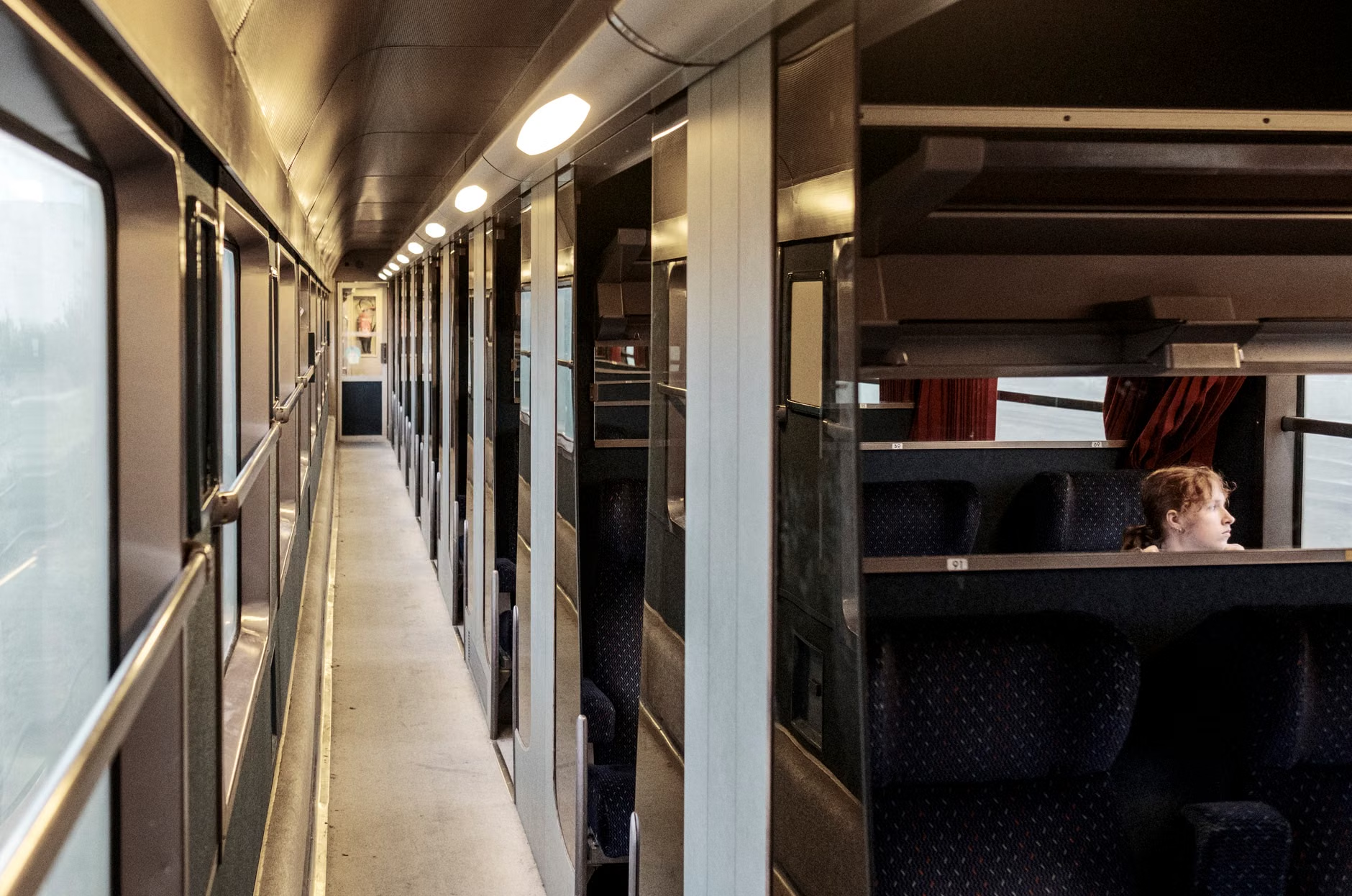
Strategizing Your Booking Timeline
The biggest mistake most families make is waiting until they are “in” the country to book their onward travel. While it is true that some local regional trains have fixed prices, the high-speed, long-distance trains (like the TGV in France or the ICE in Germany) operate like airlines. If you wait until you arrive, you are almost guaranteed to pay the maximum “walk-up” fare.
Most operators open their booking windows 90 to 120 days in advance. Setting a calendar alert for when these windows open is a small effort that pays massive dividends. If you are planning a multi-city trip, map out your itinerary in advance and book your long-haul segments as soon as the tickets go live.
| Booking Timing | Price Expectation | Availability |
|---|---|---|
| 3-4 months out | Lowest (Early Bird) | High (Choose your seats) |
| 1 month out | Moderate | Medium |
| 1 week out | High | Limited |
| Day of travel | Maximum | Very Low (Risk of standing) |
Beyond the timeline, consider the day of the week. Friday evenings and Sunday afternoons are the most expensive times to travel in Europe because that is when everyone is returning home or heading out for a weekend getaway. If your schedule allows for a Tuesday departure, you will find not only lower prices but also a much more relaxed environment for the kids.
Years ago, you had to visit a dozen different national railway websites to book a trip across borders. Today, aggregators have changed the game, but they come with their own set of considerations. Platforms like Trainline, Omio, and Rail Europe are excellent for comparing routes across different operators. They handle the complex task of stitching together a journey that might involve a French TGV and a Swiss SBB train.
However, keep in mind that these aggregators sometimes add a booking fee. For simple point-to-point journeys within a single country, it is often worth checking the national rail operator’s own app or website first. They will always have the most accurate, fee-free information. For complex, multi-country journeys, the convenience of an aggregator is usually worth the small service fee.
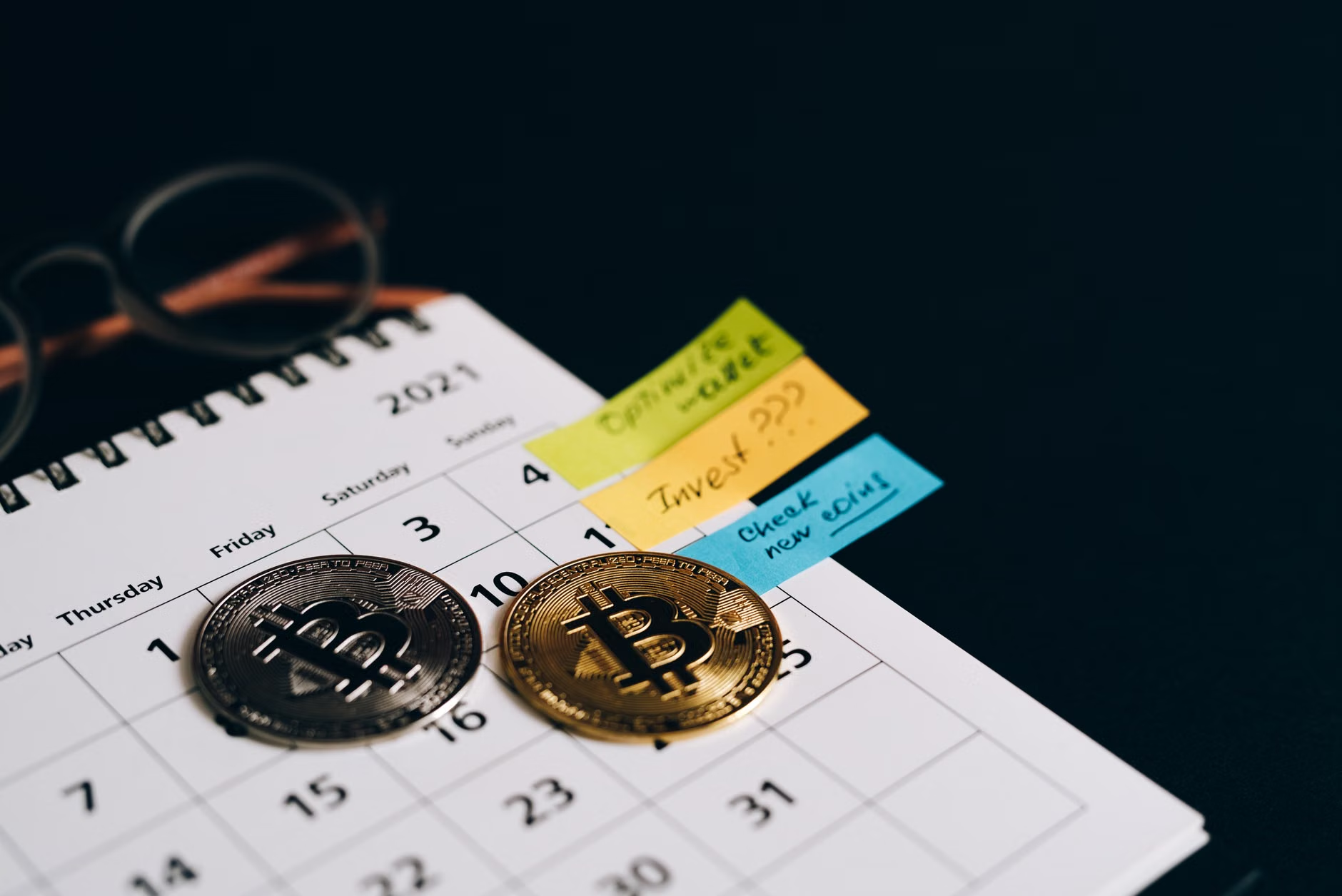
When using these apps, look for filters that allow you to sort by “cheapest.” Many modern apps now have a “price calendar” view that lets you see which days are cheaper than others. If your travel dates are somewhat flexible, this is your best friend. A shift of just one day can sometimes save you hundreds of Euros for a family of four—money that is much better spent on gelato or museum tickets.
The Parent’s Survival Kit for Long-Distance Rail
Even off-peak, a four-hour train ride can feel like an eternity to a six-year-old. The goal of off-peak travel is to give you more room, but you still need to be proactive. When booking, always look for the “Family Area” or carriage. Many European trains have dedicated compartments with extra space for strollers and a more relaxed atmosphere for children.
If you have a choice of seats, prioritize the “table” configuration. Having a flat surface for coloring books, tablets, or snacks is the difference between a peaceful ride and a chaotic one. If a table isn’t available, try to book seats that face each other. This creates a “pod” environment that feels more like a private space and less like you are invading someone else’s personal bubble.
Don’t rely on the train’s onboard catering. While the bistro car is a classic European experience, it is often expensive and can run out of food. Pack a “train picnic.” Bringing your own fruit, sandwiches, and drinks not only saves money but also ensures the kids have their favorite snacks on hand when the inevitable “I’m hungry” moment strikes. And remember: most European trains have power outlets at every seat, but they may use different plug types. A universal travel adapter is a must-have in your carry-on.
The Hidden Costs: Luggage and Connections
European trains are generally generous with luggage, but they aren’t endless. As a family, the “heavier” you travel, the more stress you will experience. The golden rule of family rail travel is: if you can’t carry it, don’t bring it. You will often have to navigate stairs at train stations, and while many have elevators, they aren’t always working. Packing light—perhaps using a system of one large suitcase per parent and smaller backpacks for the kids—makes the boarding process infinitely smoother.
Connections are another area where off-peak travel helps. When you book your ticket, the system will suggest connections. If you have a choice, always pick a connection with at least 30 to 45 minutes of buffer time. If your first train is delayed by even 10 minutes, a 15-minute connection will become a high-stress sprint through a crowded station. A longer connection gives you time to find a bathroom, grab a quick coffee, and let the kids stretch their legs.
If you find yourself with an hour to spare in a city like Munich or Zurich, use it. Most major stations have lockers where you can drop your bags, allowing you to take a quick walk to a nearby park or cafe. It turns a “waiting” period into an “exploring” period.
Why Rail beats Flying for Families
It is worth reflecting on why we go through the trouble of booking these trains at all. Flying requires you to arrive two hours early, clear security, wait at a gate, sit through a flight, and then wait for baggage. A train ride, by contrast, is city-center to city-center. You arrive at the station 15 minutes before departure, walk onto the train, and you are already in the heart of your destination when you arrive.
There is also the “scenery factor.” Flying is a sterile experience; you see clouds, then you see tarmac. On a train, you see the landscape change. You see farms, forests, and towns. For children, this is a geography lesson in real-time. It turns the travel portion of your trip into an actual part of the vacation experience rather than just a hurdle to be jumped over.
Moreover, the environmental footprint of rail travel is significantly lower than flying. For families who are increasingly conscious of their impact, this is a major benefit. It is a way to travel that feels more aligned with the values of sustainability that many of us try to instill in our children.
Summary and Final Encouragement
Navigating the European rail system doesn’t require a master’s degree in logistics. It requires a bit of foresight and a willingness to step outside the “rush hour” mentality. By focusing on off-peak travel, you are choosing a path that leads to lower costs, more space, and a significantly lower stress level for your family.
The key is to treat your rail booking as a primary part of your trip planning, not an afterthought. Use the tools available to you, book early, and don’t be afraid to take the slightly slower train if it means a more direct route or a better schedule for your family’s needs. Europe is waiting, and the train is the best way to see it.
Be patient with yourselves. There will be delays, and there will be moments of frustration. But there will also be the sight of a beautiful valley as you drink your morning coffee, and the joy of watching your children discover the world from the comfort of a train window. That, at the end of the day, is what makes the planning worth it.
Frequently Asked Questions
1. Can I change my ticket if my family’s plans change?
Most rail operators offer different ticket tiers. “Saver” or “Super Saver” tickets are usually non-refundable or have strict change fees. If you think your plans might shift, it is worth paying a few Euros extra for a “Flex” or “Full-Flex” ticket. This allows you to change your departure time or even the date without losing your entire investment.
2. Do children travel for free on European trains?
It depends on the country and the operator. In many countries, children under a certain age (often 4, 6, or sometimes 12) travel for free or at a significantly reduced rate when accompanied by an adult. Always check the specific child-fare policy for the national rail operator you are booking with, as this information is almost always clearly stated on their website.
3. Are train stations safe for families?
European train stations are generally safe, but they are busy transit hubs. As with any major public space, keep a close eye on your children and your luggage. Avoid leaving bags unattended, even for a moment. Most stations have clear signage and information desks; if you are ever unsure, don’t hesitate to ask station staff for help—they are generally very accustomed to helping tourists and families navigate the system.
For further information on specific rail routes and schedules, you can visit the official websites of the major European operators: