- Redefine Success: Quiet tourism isn’t about how many landmarks you visit, but how effectively you lower your cortisol levels by eliminating decision fatigue.
- The 48-Hour Rule: To truly reset, your retreat requires at least 48 hours without a structured itinerary to allow your brain to transition from “doing” mode to “being” mode.
- Strategic Disconnection: The most effective retreats require physical separation from digital devices; use a “lockbox” method or choose remote locations with limited connectivity to ensure silence.
If your idea of a vacation involves checking off a list of ten major sights before 2:00 PM, you aren’t alone—but you might be missing the point of why you left home in the first place. For those of us in our 30s and 40s, juggling the relentless demands of parenting, career growth, and the “always-on” nature of modern technology, a vacation often ends up feeling like just another project to manage. You return home exhausted, needing a vacation from your vacation.
This is where “Quiet Tourism” comes in. It isn’t a new travel trend involving fancy apps or luxury tour operators. Instead, it is a deliberate, restorative approach to travel that prioritizes silence, stillness, and the absence of sensory overload. By choosing a mountain retreat specifically designed for this purpose, you can move away from the “tourist” mindset and into a “restorative” one.
What Quiet Tourism Really Means for Your Mental Load
Quiet tourism is the intentional choice to visit locations where the primary activity is… nothing at all. It sounds simple, but for a generation accustomed to constant stimulation, it is surprisingly difficult. When you are a parent, your brain is perpetually scanning for hazards, schedules, and needs. When you are a professional, you are constantly processing information. Quiet tourism aims to deactivate that “scanning” part of your brain.
Why does it matter? Research in environmental psychology suggests that “Attention Restoration Theory” (ART) is real. Our cognitive resources are finite. When we live in high-stimulation environments—cities, offices, or busy family homes—we suffer from “directed attention fatigue.” A mountain environment, characterized by what scientists call “soft fascination” (the gentle, non-demanding stimulus of wind in trees or flowing water), allows your brain to recover its capacity for focus and emotional regulation.
In real life, this looks like choosing a cabin at an elevation of 1,000 meters or higher, specifically looking for “soundscapes” rather than “landscapes.” You aren’t looking for a view of the Eiffel Tower; you are looking for the absence of human-made noise. It means trading the “must-see” bucket list for a “must-feel” experience.
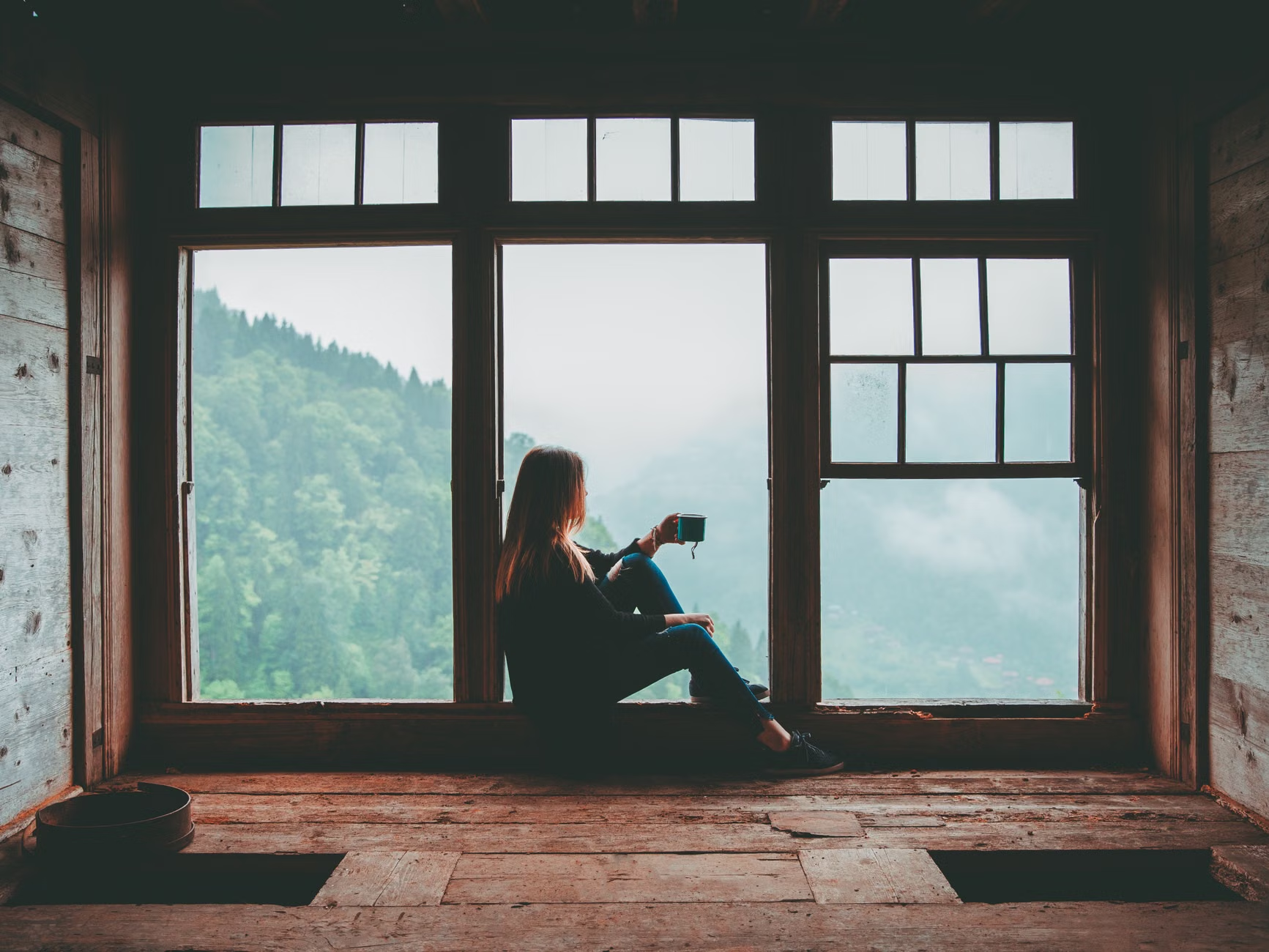
The Anatomy of a Perfect Quiet Mountain Retreat
Not every mountain trip is a quiet tourism experience. A ski resort during peak season, for instance, is the antithesis of quiet. To curate a truly restorative break, you need to apply a set of selection criteria that filter out the noise.
1. The Proximity-to-Noise Ratio
When searching for your stay, use satellite maps rather than just promotional photography. Look for properties that are at least 500 meters from the nearest main road. Road noise is the #1 killer of tranquility. Check the “noise pollution” maps often available through local environmental agencies in countries like Switzerland, Canada, or the United States. A location that is technically in the mountains but sits next to a popular hiking trail junction will be busy on weekends. Aim for “dead-end” roads or private forest clearings.
2. The “Analog” Requirement
If the listing mentions “high-speed fiber optic Wi-Fi,” keep scrolling. You want a location where you have to be intentional about your technology use. If you struggle with self-control, look for accommodations that offer physical lockboxes for your devices. This forces a psychological break. If you are a parent, this is the hardest part—the “what if there’s an emergency” anxiety. The solution is to provide a single, landline contact number for your primary caregiver or partner, and then power down your personal smartphone.
3. Essential Amenities vs. Distractions
You need comfort, not luxury. A high-end spa with loud music and crowded pools is a distraction. A comfortable chair, a wood-burning stove, and a view of the forest are tools. Look for “self-catering” rather than “full-service.” Full-service implies staff interactions, check-in schedules, and the subtle pressure to be “on.” Self-catering allows you to exist in your own rhythm.
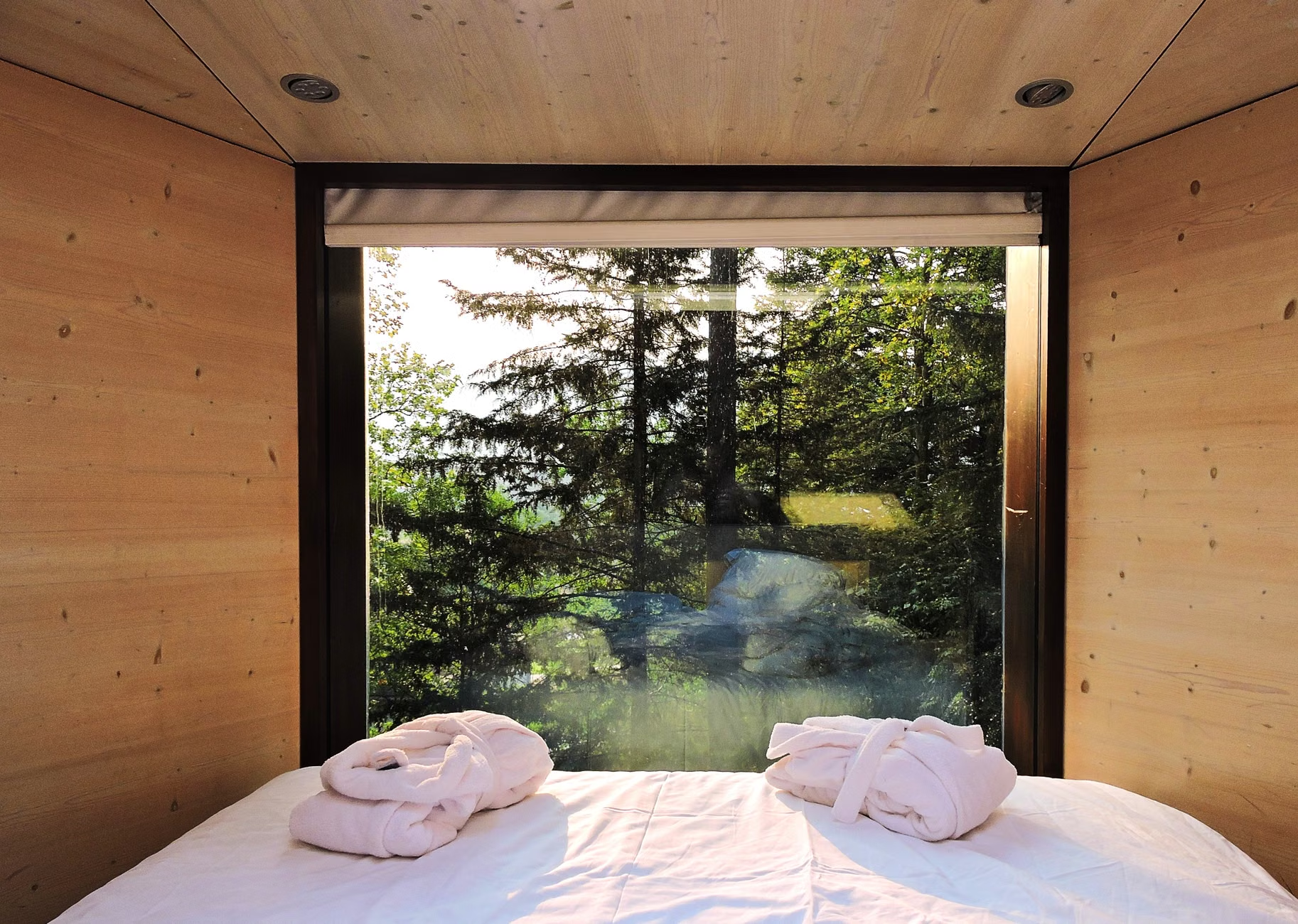
Step-by-Step: Planning Your 48-Hour Reset
Many people fail at quiet tourism because they treat it like a weekend project. You need to structure your time to ensure your nervous system actually switches gears. Here is a recommended framework for a two-day, one-night reset, which is often enough to see a significant drop in cortisol levels.
| Phase | Activity | Goal |
|---|---|---|
| Arrival (Hour 0-4) | Unpacking, lighting the fire, no screens. | Physical grounding and environment familiarization. |
| The “Decompression” (Hour 4-12) | Listen to the environment, read a book, journal. | Lowering heart rate and stopping the “to-do” loop. |
| The “Immersion” (Day 2, Morning) | A slow walk in the woods without headphones. | Engaging with nature’s “soft fascination.” |
| The “Integration” (Day 2, Afternoon) | Reflect on your life without the noise of daily chores. | Clarifying priorities for when you return home. |
The most common mistake is over-planning the “nature” part. Do not force yourself to hike 10 kilometers if you feel tired. Quiet tourism is not an athletic event. If you want to sit on a chair and watch the fog for six hours, that is a successful trip. The goal is to remove the “performance” aspect of travel.
Common Pitfalls and How to Avoid Them
The biggest hurdle to a quiet retreat is the internal voice that says, “I should be doing something productive.” We are conditioned to equate movement with progress. When you arrive at your cabin and feel a sudden spike of anxiety, that is normal. That is your brain going through withdrawal from dopamine hits. Do not give in by checking your emails or social media. Instead, engage in a low-intensity, repetitive task. Chopping wood (if provided), making a slow-pour coffee, or drawing are excellent ways to bridge that gap.
Another pitfall is “The Weekend Warrior Effect.” If you try to do a quiet retreat after a grueling work week, you might find yourself sleeping for the first 24 hours. That is not a failure; that is your body catching up on a sleep debt. Plan for the reality that you might be physically exhausted. Don’t book a retreat that involves a 6-hour drive in both directions. If the drive is longer than 3 hours, consider if the stress of the commute negates the benefit of the destination.
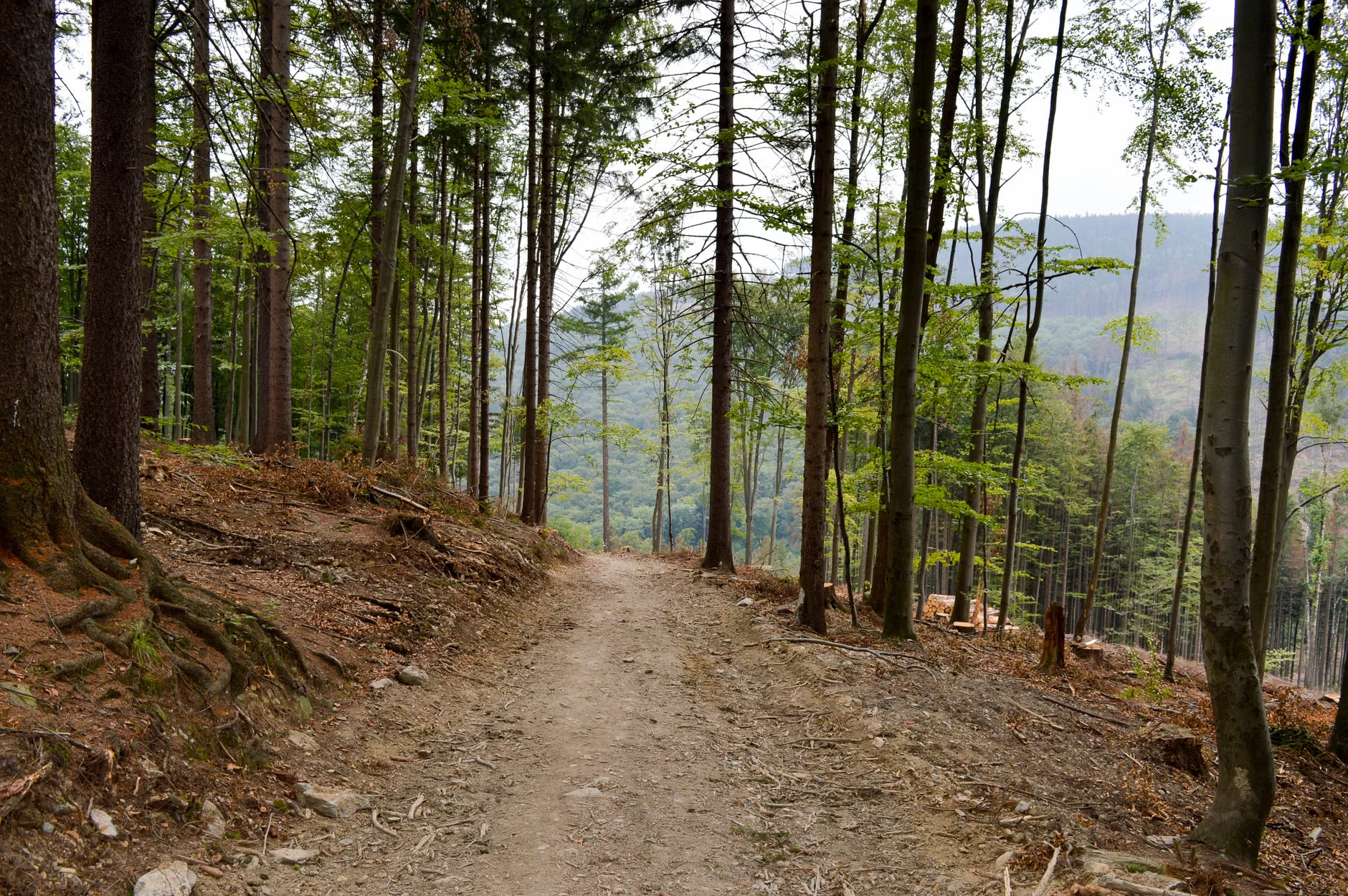
Why This Matters for Your Parenting and Career
Why should a busy professional or parent care about this? Because you are currently operating at a deficit. When you are constantly “on,” you lose the ability to think creatively or to respond to your children with patience. Quiet tourism is an investment in your capacity to handle the “real world” when you return. It’s like clearing the cache on a computer; it doesn’t change the hardware, but it makes the software run much faster and with fewer crashes.
Consider the trade-off: You lose two days of “productivity” or “family time,” but you gain a week of improved focus, reduced irritability, and better sleep. When viewed as an investment in your mental health, the cost of a quiet cabin rental is significantly lower than the cost of burnout-related health issues or the emotional toll of constant, low-level stress on your relationships.
Practical Tips for Success
- The “No-Device” Zone: If you are traveling with a partner, agree on a “No-Device” rule for the duration of the trip. If one of you breaks it, the penalty is doing the dishes or preparing the next meal. Make it a game to keep the mood light.
- Preparation is Key: Don’t arrive hungry or stressed. Bring simple, high-quality ingredients so you aren’t spending your energy planning complicated meals. The goal is to minimize decision-making.
- The “Post-Retreat” Buffer: Do not schedule an important meeting for the hour you get back. Leave a buffer of at least half a day to transition back into the noise of life. This prevents the “re-entry shock” that can instantly wipe out the benefits of your trip.
Reframing Your Future Travel
Quiet tourism isn’t just for the mountains; it’s a philosophy you can carry with you. However, the mountains provide the most effective “reset” because of their scale and the way they naturally dwarf our daily worries. When you stand in front of a mountain range that has been there for millions of years, your deadline for that project next Tuesday suddenly feels appropriately small.
As you plan your next getaway, ask yourself: “Am I going to this place to add to my collection of experiences, or am I going here to subtract the noise from my life?” The answer to that question will determine whether you return home feeling renewed or just as tired as when you left.
For more research on the impact of nature on cognitive restoration, you can explore the work of the American Psychological Association on the benefits of nature, or look into local conservation groups in your region that promote “Dark Sky” or “Quiet Zone” tourism initiatives. These organizations often maintain lists of locations that are protected from light and noise pollution, which are the gold standard for your next quiet retreat.
Frequently Asked Questions
1. Is quiet tourism just another term for a digital detox?
While digital detoxification is a component of quiet tourism, the focus is broader. Quiet tourism is about the intentional removal of all high-stimulation inputs, including digital screens, dense crowds, and structured itineraries. It is about creating a space where the primary “input” is the natural environment, which allows for deeper cognitive restoration than simply turning off a phone in a city apartment.
2. Can I bring my children on a quiet tourism trip?
Yes, but with caveats. Quiet tourism with children requires a shift in expectations. It won’t be “silent” in the literal sense. However, it can be “quiet” in the sense of removing the frantic pace of modern life. Focus on low-stimulation activities like pebble collecting, forest walks, or star gazing. The goal is to model a slower pace for your children, which benefits them just as much as it benefits you.
3. How do I know if a location is truly ‘quiet’?
Look for locations that are not near major flight paths or highways. Use tools like Google Earth to check for proximity to industrial areas or popular tourist attractions. If you are in the US, the National Park Service’s Natural Sounds and Night Skies Division offers data on soundscapes that can help you identify truly quiet areas. In Europe, look for “Quiet Areas” designated by the European Environment Agency, which are protected from noise pollution.
Ultimately, your best tool is your own intuition. If a listing feels like it’s trying too hard to sell you an “experience” or an “adventure,” it’s probably not the quiet retreat you are looking for. Look for the places that sell nothing but the space to be yourself.