The most effective way to future-proof your home isn’t by buying expensive, “forever” pieces that dictate how you live, but by investing in modular furniture that changes alongside your family’s evolving needs.
- Adaptability: Modular furniture allows you to reconfigure spaces without purchasing new items, saving money and reducing waste.
- Longevity: By focusing on high-quality, interchangeable components, you avoid the “fast furniture” cycle that plagues most households.
- Space Optimization: Modular systems are designed for the reality of modern living, where rooms must serve multiple functions throughout the day.
If you are in your 30s or 40s, you likely know the feeling: you finally get your living room looking “just right,” and then life happens. Maybe a new baby arrives, a partner starts working from home, or you move to a new space that is shaped entirely differently than your last one. Suddenly, that massive, L-shaped sectional you bought three years ago is a giant, immovable anchor that blocks the doorway, and your bookshelves are overflowing because they weren’t designed to expand.
We often treat furniture as a static element of a home—something we buy once and keep for a decade. But our lives are anything but static. The rise of modular furniture is a direct response to this friction between our rigid belongings and our fluid, modern lifestyles.
The Philosophy of ‘Living with Change’
Modular furniture is defined by its ability to be taken apart, moved, and reassembled into different configurations. Think of it as the “LEGO” approach to interior design. Instead of a single, monolithic piece, you have a collection of units—sofa modules, shelving blocks, or desk components—that fit together like a puzzle.
Why does this matter for the busy parent or the working professional? Because efficiency is the currency of our lives. When you have a limited amount of floor space and a high amount of daily activity, your furniture needs to work as hard as you do. A modular sofa, for example, can be a wide lounge area for movie night on Friday, but separated into individual chairs or a smaller love seat when you need to clear floor space for a toddler’s play area or a yoga mat on Saturday morning.
This isn’t just about aesthetics; it’s about mental load. Moving a heavy, fixed sofa is a chore that requires help and often results in scratches on the floor. Moving a modular unit is a one-person job that takes five minutes. It lowers the barrier to changing your environment, which can be surprisingly refreshing for your mental well-being.
Why ‘Fast Furniture’ is Failing Modern Families
We’ve all been there: the budget-friendly, “buy-it-because-it’s-cheap” bookshelf that starts sagging after two years, or the trendy coffee table that doesn’t survive a single sticky-hand toddler incident. This is the hallmark of the “fast furniture” era. It is built for a specific moment, not for the progression of a life.
When you buy a piece of furniture that is fixed in size and function, you are essentially betting that your life will stay the same for the next five to ten years. Statistically, for people in their 30s and 40s, that is a losing bet. Your children will grow, your hobbies will shift, and your workspace requirements will fluctuate. When your furniture can’t move with you, it ends up in a landfill, and you end up back at the store.
Modular systems offer a sustainable alternative. Because they are designed to be expanded rather than replaced, you can start with a small setup and add pieces over time. If you move from a two-bedroom apartment to a house, you don’t need to sell your furniture for a fraction of what you paid. You simply add more modules to fill the space. It’s a circular approach to consumption that feels much more grounded than the constant cycle of “buy-toss-buy.”
The Economics of Adaptability
There is a common misconception that modular furniture is inherently more expensive. While the upfront cost for high-quality modular pieces can be higher than mass-produced, non-modular alternatives, the “cost per year of use” is significantly lower. Consider this breakdown:
| Feature | Fixed Furniture | Modular Furniture |
|---|---|---|
| Flexibility | None (static design) | High (reconfigurable) |
| Lifespan | Low (replaced upon moving) | High (expandable/upgradable) |
| Storage/Shipping | Difficult/Expensive | Easy (flat-packed/segmented) |
| Resale Value | Low | Moderate to High |
When you account for the fact that you won’t need to buy new pieces when your living situation changes, the modular route often proves to be the more economical choice in the long run. It is an investment in stability, not just a purchase of a commodity.

Of course, nothing is perfect. Modular furniture requires a bit more intentionality than simply buying a pre-made set. You have to measure your space accurately and understand how the connectors work. There is also the “aesthetic trap”—sometimes modular pieces can look a bit too clinical or “office-like” if you aren’t careful about the materials you choose.
To avoid the “waiting room” look, look for modular pieces that emphasize texture and soft edges. Fabrics like velvet, heavy-duty linen, or sustainably sourced wood can bridge the gap between functional design and a warm, inviting home. Don’t be afraid to mix and match modules from the same system to create a more curated, “collected” look rather than a perfectly uniform, sterile one.
Another challenge is the connection mechanism. Some systems use heavy-duty metal clips, while others rely on gravity or hidden tension systems. Before you invest, visit a showroom or watch detailed video reviews. If the mechanism is too fiddly, you won’t use it, and the “modular” benefit will be lost. You want a system that is intuitive enough to change in under ten minutes.
Design Tips for the Modular Home
If you are ready to start building your modular home, keep these three principles in mind:
- Start with the Core: Don’t try to buy the entire system at once. Buy the essential “base” modules—a standard sofa section or a core shelving unit—and live with them for a month. Understand how you actually use the space before adding extensions.
- Prioritize Durability: Since you plan to keep these pieces for years, look for modular systems with replaceable covers or parts. If a toddler spills juice on a cushion, can you buy a replacement cover? If a shelf bracket breaks, is it a standard size?
- Think Vertically: Modular shelving is your best friend in smaller homes. By using wall-mounted modular tracks, you can move shelves up and down as your children grow (to keep breakables out of reach) or as your book collection expands.
Beyond the Living Room: The Modular Workspace
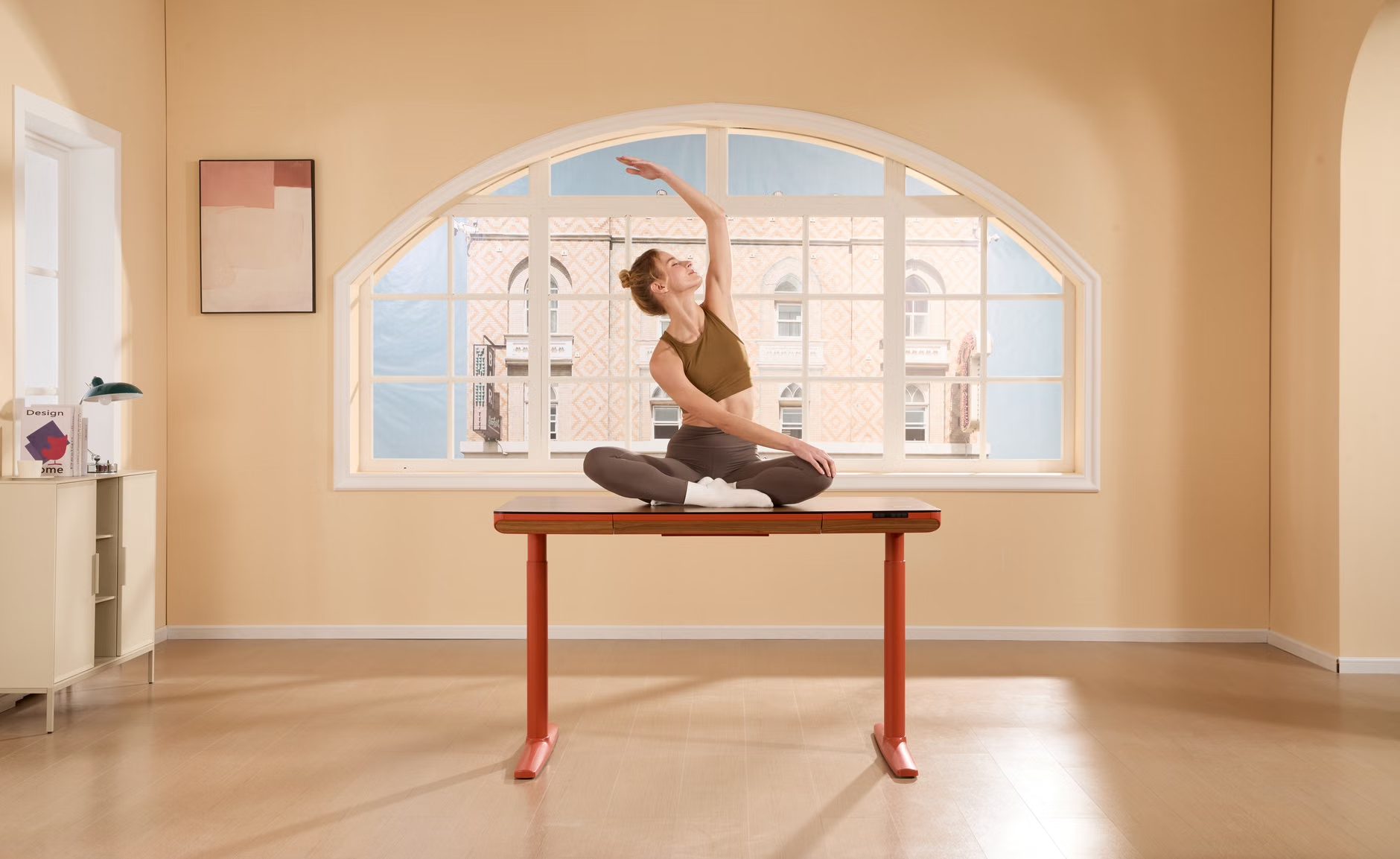
For those of us working from home, the “office” is often a corner of the dining room or a small alcove. Modular desk systems allow you to create a professional setup that can be dismantled or hidden away when the workday is over. This is critical for maintaining a psychological separation between “work” and “home.”
Some of the best modular desk systems use height-adjustable legs and cable-management trays that attach to the frame. As your needs evolve—perhaps you need a larger surface for a dual-monitor setup or a smaller one for a laptop-only workflow—you can swap out the desktop surface while keeping the legs and frame. It’s a level of customization that was once reserved for expensive custom millwork, now accessible through smart, modular design.
Addressing Common Misconceptions
A common fear is that modular furniture will “look cheap” or feel unstable. This was true a decade ago, but the market has shifted significantly. Today, high-end design houses are investing heavily in modularity because they recognize the shift in consumer behavior. You can find modular sofas that feel as plush and sturdy as traditional custom-upholstered pieces, and shelving units that are as elegant as fine cabinetry.
The key is to look for “system-based” furniture rather than “snap-together” plastic furniture. System-based furniture uses high-quality metals, solid woods, and durable textiles. It feels substantial because it is. The modular nature is a feature of its engineering, not a compromise on its construction.
Furthermore, many people worry about the “gap” between modules. While some cheaper modular furniture has visible gaps that collect dust, well-engineered systems use interlocking designs that minimize these seams. If you are concerned about dust or small items falling between cushions, look for systems that use deep-seated cushions or “tight-back” designs which naturally minimize the space between units.
The Long-Term View: A Sustainable Choice
When we talk about sustainability in the home, we often talk about energy efficiency or non-toxic paints. But the most sustainable piece of furniture is the one you don’t throw away. By choosing modular, you are committing to a long-term relationship with your belongings. You are choosing to repair, reconfigure, and adapt rather than discard and replace.
This mindset shift is powerful. It teaches us to value the objects in our home not just for their appearance, but for their utility and their capacity to grow with us. It turns the home from a static stage set into a living, breathing environment that responds to the people who inhabit it.
As you navigate your 30s and 40s, life will continue to present surprises. You’ll host more guests, you’ll change jobs, you’ll likely rearrange your rooms a dozen times. Having furniture that can keep up with you is one of the most practical luxuries you can afford yourself. It removes the friction from your daily life, letting you focus on the things that actually matter—like spending time with your family or finally getting that project finished.
Common Questions About Modular Furniture
Is modular furniture difficult to assemble?
Most modern modular systems are designed for consumer assembly. They often use clever locking mechanisms that require no tools or just a single hex key. However, always check the weight of the modules before buying. Some high-quality pieces are heavy and may require two people to move safely.
Can I mix and match different brands?
Generally, no. Modular systems are proprietary, meaning the connectors for one brand rarely fit another. It is best to stick to one system or “ecosystem” if you plan to expand your furniture over time. Research a company’s history—are they known for keeping their product lines consistent for years?
How do I clean modular furniture?
One of the biggest advantages of modular furniture is access. Because you can separate the pieces, you can reach corners and crevices that are impossible to clean on a traditional sofa or shelf. Look for pieces with removable, machine-washable covers, which is a game-changer for parents with young children.
If you are tired of feeling like your home is fighting against you, it might be time to stop buying static pieces and start investing in a system that grows as you do. It’s a small change in how you shop, but a massive change in how you live.
For further reading on sustainable design and home optimization, you can explore resources from the Architectural Digest or check out the latest design trends on Dezeen for inspiration on how to maximize small-space living.