The most effective way to recover from the relentless pace of modern parenting is to stop treating vacations as a checklist of tourist attractions and start practicing “Quiet Travel.”
- Intentionality over Activity: Quiet Travel prioritizes mental rest and connection over hitting every major landmark.
- The “One Thing” Rule: Plan only one meaningful activity per day to leave ample room for spontaneity and genuine relaxation.
- Environmental Choice: Focus on destinations that offer natural serenity rather than high-density urban tourism hubs.
If you are in your 30s or 40s, you likely know the specific brand of exhaustion that comes with planning a family trip. You spend weeks researching “must-see” spots, booking tickets months in advance, and packing enough gear to support a small expedition. You arrive at your destination, and then the real work begins: the “vacation marathon.” You wake up early to beat the crowds, drag tired children through museums, and spend your evenings scrolling through booking apps to figure out how to do it all again tomorrow.
By the time you return to your actual job, you often find yourself needing a vacation from your vacation. This cycle is exactly what the Quiet Travel movement seeks to disrupt. It isn’t about being lazy; it is about being selective. It is a reaction to the “Instagrammable” travel culture that prizes visual proof of activity over the actual experience of being present.
What Exactly Is ‘Quiet Travel’?
Quiet Travel, often grouped under the broader umbrella of “Slow Travel,” is a philosophy that prioritizes depth over breadth. In a world where we are constantly bombarded by notifications, professional demands, and the logistical heavy lifting of raising children, our nervous systems are rarely given the chance to settle. When we travel, we often bring that same high-pressure, high-output mindset with us.
Practicing quiet travel means consciously opting out of the “fear of missing out” (FOMO) that drives most modern tourism. Instead of trying to see five cities in ten days, you might spend the entire week in one small village. Instead of booking a guided tour that runs from 8:00 AM to 6:00 PM, you might spend the morning at a local park and the afternoon reading in a café.
For parents, this is a radical act. It requires letting go of the idea that you are “wasting” your travel budget if you aren’t constantly moving. It acknowledges that for a family, the most valuable part of travel is often the absence of the daily routine—the ability to sit with your kids without checking your watch or worrying about the next chore.
The Psychology of the ‘Sightseeing Marathon’
Why do we feel the need to pack our itineraries so tightly? Much of this comes from a subconscious belief that if we aren’t “doing,” we aren’t “living.” We treat travel as an asset to be optimized. We want the maximum return on our investment, which we measure in photos taken, sites visited, and “experiences” checked off a list.
However, psychological research suggests that our brains need downtime to actually encode memories. When we are in a constant state of transition—moving between hotels, trains, and lines—our cognitive load remains high. We are essentially operating in “survival mode” rather than “enjoyment mode.”
Quiet travel shifts the focus to what psychologists call “attentional restoration.” Nature, silence, and low-stimulation environments allow the brain to recover from the mental fatigue of urban life and digital overload. By choosing destinations that offer stillness, you aren’t just taking a break from work; you are allowing your nervous system to regulate.
How to Plan a ‘Quiet’ Family Trip
Transitioning to this style of travel requires a shift in logistics. You don’t just “go” to a quiet place; you have to structure your trip to protect that quietness. Here is a practical framework to help you plan your next getaway without falling into the trap of over-scheduling.
1. The Destination Selection Process
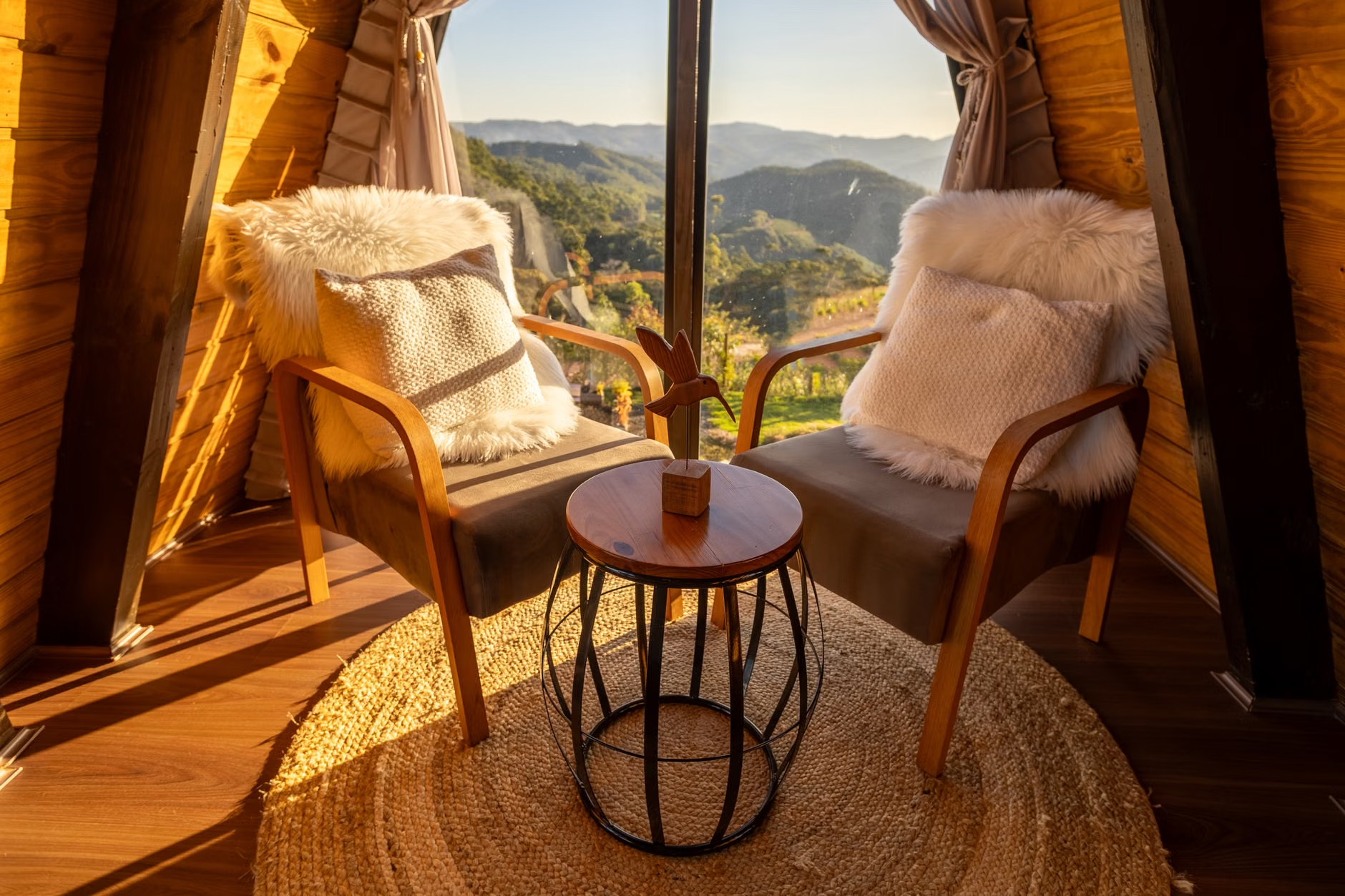
Avoid the “hot spots.” If a destination is currently trending on social media, it is likely the antithesis of quiet travel. Instead of Paris, consider a small town in the French countryside. Instead of a major theme park, look for a lakeside cabin or a quiet coastal town during the shoulder season.
| Traditional Travel | Quiet Travel |
|---|---|
| Multiple locations in one trip | Base yourself in one location |
| Strict, timed itineraries | Flexible, activity-light schedules |
| Focus on “must-see” landmarks | Focus on local rhythms and nature |
| High-density tourist areas | Low-density, rural or quiet spots |
2. The ‘One-Thing’ Rule
This is the golden rule of quiet travel. Commit to doing only one “big” thing per day. This could be a hike, a visit to a local museum, or a trip to a nearby beach. Everything else is secondary. If you end up doing nothing but playing at the park, the day is still a success.
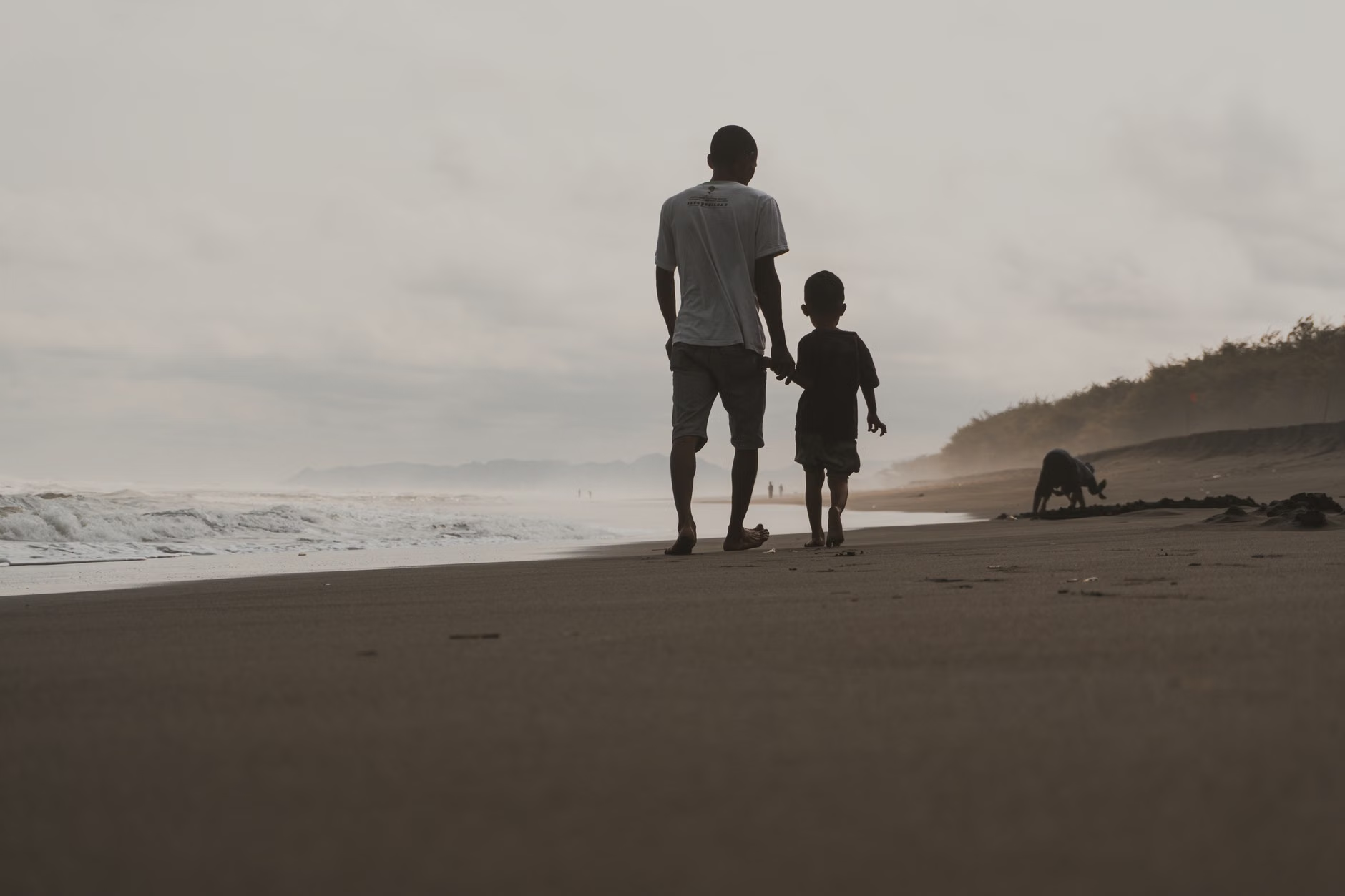
By limiting the day to one activity, you remove the stress of transit and the pressure of “keeping time.” If the kids are having a great time playing in the sand, you don’t have to cut it short to make it to a 2:00 PM reservation. You can just stay.
3. Managing Expectations with Kids
One of the biggest hurdles for parents is the fear of boredom. We are conditioned to think that if our children aren’t being entertained by a scheduled activity, they will be unhappy. But boredom is a precursor to creativity. When you step back from the scheduled entertainment, your kids learn to interact with their environment in new ways.
Pack a “boredom kit” for the trip: sketchbooks, a deck of cards, a few favorite books, and some simple art supplies. These tools help fill the quiet gaps without requiring a digital screen or a forced activity.
The Practical Benefits of Scaling Back
Beyond the mental health benefits, quiet travel is often significantly cheaper and more sustainable. By staying in one place, you reduce transportation costs and the need for expensive “express passes” or guided tours. You are also less likely to fall for tourist traps, as you have the time to find local grocery stores and markets, which are often better and cheaper than tourist-centric restaurants.
There is also a profound environmental benefit. “Overtourism” is a major issue in many popular cities, where the sheer volume of visitors degrades the local quality of life. By choosing quieter, less-visited destinations, you are spreading your economic impact to communities that actually benefit from it, rather than contributing to the congestion of already overwhelmed cities.
Common Mistakes to Avoid
Even when you intend to travel quietly, old habits die hard. Here are a few things to watch out for:
- The “What If” Trap: Don’t pack your suitcase with “just in case” items that add weight and stress. If you are going to a quiet cabin, you likely don’t need a formal outfit or professional-grade gear. Pack light; the less you have to manage, the freer you feel.
- The Digital Tether: If you are trying to find peace, your phone is your biggest enemy. Try to set specific hours for checking emails or social media. Better yet, delete the work apps from your phone entirely for the duration of the trip.
- The Need for Perfection: Quiet travel isn’t about creating a perfect aesthetic experience. Sometimes the weather will be bad, or the kids will be cranky. The goal is to be present through the reality of the trip, not to force a “serene” experience that doesn’t exist.

How to Measure Success
How do you know if your quiet travel experiment worked? Don’t look at your camera roll. Instead, look at your family’s energy levels. If you find that you are actually having conversations with your partner and children—without the distraction of a map or a bus schedule—you have succeeded.
Success in quiet travel is measured by the feeling of being “unhurried.” It is that moment in the late afternoon when you realize you have nowhere to be and nothing to do, and for the first time in months, that thought doesn’t cause you anxiety. It brings you relief.
Preparing for the Return
The transition back to reality can be jarring. To keep the benefits of your quiet trip alive, try to build a “buffer day” into your schedule. If you return on a Sunday night and head straight back to work or school on Monday morning, you will lose the sense of calm almost immediately.
Use that final day to unpack, do a load of laundry, and ease back into your routine. This small adjustment can help you hold onto the “quiet” mindset for a little longer, even when the demands of work and school return.
A Note on Flexibility
Quiet travel is not a rigid doctrine. There are times when a busy, fast-paced trip is necessary—perhaps you are visiting family in a major city or attending a specific event. The philosophy of quiet travel can still be applied to these trips. Even in a busy city, you can carve out “quiet pockets.” Wake up an hour early to sit in a park before the crowds arrive, or find a quiet library or museum corner to spend an hour away from the noise.
The goal is not to eliminate all activity, but to eliminate the *compulsion* to be active. It is about reclaiming your agency over your time. When you travel, you are the architect of your own experience. You don’t have to follow the path that travel influencers or guidebooks have laid out for you.
By choosing stillness, you are giving yourself and your family a gift that is becoming increasingly rare in our world: the gift of time without a deadline.
Frequently Asked Questions
1. Is quiet travel just for people without kids?
Absolutely not. While it might seem easier to travel quietly without children, the principles of slowing down are actually more beneficial for parents. It removes the stress of keeping up with a rigorous schedule, which is often the primary cause of family conflict during trips. The key is to adjust your expectations and focus on activities that the children enjoy, rather than forcing them into adult-centric sightseeing.
2. How do I deal with the ‘FOMO’ of not seeing the main attractions?
Remind yourself that you cannot see everything. Even if you spent a month in a major city, you would miss 90% of it. By focusing on a few things that truly interest your family, you create a deeper, more meaningful memory than you would by rushing through ten sites you barely remember. Quality of experience beats quantity every time.
3. What if I get bored?
Boredom is often just the brain’s way of recalibrating. If you find yourself feeling bored, embrace it. Use the time to observe your surroundings, talk to your children, or simply rest. Boredom is a blank canvas; it is an invitation to engage with your environment or your family in a way that isn’t dictated by an external schedule.
For further reading on the benefits of slow living and mindful travel, you can explore resources from the Slow Movement, which provides a broader context on how this philosophy applies to various aspects of modern life beyond just vacations.
Travel is meant to be a restorative experience, not a test of endurance. By embracing the Quiet Travel movement, you can reclaim your time and return home feeling genuinely refreshed rather than just exhausted by another set of logistics. Take a deep breath, pack a little lighter, and give yourself the permission to simply be.