You probably spend about 90% of your time indoors, yet most of us have no idea what we are actually breathing in our own living rooms. An indoor air quality (IAQ) monitor is the missing link in your smart home setup, providing the hard data needed to protect your family from invisible pollutants like CO2, VOCs, and fine particulate matter.
- Invisible Threats: Indoor air can be significantly more polluted than outdoor air due to cooking, cleaning products, and poor ventilation.
- Data-Driven Decisions: Unlike air purifiers that run blindly, monitors tell you when to open a window or when to crank up the filtration.
- Health Impact: Maintaining optimal humidity and CO2 levels directly correlates to better sleep, improved cognitive focus for remote work, and fewer respiratory issues for children.
If you are in your 30s or 40s, you are likely already juggling a dozen responsibilities: career demands, school runs, meal prep, and the ever-present task of keeping your home environment stable. You might have a smart thermostat, a video doorbell, or a robot vacuum, but have you considered what’s actually floating in the air your kids are breathing while they sleep?
For a long time, air quality was something we only thought about if we lived in a city with heavy smog or if we were actively painting a room. But the reality is that the modern, energy-efficient home—which is built to be airtight—often traps pollutants inside. Without proper monitoring, you are essentially living in a sealed box where every candle, cleaning spray, and morning stir-fry contributes to a cocktail of indoor air contaminants.
Understanding the invisible: What are you actually monitoring?
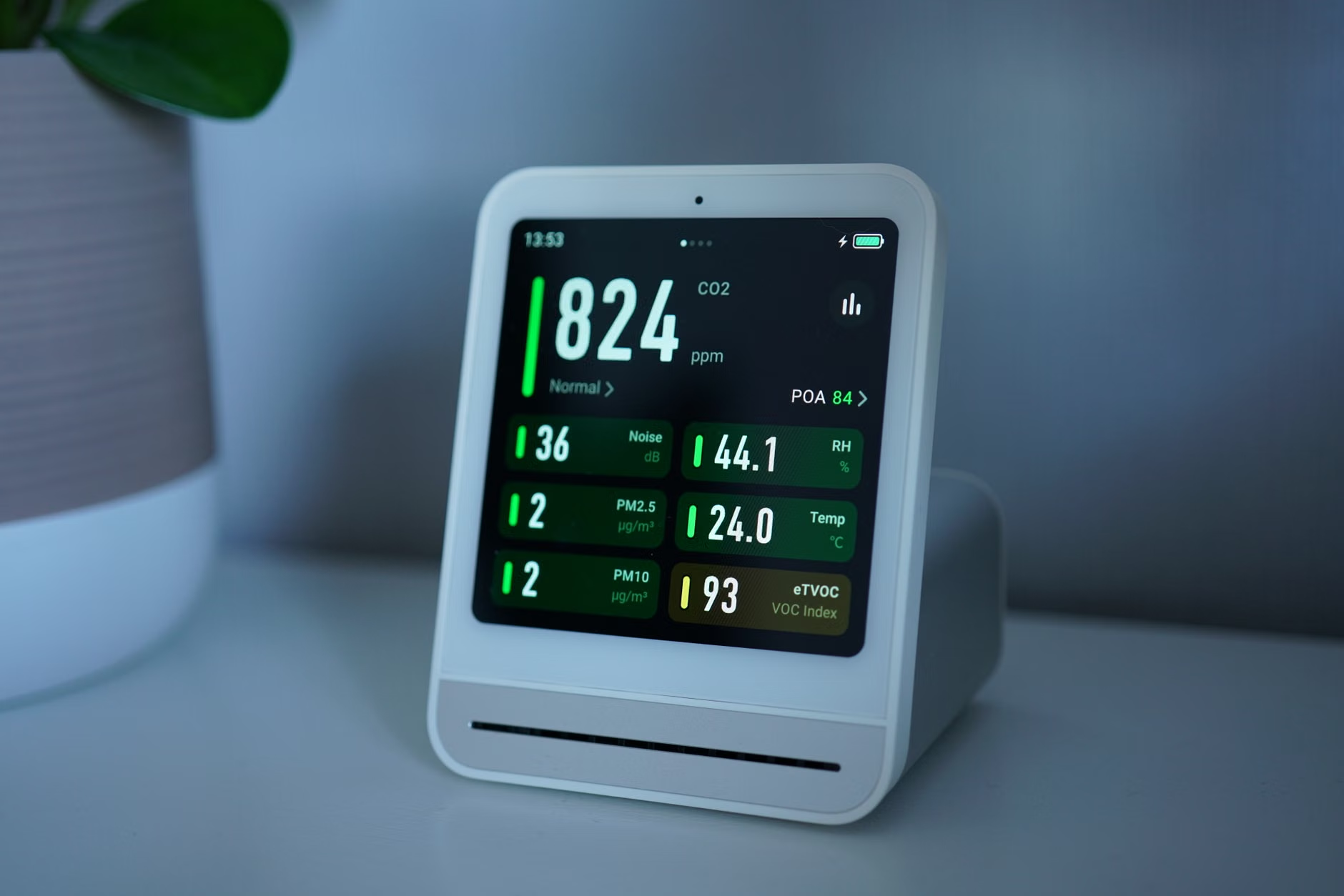
When you look at the specs for a decent air quality monitor, you will see a list of acronyms that might look like alphabet soup. To make an informed purchase, you don’t need a degree in atmospheric science, but you do need to understand the big four metrics that matter for residential health.
1. PM2.5 (Particulate Matter)
These are tiny particles, 2.5 micrometers or smaller in diameter. To put that in perspective, a human hair is about 50 to 70 micrometers wide. These particles are small enough to bypass your body’s natural defenses, entering your bloodstream and lungs. Common sources include smoke (from cooking or fireplaces), dust, and outdoor pollution that finds its way inside.
2. VOCs (Volatile Organic Compounds)
VOCs are gases emitted from certain solids or liquids. You’ll find them in paints, varnishes, cleaning supplies, disinfectants, and even new furniture (that “new car smell” or “new couch smell” is often off-gassing). In high concentrations, they can cause headaches, dizziness, and eye irritation.
3. CO2 (Carbon Dioxide)
In a home, CO2 levels are a direct indicator of ventilation. If your windows are closed and your family is hanging out in the living room, CO2 levels rise. High CO2 levels don’t just feel “stuffy”; they are scientifically linked to decreased cognitive function, drowsiness, and poor sleep quality. If you find yourself hitting a wall at 3:00 PM while working from home, it might not be the caffeine crash—it might be the CO2.
4. Humidity and Temperature
These aren’t just for comfort. If your humidity is too high, you risk mold growth. If it’s too low, you’re looking at dry skin, chapped lips, and increased susceptibility to viruses. Keeping humidity between 40% and 60% is the “Goldilocks zone” for health.
Why a monitor is better than just an air purifier
A common mistake many parents make is buying an expensive air purifier and leaving it on “Auto” mode 24/7. While that’s better than nothing, it’s a reactive approach. Most purifiers only detect particles; they don’t know if your CO2 levels are spiking or if your cleaning products are flooding the room with VOCs.
Think of an air quality monitor as the “brain” and the purifier as the “muscle.” By having a dedicated sensor, you can see the correlation between your actions and your environment. You might be surprised to learn that your vacuum cleaner is kicking up more dust than the purifier can handle, or that your favorite scented candle is causing a massive spike in VOCs every single time you light it.
| Metric | Why it matters | Actionable Step |
|---|---|---|
| PM2.5 | Respiratory health | Run air purifier or open windows |
| VOCs | Neurological/allergic health | Improve ventilation, remove source |
| CO2 | Cognitive/sleep quality | Increase fresh air intake |
| Humidity | Mold/viral transmission | Use humidifier or dehumidifier |
Integrating the monitor into your parenting and work routine
For those of us balancing work and family, the “smart” part of the smart home is the most important. You don’t want to be constantly checking an app. You want the device to do the heavy lifting for you.
Look for a monitor that integrates with your existing smart home ecosystem—whether that’s Apple HomeKit, Google Home, or Amazon Alexa. This allows you to set up automations. For example, if the monitor detects that CO2 levels have exceeded 1,000 ppm (parts per million) in your home office, you can have a smart plug connected to a desk fan turn on to improve circulation, or get a notification sent to your phone reminding you to crack a window.
For the nursery or children’s bedrooms, these monitors offer peace of mind. Many parents struggle with the worry of whether their child is sleeping in a “stuffy” room. A monitor allows you to check the air quality from your own bedroom, ensuring that the room remains at a healthy temperature and that the air is circulating properly throughout the night.

Common pitfalls to avoid when choosing a monitor
The market is flooded with sensors. Some cost $30, while others cost $300. As someone who has spent far too much time comparing specs, here is what you need to watch out for:
- The “Calibration” Trap: Cheap sensors often use lower-quality laser particle counters that lose accuracy within months. Look for reputable brands that use high-grade sensors that are recalibrated or self-calibrating.
- Subscription Models: Some companies try to lock your historical data behind a monthly paywall. Avoid these if you can; you should own your data without a recurring fee.
- Connectivity Issues: Ensure the device supports the Wi-Fi frequency you use at home. Most smart devices operate on 2.4GHz, but if you have a complex mesh network, double-check that the monitor will play nice with your router.
Another point of contention is the “All-in-One” versus “Dedicated Sensor” debate. Some smart thermostats have built-in air quality sensors. While convenient, they are often limited by their placement. A thermostat is usually in a hallway, which doesn’t reflect the air quality in a bedroom or a kitchen. Dedicated, portable sensors are almost always superior because you can move them to the room where you spend the most time.
Real-world scenarios: When the monitor pays for itself
Let’s look at a few everyday vignettes that might sound familiar.
Scenario A: The Kitchen Chaos. You are searing a steak or frying vegetables. Suddenly, your phone pings. The air quality monitor in the living room is flashing red because the smoke and VOCs from the kitchen have drifted into the main living space. You realize that your stove vent isn’t actually venting to the outside—it’s just recirculating the air. You open the kitchen window immediately, saving your family from inhaling unnecessary combustion byproducts.
Scenario B: The “New Furniture” Headache. You just bought a new bookshelf or a piece of pressed-wood furniture. A few days later, everyone in the family has a slight headache. The monitor shows a steady, high level of VOCs. You now have the data to confirm that the furniture is off-gassing, and you can take steps to ventilate the room more aggressively until the levels drop, rather than wondering why everyone feels “off.”
Scenario C: The Winter Sleep. It’s the middle of winter. The house is sealed tight to keep the heat in. The kids are waking up congested every morning. The monitor shows that the humidity has dropped to 20% and the CO2 levels are hitting 1,500 ppm by 6:00 AM. You adjust the humidifier and leave the bedroom door slightly ajar. The next morning, the CO2 levels are lower, the humidity is at 45%, and the kids wake up breathing easier.

Maintenance and long-term care
Once you’ve installed your monitor, it doesn’t mean you can just forget about it. These devices are essentially scientific instruments, and like any instrument, they need a little care.
Dust is the enemy of an air quality sensor. Because these devices draw air into a chamber to analyze it, they can accumulate dust inside the sensor housing over time. Every few months, use a can of compressed air to gently blow out the intake vents. Do not use water or harsh chemicals, as this will damage the sensitive electronics inside.
Keep the device away from direct heat sources or moisture-heavy areas like the immediate vicinity of a bathroom shower. While they are designed to measure humidity, constant exposure to steam can shorten the lifespan of the sensors. Finally, ensure the firmware is updated. Most smart devices receive updates that improve the accuracy of their algorithms over time, so check your app settings to ensure auto-updates are enabled.
The psychological benefit of “knowing”
Beyond the physical health benefits, there is a tangible reduction in “parenting anxiety.” We live in an age where we are constantly bombarded with information about toxins, allergens, and environmental hazards. It’s easy to feel overwhelmed. Having a monitor provides a sense of control. When you see the screen glowing green, you have objective proof that your home is a safe sanctuary. When it glows yellow or red, you have a clear, actionable path to fix it.
It turns the abstract concept of “air quality” into something manageable. You stop guessing and start doing. You don’t need to be an expert in indoor chemistry; you just need to follow the prompts. If the CO2 is high, open a window. If the PM2.5 is high, turn on the purifier. It’s simple, logical, and effective.
Cautions and realistic expectations
While an air quality monitor is an essential tool, it is not a magic wand. It cannot detect every single hazard. Most consumer-grade monitors do not detect radon gas, carbon monoxide (which requires a specific, life-safety-rated detector), or biological pathogens like viruses or bacteria directly. You should always have a dedicated, wall-mounted carbon monoxide detector in your home, as this is a life-safety device that should never be substituted by an air quality monitor.
Also, remember that air quality is dynamic. A single reading doesn’t tell the whole story. Look for trends over a week or a month. If you see a consistent spike at 8:00 AM every day, look at your routine. What happens then? Is it the morning commute bringing in exhaust? Is it the coffee machine? Is it the kids getting ready for school? Use the data to find the pattern, then solve the root cause.
Final thoughts on the evolving home
As we continue to spend more time in our homes, the definition of a “smart home” is shifting. It’s no longer just about convenience—turning lights on with your voice or setting the perfect temperature. It’s about health, sustainability, and longevity. An air quality monitor is the first step toward reclaiming the health of your indoor environment.
If you are looking to make one change to your home setup this year, let it be this. It is a relatively low-cost investment that pays dividends in your family’s daily comfort and long-term wellness. Start small, track your data, and make those minor adjustments. You will likely find that the air you breathe is the most important thing you’ve been ignoring for far too long.
Frequently Asked Questions
1. Do I need an air quality monitor if I already have an air purifier?
Yes. Most air purifiers have limited sensors that only detect particles. A dedicated monitor provides a much broader view of your air, including CO2, VOCs, humidity, and temperature. It helps you verify if your purifier is actually doing its job or if you need to adjust your ventilation habits.
2. Can a smart air quality monitor detect carbon monoxide (CO)?
Generally, no. Standard smart air quality monitors are designed to detect VOCs, PM2.5, and CO2. Carbon monoxide is a lethal, odorless gas that requires a specific, UL-certified CO detector. You should always have a dedicated, life-safety-rated CO alarm installed in your home, separate from your smart home sensor system.
3. How often should I check the data on my monitor?
You don’t need to check it daily. Most people check it once a week to see if there are any concerning trends. However, the real value comes from the push notifications; set your monitor to alert you only when levels exceed a specific threshold. This way, you only pay attention when there is an actual problem to address.
For further reading on indoor air quality standards, you can refer to the United States Environmental Protection Agency (EPA) official guide on Indoor Air Quality, which provides comprehensive information on common pollutants and how to manage them.