- Visiting major capitals during the “shoulder” or “off-season” months significantly reduces costs and crowd-related stress.
- Slow travel allows for deeper cultural immersion and a more relaxed pace, which is essential for parents juggling busy schedules.
- Planning for off-season weather and shorter daylight hours requires a mindset shift—focus on indoor culture, cozy dining, and local experiences rather than outdoor sightseeing checklists.
The secret to enjoying a major capital city isn’t finding the perfect summer weekend; it’s choosing to visit when everyone else is staying home. If you are in your 30s or 40s, balancing the relentless demands of a career with the logistical mountain of parenting, the idea of a “vacation” often feels like just another form of labor. You spend months saving, weeks planning, and then you arrive in a city only to spend your entire trip standing in queues, fighting for dinner reservations, and watching your children lose their patience in a sea of tourists. It doesn’t have to be this way.
Traveling during the off-season—typically late autumn, winter (excluding the holidays), and early spring—isn’t just a budget hack. It is a strategic lifestyle choice. By avoiding the peak summer rush, you aren’t just saving money; you are reclaiming the city for yourself. You get to see the architecture without the scaffolding of a thousand selfie sticks, and you get to experience the local rhythm of life rather than the manufactured experience of a tourist trap.
The Psychology of the Off-Season: Why Less is More
We often fall into the trap of “optimizing” our travel. We want the best weather, the most daylight, and the most outdoor activities. But in a major capital—think London, Paris, Rome, or Tokyo—that optimization leads to the “tourist congestion effect.” When you travel in the peak months, your brain is constantly processing noise, wait times, and the pressure to “do it all.”
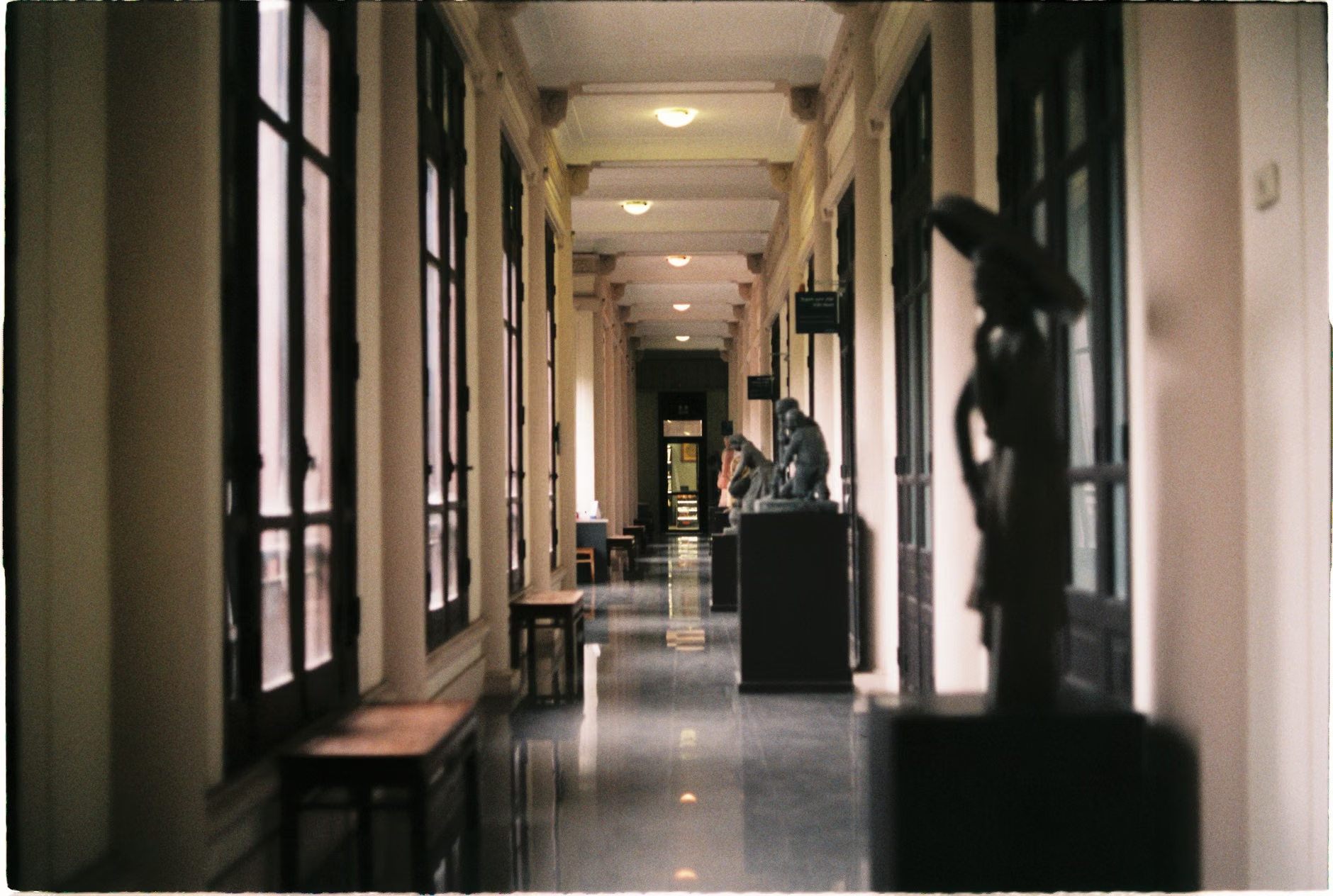
When you shift your travel window to the off-season, the psychological burden lifts. You aren’t competing for space. You can walk into a museum, breathe, and actually look at the art. For a parent, this is transformative. Instead of navigating a stroller through a dense crowd of people at the Colosseum or the Louvre, you are moving through a space that feels personal and accessible. You can sit in a cafe for two hours with a coffee and a book without feeling the pressure to vacate the table for the next paying customer. It is the difference between a high-stress production and a genuine break.
Redefining Your Itinerary: The “Indoor-First” Strategy
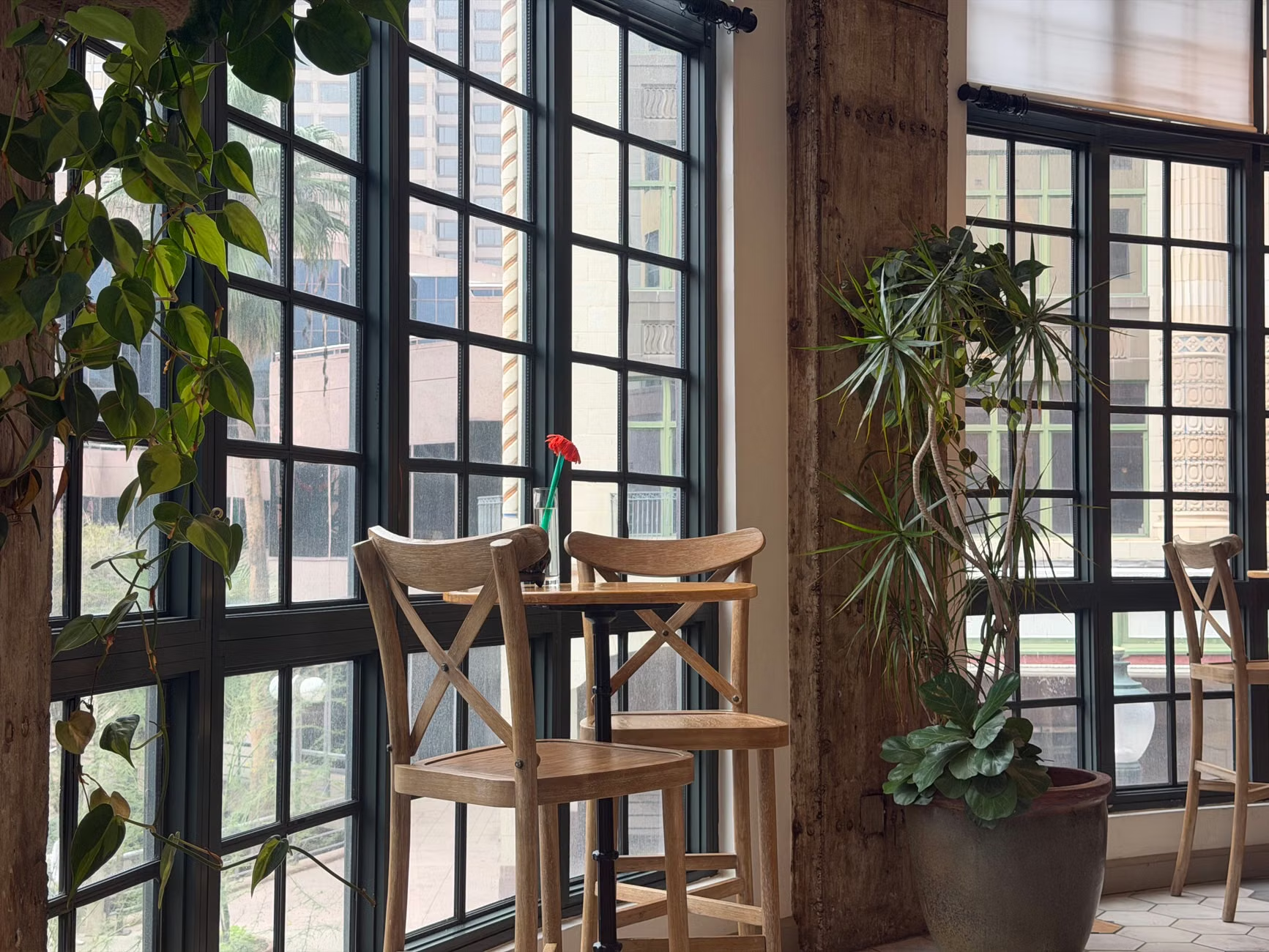
The primary concern most people have about off-season travel is the weather. “But it’s going to be cold,” they say. “It might rain.” This is true. However, the mistake is treating a rainy day in a capital city as a “wasted” day. In cities like London, Amsterdam, or Berlin, the culture is built for the indoors. The off-season is the perfect time to lean into the institutions that define these places.
When you plan for the off-season, you should flip your itinerary structure. Instead of planning for parks and walking tours, plan for the “three-pillar” approach:
- The Cultural Deep-Dive: Spend your mornings in museums, galleries, and historical archives. Without the crowds, you can focus on specific exhibits rather than rushing through the highlights.
- The Culinary Slow-Down: In peak season, the best restaurants are booked out weeks in advance. In the off-season, you can often secure a table at a local bistro or a classic institution with relative ease. This is when you actually eat like a local.
- The Indoor Architecture Tour: Focus on cathedrals, libraries, historic shopping arcades, and covered markets. These are often the most beautiful parts of a city, and they are climate-controlled and stunning regardless of the weather outside.
By shifting your focus to these areas, you remove the stress of weather-dependent planning. If it rains, you are already where you want to be.
Financial Realities and the “Value-for-Money” Shift
Let’s talk numbers. The price gap between peak season and off-season is staggering. In many European capitals, hotel prices can drop by 40% to 60% once you move past the summer months. This creates a fascinating opportunity for the 30-something traveler: you can often afford a higher standard of accommodation for the same price as a budget room in July.
For families, this is a game-changer. Staying in a central, well-located apartment or a high-quality hotel with a kitchen means you aren’t forced to eat out every meal. You can grab fresh bread and local ingredients from a market, eat a slow breakfast in your pajamas, and start your day without the logistical chaos of getting everyone dressed and out the door by 8:00 AM to beat the crowds.
| Factor | Peak Season (June-August) | Off-Season (Nov, Jan-March) |
|---|---|---|
| Flight Costs | Premium, often 2x-3x higher | Budget-friendly, high availability |
| Accommodation | Expensive, limited choices | Affordable, luxury upgrades possible |
| Museum Access | Long queues, timed entry required | Walk-in access, quiet galleries |
| Vibe | High-energy, tourist-heavy | Local, authentic, peaceful |
Managing the “Daylight Deficit” and Other Practical Challenges
There are, of course, challenges to off-season travel. The most significant is the shorter day. In cities like Stockholm or London, the sun might set by 4:00 PM in the depths of winter. This can feel daunting, but it actually forces a more sustainable pace.
Instead of trying to squeeze 14 hours of activity into a day, you accept that you have a “morning phase” and an “evening phase.” The evening phase, starting from late afternoon, becomes about the “cozy” factor. This is the time for visiting a classic pub, a bookstore, or an early dinner. It embraces the concept of hygge—that Scandinavian idea of creating warmth and comfort. When you stop fighting the darkness and start leaning into it, the city feels more intimate.
Another challenge is the potential for closures. Some smaller attractions or boutique shops might have limited hours or close entirely for renovations. The solution here is simple: research. Before you book your flights, check the websites of the three or four things you absolutely want to see. If the museum is closed for renovations in February, you know to swap your dates. It takes a little more administrative effort upfront, but the payoff is a smoother experience on the ground.
The Parenting Perspective: Why Off-Season Travel is Actually Easier
If you are traveling with children, the off-season is arguably the best time to go. Think about the sensory overload of a major city. In the summer, the heat, the noise, the crowds, and the constant movement are exhausting for children. In the off-season, the pace is significantly lower. Your children can actually move around without you worrying about losing them in a throng of people.
Furthermore, most major capitals have excellent indoor children’s museums, science centers, and public libraries that are perfect for cold-weather days. These spaces are rarely crowded during the school term, meaning your kids get more interaction with the exhibits and less competition from other children. It’s a more educational and less frantic experience for everyone involved.
Pro-tip for parents: Pack layers. The biggest mistake is assuming you need one giant, heavy coat. Instead, bring thin, high-quality base layers, sweaters, and a light, waterproof shell. This “onion” method allows you to adjust to the temperature inside museums (which can be quite warm) versus the temperature outside. It also makes packing much lighter, which is a blessing when you are already hauling snacks, diapers, and electronics.
Choosing Your Destination: Where to Go in the Off-Season
Not all cities are created equal during the off-season. Some are better than others. Here is how to evaluate a destination for a winter or shoulder-season trip:
- The “Museum-Heavy” Capital: Cities like Paris, Madrid, and Vienna are perfect. They have world-class indoor culture that is unaffected by the weather. In fact, seeing the Louvre or the Prado in February is a completely different (and better) experience than seeing them in July.
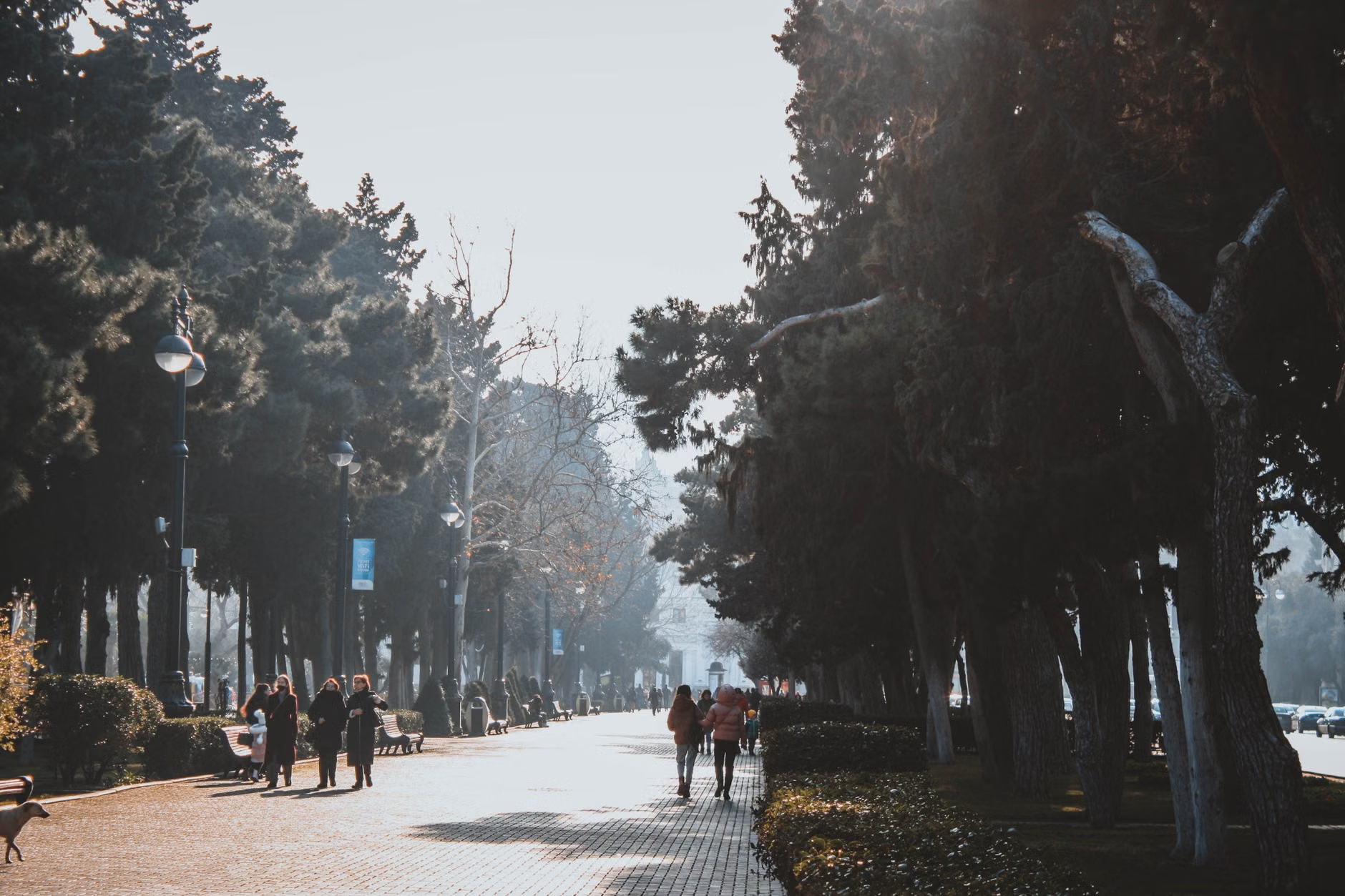
- The “Walkable” Capital: Cities like Edinburgh or Prague are beautiful in the cold. The dramatic, moody atmosphere of these cities in the winter adds to their charm. Just ensure you have good footwear for potentially slippery cobblestones.
- The “Tech-Forward” Capital: Cities like Tokyo or Seoul are great in the off-season. They have incredibly efficient public transport, vast underground shopping and dining networks, and endless indoor entertainment, meaning you can navigate the city comfortably regardless of the weather.
Avoid cities that are purely outdoor-focused. If your primary goal is to visit a beach or to hike, the off-season will likely disappoint you. Focus on capitals where the “life” of the city happens inside the buildings and the cafes.
The Hidden Benefit: Authentic Local Interaction
When there are fewer tourists, locals are more likely to engage. In a busy cafe during July, a barista is a machine, pumping out lattes as fast as humanly possible. In February, that same barista has time to chat, suggest a local bakery, or ask you where you’re from. These small, human moments are what make travel memorable.
You’ll also find that service in hotels and restaurants is often more attentive. The staff isn’t burnt out from a three-month-long marathon of peak-season chaos. They have the time to provide the hospitality that the industry is supposed to be about. You’ll notice this in the details: a slightly longer conversation, a better recommendation, or a more relaxed check-out time.
A Note on Cautions and Reality Checks
While I advocate for the off-season, I am not suggesting it is perfect. You must be prepared for the realities. Some parks may be less manicured, some outdoor fountains may be turned off for the winter, and you will definitely encounter grey skies. If you are the type of person who needs bright blue skies to feel “happy,” the off-season might require a significant mental adjustment.
Also, check for major holidays. While the “off-season” is generally quiet, it does not include the weeks around Christmas and New Year. During that time, prices skyrocket and crowds return with a vengeance. Aim for the “sweet spots”: mid-November to early December, or late January through March.
Finally, always check the local school holiday calendar for your destination. Even in the off-season, local school breaks can cause local spikes in museum attendance or public transport usage. A quick search for “[City Name] school holidays 2025” will save you from arriving during a local busy period.
Making the Commitment to Slow Travel
The transition to off-season travel is, at its core, a transition to slow travel. It’s about prioritizing quality over quantity. Instead of checking off every single landmark on a list, you allow yourself to inhabit a city. You wake up, you have a slow breakfast, you visit one major site, you have a long lunch, you wander through a neighborhood, and you end your day with a local experience.
For those of us in our 30s and 40s, we are constantly being told to maximize our efficiency. Travel should be the one place where we are allowed to be inefficient. By choosing the off-season, you aren’t just saving money or avoiding queues. You are giving yourself the gift of time and space, which is perhaps the most valuable commodity we have in our busy lives.
Start small. Try a long weekend in a city you’ve always wanted to see but were afraid of because of the crowds. Pick a date in February, book a nice hotel, and see the city as it really is, rather than as a postcard. You might find that you never want to travel in the summer again.
Frequently Asked Questions
Q: Will everything be closed if I visit a city in the off-season?
A: Very few things actually close. Major museums, restaurants, and attractions remain open year-round in all major capitals. The only things that might close are seasonal outdoor cafes or specific summer-only tours. Always check the official website of your top-priority sites before booking.
Q: How do I handle the weather if I’m traveling with kids?
A: The key is the “15-minute rule.” Ensure you are never more than 15 minutes away from a warm, indoor space. Map out cafes, museums, and public transit stations in advance. If the kids get cold or tired, duck into a local bakery for a hot chocolate. It’s about managing expectations and keeping the experience comfortable.
Q: Is it actually cheaper, or is that just a myth?
A: It is definitely not a myth. Flight and accommodation prices are driven by demand. When demand drops in the off-season, prices drop accordingly. You can often save 30-50% on total trip costs by shifting your travel dates by just a few weeks outside of peak times.
Official Resources for Planning:
- Visit Europe Official Tourism Portal – Excellent for checking seasonal closures and regional travel advice.
- Time and Date – Use this to check sunrise and sunset times for your destination to plan your “daylight” hours effectively.
- TripAdvisor Forums – Great for checking recent, real-time reports on whether specific attractions are undergoing maintenance or have reduced winter hours.
Traveling is a privilege, but it doesn’t have to be a chore. Embrace the quiet, enjoy the lower prices, and see the world when it isn’t trying to perform for the masses. Your future self, rested and actually having enjoyed their vacation, will thank you.