- Cooking with your child is an investment in their development, building confidence, math skills, and healthy eating habits.
- Success depends on lowering your expectations for perfection and prioritizing the “process” over the “product.”
- Safety and organization are the foundations of a stress-free kitchen; prep stations and age-appropriate tools are essential.
The secret to a successful parent-child cooking hour isn’t a Michelin-star recipe; it is the willingness to embrace a little bit of flour on the floor and a lot of patience. If you have ever tried to involve a toddler or a pre-teen in dinner preparation, you know the immediate push-pull: you want to teach them, but you also want the meal to be edible and ready before everyone gets “hangry.” The good news is that with the right framework, the kitchen can become one of the most effective classrooms in your home.
Why the Kitchen is the Ultimate Classroom
We often think of “quality time” as a separate event—a trip to the park or a board game night. However, cooking is a daily requirement that offers a unique opportunity for “micro-bonding.” When you cook with your children, you aren’t just making dinner; you are engaging in a multi-sensory experience that builds neurological pathways and emotional connections.
From a developmental standpoint, the kitchen is where abstract concepts become concrete. Measuring a cup of flour is a lesson in fractions. Watching yeast rise or chocolate melt is an introduction to chemistry. Deciding whether to add more salt is a lesson in sensory evaluation. For parents in their 30s and 40s—who are likely juggling demanding careers and the mental load of household management—this is an efficient way to check two boxes: feeding the family and nurturing your child’s growth.
Furthermore, children who are involved in the cooking process are statistically more likely to try new foods. It is the “I made this” effect. When a child has agency over a dish, their resistance to vegetables or new textures often drops significantly. It shifts their role from a passive recipient of a meal to an active architect of it.
Setting the Stage: Preparation and Safety
Before you even crack an egg, you need to manage the environment. If you walk into the kitchen with a “do-it-yourself” mindset, you will end up frustrated. If you walk in with a “let’s explore” mindset, you will likely have a great time, even if the kitchen ends up needing a deep clean afterward.
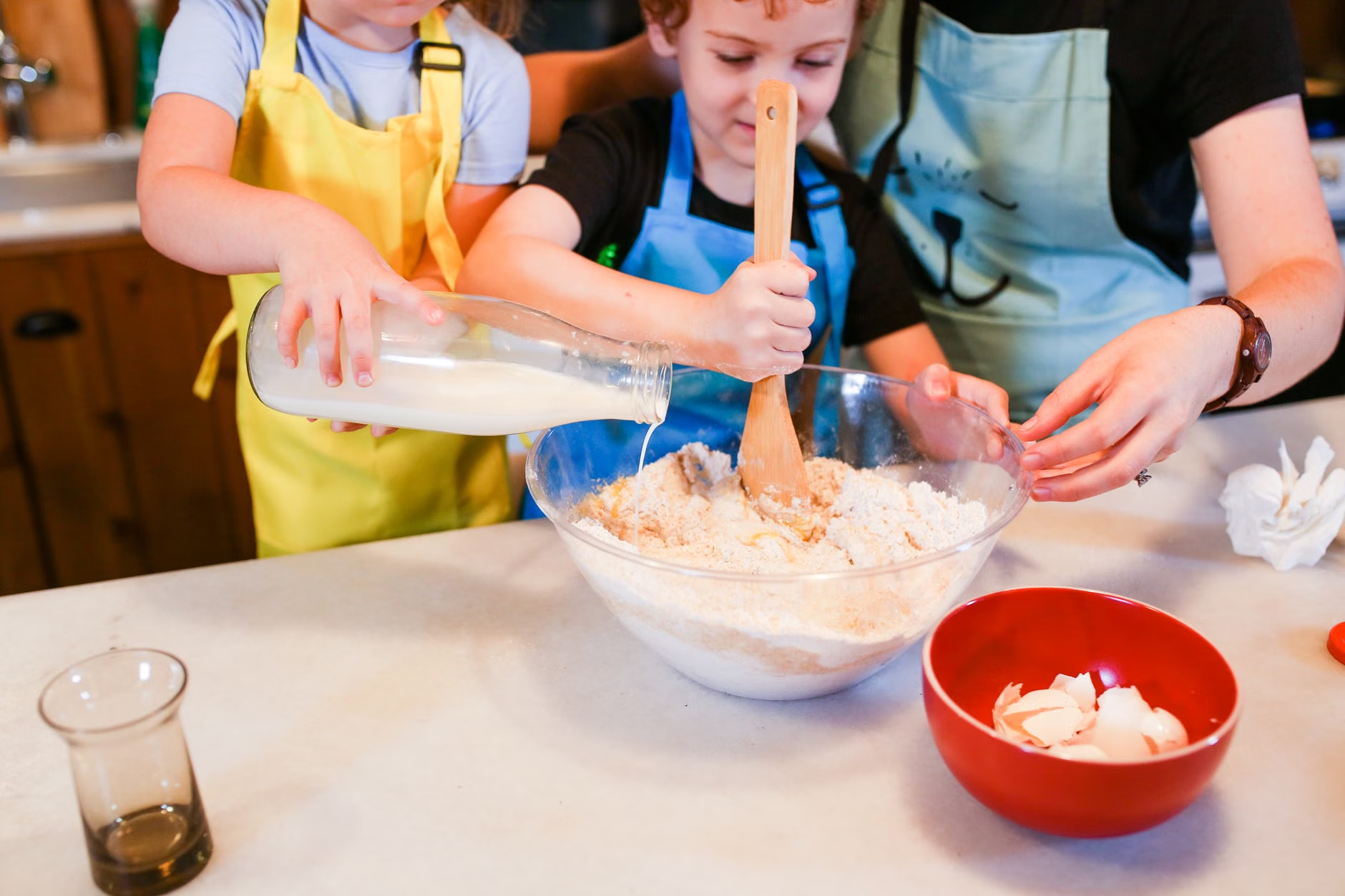
Start by creating a “Yes Space” in your kitchen. This is a designated area where your child can work without you worrying about them touching the stove or sharp knives. A low table or a sturdy kitchen helper stool (the kind that encloses the child safely) is a game-changer. By bringing them to counter height, you remove the physical strain of them trying to peek over the edge, which often leads to spills and accidents.
Essential Tools for Small Hands
One of the most common mistakes parents make is handing a child a tool that doesn’t fit their grip. If you want them to participate, give them tools that make them feel capable. Nylon knives are excellent for children as young as four; they are sharp enough to cut through cucumbers and strawberries but will not slice through skin. Using a smaller whisk or a silicone spatula that fits their palm reduces frustration and increases their success rate.
| Tool Category | Recommended Item | Why it works |
|---|---|---|
| Cutting | Nylon/Plastic serrated knife | Safe for fingers, effective on soft produce. |
| Mixing | Small balloon whisk | Fits small hands; easier to control than large ones. |
| Measurement | Color-coded silicone cups | Visual cues help with math and sequence learning. |
| Protection | Adjustable apron with pockets | Keeps clothes clean and holds small utensils. |
Managing the “Chaos Factor”: A Step-by-Step Approach
If you are a perfectionist, the kitchen can be your nemesis. To survive the process, you must embrace the “mise en place” philosophy—a French term meaning “everything in its place.” For a parent-child session, this means pre-measuring ingredients into small bowls before you call your child into the room.
When everything is pre-portioned, the child’s job becomes one of assembly rather than preparation. This prevents the “I spilled the whole bag of flour” catastrophe. It also allows you to talk to them about what you are doing, rather than frantically searching for the measuring spoons while your child gets bored and starts climbing the pantry shelves.
The Incremental Skill Ladder
Don’t expect a five-year-old to sauté onions on their first day. Build their skills in layers. Start with simple assembly tasks, then move to measuring, and eventually to heat-based cooking. Here is a realistic progression:
- Ages 3-4: Washing vegetables, tearing lettuce for salads, dumping pre-measured ingredients into a bowl, stirring cold mixtures.
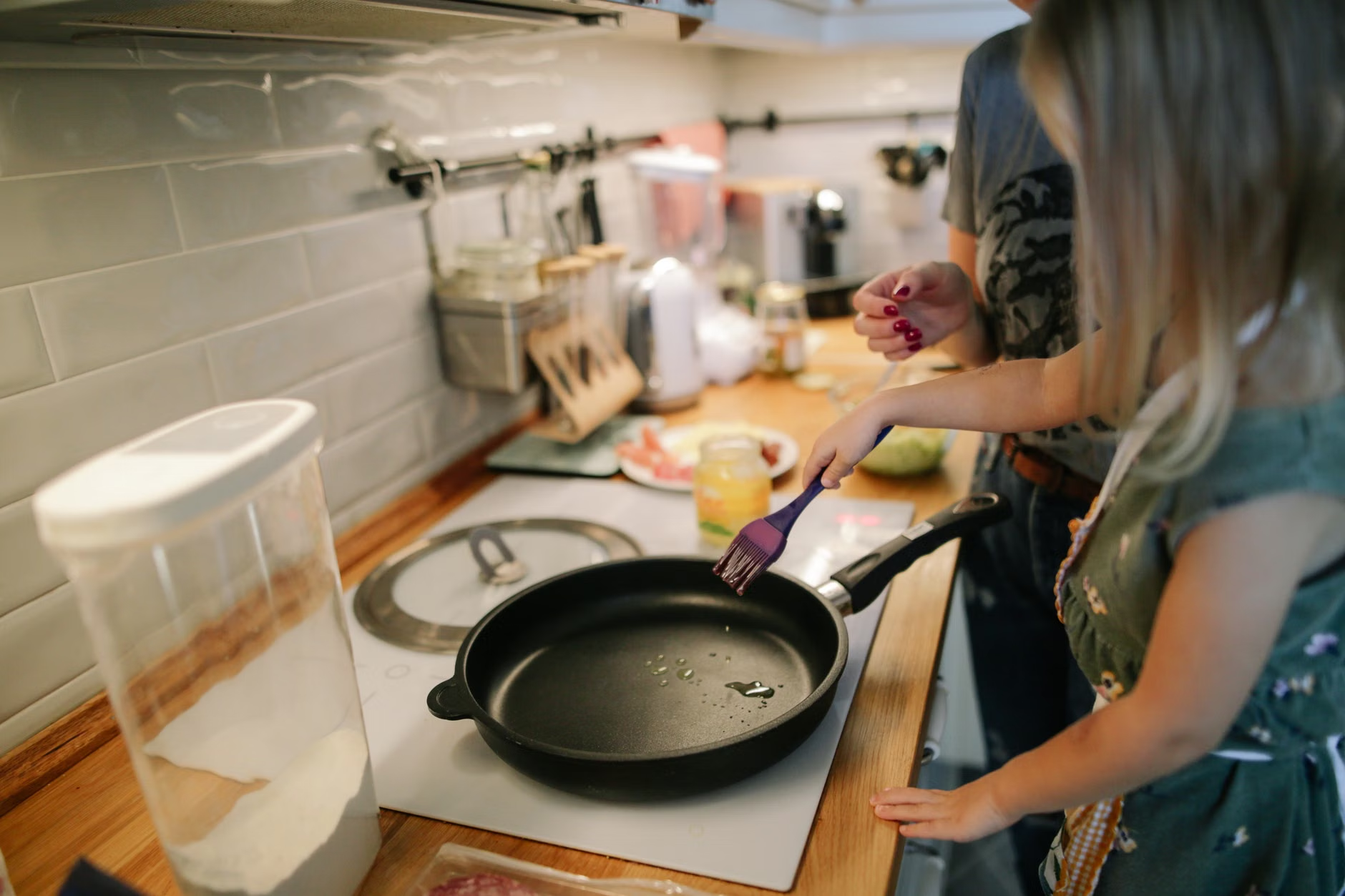
- Ages 5-7: Measuring liquids and dry ingredients, using nylon knives to cut soft fruits, peeling hard-boiled eggs, spreading sauces on pizza dough.
- Ages 8-10: Using a box grater, operating a hand mixer, reading a recipe, learning basic stove-top safety, cracking eggs without getting shells in the mix.
Teaching Life Skills Beyond the Plate
Beyond the culinary output, the cooking hour is a masterclass in executive function. Planning a meal requires identifying a goal (making dinner), gathering resources (ingredients and tools), executing the steps in order, and cleaning up. These are the exact skills that adults use in their professional lives every day.
When a recipe goes wrong, it is a teachable moment. Did the cookies burn? Why? Maybe we left them in the oven too long, or the oven temperature was too high. This is scientific inquiry in action. It teaches children that failure is not a catastrophe; it is data. It is a prompt for adjustment and improvement. By remaining calm when a kitchen mishap occurs, you model emotional regulation for your child. They learn that problems are solvable, not just sources of stress.
The Importance of Cleanup
The “cooking hour” must include the “cleanup hour.” Many parents make the mistake of doing all the dishes themselves while the child runs off to play. This reinforces the idea that cooking is fun and cleaning is a chore for someone else. Instead, make cleaning part of the ritual. Even a toddler can help wipe down a counter with a damp sponge or sort cutlery (safely) into the drawer. It teaches them that the kitchen is a shared space that requires collective maintenance.
Addressing Common Hurdles
Let’s talk about the elephant in the room: time. We are all busy. Sometimes, the idea of cooking with a child feels like an unnecessary burden on an already packed schedule. If you are exhausted after a long day of work, do not force a complex cooking project. Choose a “low-stakes” day, perhaps a weekend morning, to start. You do not need to cook every meal together. Once a week is a fantastic goal.
Another hurdle is the fear of safety. It is natural to worry about burns or cuts. The key here is “active supervision.” This does not mean hovering, which can make a child nervous and more prone to mistakes. It means being present, explaining the “why” behind safety rules (e.g., “We hold the handle of the pan because it keeps the heat away from our skin”), and allowing them to take measured risks. A small, supervised burn from a warm pan is a much better teacher than a lecture about why stoves are hot.
We live in an age where distraction is the default. Between smartphones, tablets, and the constant hum of notifications, it is increasingly difficult to hold a child’s attention. Cooking is a “high-engagement” activity. It requires the use of hands, eyes, and focus. In this way, it acts as a digital detox. It pulls the child into the present moment, forcing them to engage with the physical world.
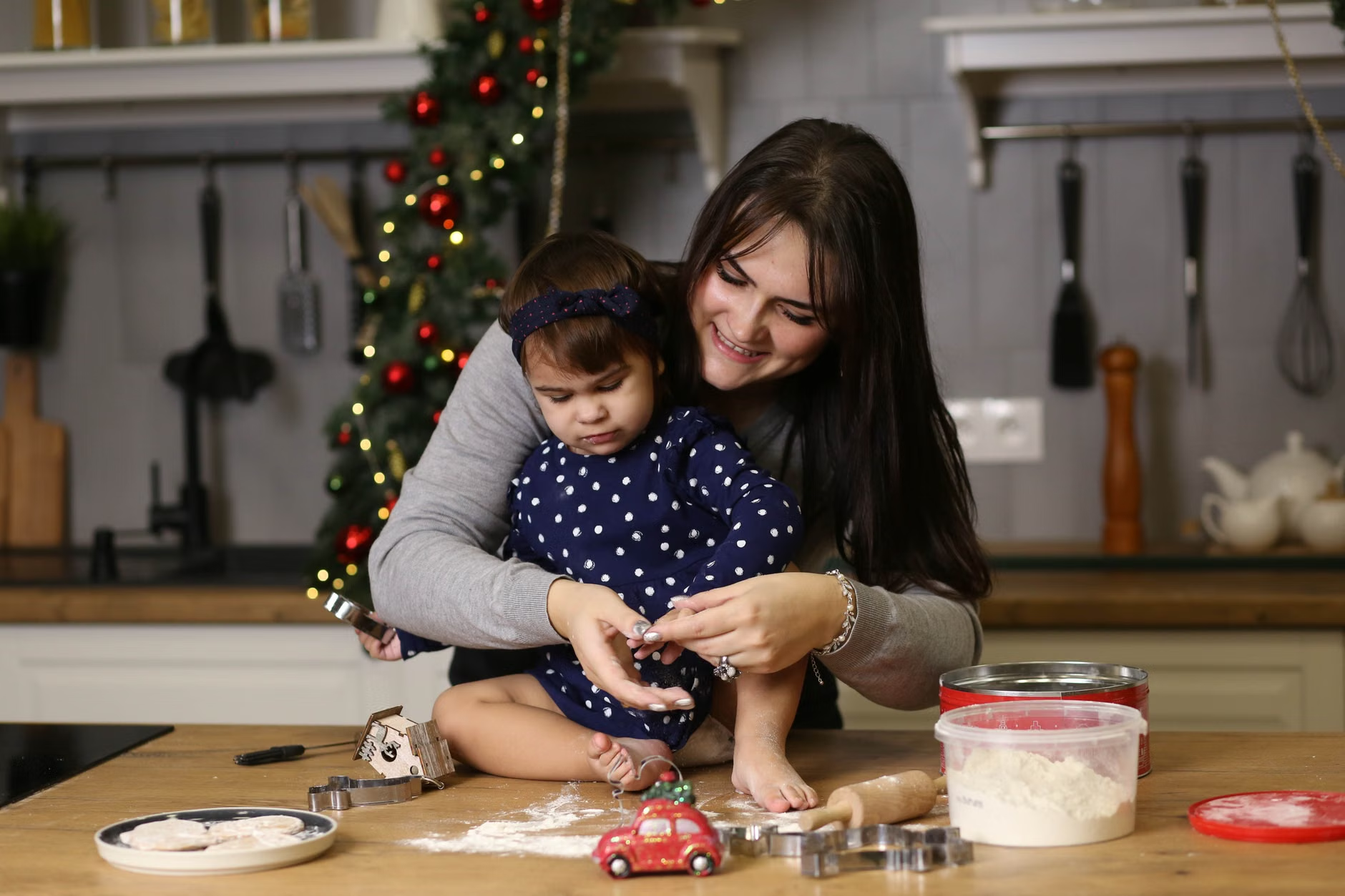
When you cook together, you are creating a shared history. You are building a mental library of memories—the time you made a mess of the pancake batter, the time you made the world’s best pizza, or the time you accidentally added salt instead of sugar. These moments are the glue of family life. They are what your children will remember when they are adults, much more than the high-tech gadgets or the expensive toys you might have bought them.
Actionable Tips for Success
If you are ready to start this week, here is your framework for success:
- Keep it simple: Start with no-cook recipes like assembly-only salads, sandwiches, or fruit skewers.
- The “One-Task” Rule: Give your child one specific job. If they are in charge of the timer, let them be the boss of the timer. If they are in charge of the cheese, let them grate it.
- Lower the bar: If the cookies are misshapen, they are still cookies. If the kitchen is messy, it can be cleaned. The goal is the connection, not a perfect Pinterest-worthy photo.
- Explain the “Why”: Don’t just give orders. Explain that we wash vegetables to remove dirt, or that we stir slowly to keep the air in the batter. This builds their understanding of the world.
- Create a Ritual: Maybe it’s “Pizza Friday” or “Sunday Morning Pancakes.” Consistency helps children feel secure and look forward to the activity.
Reflections on the Process
The cooking hour is not about creating a junior chef who can run a restaurant by age ten. It is about fostering a sense of capability. When a child realizes they can transform raw ingredients into a meal, their self-esteem grows. They see themselves as contributors to the family unit, not just dependents. This shift in perspective is profound. It builds a sense of responsibility and pride that carries over into their schoolwork, their friendships, and their future independence.
As parents, we often feel the pressure to provide “enrichment” activities that are expensive or complex. We think we need to sign them up for classes or buy the latest educational toys. But the most valuable lessons often happen in the simplest places. The kitchen is a place of labor, yes, but it is also a place of love and learning. By inviting your child into that space, you are giving them the tools to navigate the world with confidence and the knowledge that they are a vital part of your home.
Remember that the “cooking hour” is a marathon, not a sprint. Some days will be chaotic, and some recipes will fail. That is perfectly fine. The goal is to keep showing up, to keep inviting them in, and to keep the dialogue open. You are building a relationship one stir at a time.
Resources and Further Reading
For those interested in the science of early childhood development through practical tasks, resources like the American Academy of Pediatrics offer excellent guidelines on age-appropriate household chores. Additionally, organizations focusing on food literacy and nutrition, such as EatRight.org, provide great insights into how involving children in cooking impacts long-term health outcomes. Always verify safety guidelines, especially regarding food handling and temperature control, through your local food safety authority’s website.
Ultimately, the kitchen is where you show your children that you trust them. That trust is the most important ingredient in any recipe.
Frequently Asked Questions
1. How do I handle the mess without getting stressed?
The best approach is to minimize the “splash zone.” Use a large tray or a silicone mat under your child’s workspace. This contains the flour, spills, and debris. Also, accept that the cleanup is part of the process. If you treat cleaning as a team activity—”We made this together, now we clean it together”—it becomes a lesson in responsibility rather than an extra burden for you.
2. My child gets bored easily. How do I keep them engaged?
Children often get bored when the task is either too hard or too long. Keep the cooking segments short. If you are making a meal that takes an hour, have them join you for the final 15 minutes of assembly or decoration. Also, give them ownership of a specific, tangible part of the meal, like being the “official taste-tester” or the “sauce-spreader.” When they have a defined role, their engagement naturally increases.
3. What if I am not a good cook myself?
You don’t need to be a chef to teach your child to cook. In fact, learning together can be a beautiful bonding experience. Use this as an opportunity to practice “discovery-based learning.” Pick a simple recipe, read the instructions aloud together, and figure it out step-by-step. Showing your child that you are also learning and that it’s okay to make mistakes is a powerful lesson in humility and resilience.
For more information on food safety and age-appropriate kitchen tasks, visit EatRight.org and the official FoodSafety.gov portal.