The most effective way to experience a mountain retreat is to intentionally bypass the peak tourist seasons, allowing you to secure lower rates, avoid crowded trails, and actually hear the silence you came for. In our thirties and forties, the “vacation” often feels like just another logistical project—managing schedules, booking flights, and ensuring the kids are entertained. By shifting your travel window to the “shoulder season,” you trade the frantic energy of peak periods for a more authentic, restorative pace.
- Financial Efficiency: Off-peak travel typically results in 30% to 50% lower accommodation costs, freeing up your budget for better dining or experiences.
- Reduced Cognitive Load: Without the pressure of overbooked restaurants and crowded trailheads, you can actually practice “slow travel” rather than managing a high-stress itinerary.
- Nature’s Rhythm: Visiting during transitional seasons—when the crowds dissipate—allows for a more intimate observation of local wildlife and changing landscapes.
Why We Are All Tired of the “Peak” Experience
If you have ever tried to take your family to a popular mountain resort during the height of summer or the middle of the ski season, you know the feeling. It is not exactly a “retreat.” It is a series of queues: the queue for the lift, the queue for the coffee, the queue for the parking spot, and the inevitable queue to get a table for dinner that you probably booked six months in advance. For those of us balancing careers and parenting, our limited time off is a precious commodity. Spending it in a crowd that mirrors the stress of our daily commute is counterproductive.
The “off-peak” or “shoulder” season refers to the periods immediately before or after the peak tourist rush. In the mountains, this usually means late spring (before the summer hiking crowds arrive) or late autumn (after the leaves have turned but before the first heavy snowfall). During these times, the mountain towns are still functioning, but the frantic energy has evaporated. You are not fighting for space; you are simply existing in the space.
The Financial Reality of Choosing the Shoulder Season
Let’s talk numbers. When you book a mountain cabin or hotel room during peak season, you are paying a “convenience premium.” You are paying for the privilege of being there when everyone else is there. Off-peak pricing isn’t just about saving a few dollars; it’s about shifting the value proposition of your trip. When the nightly rate drops significantly, you might find that you can afford a higher-end property that would be completely out of reach during the high season.
Consider the following comparison table to understand the cost-benefit shift:
| Factor | Peak Season | Off-Peak (Shoulder) |
|---|---|---|
| Accommodation Cost | Premium (100%+) | Discounted (50-70%) |
| Crowd Density | High (Stressful) | Low (Relaxing) |
| Flexibility | Low (Reservations required) | High (Spontaneous choices) |
| Service Quality | Stretched/Frantic | Attentive/Personal |
Beyond the direct costs, there is the hidden cost of “logistical fatigue.” When you travel off-peak, you don’t need to make dinner reservations two months in advance. You don’t need to wake up at 5:00 AM to secure a parking space at the trailhead. This lack of friction is a luxury in itself. It allows you to actually be present with your family instead of constantly checking your phone to see if you are late for your next scheduled activity.
Managing Expectations: The “Unpolished” Mountain Experience
There is a reason why places are “off-peak,” and it’s important to be honest about that. You won’t have the manicured experience of a fully operational tourist hub. Some smaller cafes might be closed, or a specific chairlift might not be running. If you are the type of traveler who needs every single amenity to be open 24/7, this might feel like a drawback. However, for those of us in our thirties and forties, this “unpolished” state is often where the real charm lies.
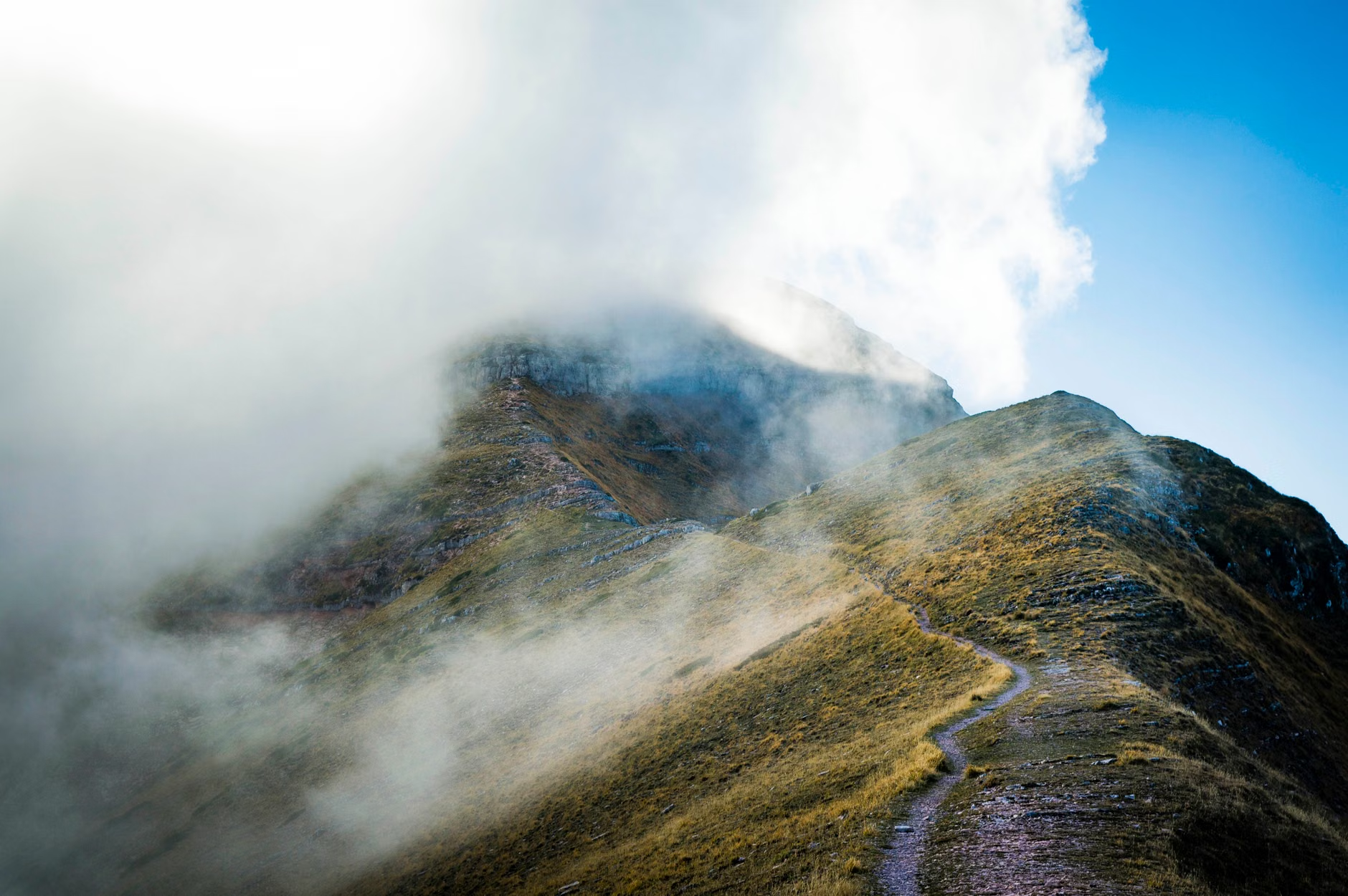
When you visit a mountain town in the shoulder season, you are seeing the community as it actually exists, rather than as a stage set for tourists. You will interact with locals who have time to talk. You will see the mountains in their raw, transitional states. There is a specific kind of beauty in a mountain forest that is waking up from winter or settling down for the frost. It is not necessarily “pretty” in the postcard sense, but it is deeply grounding.
If you are traveling with children, this is also a golden opportunity for education. Instead of just “doing” things, you can explain the seasons. You can show them why a trail might be muddy, or why some shops are closed. It turns the trip into a lesson on adaptation and local economies, which is far more valuable than another overpriced souvenir shop experience.
Strategic Planning: How to Execute the Perfect Off-Peak Trip
Planning an off-peak trip requires a different mindset than booking a standard vacation. You aren’t just looking for a deal; you are looking for specific conditions. Here is a framework to help you navigate the planning phase without adding to your mental load.
1. Define Your “Why”
Are you going for silence? For hiking? For photography? For simply reading by a fire? If your goal is photography, the shoulder season is actually superior because you avoid having people in your shots. If your goal is hiking, you must be prepared for variable weather. Define your priority so that you don’t feel disappointed if a specific activity is unavailable.
2. The “Bridge” Strategy
Aim for the two-week windows right before or after the main rush. For example, if summer tourism peaks from July to August, aim for the second half of June or the first half of September. These “bridge” periods are the sweet spot where the weather is usually decent, but the crowds have yet to arrive or have already departed.
3. Weather-Proofing Your Itinerary
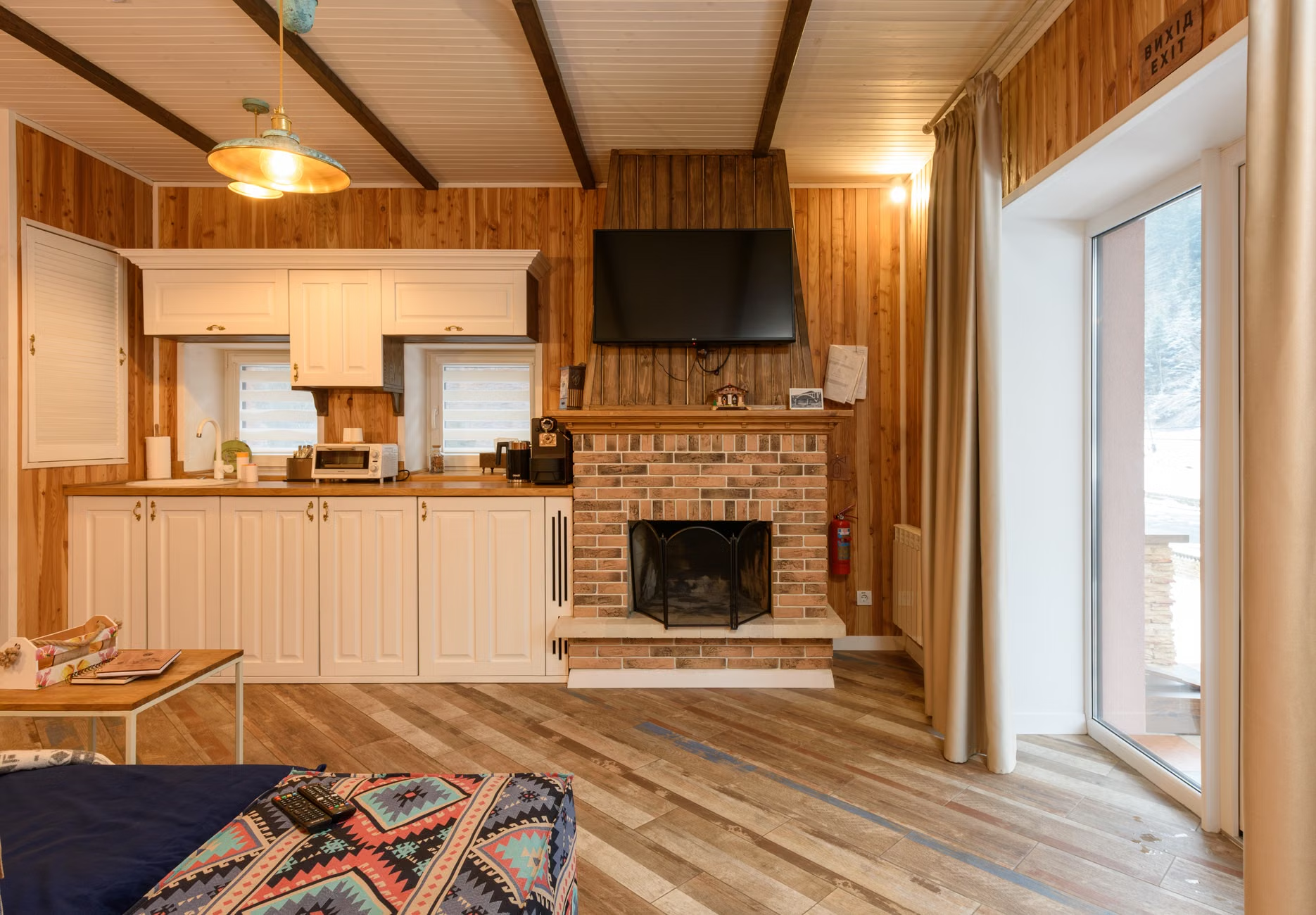
Off-peak weather is notoriously fickle. You might get a week of sunshine, or you might get three days of rain. This is why you must plan for “indoor-outdoor” flexibility. Choose accommodation that is comfortable enough to spend time in. If you are renting a cabin, make sure it has a good kitchen, a selection of games, and enough space that you aren’t all on top of each other if a storm rolls in.
4. The Equipment Check
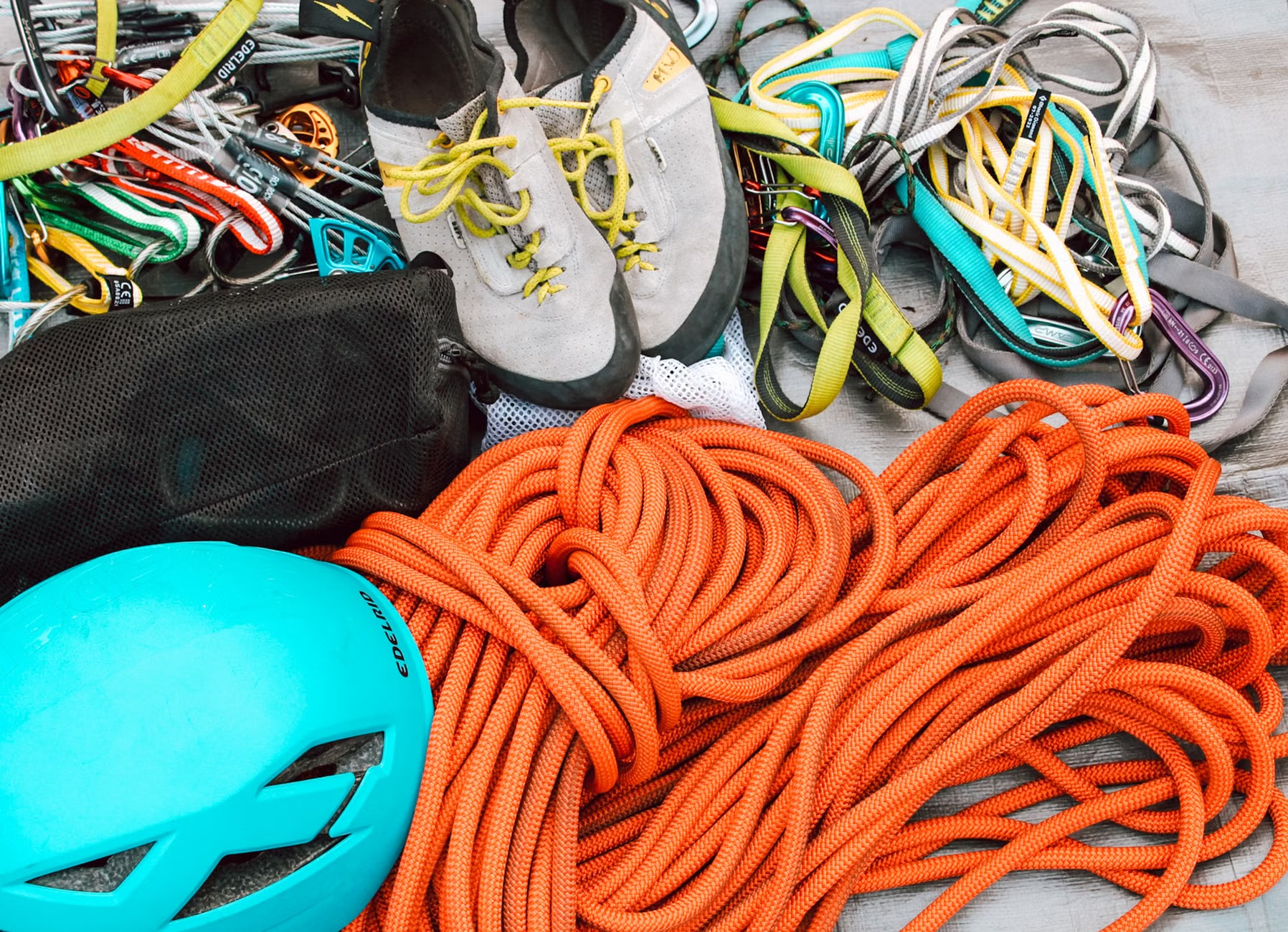
Because you are traveling in a transitional season, your packing list needs to be more robust than for a summer trip. Layers are non-negotiable. Even if the forecast looks warm, mountain temperatures drop drastically at night. Investing in a high-quality base layer and a windproof shell will save you from being trapped inside by a minor temperature drop.
When we talk about “slow travel,” it can sound like a buzzword. In practice, it is simply the rejection of the “checklist” vacation. Most of us spend our lives checking boxes at work and at home. Why should our time off be any different? When you are in the mountains off-peak, commit to doing less.
Instead of trying to visit three different viewpoints in one day, pick one and spend the whole morning there. Let the kids explore the same patch of forest for an hour. Observe the moss, the rocks, and the way the light hits the trees. This level of engagement is impossible when you are rushing to the next “must-see” attraction. It builds a deeper connection to the environment and, just as importantly, a deeper connection between family members.
Common mistakes in this area often stem from over-scheduling. Even in the off-peak, if you bring your high-pressure, high-efficiency mindset with you, you will still feel exhausted. The goal is to let the environment dictate the pace. If it’s raining, you read. If the sun comes out, you walk. This surrender to the environment is the true essence of the retreat.
Addressing Common Concerns: Safety and Accessibility
A legitimate concern when traveling off-peak is safety and accessibility. Mountain regions can be remote, and during shoulder seasons, emergency services or nearby help might be further away than you think. This is not to say it’s dangerous, but it requires a slightly higher level of self-sufficiency. Always download offline maps, carry a physical first-aid kit, and ensure you have a reliable way to communicate if cell service is spotty.
Furthermore, be mindful of the “local burden.” Small mountain towns often have limited infrastructure. When you visit off-peak, you are supporting the local economy during a time when they truly need it. However, be respectful. Don’t expect the same level of service you would get at a major resort. If a local shopkeeper is closing early, accept it. Your presence is an economic benefit, but it should not come with an entitlement to disrupt their life.
Finally, consider the environmental impact. Off-peak travel is generally better for the environment because it spreads tourist pressure out over a longer period, rather than concentrating it into a few intense months. By choosing to travel in these times, you are participating in a more sustainable model of tourism that is less taxing on the local ecosystem and infrastructure.
Refining Your Decision Criteria
To ensure your trip is a success, use this checklist before you finalize your bookings:
- Infrastructure Availability: Have you checked the operating hours for local grocery stores? If you are staying in a remote area, you may need to stock up on supplies before you arrive.
- Weather Patterns: Have you looked at the historical weather for the specific month you are targeting? A quick search of “average rainfall in [Town Name] in October” can save you from a soggy surprise.
- Gear Assessment: Do you have the right footwear for potentially muddy or slippery trails? Waterproof hiking boots are almost always a better choice than sneakers in the shoulder season.
- Connectivity: Have you verified your internet needs? If you need to work or stay connected, ensure your rental has reliable Wi-Fi, as some mountain properties struggle with connectivity during quiet periods.
- Emergency Plan: Do you know the location of the nearest hospital or urgent care center? It’s a simple check that provides immense peace of mind when traveling with children.
The Psychology of the Off-Peak Pivot
There is a psychological shift that happens when you intentionally choose the path less traveled. By opting for the off-peak, you are signaling to yourself that your needs—for rest, for space, for quality—are more important than the convenience of the crowd. This is a subtle but powerful form of self-care. It reinforces the idea that you are the architect of your experience, not a passive consumer of a pre-packaged tourist product.
In our thirties and forties, we are often in the thick of the “sandwich generation” struggle—caring for children while managing our own aging parents or career demands. The cognitive load is constant. A mountain retreat is not just about the view; it is about the silence. It is about the ability to hear your own thoughts again. When you remove the noise of the crowds, you give yourself the space to process, to breathe, and to recalibrate.
Don’t be surprised if the first 24 hours of your trip feel “empty.” This is normal. You are experiencing the withdrawal symptoms of a high-stimulation life. Use that time to just sit. Let the kids be bored. Boredom is often the precursor to creativity and deep play. By the second or third day, you will find that your internal rhythm begins to sync with the mountain’s pace. That is when the real transformation happens.
Final Considerations for a Sustainable Retreat
As you plan your next escape, remember that the goal is not to “conquer” the mountain or to check off a list of sights. The goal is to inhabit the landscape. Whether you are in the Rockies, the Alps, or the Southern Alps, the same principles apply: slow down, lower your expectations of “service,” and raise your expectations of “experience.”
The shoulder season is a gift. It is a time when the world is allowed to be itself, without the constant demand to perform for an audience. If you can embrace that, you will find that your mountain retreat becomes the most significant part of your year—not because of what you did, but because of how you felt.
Take the time to research your destination thoroughly, respect the local environment, and be prepared for the realities of the season. The mountains are waiting, and they are much more welcoming when you give them the space to breathe.
Frequently Asked Questions
1. Is it risky to travel to the mountains during the shoulder season due to unpredictable weather?
It is not necessarily “risky,” but it requires preparation. The primary risk is discomfort or the inability to complete specific outdoor activities. By monitoring local weather forecasts 48 hours in advance and having a “Plan B” (such as visiting local museums, libraries, or spending time in a cozy cafe), you can mitigate the impact of bad weather. Always prioritize safety over the original itinerary.
2. How do I find out if local businesses will be open during the off-season?
Most mountain towns have a local tourism board or Chamber of Commerce website. These sites often list seasonal operating hours. Additionally, you can check Google Maps for specific businesses; however, it is always best to call or email the property or business directly if you are relying on their services for your trip. Don’t assume that a business listed as “open” on a general travel site is actually operating during the shoulder season.
3. What is the best way to pack for the highly variable temperatures of the shoulder season?
The “layering system” is your best friend. Start with a moisture-wicking base layer, add an insulating mid-layer (like a fleece or down vest), and top it off with a waterproof and windproof outer shell. Avoid cotton, as it stays wet and cold if you get caught in rain or snow. Always pack extra wool socks and a warm hat, even if the forecast looks mild, because temperature swings in the mountains are significant.
For further information on mountain safety and travel planning, you can visit official resources such as the National Park Service for US-based trips or equivalent regional tourism authorities for international travel. Always verify local regulations before heading into protected wilderness areas.