Designing a home office that is “neuro-inclusive” isn’t about buying expensive gadgets; it is about creating an environment that minimizes sensory overload and maximizes your ability to stay on task while balancing the unpredictable rhythm of family life.
Key Takeaways
- Reduce Visual Noise: Use closed storage and neutral palettes to prevent your environment from triggering distraction.
- Sensory Control: Implement “zoning” to manage sound and light, ensuring you can pivot between deep work and parenting duties.
- Executive Function Support: Use external tools like analog timers and physical checklists to offload the mental burden of task management.
If you are in your 30s or 40s, you know the specific flavor of frustration that comes with trying to finish a report while your child is asking for a snack, the laundry is buzzing, and your brain is struggling to find the “on” switch for focus. For many of us, the traditional “open concept” or “minimalist” office advice just doesn’t work. If you have ADHD, sensory processing sensitivities, or simply a brain that gets overwhelmed by clutter, your office isn’t just a room; it’s a tool that either supports your executive function or actively sabotages it.
Understanding the Neuro-Inclusive Approach
Neuro-inclusivity in interior design acknowledges that different brains process environmental stimuli—light, sound, texture, and visual complexity—in vastly different ways. For a neurotypical person, a bright, white, open-plan office might feel “clean.” For someone with sensory sensitivities, that same room might feel like a high-voltage environment that drains their energy in under an hour.
When we talk about a neuro-inclusive home office, we are aiming for environmental regulation. This means the space should be flexible enough to provide high stimulation when you need to be creative, and low stimulation when you need to finish mundane, repetitive tasks. It is about removing the “hidden friction” that makes starting a task feel like climbing a mountain.
The Power of Visual Quiet
The most common enemy of focus in a home office is visual clutter. Even if your desk is clean, seeing a pile of unfolded laundry, a stack of bills, or an overflowing bookshelf in your peripheral vision can keep your brain in a state of low-level “task switching.” Your brain is constantly scanning these items, wondering if they need attention.
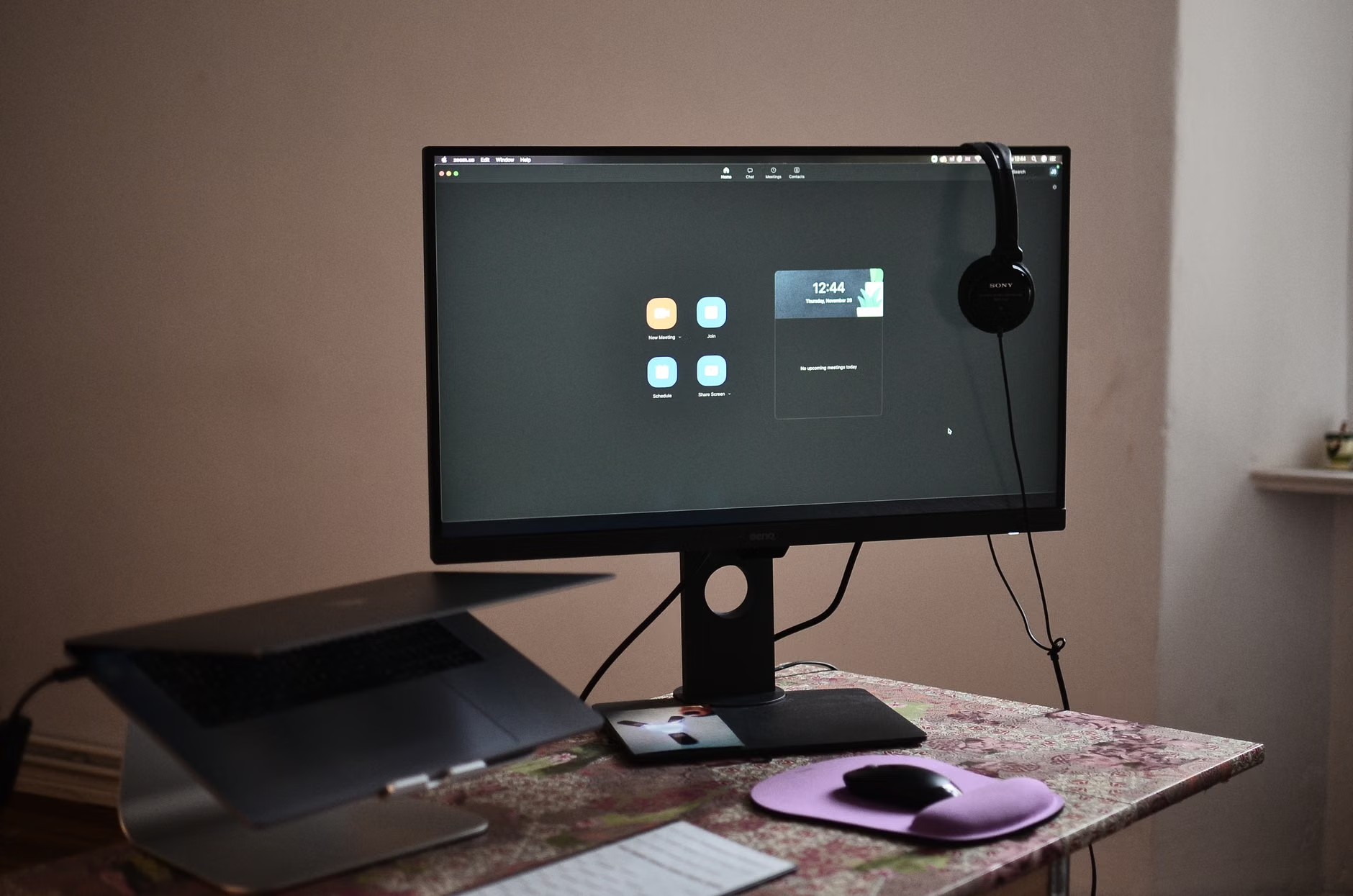
To combat this, start by implementing visual boundaries. If you cannot have a separate room, use room dividers, tall bookshelves, or even a curtain to hide the “non-work” parts of your life while you are on the clock. If you work in a shared space, consider using a desk mat to define your “work zone.” When the mat is out, you are working. When it’s rolled away, the office is closed.
Storage Solutions That Don’t Require “Perfect” Organization
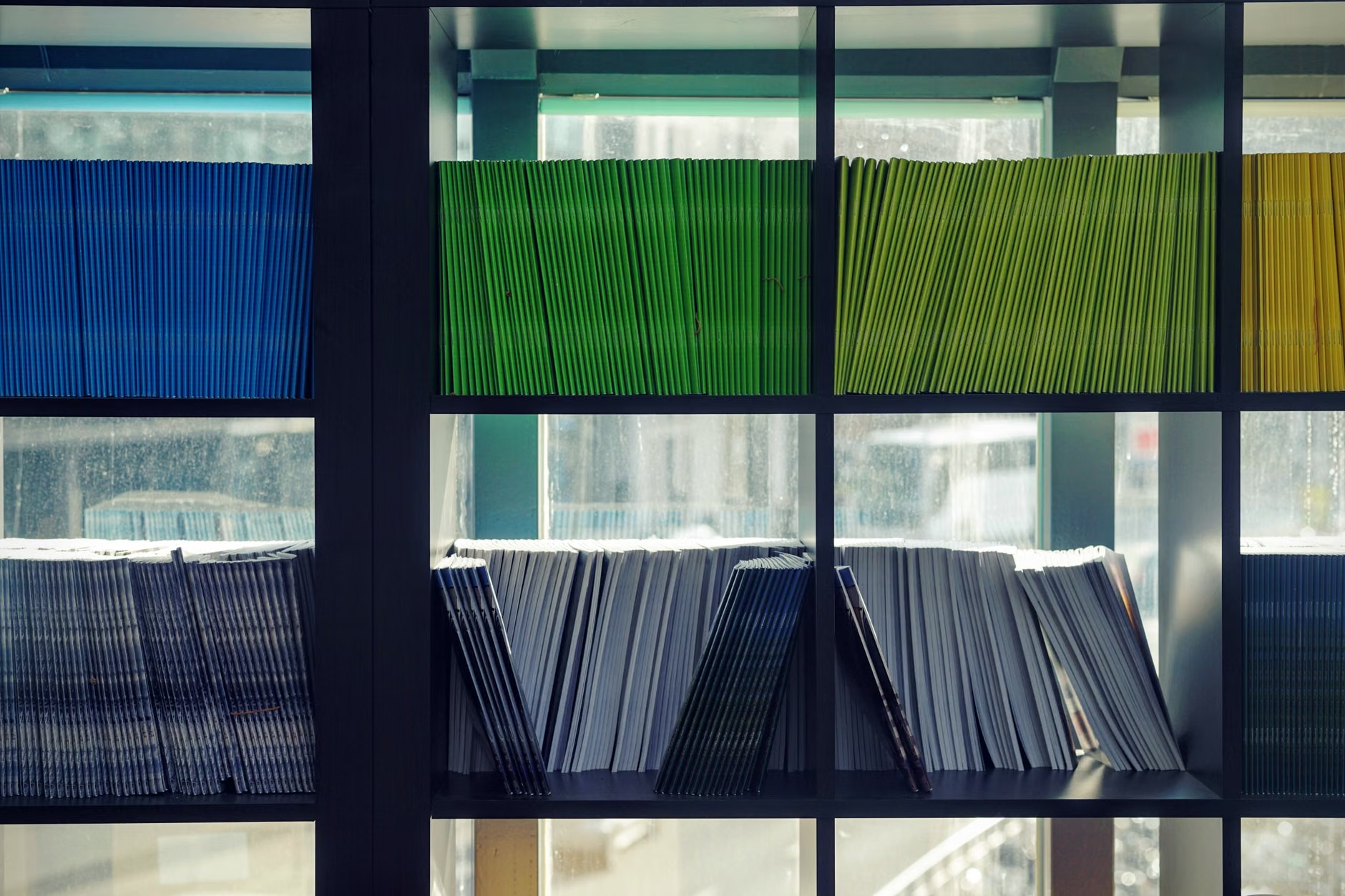
Many organizational systems fail because they require a high level of executive function to maintain. If you have to label every single bin with perfect handwriting, you will likely stop using the system within a week. Instead, aim for “drop zones.” Use opaque bins where you can simply toss items at the end of the day. If you can’t see the mess, your brain can stop worrying about it.
| Strategy | Why it works |
|---|---|
| Opaque Bins | Removes visual stimuli and prevents “mess-anxiety.” |
| Vertical Storage | Keeps the desk surface clear for active tasks. |
| Color-Coding | Allows for quick retrieval without needing to read labels. |
Managing Sensory Inputs: Sound and Light
Sound is arguably the biggest disruptor for parents working from home. You are not just listening for your work calls; you are subconsciously monitoring the house for the sounds of children or household activity. This “vigilance” is exhausting.
If you cannot soundproof your walls, you must manage your personal sensory environment. High-quality active noise-canceling (ANC) headphones are non-negotiable. However, some people find the “pressure” of ANC uncomfortable. In those cases, consider “brown noise” or “pink noise” generators. Unlike white noise, which is high-pitched and can be grating, brown noise is deeper and more soothing, effectively masking the erratic sounds of a busy household.
Lighting for Focus and Mood
Overhead lighting is often the worst offender. It is harsh, flat, and can cause eye strain. If possible, turn off the “big light” and use task lighting instead. A warm-toned desk lamp pointed at your workspace creates a “pool of focus.” This is a psychological signal to your brain: “Everything inside this light is important; everything outside is background.”
Externalizing Executive Function
When you are juggling parenting and a career, your brain is doing a lot of heavy lifting. It is tracking deadlines, school schedules, and project milestones simultaneously. To keep your brain from burning out, externalize your executive function. Do not rely on your memory for anything.
- Analog Timers: Use a physical, visual timer (the kind where a red disk disappears as time passes). This provides a concrete sense of how much time you have left, which is much more effective for focus than a digital clock.
- The “Brain Dump” Board: Keep a physical whiteboard or a large notepad right next to your desk. Whenever a non-work thought pops up (e.g., “I need to buy milk”), write it down immediately and return to your work. This clears the “mental cache” so you can focus.
- Transition Rituals: Your brain needs a cue to switch from “parent mode” to “professional mode.” This could be putting on a specific pair of work shoes, lighting a candle, or listening to a specific playlist. Rituals reduce the friction of starting.
The “Transition Space” Concept
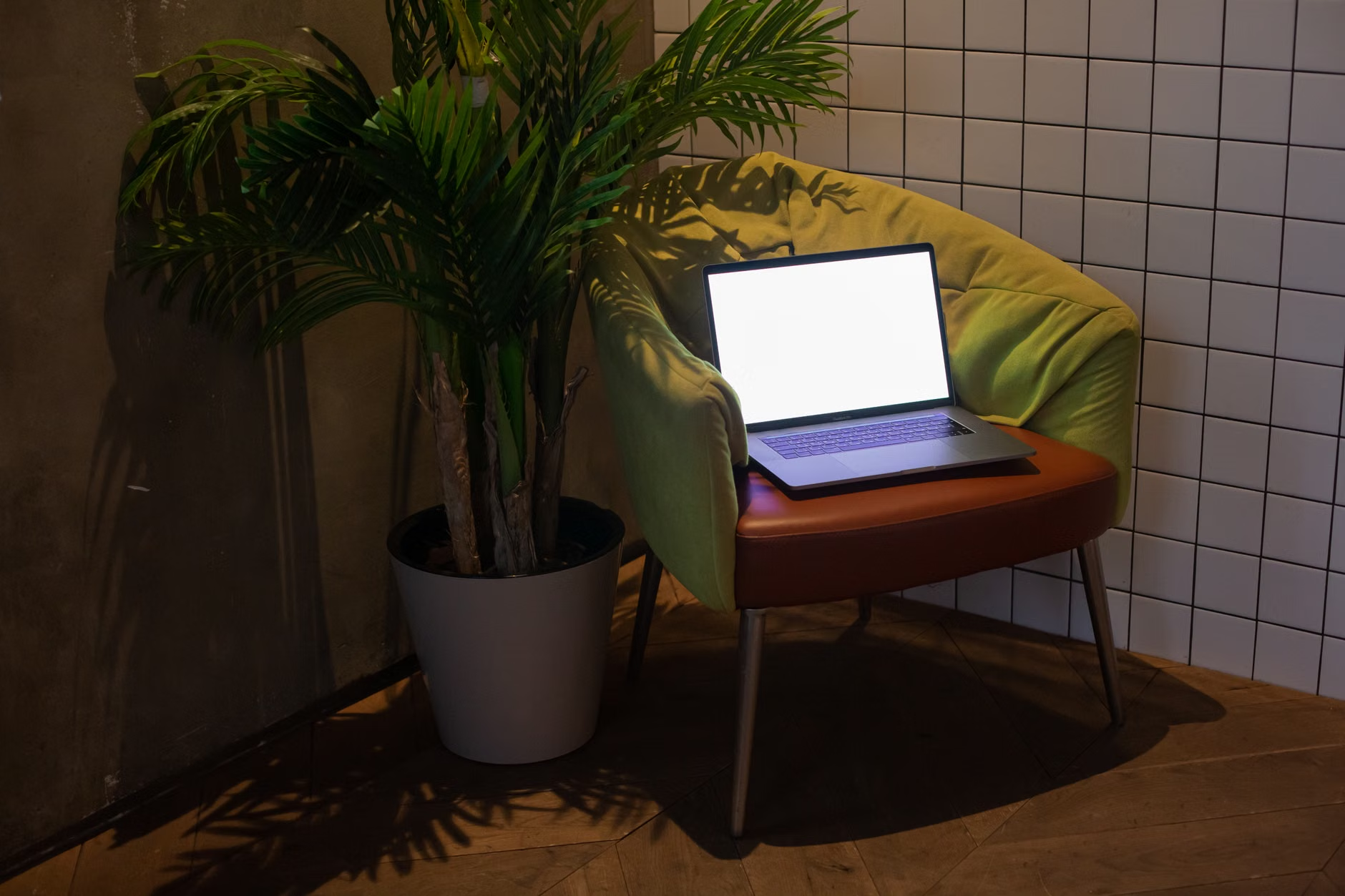
If your office is in a shared area, you need a designated “cool down” or “transition” spot. This is a space that is not for work, but not necessarily for high-energy play either. It is a place to sit, breathe, and reset for five minutes between tasks. It could be a simple armchair in the corner or even a comfortable floor cushion.
The goal of this space is sensory regulation. If you feel yourself getting snappy or overwhelmed, you leave your desk and go to this spot. No phone, no computer, no chores. Just a few minutes of “nothing.” This prevents the build-up of sensory overload that often leads to a mid-afternoon crash.
Common Mistakes to Avoid
One of the biggest mistakes people make is trying to design a “perfect” office all at once. They go out, buy expensive ergonomic furniture, and spend an entire weekend organizing, only to find that the layout doesn’t actually work for their workflow. Design iteratively.
Start with the basics: a desk, a chair that supports you, and a way to block out noise. Live with that for two weeks. Notice when you get distracted. Do you keep reaching for your phone? Are you constantly looking at the door? Are your eyes hurting? Once you identify the specific pain point, *then* add the solution. If you are distracted by the door, add a privacy screen. If your eyes are hurting, add a desk lamp.
Another mistake is neglecting the “ergonomics of movement.” If you have a sit-stand desk, use it, but don’t feel like you have to stand for hours. Some neurodivergent brains find that subtle, rhythmic movement (like fidgeting or pacing) actually helps with cognitive processing. If you need to stand to think, stand. If you need to pace, create a path to pace in.
Creating a Sustainable Routine
Finally, remember that a neuro-inclusive office is useless if you don’t have a routine that respects your energy levels. If you know you have a “slump” at 2 PM, don’t schedule your most cognitively demanding tasks for that time. Use that time for administrative work, email, or physical organization.
The 30s and 40s are a period of high responsibility. You are likely managing the needs of children, aging parents, and your own career. It is okay if your office isn’t “Instagram-worthy.” It is okay if it looks a little utilitarian. The only metric that matters is whether it allows you to finish your day feeling like you were in control of your attention, rather than your environment being in control of you.
Addressing Potential Challenges
What if you have no choice but to work from a kitchen table? You can still create a “micro-office.” Use a dedicated box or a rolling cart that holds everything you need for work. When you start, you pull out the cart. When you finish, you put everything back in the cart and roll it into a closet. This creates a psychological “start” and “stop” to your workday, which is crucial for preventing work-life blur.
If you share your home with others, communicate your needs clearly. “I need 60 minutes of quiet time to focus on this project” is a reasonable request. Use a visual signal, like a sign on the door or a pair of headphones, to indicate that you are in a “deep work” session. Most family members, including children, will respect these boundaries once they understand the “why” behind them.
Conclusion and Next Steps
There is no “one size fits all” when it comes to the neuro-inclusive office. What works for one person might be a distraction for another. The key is to pay attention to your own internal signals. Are you feeling tense? Are you unfocused? Are you procrastinating because the environment feels “heavy”?
Start by identifying one small thing you can change this week. Maybe it’s moving your desk to face a wall instead of a window, or buying a pair of noise-canceling headphones. Small, incremental changes are more sustainable and more effective than a total overhaul. Your home office should be a place where you can do your best work, not a place where you are constantly fighting against your own brain.
For more research on environmental design and sensory processing, you can explore resources from the International WELL Building Institute, which provides extensive data on how our physical environment impacts our mental health and productivity.
Frequently Asked Questions
1. Do I really need an expensive ergonomic chair for a neuro-inclusive office?
Not necessarily. While ergonomics is important for physical health, “neuro-inclusive” is more about sensory and cognitive support. If a standard chair allows you to sit comfortably without fidgeting or feeling restricted, it is fine. If you find yourself constantly shifting and uncomfortable, that physical discomfort is a distraction that will impact your focus.
2. How can I stay productive when I have young children at home?
Productivity with children is about “time-blocking” and realistic expectations. Use visual cues for your children—such as a red/green light—to indicate when you are available. Also, embrace “asynchronous work” where possible, doing your deep work during nap times or early mornings, and reserving low-focus tasks for when the children are awake.
3. Is it better to have a minimalist office or one filled with things that make me happy?
This depends on your brain. If you find that objects “call” to you and distract you, minimalism is your best friend. However, if you find that a “sterile” environment makes you feel uninspired or anxious, add items that ground you—a plant, a specific texture, or a piece of art. The goal is to avoid “visual noise” that pulls your attention away, not to make the room look like a laboratory.
Sources and further reading:
– International WELL Building Institute (wellcertified.com) for guidelines on environmental impact on productivity.
– ADDitude Magazine (additudemag.com) for practical tips on managing ADHD in a work-from-home environment.