The most effective way to encourage a child’s love for reading isn’t to give them more books, but to give them the right books at the right time through a systematic rotation.
- Curated Accessibility: Limiting the number of books on display prevents overwhelm and helps children focus on the stories they have.
- Thematic Rotation: Aligning book choices with seasonal changes, current interests, or developmental milestones keeps reading material fresh and engaging.
- Clutter Management: A rotation system effectively hides the “mess” of a large collection while keeping the library accessible in long-term storage.
If you are a parent in your 30s or 40s, your home likely suffers from “book creep.” It starts innocently enough with a few board books, and suddenly, you have piles of paperbacks stacked on the coffee table, stuffed into toy bins, and shoved into the back of closets. It is a common frustration: you want your children to be surrounded by literature, but the sheer volume of books often leads to the “paradox of choice”—where the child has so many options that they end up engaging with none of them.
This is where the “Parent-Child” book rotation comes in. It is not about throwing away books or being a minimalist for the sake of aesthetics. It is a functional system designed to manage your home environment while maximizing the developmental benefits of reading.
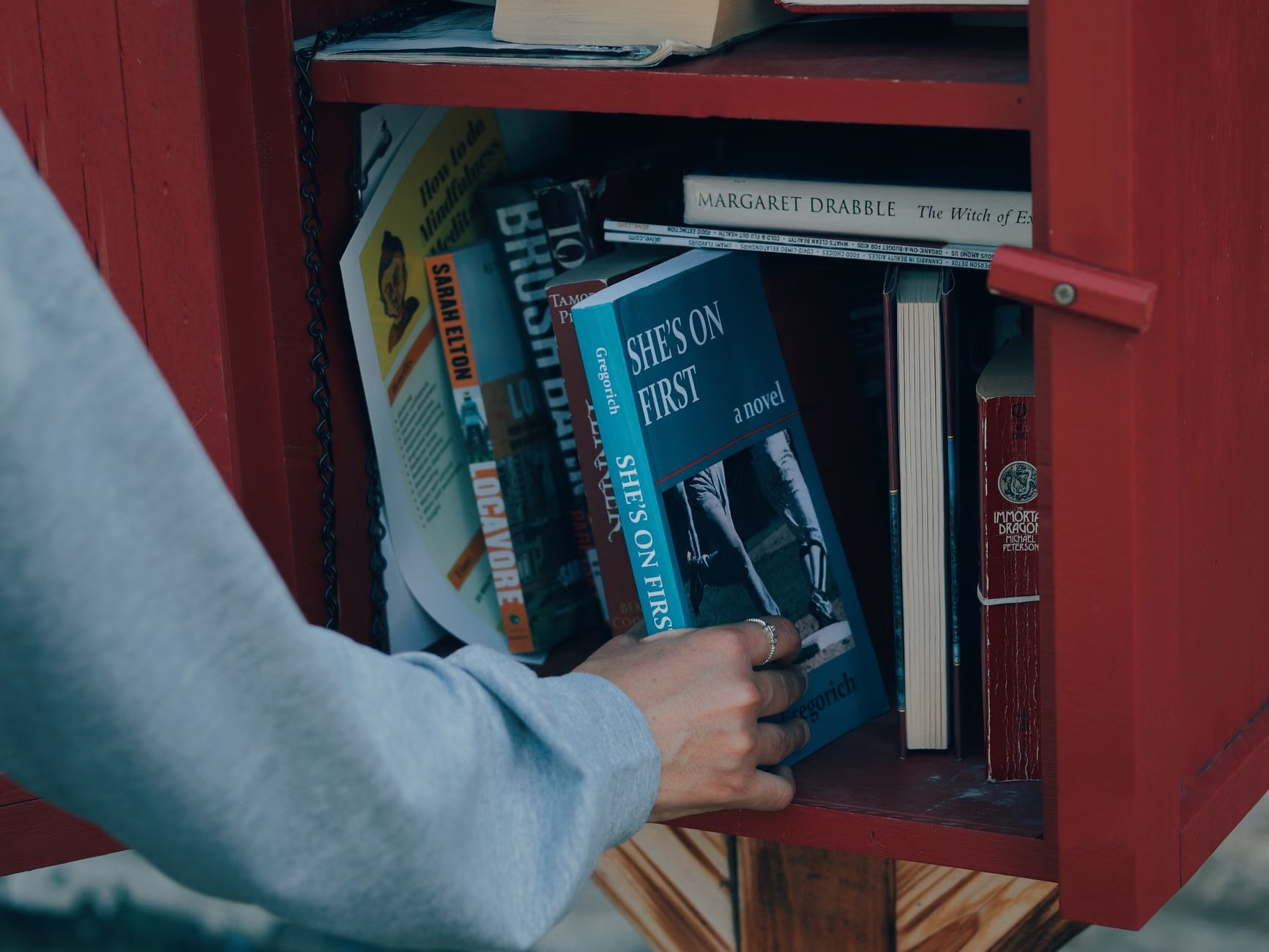
Why Your Bookshelves Are Likely Working Against You
There is a psychological phenomenon often referred to as “choice overload.” When a child is presented with a wall of bookshelves containing dozens, if not hundreds, of titles, the decision-making process becomes stressful rather than exploratory. We see this in adults with streaming services; we spend more time scrolling through the menu than actually watching a movie. For a toddler or a young school-aged child, the same applies to books.
When books are crammed onto shelves, covers are obscured. A book with its spine facing out is essentially invisible to a child who cannot yet read. By implementing a rotation system, you are essentially “curating” your child’s environment. You are creating a boutique experience rather than a chaotic warehouse.
Furthermore, children go through phases. A three-year-old might be obsessed with trucks for two months, only to pivot entirely to dinosaurs or space. If you keep the truck books out when the interest has shifted, they become visual noise. By rotating, you keep the collection relevant to their current cognitive development and interests.
Establishing Your Rotation Framework
The beauty of a rotation system is that it is highly adaptable to your specific living situation. Whether you live in a sprawling house or a compact apartment, the mechanics remain the same: you keep a “live” collection and a “reserve” collection.
Step 1: The Great Audit
Before you can rotate, you need to know what you have. Spend an afternoon gathering every single children’s book in the house. This is the perfect time to identify damaged books that need repair or titles that have been outgrown and should be donated or passed on to younger relatives.
Step 2: Defining the “Live” Collection
Decide how many books you want available at any given time. For a toddler, 10 to 15 books are often sufficient. For an older child, perhaps 20 to 25. This “live” collection should be placed in areas that are easily accessible—low shelves, a basket in the living room, or a dedicated reading nook.
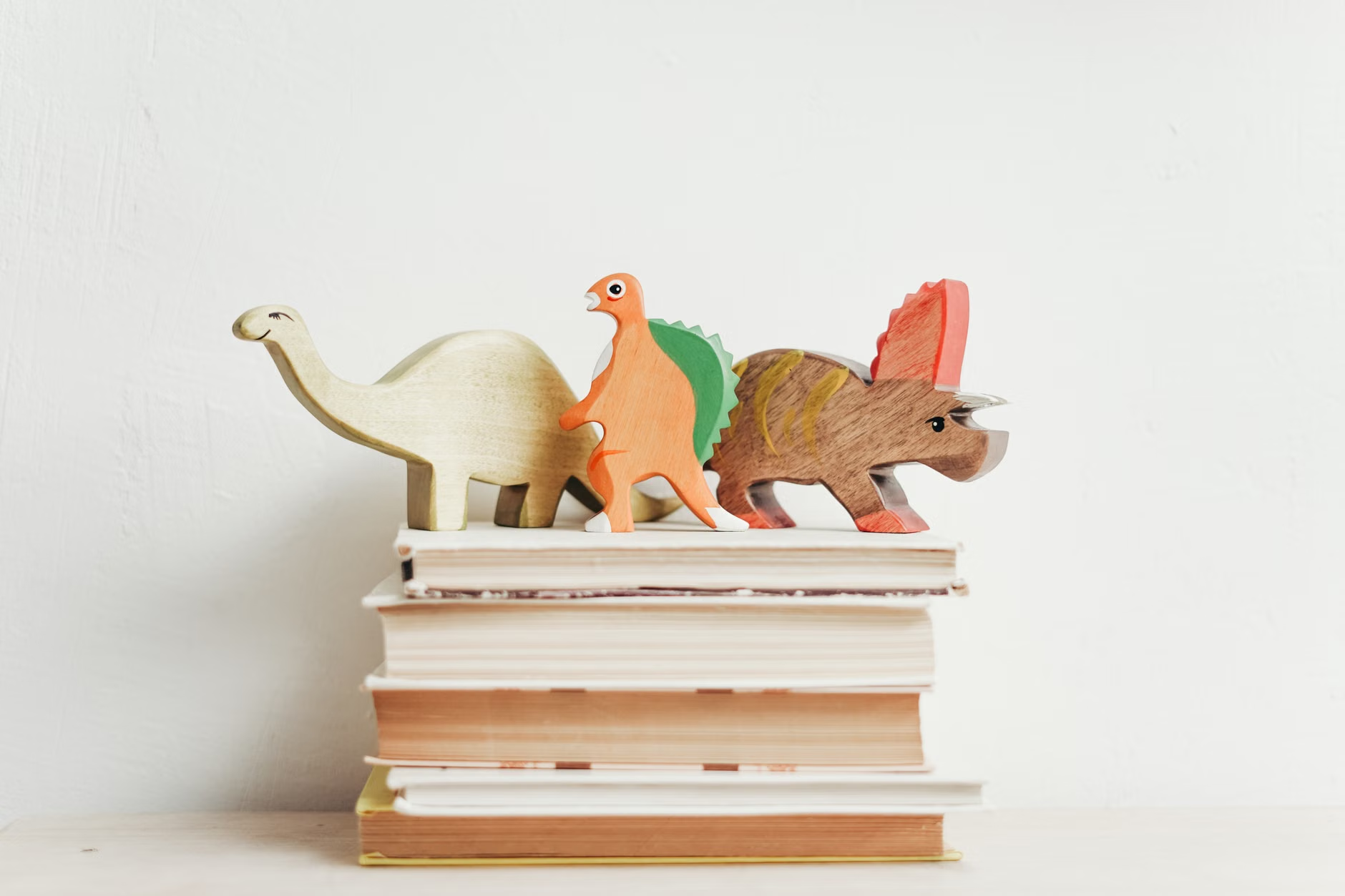
Step 3: Storing the Reserve
The remaining books go into the “reserve.” These should be stored in a closet, an under-bed bin, or a high shelf out of reach. The goal is to keep these books out of sight. When a book is out of sight, it is out of mind, which makes its eventual return to the “live” collection feel like a brand-new discovery.
The Mechanics of a Successful Rotation
How often should you rotate? There is no “perfect” frequency, but a monthly or bi-monthly schedule works well for most families. You might choose to rotate books based on specific triggers rather than a calendar date.
| Trigger | Action | Benefit |
|---|---|---|
| New Season | Swap in books about weather, nature, or holidays. | Connects reading to real-world experiences. |
| New Interest | Introduce books related to a hobby or topic. | Deepens engagement and focus. |
| Developmental Milestone | Swap in books for potty training or school prep. | Provides comfort and guidance. |
When you perform the rotation, don’t just dump the books into the bin. Make it a ritual. If your children are old enough, involve them in the process. Ask them, “Which books are you tired of?” and “Which ones do you want to bring back from the closet?” This gives them agency and teaches them how to manage their own personal belongings.
Common Pitfalls and How to Avoid Them
The most common mistake is becoming too rigid. If your child is currently reading a book every single night, do not rotate it out just because it has been in the “live” collection for four weeks. The goal of the system is to foster a love of reading, not to adhere to a strict organizational schedule. Always keep a “permanent” section of the shelf—books that are absolute favorites and should stay in the rotation indefinitely.
Another pitfall is the “hidden storage” trap. If you store your reserve books in a place that is difficult to access, you will be less likely to rotate them. Ensure your reserve bins are easy to move. If you have to climb a ladder to get to your reserve books, you will eventually stop rotating them altogether. Choose a location that is convenient for you as the parent.
The Cognitive Benefits of Limited Exposure
Research into child development suggests that limiting environmental clutter improves executive function. When a child isn’t visually overstimulated, they are better able to concentrate on the task at hand—in this case, reading. By presenting fewer choices, you are actually helping them develop deeper concentration skills.
Additionally, the “newness” of a rotated book triggers a different part of the brain. When we see something familiar but slightly forgotten, we are more likely to re-read it with fresh eyes. This is particularly important for language development. Re-reading books is how children internalize vocabulary and sentence structure. By pulling a book out of the “reserve” that they haven’t seen in three months, they are more likely to engage with it again, reinforcing those language patterns.

Integrating Technology and Digital Reading
While the rotation system is primarily physical, many parents in their 30s and 40s also manage digital libraries. If you use tablets or e-readers, the same principle applies. You can curate “collections” or “folders” on the device. Just as you rotate physical books, you can curate a “monthly folder” of e-books. This keeps the device from becoming an overwhelming list of hundreds of titles, which, just like physical shelves, can lead to decision paralysis.
However, be cautious about screen time. While digital tools have their place, the tactile nature of physical books—the smell of the paper, the weight of the book, the act of turning pages—is crucial for early childhood literacy. Use the rotation system to prioritize physical books, and keep digital options as a secondary, supplemental resource.
Practical Tips for Small Spaces
If you are living in a smaller home, you might worry that you don’t have space for a “reserve” bin. Think vertically. Use over-the-door shoe organizers for paperback books. They are perfect for children’s books and keep them hidden but accessible. Alternatively, use decorative ottomans with storage inside. They serve a dual purpose as furniture and as a hidden library.
Remember that the “reserve” doesn’t have to be a massive box. It can be a simple fabric bin tucked under a bed or a single shelf in a hall closet. The objective is simply to remove the excess from the child’s primary play area.
Maintaining the System Over Time
As your child grows, the nature of your rotation will change. You will move from board books to picture books, and eventually to early readers and chapter books. The system remains, but the “units” of measurement change. With chapter books, you might only rotate three or four books at a time, as these stories take longer to consume.
Stay flexible. If you find that a particular rotation isn’t working, don’t be afraid to change it mid-month. The system should serve you, not the other way around. If you find yourself dreading the rotation process, it might be a sign that you have too many books overall. It is okay to curate your collection down to a size that feels manageable.
Final Thoughts on Building a Reader
The ultimate goal of the Parent-Child book rotation is to create a home environment where reading feels like a natural, exciting part of daily life. By curating what is available, you turn your home into an active library where books are treated as precious, rotating treasures rather than disposable clutter.
Be patient with yourself as you set this up. It might take a few tries to find the right frequency and the right storage solutions that work for your family’s unique flow. Start small—perhaps with one basket of books—and see how your child reacts. You will likely find that they spend more time with the books you’ve selected than they ever did when the entire collection was on display.
Remember, your involvement is the most important part of the equation. No matter how perfectly you rotate your books, the time spent reading together is what truly fosters the love of literature. Use this system to clear the path, then sit down and open a book together.
Frequently Asked Questions
1. How many books should I keep in the “live” collection?
A good rule of thumb is 10 to 15 books for toddlers and up to 25 for school-aged children. The goal is to provide enough variety to keep them interested without overwhelming them with too many choices.
2. What if my child asks for a book that is in the “reserve”?
That’s a great sign! If they specifically ask for a book, go ahead and retrieve it. The goal isn’t to restrict access, but to manage the visual environment. Simply swap it with a less-popular book from the “live” collection to keep the total count stable.
3. How do I handle books that are part of a series?
For series, it is often best to keep the first book in the “live” collection and keep the others in the “reserve.” If they enjoy the first one, you can “unlock” the next ones. This builds anticipation and encourages them to finish a story before moving on to the next.
For more information on early childhood literacy and the benefits of a print-rich environment, you can refer to resources from organizations like Reading Rockets, which provides evidence-based strategies for parents and educators.