A child’s school lunch is far more than a nutritional pitstop; for many, it is a complex sensory challenge that can either stabilize their nervous system or trigger a total afternoon meltdown.
Key Takeaways:
- Proprioceptive Input: Crunchy or “heavy” foods provide jaw pressure that helps calm a child’s nervous system during a chaotic school day.
- Sensory Safety: A lunchbox should prioritize “safe” foods to prevent sensory overload, using the 80/20 rule for introducing new textures.
- Tactile Comfort: The physical design of the lunchbox and utensils is just as important as the food itself for children with tactile sensitivities.
We’ve all been there. You spend twenty minutes meticulously cutting cucumbers into stars and assembling a turkey wrap that looks like it belongs on a Pinterest board, only for it to come back untouched, slightly soggy, and smelling faintly of “disappointment.” As parents in our 30s and 40s, we often chalk this up to “picky eating.” We tell ourselves they’ll eat when they’re hungry. But what if the problem isn’t the flavor of the turkey? What if the problem is the vibration of the lunchroom, the smell of the adjacent kid’s tuna sandwich, or the texture of the wrap that turned slightly gummy in the backpack?
For children with sensory processing sensitivities—and honestly, even for neurotypical kids who are just overwhelmed by the school environment—the lunchbox is a tool for sensory integration. It’s a way to ground them. When we talk about “Sensory Integration” (SI), we’re talking about how the brain receives and organizes information from the senses. The lunchroom is a sensory minefield: screeching chairs, bright lights, shouting peers, and a kaleidoscope of competing food smells. In this context, the food you pack acts as a neurological anchor. Let’s dive into how we can move past “picky” and start planning for “regulation.”
Beyond the Five Senses: The Secret Role of Proprioception
Most of us grew up learning about sight, smell, taste, touch, and hearing. But when it comes to eating, two “hidden” senses play a massive role: proprioception and interoception. Proprioception is the sense of self-movement and body position. It’s why you can touch your nose with your eyes closed. Interoception is the sense of the internal state of the body—feeling hunger, thirst, or a racing heart.
Why does this matter for a lunchbox? Because chewing is a form of “heavy work.” When a child bites into something resistive—like a thick bagel, a piece of jerky, or a crunchy apple—the pressure in their jaw sends calming signals to the brain. This is proprioceptive input. If your child is “fidgety” or “acting out” after lunch, it might be because their lunch didn’t provide enough jaw work to help them regulate after the chaos of the playground. On the flip side, some kids find the act of chewing exhausting if they have low muscle tone, meaning they might need “easy” textures to preserve their energy for the rest of the school day.
Interoception is equally critical. A child who is overstimulated in a loud cafeteria might literally lose the ability to “feel” their hunger. Their brain is too busy processing the noise to listen to the stomach. This is why many kids come home “hangry” despite having a full lunchbox. Our goal is to make the eating process so sensory-friendly that the brain can finally hear the “I’m hungry” signal.
The Texture Map: Crunchy, Smooth, and the “Dreaded Slimy”
Texture is often the primary reason for food refusal. When a child rejects a tomato, they aren’t rejecting the vitamin C; they are rejecting the unpredictable explosion of seeds and slime. To build a sensory-integrated lunchbox, we need to categorize foods by their “mouthfeel.”
| Texture Category | Sensory Effect | Example Foods |
|---|---|---|
| Hard & Crunchy | Alerting and Grounding (High Proprioception) | Carrots, Pretzels, Thick Apple Slices, Rice Cakes |
| Chewy & Resistive | Calming and Organizing | Dried Mango, Bagels, Fruit Leather, Cheese Sticks |
| Smooth & Creamy | Soothing and Low-Effort | Yogurt, Hummus, Mashed Potatoes, Smoothies |
| Soft & Uniform | Predictable and Safe | Pancakes, Bread (no crust), Banana slices |
If your child is having a particularly stressful week—maybe there’s a big math test or a change in the school schedule—lean heavily into the Hard & Crunchy and Chewy & Resistive categories. These provide the most “organizing” input for the brain. If they are coming off a period of illness or extreme fatigue, stick to Smooth & Creamy or Soft & Uniform foods that require less physical effort to consume.
Managing the Olfactory and Visual Landscape
The sense of smell is the only sense that bypasses the thalamus and goes straight to the brain’s emotional center (the amygdala and hippocampus). This is why a smell can trigger a memory—or a gag reflex—instantly. In a school setting, smells are trapped in lunchboxes and then released in a “puff” when opened. To a sensory-sensitive child, this can be overwhelming.
The “Cooling” Trick: Cold foods generally have less odor than warm foods. If your child is sensitive to smells, avoid packing warm broccoli or fish. Stick to chilled items. If you are using a thermos for warm food, try to choose items with “flat” scent profiles, like plain pasta or mild chicken soup, rather than highly spiced dishes.
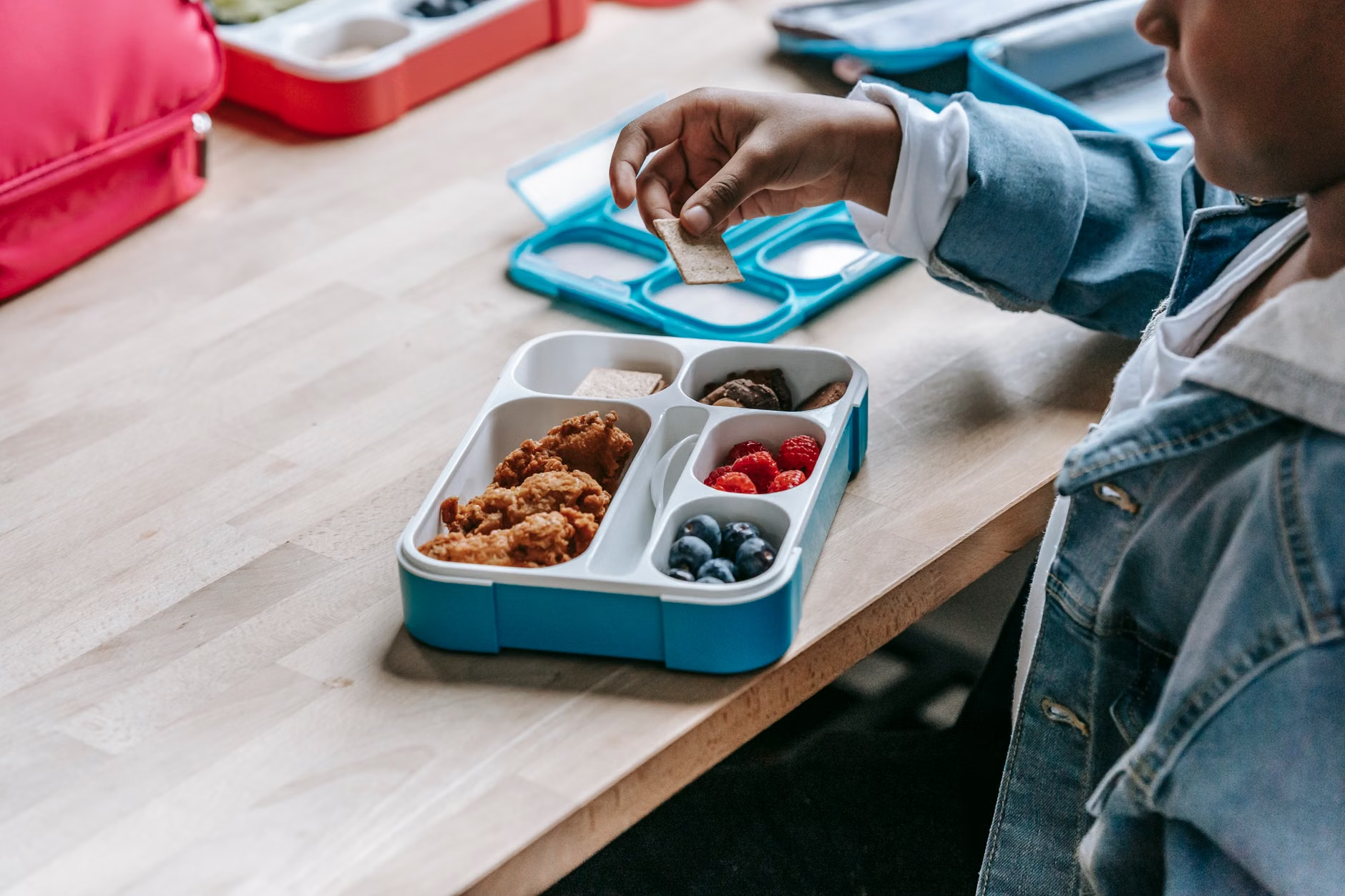
Visually, “food touching” is a major hurdle. This isn’t just a whim; it’s about predictability. If the juice from a strawberry soaks into a sandwich, the sandwich is no longer “safe.” It has become a “mixed texture.” Bento-style boxes with leak-proof dividers are not just a trend; they are a vital sensory tool. They provide visual boundaries that tell the child exactly what to expect from every bite. No surprises means less anxiety, and less anxiety means more eating.
The Tactile Experience: It’s Not Just the Food
We often forget that the lunchbox itself is a tactile object. Think about the sound of Velcro ripping in a quiet room, or the feeling of a “scratchy” zipper. For a child with tactile defensiveness, these small things can be the barrier to entry.
The “Latch” Test: Can your child easily open every container? If a container is too tight and they have to struggle, the sudden “pop” and potential spill can trigger a stress response. Practice opening the lunchbox at home. Ensure the utensils are comfortable—some kids hate the feeling of wooden disposable forks but find metal ones too “cold.” Silicone-coated spoons can be a “just right” middle ground for those who dislike the clink of metal against teeth.
Also, consider the “mess factor.” Many sensory-sensitive kids cannot stand having sticky hands. If you pack a juicy orange, you must pack a wet wipe. If they feel they can’t get their hands clean after eating, they may choose not to eat at all to avoid the discomfort of the lingering residue.
The 5-Day Sensory-Integration Lunchbox Plan
Here is a sample week designed to balance sensory inputs. This plan assumes a “middle-of-the-road” sensory profile, focusing on grounding and predictability.
Monday: The Grounding Start
Monday can be tough after a weekend of freedom. We want “heavy work” to help them transition back to the school structure.
- Main: Turkey and cheese on a dense whole-wheat bagel (Chewy/Proprioceptive).
- Side 1: Thick-cut carrot sticks with a small tub of ranch (Crunchy/Alerting).
- Side 2: Apple slices (dipped in lemon water to prevent browning/visual change).
- Drink: Water in a straw-top bottle (sucking provides calming oral-motor input).
Tuesday: Texture Harmony
Focusing on visual separation and predictable mouthfeel.
- Main: “Deconstructed” Lunchable: Cubes of ham, cheddar cheese blocks, and butter crackers (Tactile/Predictable).
- Side 1: Cucumber rounds (Crisp/Hydrating).
- Side 2: Dry cereal or “O”s (Small, repetitive crunchy movements).
- Treat: A few chocolate chips tucked into a compartment.
Wednesday: The Mid-Week “Soother”
By Wednesday, sensory fatigue often sets in. We want lower-effort, comforting textures.
- Main: Creamy pasta (rotini is easier to pick up than spaghetti) in a thermos.
- Side 1: A cheese stick (Soft/Uniform).
- Side 2: Applesauce pouch (Smooth/Low effort).
- Note: Ensure the pasta isn’t “mushy,” as that can be a negative sensory trigger.
Thursday: The Proprioceptive Push
Thursday is often the “hump” day for behavior. Let’s bring back the heavy chewing.
- Main: Beef or turkey jerky strips with a side of pita bread.
- Side 1: Snap peas or celery (High “snap” factor).
- Side 2: Greek yogurt with a few granola clusters on the side (to be added just before eating to keep them crunchy).
Friday: The “Safe Food” Celebration
Keep it simple and high-reward to end the week on a positive note.
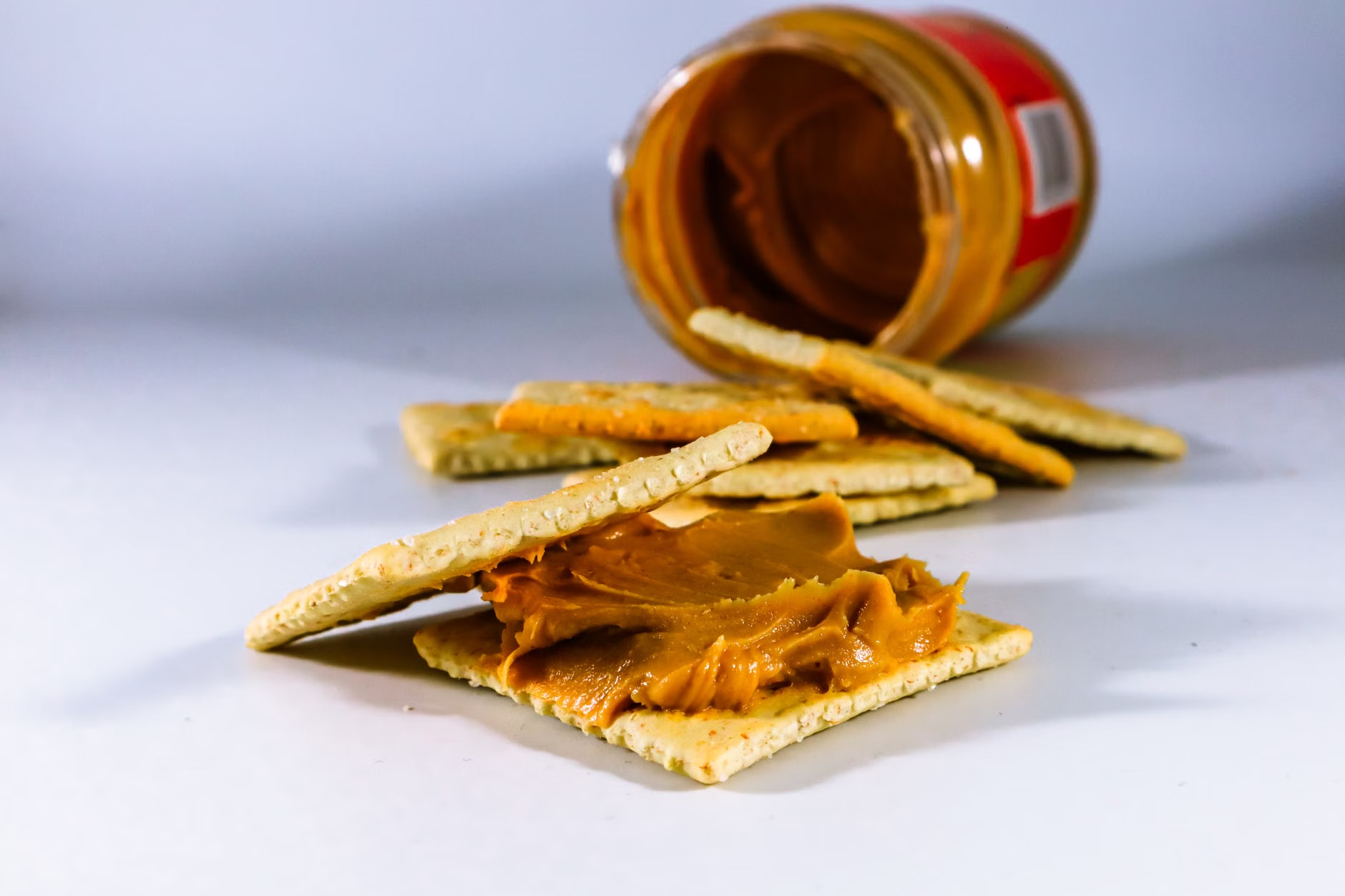
- Main: Sunbutter (or peanut butter, if allowed) and jelly sandwich with crusts removed (Soft/Safe).
- Side 1: Pretzels (Reliable crunch).
- Side 2: Grapes (Sliced vertically for safety and to reduce the “pop” sensation if preferred).
Common Mistakes: Why the “Perfect” Lunch Fails
Even with the best plan, things go wrong. Usually, it’s because we’ve overlooked a small environmental detail. One common mistake is over-packaging. If a child has to open three different plastic wraps and two stubborn containers, they may run out of time or patience. Try to use a “one-and-done” bento box where opening one lid reveals everything.
Another pitfall is The Soggy Factor. Moisture is the enemy of sensory integration. A cracker that has lost its “snap” because it was next to a damp strawberry is no longer a cracker; it’s a sensory disappointment. Use silicone muffin liners to create extra barriers within compartments, or wrap dry items in a small piece of paper towel to absorb any ambient moisture.
Finally, avoid the “Surprise” New Food. School is not the place to introduce a new texture. If you want to expand your child’s palate, do it at dinner where they are in a safe, quiet environment. The school lunchbox should be 80-90% “safe” foods that you know they can handle even on their worst day. That 10% “challenge” food should be tiny—one single blueberry, one small piece of a new cracker.
The “Heavy Work” Cheat Sheet
If you notice your child is particularly “high energy” or “disorganized” when they get home, you might want to increase the “heavy work” in their lunchbox. Here is a quick list of foods that provide significant proprioceptive input to the jaw:
- Thick Bagels: Much more resistive than standard sliced bread.
- Raw Carrots/Cauliflower: The “gold standard” for crunch.
- Dried Fruit: Especially mango or apricots, which require significant tearing and chewing.
- Jerky: Provides intense resistive input.
- Frozen Grapes: Adds a temperature “shock” along with a firm bite (ensure they are sliced for safety).
- Licorice Roots or Thick Fruit Leathers: Long-lasting chewing.
The Social-Sensory Overlap
We also have to consider that eating is a social act. If a child feels “different” because of their sensory lunch, that adds a layer of social anxiety. This is why the presentation matters. Modern bento boxes are incredibly popular among all kids, not just those with sensory needs. By using “cool” gear, you help your child blend in while still meeting their neurological needs.
If your child is sensitive to the noise of the cafeteria, you can’t change the school, but you can talk to the teacher about “preferential seating.” Sometimes sitting at the end of the table or away from the noisest “echo” spots in the room can make the act of eating much easier. When the ears are less stressed, the mouth is more willing to work.
Summary and Final Thoughts
Creating a sensory-integration lunchbox is a journey of observation. It’s about becoming a detective in your own kitchen. Watch how your child eats at home. Do they prefer to crunch loudly? Do they avoid things that leave a residue on their fingers? Do they struggle with “mixed” foods like stews or sandwiches with many layers?
The goal isn’t to have a “perfectly balanced” meal in the traditional sense every single day; it’s to have a meal that supports your child’s ability to function in a high-stress environment. Sometimes, that means a lunchbox full of “beige” foods because those are the only ones that provide the predictable sensory input they need to survive a Tuesday in the third grade. And that is perfectly okay.
Be patient with yourself and your child. Sensory needs change. A food that was “safe” last month might be “gross” this month. That’s not them being difficult; it’s their nervous system reporting a different set of data. Keep the communication lines open, keep the carrots crunchy, and remember that you’re doing a great job navigating the complex world of modern parenting.
For more official resources on sensory processing and eating, you can visit these organizations:
- American Occupational Therapy Association (AOTA)
- STAR Institute for Sensory Processing
- Sensory Processing Disorder Foundation
Frequently Asked Questions
1. My child only eats “crunchy” foods and refuses everything else. Is this okay?
In the short term, yes. This is often a sign that they are seeking proprioceptive input to ground themselves. You can slowly “chain” foods by introducing items with a similar crunch but different flavors, like freeze-dried fruits or veggie straws, before moving to raw vegetables.
2. How do I keep “crunchy” foods from getting soggy by lunchtime?
The best way is to use airtight compartments and ensure that “wet” foods (like cut fruit) are thoroughly patted dry with a paper towel before being packed. You can also pack crackers or chips in a separate small silicone bag inside the lunchbox.
3. Should I force my child to try one new food in their lunchbox every day?
Generally, no. The school lunchroom is a high-stress environment, which is the worst time to try new things. It’s better to keep the lunchbox as a “safe zone” and do food exploration at home during dinner or weekend snacks when they feel more relaxed.
Every small adjustment to their lunchbox is a step toward a calmer, happier school day for your child. You’ve got this!