The most effective way to manage a child’s toy collection in a small home is to store 70% of the toys out of sight and rotate them on a bi-weekly basis, which simultaneously reduces clutter and increases the child’s depth of focus.
- Quality over Quantity: Rotating toys transforms a chaotic playroom into a curated space that encourages intentional play.
- Cognitive Benefits: Research suggests that fewer toys in view help children develop longer attention spans and better problem-solving skills.
- Spatial Efficiency: A rotation system is the ultimate space-saving hack, turning unused closet space into a dynamic inventory for your child’s development.
If you live in a small home, you know the specific, sharp pain of stepping on a plastic brick in the dark. It is a rite of passage, sure, but it is one that signals a larger problem: volume. We often fall into the trap of thinking that more toys equal more entertainment. In reality, modern homes are frequently over-saturated with plastic, noise-makers, and pieces that inevitably end up under the sofa.
The “minimalist toy rotation” isn’t about depriving your children of joy. It is about curation. Think of it like a library or a museum; you don’t display the entire collection at once. By cycling through what is available, you keep the environment fresh, manageable, and genuinely engaging for your little ones.
Why Less Really Does Mean More for Developing Brains
When a living room is flooded with toys, it creates a state of sensory overload. For a child, this often results in “tossing behavior”—where they dump every bin out, scan the carnage, and then announce they are “bored” within five minutes. This isn’t because they are ungrateful; it is because their cognitive resources are being pulled in too many directions.
A study published in Infant Behavior and Development found that when toddlers had fewer toys to play with, they were more creative and stayed engaged with each toy for longer periods. When the environment is simplified, the child is forced to use their imagination to invent new ways to use a familiar object. A block isn’t just a block; it’s a phone, a car, or an ingredient in a pretend soup. When there are fifty other toys competing for their attention, the block is just a block, and it gets discarded.
Furthermore, from a logistical standpoint, small-home living demands efficiency. If you don’t have a dedicated playroom, your living space is a multi-purpose zone. Keeping only a small, manageable amount of gear out means that “resetting” the room at the end of the day takes five minutes rather than an hour of aggressive tidying.
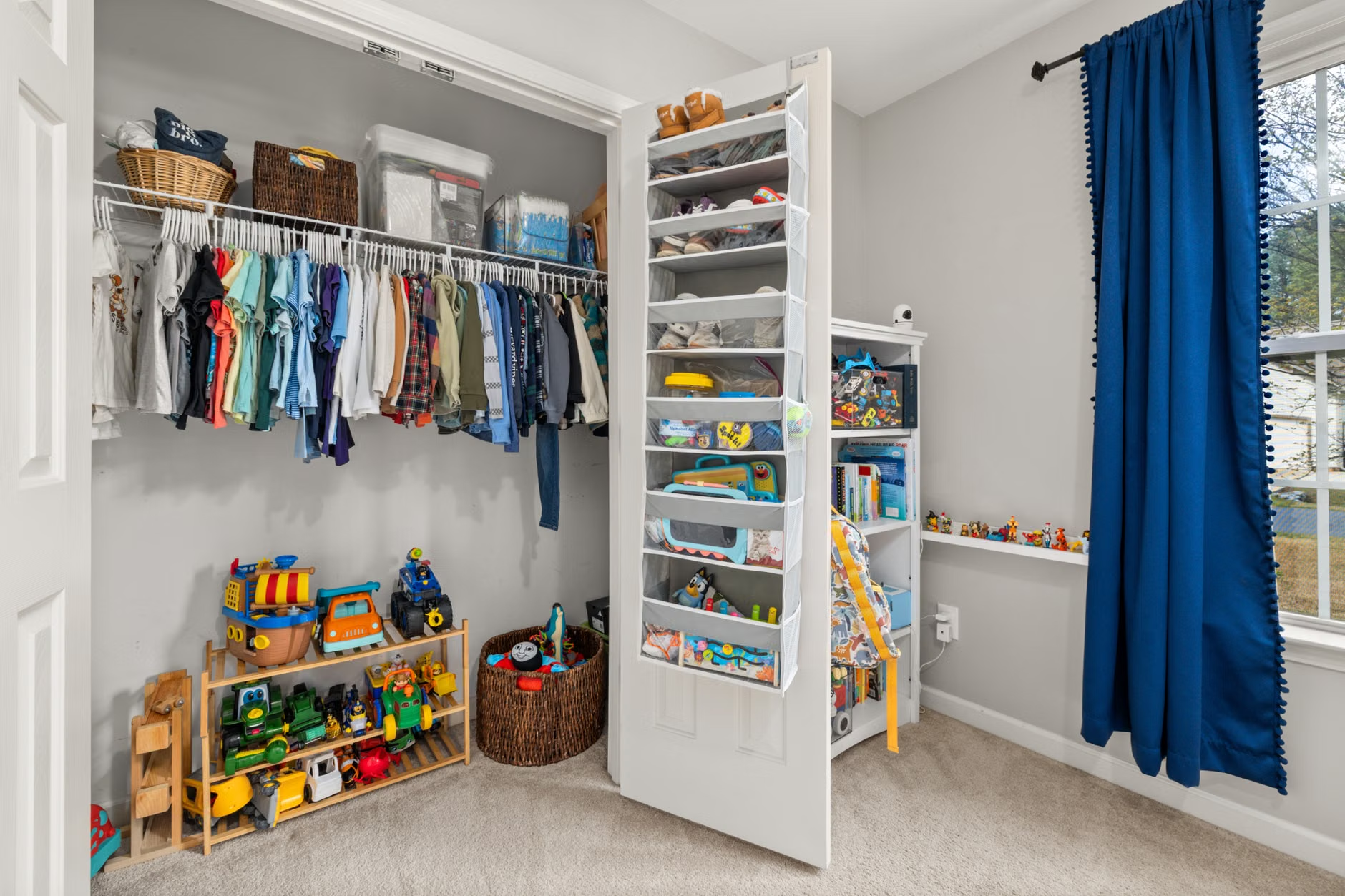
The Mechanics of a Successful Rotation System
Implementing a rotation isn’t as simple as stuffing everything into a trash bag. It requires a system. If you want this to stick, you need to be methodical. Here is how you can set up a system that actually lasts beyond the first week.
Step 1: The Great Purge (The Honest Audit)
Before you start rotating, you must audit what you have. If a toy is broken, missing pieces, or genuinely annoying (the ones that play loud, repetitive music with no volume control), it needs to go. This is the “minimalist” part of the process. If your child hasn’t touched a specific toy in six months, they likely won’t miss it. Don’t be afraid to donate or recycle items that no longer serve a developmental purpose.
Step 2: Categorization
Group your toys by function. You don’t want a “bin of random stuff.” Aim for categories like:
- Open-ended: Blocks, wooden figures, play silks.
- Fine motor: Puzzles, threading beads, stacking cups.
- Imaginative/Roleplay: Kitchen items, dress-up, dolls.
- Active/Physical: Balls, tunnels, balance boards.
Step 3: The Rotation Schedule
There is no “perfect” frequency, but bi-weekly is the sweet spot for most families. If you rotate too often, the child doesn’t have time to master the toys. If you wait too long, they lose interest. Use a calendar reminder on your phone to trigger the swap. The swap itself should ideally happen during nap time or after bedtime so the “new” toys appear like magic in the morning.
| Phase | Action | Goal |
|---|---|---|
| The Audit | Remove broken/unused items | Establish a baseline of quality |
| The Storage | Pack items into labeled bins | Create an accessible inventory |
| The Swap | Switch out 70% of current toys | Renew interest and engagement |
Managing Storage in a Small Footprint
In a small home, storage is the ultimate constraint. You likely don’t have a basement or a massive walk-in closet. You have to get creative with vertical space and “hidden” storage. Here are a few strategies for apartment or small-house dwellers:
Use Vertical Space: If you have high shelves, use them. Store your rotation bins there. If you don’t have built-in shelves, consider installing simple floating shelves above door frames. They are out of reach for the kids but perfect for storing the “off-duty” toys.
Under-Bed Storage: The space under a bed or a crib is prime real estate. Use low-profile, rolling bins that can slide in and out. This keeps the toys accessible to you but invisible to the child during their daily play.
Multi-Functional Furniture: If you are buying new furniture, look for ottomans with storage or coffee tables with drawers. These are excellent for hiding the current rotation of toys, allowing the living room to transition back into an adult space once the kids are in bed.

Common Pitfalls and How to Avoid Them
Even with the best intentions, parents often run into common hurdles. Recognizing them early can save you from abandoning the system entirely.
The “I Want That One” Problem
Sometimes, a child will ask for a toy that is currently in the storage bin. This is actually a great teaching moment. It’s an opportunity to discuss the concept of “waiting” and “choosing.” You can say, “That toy is resting right now, but we can swap it in during our next rotation day.” This helps build patience and prevents the habit of demanding instant gratification.
The “Everything on the Floor” Syndrome
If your child is still dumping everything out, you might have too many toys out at once. Try reducing the number of bins available. For younger toddlers, sometimes just two or three baskets is more than enough. If they dump them, teach them to put one bin away before taking another one out. It’s a slow process, but it’s a necessary life skill.
The Emotional Attachment Trap
We all have toys that we bought with good intentions—maybe a gift from a grandparent or an expensive set that was supposed to be “educational.” If your child doesn’t play with it, keeping it is just a form of clutter. It is okay to rotate it out for a long period, and if they still don’t show interest, it is okay to let it go. The value of a toy is in its usage, not its price tag.
Building a Culture of Respect for Play
Minimalism isn’t just about the physical objects; it’s about the mindset. When you rotate toys, you are showing your child that play is something to be valued and cared for. It encourages them to take care of the toys that are currently out because they know those are the “special” items for this week.
Involve your children in the process as they get older. Once they are school-aged, ask them, “Which toys do you think we should put away for a while, and what should we bring back?” This gives them agency and helps them understand the logic behind the system. They start to see that their room isn’t just a place where toys go to die in a pile, but a space that they have the power to curate and control.
This approach also helps with the “gift influx” issue. Birthdays and holidays often bring an overwhelming amount of new plastic into the home. Instead of stressing about where it will go, treat incoming gifts as an opportunity to rotate out older, less-used items. It keeps the total volume of toys in your home constant, preventing the slow creep of clutter that happens over time.

Refining Your Minimalist Strategy: Advanced Tips
Once you’ve mastered the basic bi-weekly rotation, you might find ways to optimize the process further. Here are some advanced strategies to keep the system running smoothly.
Theme-Based Rotations
If you want to make the rotation more exciting, align it with the seasons or current interests. In the winter, bring out the indoor building sets and puzzles. In the spring, focus on sensory play or transport-related toys. This keeps the environment dynamic and responsive to the child’s natural developmental trajectory.
The “Fix-It” Station
During the rotation process, you will inevitably find toys that have lost a piece or need a quick repair. Keep a small “repair kit” nearby—some tape, a bit of glue, or a small box for loose parts. Fixing a toy instead of tossing it is a great lesson in sustainability and helps extend the life of the items you choose to keep.
Digital Documentation
If you are prone to forgetting what is in which box, take a quick photo of the contents and tape it to the outside of the bin. This is especially helpful if you have a lot of bins stored in a garage or high-up closet. It allows you to see at a glance what is available without having to pull every box down.
Final Thoughts on Sustaining the System
Minimalism in a small home is a constant negotiation between space and stuff. Toy rotation is one of the most effective tools in your arsenal because it addresses the core issue: the sheer volume of items that occupy our physical and mental space. It isn’t a “set it and forget it” solution; it requires a bit of maintenance, but the payoff—a calmer home, more engaged children, and the end of those “toy-tsunami” cleanup sessions—is worth the effort.
Remember that your home is a living space, not a warehouse. It is meant to be enjoyed by everyone, not just as a storage facility for plastic blocks. By keeping the toy count low, you are creating a sanctuary for your family, where the environment supports play rather than hindering it. Start small, stay consistent, and don’t be too hard on yourself if a rotation day gets missed. It’s a system, not a religion.
For further reading on the impact of environment on child development, you can explore resources from the Zero to Three organization, which provides evidence-based information on how play and environments shape early childhood growth.
Frequently Asked Questions
1. How many toys should I actually leave out for my child?
There is no hard-and-fast rule, but many experts suggest having between 6 and 10 “stations” or categories of play available at once. If you find that your child is still struggling to focus or is dumping bins, reduce that number further until you find the “sweet spot” for their specific age and temperament.
2. What should I do if my child gets upset when I put toys away?
It is normal for children to have an attachment to their belongings. Frame the rotation as “putting the toys to bed” or “giving the toys a vacation.” Remind them that the toys will come back soon. If they are particularly attached to a specific item, leave it out for an extra round, but gently encourage them to explore the “new” items as well.
3. Does this work for older children, or just toddlers?
While the system is most commonly associated with toddlers, it is highly effective for school-aged children as well. For older kids, you can include them in the rotation process, allowing them to manage their own collections. It teaches them organizational skills, value for their belongings, and the basics of decision-making—all of which are valuable as they grow.
Note: This article is intended for informational purposes and reflects common practices in minimalist parenting. Always prioritize the safety and developmental needs of your individual child when choosing toys and storage solutions.