The most effective way to foster a growth mindset in your child isn’t by buying the latest expensive gadget, but by regularly rotating their play materials through a toy library to encourage constant adaptation and problem-solving.
Key Takeaways:
- Cognitive Flexibility: Regularly changing toys forces children to adapt to new challenges, which is a cornerstone of a growth mindset.
- Financial and Spatial Efficiency: Renting toys significantly reduces household clutter and saves thousands of dollars over a child’s developmental years.
- Environmental Responsibility: Utilizing a circular economy model for toys teaches children the value of sharing and sustainability from a young age.
Do you ever feel like you’re fighting a losing battle against the plastic tide in your living room? You buy a “developmental” toy that promises to teach your child everything from basic physics to emotional intelligence, only to watch it get tossed aside after three days of lukewarm interest. Then, it sits there, collecting dust—a permanent monument to your well-intentioned but ultimately failed investment.
We’ve all been there. The toy box is overflowing, yet your child is bored. The problem isn’t the quality of the toys; it’s the lack of novelty and the overwhelming nature of choice. This is where the concept of the “Growth-Mindset Toy Library” comes into play. It’s not just about saving space; it’s about changing how our children interact with the world around them.
Understanding the Growth Mindset Through Play
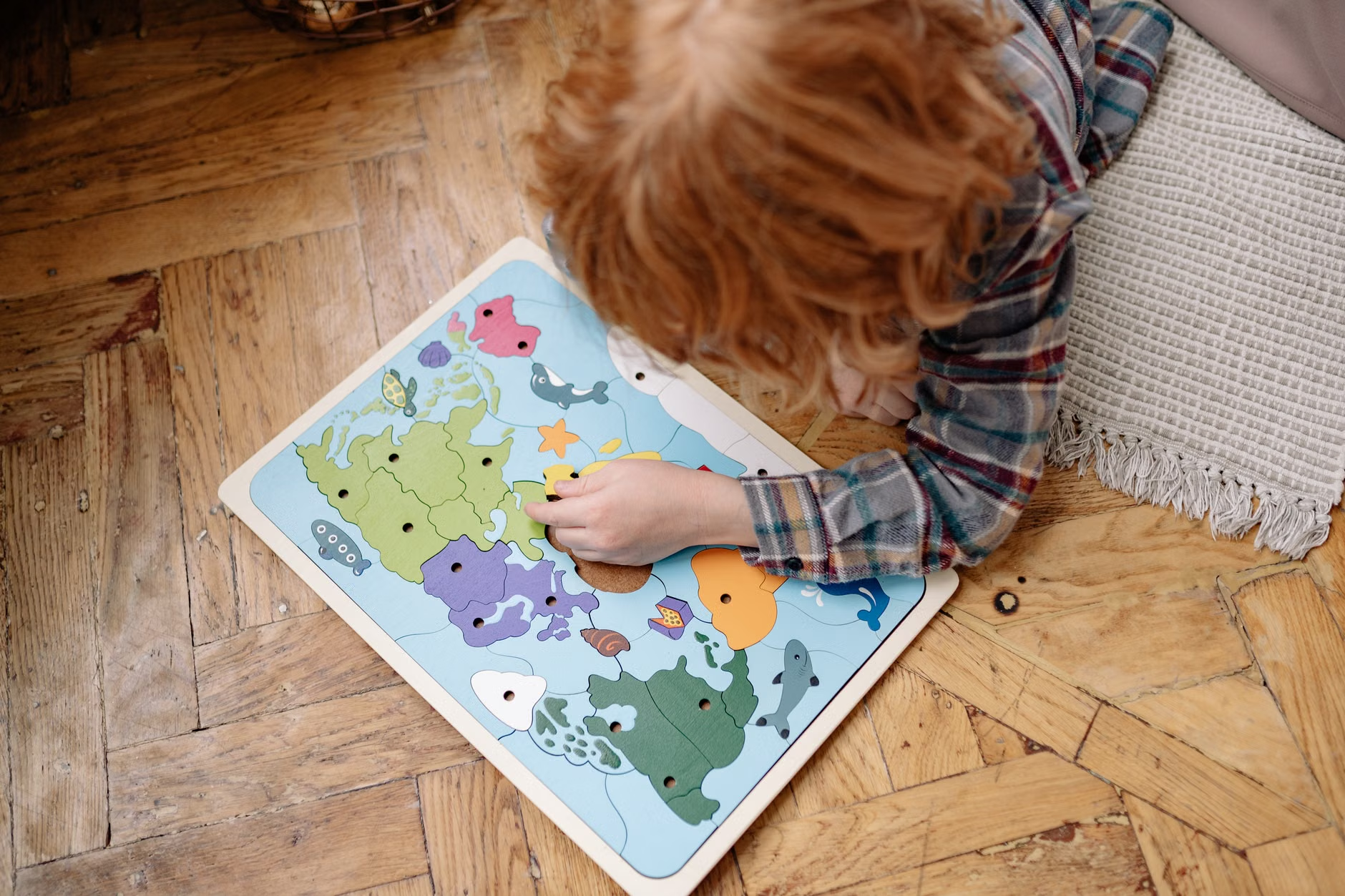
Psychologist Carol Dweck popularized the term “growth mindset” to describe the belief that abilities can be developed through dedication and hard work. When applied to play, this means choosing toys that present a manageable challenge rather than toys that provide instant, mindless gratification. A toy library is uniquely positioned to support this because it allows for the constant introduction of new, developmentally appropriate “problems” for your child to solve.
When a child is presented with a toy that is slightly outside their current skill set, they are forced to experiment, fail, and try again. This process of trial and error is the engine of intellectual growth. If a toy stays in the playroom for six months, the child eventually masters it, and it ceases to be a learning tool and becomes mere background noise. By rotating toys through a library system, you ensure that the materials in your home are always hitting that “sweet spot” of cognitive demand.
The Psychology of “Too Much”
Research in developmental psychology suggests that too many toys can actually hinder a child’s ability to focus. When a child is surrounded by dozens of options, they often engage in shallow, distracted play. They move from one item to the next without truly exploring the mechanics or creative possibilities of any single object. This is the antithesis of the deep-work habit we hope to instill in our children.
Toy libraries act as a natural filter. By limiting the number of toys available at any given time, you are essentially curating an environment that demands deep engagement. A child who has only four toys to play with for two weeks will build, dismantle, invent, and imagine far more than a child who has forty toys to choose from.
Why Traditional Toy Ownership Often Fails
Let’s look at the math. If you purchase high-quality educational toys—think brands that focus on open-ended materials like blocks, balancing games, or STEM-based construction sets—you are looking at a significant investment. A single set of quality wooden blocks can cost upwards of $100. Multiply that by the various stages of development, and the costs skyrocket.
Furthermore, the “shelf life” of a toy is often much shorter than we anticipate. A toddler might be obsessed with a shape-sorter for three weeks, then move on to pretend play. You are then left with a bulky, expensive piece of plastic or wood that you feel guilty getting rid of, but that serves no further purpose. The toy library model converts this “fixed cost” into a “subscription service,” allowing you to pay a fraction of the cost for access to a massive inventory.
| Feature | Traditional Ownership | Toy Library Membership |
|---|---|---|
| Financial Cost | High (Upfront investment) | Low (Subscription/Rental fee) |
| Clutter | Accumulative | Controlled/Minimalist |
| Variety | Stagnant until new purchase | Constant, curated cycles |
| Environmental Impact | High waste/Disposal | Circular economy/Shared |
| Skill Matching | Difficult as child grows | Easy access to age-appropriate gear |
Implementing a Toy Rotation System at Home
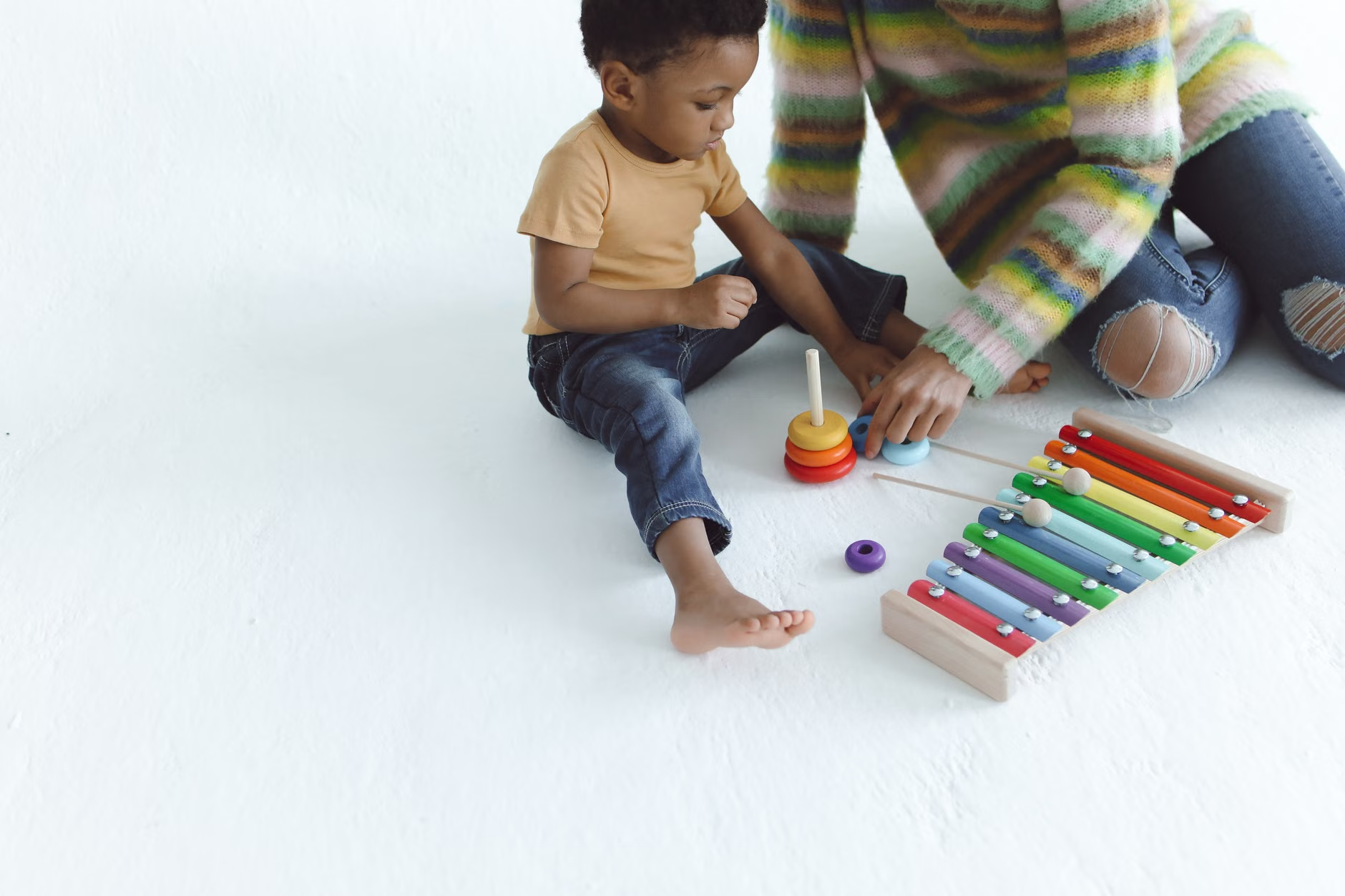
You don’t necessarily need a physical building nearby to start a “toy library” experience. You can implement the principles of a toy library within your own home. The goal is to simulate the scarcity and novelty that a library provides. If you have a large collection of toys, start by boxing up 80% of them and storing them out of sight. Keep a small, curated selection in the main living area.
Every two weeks, perform a “swap.” Take the current toys back to the storage bin and bring out a fresh set. This ritual is powerful. It teaches children that toys are meant to be cared for and that they are precious resources. When they know a toy will eventually go back to the “library” (or the storage closet), they are often more careful with it.
Step-by-Step Guide to Effective Rotation
- Categorize: Group toys by developmental function—gross motor, fine motor, puzzles, imaginative play, and building.
- Audit: Remove anything broken, missing parts, or that your child has clearly outgrown.
- Curate: Select one item from each category to form a “set” of 5–7 items.
- Display: Place these items on low, accessible shelves. Don’t hide them in opaque bins; let the child see the options.
- Observe: Watch how they play. If they ignore a toy for the entire two-week cycle, it may be time to donate it or return it to the library.
Addressing Common Concerns: Hygiene and Attachment
A common pushback against toy libraries is the concern over hygiene. This is understandable, especially in the post-pandemic era. However, most professional toy libraries operate with rigorous cleaning protocols. They use non-toxic, eco-friendly sanitizers and inspect every item upon return. When you rent, you are essentially getting a professionally cleaned item that has been vetted for safety.
What about attachment? Will your child be devastated when a favorite toy has to go back? This is actually a fantastic teaching moment. It provides a low-stakes environment to practice the emotions associated with letting go. You can frame it as: “We’ve had so much fun with this, but now it’s time for another child to have the same fun. We’ll pick something new for our next adventure.” This builds emotional resilience and a sense of community—key components of a growth mindset.

The Environmental and Social Implications
Beyond the personal benefits, using a toy library is a direct act of environmental stewardship. The toy industry is notoriously plastic-heavy and creates a massive amount of waste. By participating in a circular economy, you are reducing the demand for new plastic production and minimizing the number of toys that end up in landfills.
Furthermore, it is a lesson in social responsibility. When children participate in a library system, they learn that resources are shared. They learn that they don’t need to own everything to enjoy it. In a world that pushes consumerism at every turn, this is a radical and necessary lesson for the next generation.
Choosing the Right Approach for Your Family
If you don’t have a formal toy library in your city, look for community-based alternatives. Many neighborhood Facebook groups or local parenting forums have informal “toy swap” threads. You can also partner with a friend or two to create a mini-library. Simply agree on a set of rules, create a shared spreadsheet of items, and rotate them every month. It’s a low-cost, high-impact way to foster community while keeping your home organized.
The key to success is consistency. Don’t view this as a chore. View it as a way to keep your home environment fresh, stimulating, and aligned with your goal of raising a curious, resilient child. Remember, the goal is not to have the perfect toy collection; the goal is to provide the perfect conditions for your child to learn how to learn.
Final Thoughts and Cautions
While the toy library model is excellent, be careful not to fall into the trap of “optimizing” your child’s play to the point where it becomes stressful. If a child wants to play with a cardboard box for a week, let them. The toy library is a tool, not a rigid curriculum. The core of a growth mindset is agency—giving children the space to decide what they want to explore.
Start small. Perhaps you only rent one large, expensive item—like a climbing triangle or a balance board—before committing to a full subscription. Observe how your child interacts with it. If it sparks curiosity and sustained engagement, you know you’re on the right track. If not, don’t force it. The beauty of this system is its flexibility.
For more information on the benefits of open-ended play and how to set up your home environment for success, you can refer to resources from organizations like The National Association for the Education of Young Children (NAEYC), which provides extensive research on play-based learning and cognitive development.
Frequently Asked Questions
- How do I handle a toy that gets broken while rented?
Most toy libraries have a “damage policy.” Minor wear and tear is expected, but if a toy is destroyed, they usually charge a replacement fee or a small deductible. Always check the terms of service before joining. - Is a toy library suitable for very young infants?
Yes, but focus on sensory-based items. For infants, you want materials that are easy to clean and safe for mouthing. Libraries often have specific “infant collections” that meet these safety standards. - How do I introduce the idea of returning toys to a toddler?
Focus on the “swap” aspect. Frame it as an exciting trip to pick out “new-to-us” items. If they are particularly attached to an item, consider extending the rental if the library policy allows, or simply acknowledge their feelings without changing the rule.
Raising a child in the modern world is a constant balancing act between providing enough and avoiding excess. By shifting your mindset from ownership to access, you’re not just saving your living room from the toy apocalypse—you’re teaching your child that the most valuable thing they can possess is a curious, adaptable mind.