The most effective strategy for traveling with a neuro-diverse child is not to avoid the trip entirely, but to create a “sensory buffer” that allows them to regulate their environment regardless of where you are in the world.
- Predictability is key: Use visual schedules and pre-travel preparation to reduce anxiety about the unknown.
- The “Sensory Toolkit” concept: Curate a portable kit tailored to your child’s specific sensory needs—whether they seek input or avoid it.
- Advocacy matters: Don’t be afraid to communicate needs to airline staff, hotel concierges, or tour operators ahead of time.
We’ve all been there: the middle of an airport terminal or the queue for a popular tourist attraction, and suddenly the environment becomes too much. The lights are too bright, the ambient noise is piercing, or the sheer number of people creates an invisible wall of pressure. For neuro-diverse children—those on the autism spectrum, those with ADHD, or children with sensory processing differences—these moments are not just “tantrums.” They are physiological responses to sensory overload.
Travel, by its very nature, is a sensory assault. It involves unpredictable timelines, strange smells, unfamiliar textures, and a constant barrage of auditory input. However, it doesn’t mean you have to stay home. With a bit of logistical planning and a well-stocked sensory kit, you can transform a chaotic journey into a manageable experience.
Understanding the “Why” Behind Sensory Needs
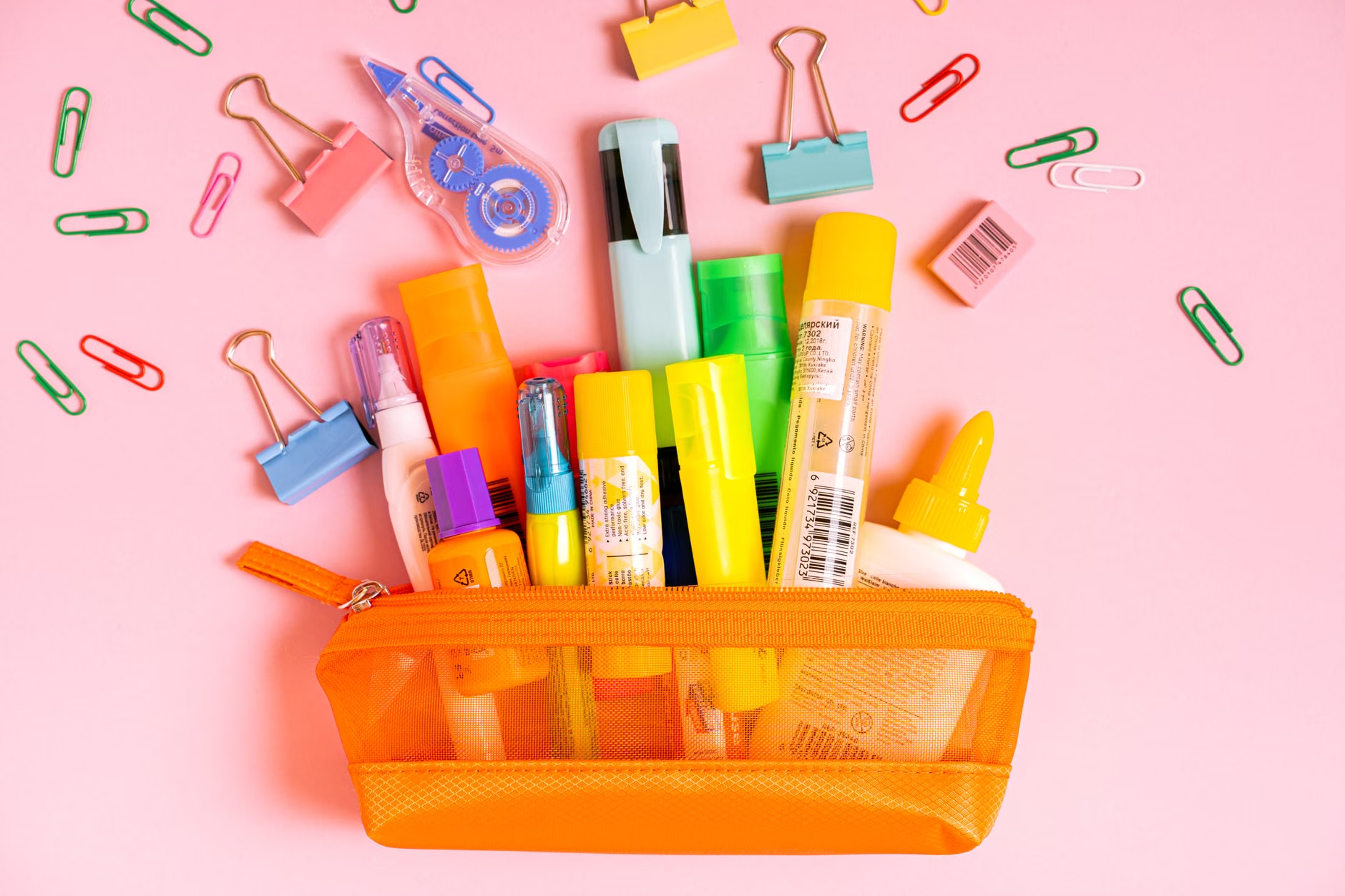
To build an effective kit, we have to move past the idea of a “one-size-fits-all” bag of toys. A child who seeks sensory input (a “sensory seeker”) needs different tools than a child who is easily overwhelmed by it (a “sensory avoider”).
Sensory processing is how our nervous system receives information from the senses and turns it into a response. For many neuro-diverse individuals, this system doesn’t filter information the same way a neurotypical brain does. A buzzing fluorescent light might be barely audible to you, but to an autistic child, it might sound like a lawnmower running right next to their ear. Understanding these specific triggers is the first step in your travel prep.
Before you even pack your bag, take a week to observe your child. What are their “calm down” go-to items? What are the sounds or textures that make them visibly tense up? This observation period is more valuable than any “top ten travel toy” list you’ll find online.
Building Your Custom Sensory Kit: The Essentials
Your sensory kit should be treated like a first-aid kit—it’s not for entertainment; it’s for regulation. Keep it accessible. If it’s buried in the bottom of a suitcase in the overhead bin, it’s useless when the plane hits turbulence or the boarding process is delayed.
1. Auditory Regulation Tools
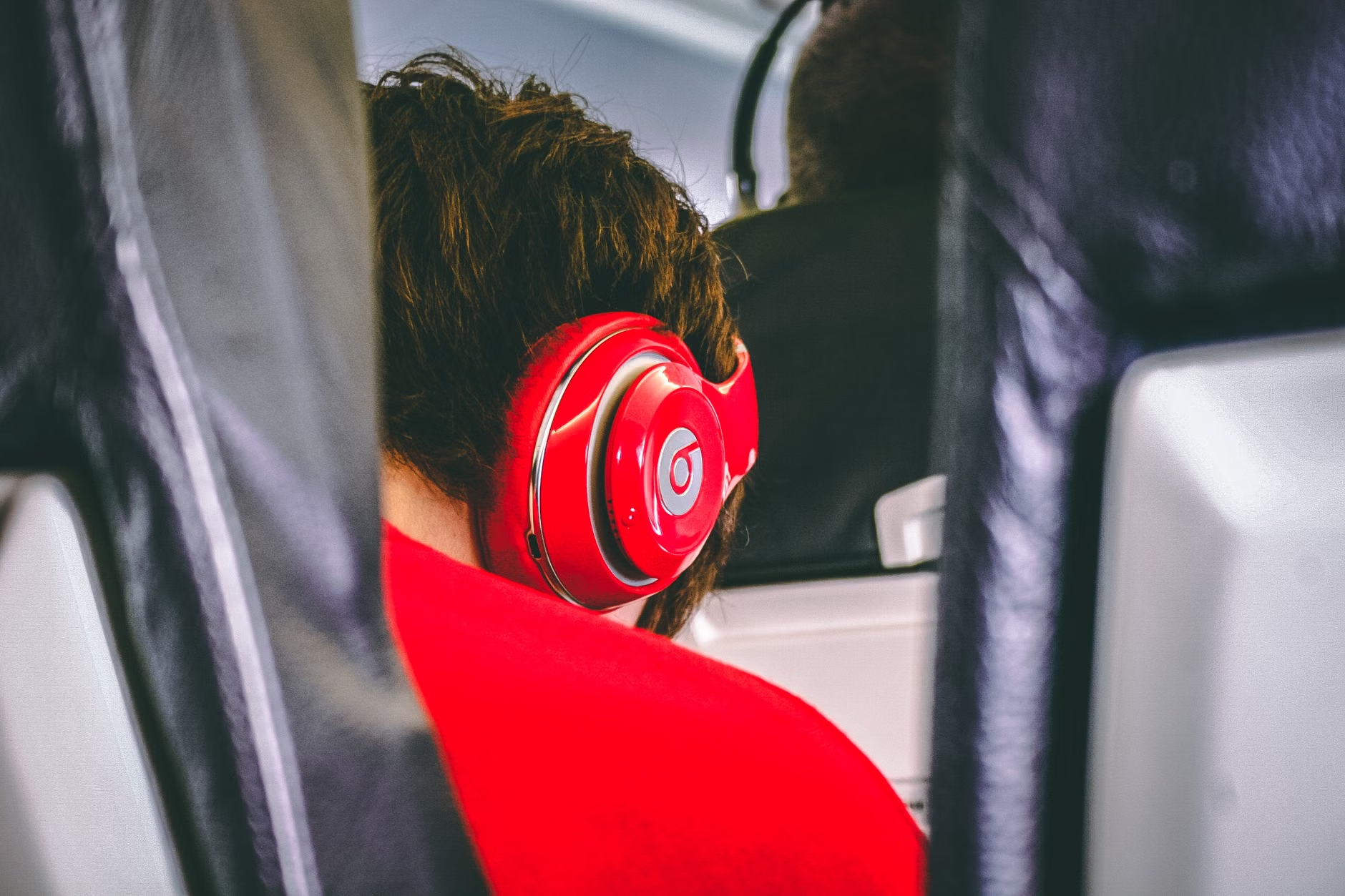
Noise is often the biggest culprit in travel-related meltdowns. Whether it’s the roar of a jet engine or the chatter of a crowded train station, you need a way to dampen the input.
- Noise-canceling headphones: These are non-negotiable. Look for over-the-ear models that provide a physical seal. If your child finds these too heavy, high-fidelity earplugs (which reduce decibels without muffling sound) are a great alternative.
- White noise or calming playlists: Pre-download your child’s favorite soothing sounds or music that helps them regulate. Don’t rely on airport or hotel Wi-Fi.
2. Tactile and Fidget Tools
When the world feels out of control, having something to manipulate can provide a much-needed sense of grounding. Focus on items that offer consistent resistance or texture.
| Tool Type | Best For | Why It Works |
|---|---|---|
| Silicone poppers | Low-level anxiety | Repetitive, quiet, and satisfying tactile feedback. |
| Weighted lap pad | High-stress situations | Provides deep pressure, which is naturally calming for the nervous system. |
| Textured sensory strips | Discrete calming | Can be stuck to a phone or tray table for quiet rubbing/touching. |
3. Visual and Olfactory Anchors
Sometimes the eyes and nose are the triggers. Travel environments are often visually “loud.”
- Tinted glasses: If your child is sensitive to harsh fluorescent lights, blue-tinted glasses can soften the visual input significantly.
- Familiar scents: A small vial of a scent that reminds the child of home (like a specific lavender oil or even a piece of clothing that smells like their favorite blanket) can be an incredibly powerful tool for grounding during a panic response.
The Logistical Side: Preparing the Environment
Beyond the kit, the way you structure the trip matters. Neuro-diverse children often rely on predictability to navigate the world. When travel breaks their routine, their anxiety spikes.
Pre-Trip Desensitization
Use “social stories” or visual schedules to walk your child through the trip before it happens. If you are flying, use YouTube to show videos of what the airport process looks like—from checking bags to going through security. For many children, the fear of the unknown is worse than the event itself.
Many airports now offer “rehearsal” programs where families can go to the airport, walk through the security checkpoint, and visit the gate without actually boarding a plane. Check if your local or destination airport participates in such programs.
The Power of the Visual Schedule
A simple, laminated card with icons representing the steps of the day can work wonders. “1. Breakfast, 2. Taxi, 3. Airport, 4. Plane.” When a child can see that the “Plane” step is coming and that it will eventually lead to “Hotel,” the transition becomes less daunting.
Managing “The Wall” When Things Go Wrong
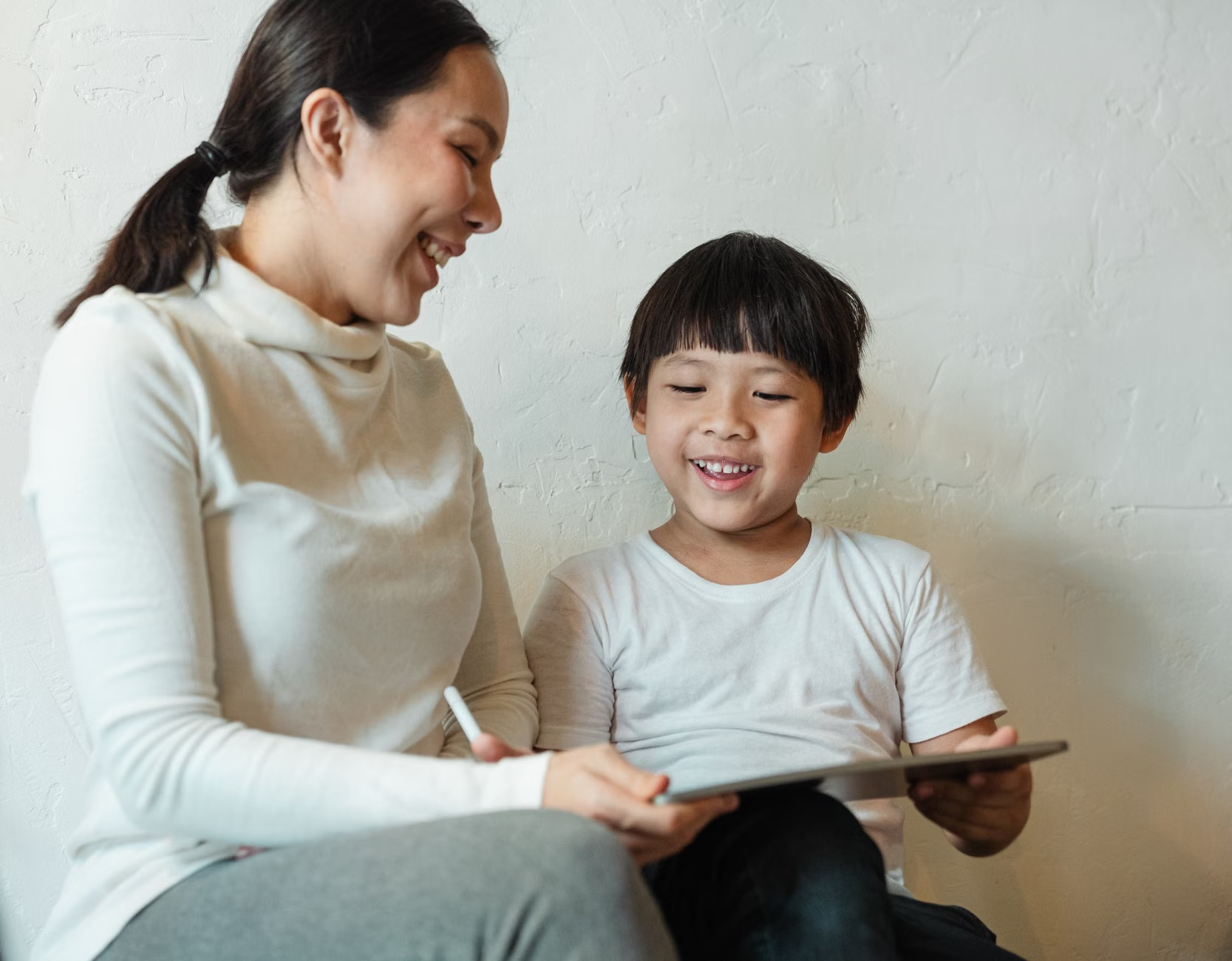
Even with the best kit, meltdowns can happen. It is important to remember that a meltdown is not a behavioral problem; it is a communication of distress. When you are in public, the pressure to “be quiet” or “behave” can make the parent feel just as overwhelmed as the child.
First, ignore the onlookers. Most people are either indifferent or sympathetic; the ones who are judgmental are irrelevant to your child’s needs. Second, find a “low-sensory” zone. In airports, this might be a quiet corner near an empty gate or an interfaith prayer room. In a city, it might be a small park or even the quiet lobby of a library.
Use your sensory kit immediately. If you have a weighted item, use it. If not, deep pressure—like a firm squeeze on the shoulders or a tight hug—can sometimes help “reset” the nervous system. Keep your voice low and slow. Your own state of calm is the most powerful tool you have. If you are frantic, your child will mirror that energy.
Choosing Destinations and Accommodations Wisely
Not all travel is created equal for a neuro-diverse family. When planning, look for “sensory-friendly” certifications. Many theme parks and museum chains now offer sensory maps that identify high-stimulus areas (loud noises, flashing lights) and low-stimulus areas.
When booking hotels, ask for a room away from the ice machine, elevators, and main lobby. These are high-traffic, high-noise areas that can make it difficult for an already-stimulated child to fall asleep. If the hotel allows it, ask for a room on a lower floor to avoid the stress of waiting for elevators, which can be a sensory nightmare in itself.
Common Mistakes to Avoid
One of the biggest mistakes parents make is over-scheduling. It is tempting to try to see every sight on your itinerary, but for a neuro-diverse child, “down days” are essential. If you spend a high-stimulation morning at a crowded museum, the afternoon should be spent in a low-stimulus environment, like a hotel pool or a quiet park.
Another mistake is assuming that “vacation” means “no rules.” While you want to have fun, keeping the same sleep and meal schedule as you have at home can provide a crucial sense of stability. Try to keep the “anchor” times—waking up, lunch, and bedtime—as close to your home schedule as possible, even if you are in a different time zone.
The Importance of Self-Care for the Caregiver
You cannot pour from an empty cup. Traveling with a child who has sensory needs is exhausting work. It requires constant hyper-vigilance and emotional regulation. If you are burning out, your ability to help your child regulate will decrease.
If you are traveling with a partner, trade off. One person handles the logistics of the trip, while the other focuses solely on the child’s sensory regulation. Switch roles halfway through the day. If you are traveling solo, be realistic about your limits. It is okay to skip an activity if it means preserving your child’s (and your own) mental health.
Practical Tips for International Travel
When traveling internationally, the sensory challenges are amplified by language barriers and cultural differences. Keep a “communication card” in the local language that explains your child’s needs. For example: “My child is autistic and may have a sensory reaction to loud noises. Thank you for your patience.”
Also, check if your destination has specific disability access passes. In many European countries, for example, the “Hidden Disabilities Sunflower” lanyard is recognized at airports and major attractions, signaling to staff that your child may need extra time or support without you having to explain the details in a foreign language.
Summary and Encouragement
Traveling with a neuro-diverse child requires a shift in perspective. You are not just a tourist; you are a sensory architect, designing an environment that allows your child to feel safe enough to explore the world. It takes preparation, it takes patience, and yes, it takes a really good sensory kit.
There will be moments of stress, but there will also be moments of genuine discovery. Seeing your child engage with a new culture or find joy in a new experience is worth every bit of the planning. Start small, be flexible, and remember that the goal is not a “perfect” trip, but a memorable one where everyone feels supported.
Frequently Asked Questions
Q: How do I know which fidget tools are best for my child?
A: Focus on your child’s specific sensory seeking or avoiding patterns. If they enjoy chewing, look for food-grade silicone “chewelry.” If they need tactile input, consider items with varied textures like velvet, bumpy plastic, or kinetic sand in a leak-proof pouch.
Q: What if my child has a meltdown in the middle of a flight?
A: Stay calm and focus on the child, not the passengers. Use your noise-canceling headphones, offer a weighted item, and try to maintain a calm, low-pitched voice. If the flight crew approaches, simply state that your child is having a sensory overload and you are working to help them regulate. Most staff are trained to be supportive in these situations.
Q: Is it worth it to travel if it seems this difficult?
A: That is a personal decision, but for many families, the benefits of shared experiences and the growth that comes from navigating new environments far outweigh the challenges. The key is to adjust your expectations of what “travel” looks like—it doesn’t have to be a jam-packed itinerary to be successful.
Useful Resources:
Hidden Disabilities Sunflower Scheme – A global initiative for non-visible disabilities.
National Autistic Society (UK) – Excellent guides on travel and public spaces.
TSA Cares (USA) – Information on requesting assistance for travelers with disabilities.