The secret to stress-free family travel isn’t buying more specialized gear, but rather adopting a “Train-First” mindset that forces you to prioritize mobility, weight, and modularity above all else.
- The Train-First Principle: If you can’t navigate a busy train station platform, a flight of stairs, and a crowded boarding gate solo with your gear, you have too much.
- Modularity Over Bulk: Swap oversized, single-use equipment for multi-functional items that can be layered or broken down into smaller, manageable units.
- The “One-Hand” Rule: Every piece of gear you bring must allow you to keep at least one hand free to hold your child’s hand or manage a boarding pass.
If you have ever stood in the middle of an airport terminal or a train station lobby, surrounded by three suitcases, a double stroller, a diaper bag that weighs as much as a small boulder, and a toddler who has suddenly decided that walking is a form of torture, you know the feeling. It’s that specific, cold sweat that hits you when you realize you are officially outnumbered by your own belongings. We often fall into the trap of “what-if” packing—what if it rains? What if we need the travel blender? What if the kids get bored of their toys in ten minutes?
The “Train-First” strategy is the antidote to this modern parenting affliction. It is a mental framework designed for the 30-something parent who values their sanity as much as their vacation. The premise is simple: design your entire gear strategy as if you were traveling solo on a high-speed train through Europe. Why? Because trains require speed, agility, and the ability to navigate narrow aisles and rapid transitions. If your gear can handle the platform, it can handle anything.
Why the “Train-First” Mindset Changes Everything
Most family travel advice revolves around “must-have” products. We are bombarded with advertisements for specialized travel cribs, portable white noise machines, and strollers that claim to be “all-terrain.” While some of these are genuinely useful, the cumulative effect is a massive, unmanageable mountain of plastic and fabric. The Train-First strategy flips this on its head. Instead of asking, “What gear do I need for my child?” you ask, “What is the absolute minimum I need to maintain our daily rhythm while moving through space?”
Consider the logistics of a train journey. You have to move from the station entrance to the platform, potentially navigate a set of stairs, board the train, find your seat, and stow your luggage—all in a window of about 90 seconds. If you are struggling with a massive SUV-sized stroller and four suitcases, you are not just inconveniencing yourself; you are creating a safety hazard and a massive bottleneck. When you pack for the train, you are forced to be honest about your physical limits.
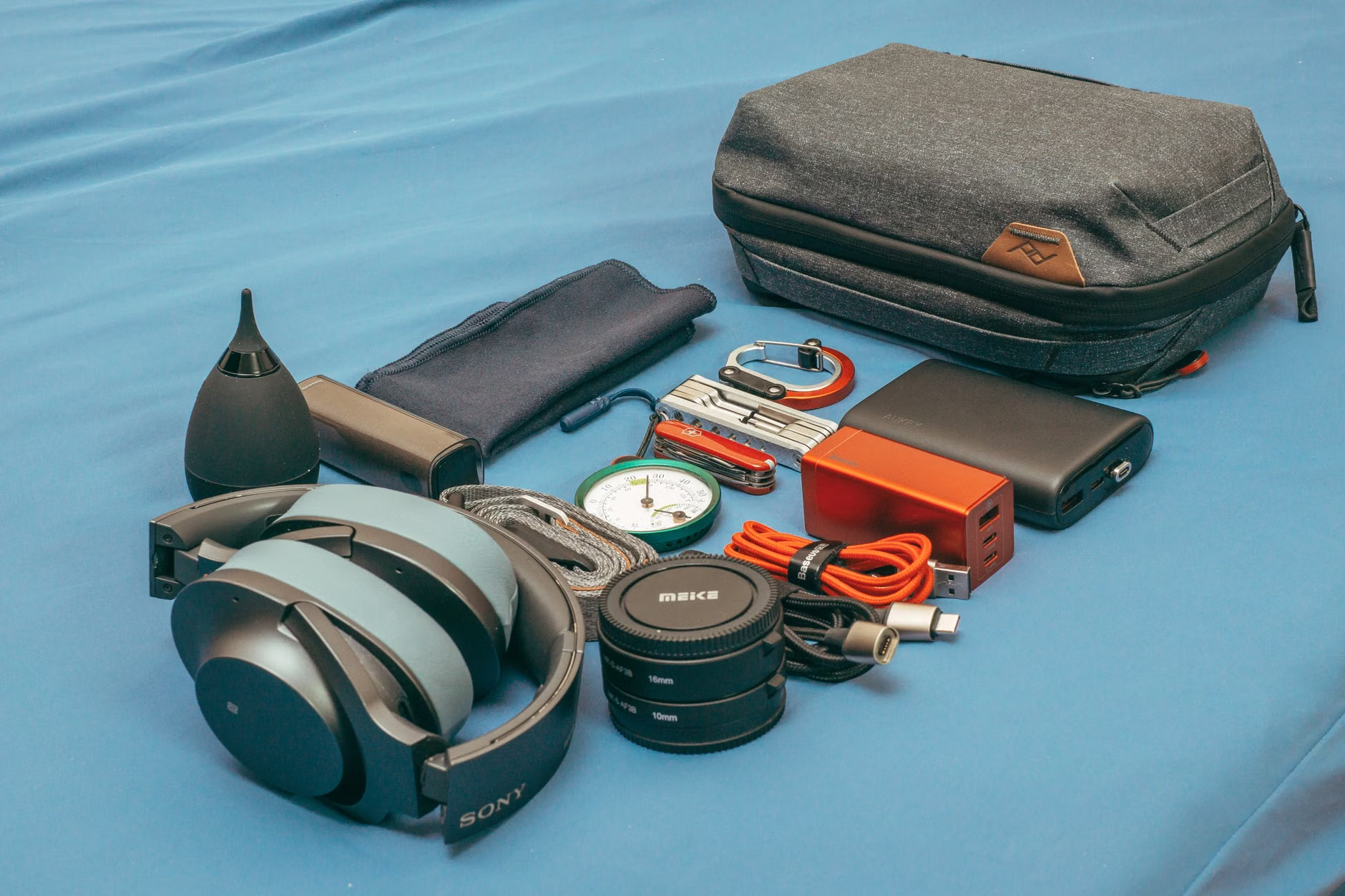
This mindset shift naturally forces you to abandon the “just-in-case” gear. You start to prioritize items that serve multiple purposes. Does the stroller have a large basket? If not, is it really worth bringing? Can the carrier replace the stroller for 80% of the trip? By treating every trip as a high-stakes logistical puzzle, you naturally shed the dead weight that usually makes family travel so grueling.
The Anatomy of a Train-First Packing List
To implement this, you need to categorize your gear into three tiers: Essential, Strategic, and Optional. Most of us start with the “Optional” pile and work our way back, which is exactly why we overpack. The Train-First strategy starts with the “Essential” and stops when the “Strategic” list is complete.
The Essential Tier: The Non-Negotiables
These are the items that keep you sane and keep your child safe. This includes your core transport (a lightweight, umbrella-fold, or cabin-approved travel stroller), your primary baby carrier (which is mandatory for the times you cannot use wheels), and your modular diaper bag. Note that I said “modular.” Your diaper bag should be a backpack—never a shoulder bag. When you are running to catch a train, you need your center of gravity to be stable.
The Strategic Tier: The Efficiency Multipliers
This is where you gain your time back. Strategic gear is items that serve two or more purposes. A high-quality, lightweight travel blanket that doubles as a sunshade? That’s strategic. A tablet loaded with offline content that doubles as a distraction tool and a night-time white noise source? That’s strategic. These items reduce the total number of physical objects you have to track.
The Optional Tier: The “Leave at Home” List
If it is a single-use item, it is likely optional. Do you really need a dedicated travel bottle warmer? Probably not. Can you get hot water from the train cafe or your hotel room? Yes. Does your child have a collection of five favorite stuffed animals? Pick one. The Train-First rule is firm here: if it isn’t essential or highly strategic, it stays home.
| Category | Train-First Approach | Traditional Approach |
|---|---|---|
| Stroller | Ultra-compact, carry-on size. | Full-size, heavy-duty “all-terrain.” |
| Luggage | One backpack per adult, one small carry-on. | Multiple large checked suitcases. |
| Entertainment | Digital library + one small activity book. | Bag full of assorted toys and books. |
| Feeding | Modular, easy-to-clean reusable containers. | Bulkier, specialized travel-feeding sets. |
Mastering the Transition: Logistics and Mobility
The “Train-First” strategy isn’t just about what you pack; it’s about how you pack it. The most common mistake parents make is poor weight distribution. When you are moving through a station, your weight should be distributed so that the heaviest items are easily accessible or handled by the person with the most mobility. If you are traveling with a partner, one of you should be “Point” (handling the kids and the most immediate needs) and the other should be “Cargo” (handling the larger gear).
Efficiency in movement is the hallmark of a seasoned traveler. Practice your “breakdown” at home. Can you fold your stroller with one hand while holding your child? If you can’t, you need to practice until you can, or reconsider the gear. This is a common pain point: parents often buy gear that looks great in a demo video but fails in the real-world stress of a crowded transit hub. Test your gear under pressure. If it takes you more than 30 seconds to collapse your system, it’s going to fail you on the platform.
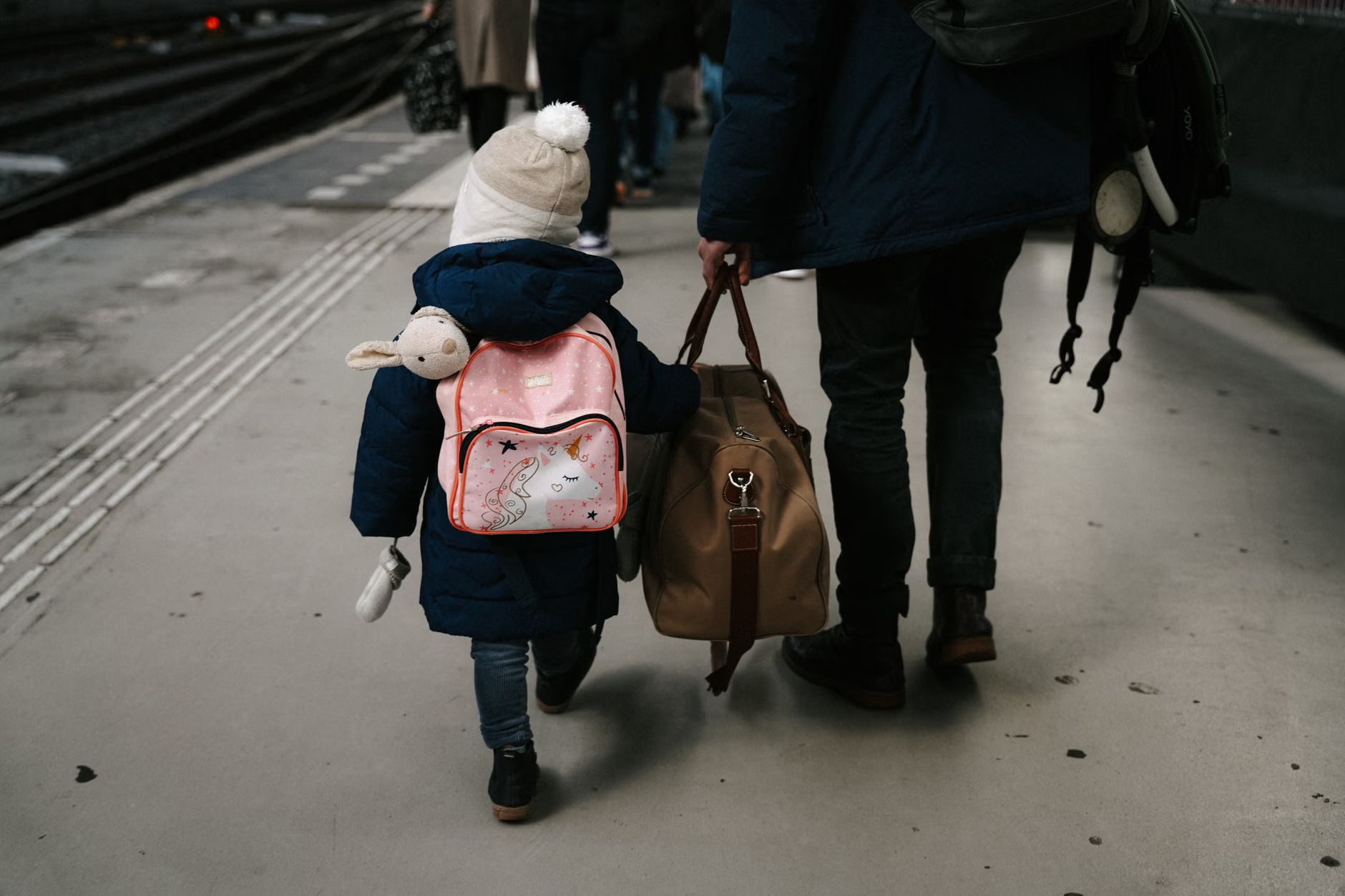
Another aspect of mobility is the “One-Hand” rule. In any public transport scenario, you should always have one hand free. This allows you to hold a handrail, manage a ticket, or grab your child if they bolt. If you are carrying a duffel bag, a stroller, and a backpack, you have zero hands free. You are now a prisoner of your own luggage. The Train-First strategy demands that you consolidate your bags. Use a suitcase that attaches to your stroller or a backpack that has a luggage sleeve.
The Psychological Benefits of “Less”
Why go to all this trouble? Because the psychological weight of “stuff” is real. When you are traveling with children, your cognitive load is already sky-high. You are managing snacks, nap schedules, potty breaks, and safety. Every extra piece of gear you bring is another item you have to track, monitor, and worry about losing. By stripping your gear down to the essentials, you are literally freeing up brain space to focus on the experience of the trip.
Think about the last time you traveled. How much time did you spend hunting for a specific item in a disorganized suitcase? Or worrying if you left the travel blender at the hotel? When you adopt the Train-First strategy, you move from a state of “reactive parenting”—where you are constantly fixing problems caused by your gear—to “proactive parenting,” where you are present and available to your children. Your gear becomes invisible. It just works, and you move on.
It also changes how your children perceive travel. When they see you stressed, scrambling, and yelling at suitcases, they internalize that travel is chaotic and anxiety-inducing. When they see you moving smoothly, calmly navigating a station, and focusing on the journey rather than the logistics, they learn that travel is an adventure. You are modeling a behavior that will serve them for the rest of their lives.
Common Mistakes to Avoid
Even with the best intentions, it is easy to slip back into old habits. Here are a few traps to watch out for:
- The “Just-in-Case” Trap: We discussed this, but it bears repeating. If you haven’t used an item in your daily life at home for the last three months, you do not need it on vacation.
- Over-reliance on Tech: While tablets are great, they can fail. Batteries die, screens break, and software updates happen at the worst times. Always have a low-tech backup, like a sketchpad or a deck of cards.
- Ignoring Ergonomics: A backpack might look cool, but if it doesn’t have a chest strap or proper padding, your back will be screaming by the time you reach the platform. Prioritize comfort for yourself; if you are in pain, you cannot be an effective parent.
- Forgetting the “Last Mile”: You might get your gear onto the train, but what happens when you get off? If your gear is so heavy that you need a porter to move it from the station to your taxi, you have failed the Train-First test.
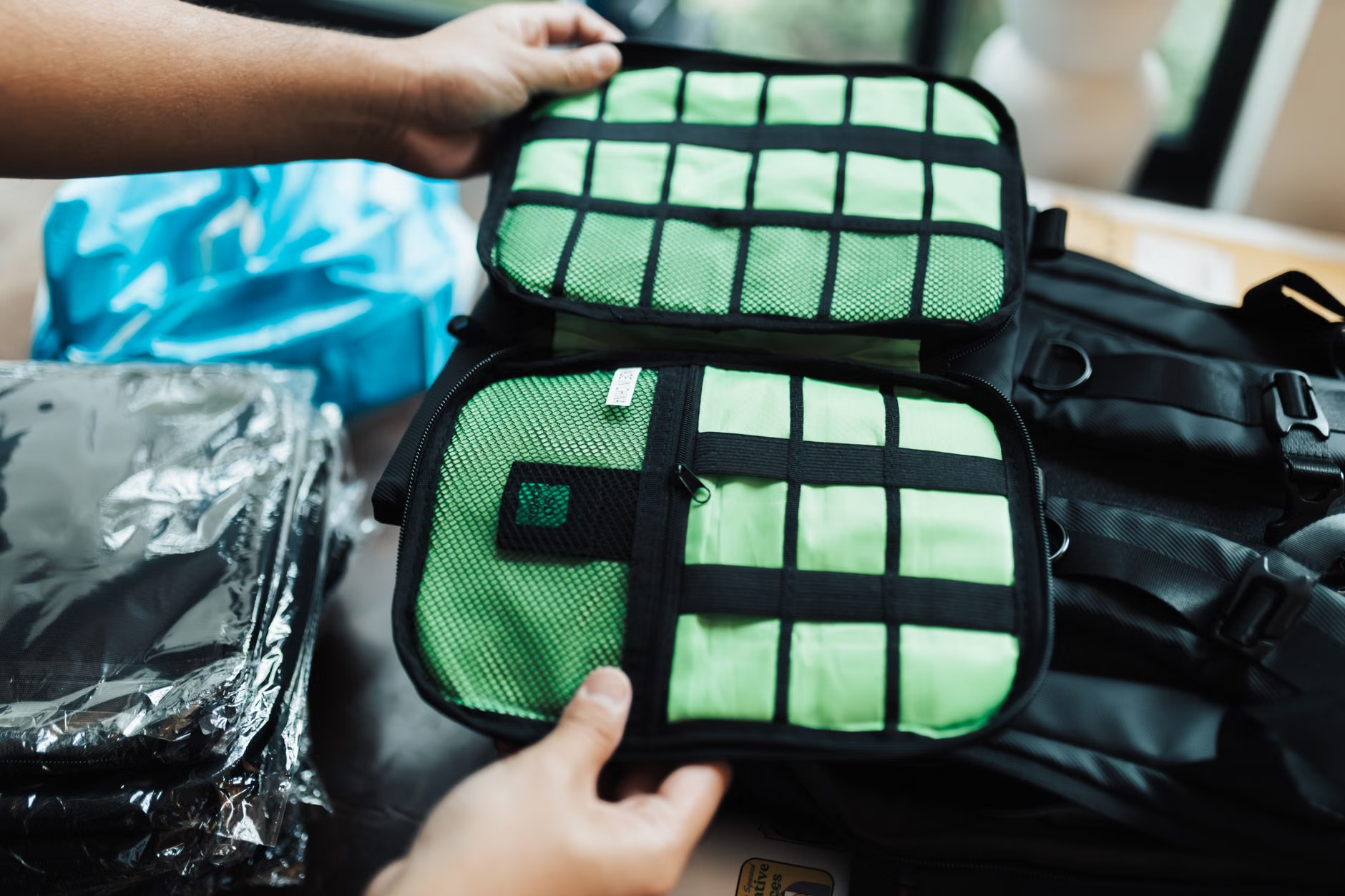
To avoid these, keep a “Travel Log” on your phone. After every trip, write down one thing you brought that you didn’t use, and one thing you desperately wished you had. The next time you pack, review the log. It’s a simple data-driven approach that will refine your gear strategy over time. Most of us never do this, which is why we keep making the same packing mistakes year after year.
Refining Your System: A Step-by-Step Framework
If you are ready to overhaul your approach, start with a “Trial Pack.” This isn’t just about fitting things into a bag; it’s about a dry run. Pack your gear exactly as you would for a trip. Then, put on your shoes, pick up your bags, and walk to your nearest bus stop or train station. Try to navigate the process—the ticket machines, the boarding, the seating. If you find yourself struggling, take note of what specifically caused the friction. Was it the weight of the bag? The size of the stroller? The lack of accessibility to your wallet?
This “dry run” is the most effective way to identify the weak links in your strategy. You will likely find that the gear you thought was essential is actually the main source of your frustration. It’s a humbling exercise, but it is incredibly effective. Once you identify the friction points, you can swap out those items for more efficient alternatives.
Another technique is the “Modular Swap.” Instead of one giant suitcase, use three smaller, specialized units. One for clothes, one for tech and documents, and one for “immediate access” items like snacks and diapers. This allows you to split the load if you are traveling with a partner. If you are solo, it allows you to keep the “immediate access” bag within arm’s reach at all times, so you never have to open your main luggage in a public space.
The Long-Term Value of Minimalism
Adopting the Train-First strategy is an investment. High-quality, compact, modular gear often costs more upfront than the bulky, standard alternatives. However, when you calculate the cost-per-use and the value of your time and reduced stress, the investment pays for itself within a single trip. Moreover, high-quality gear lasts longer. You won’t be replacing broken strollers or torn bags every few years.
There is also a sustainability component here. By buying fewer, higher-quality items, you are reducing your consumption and your environmental footprint. It is a win-win for your family and the planet. We are currently seeing a shift in the travel industry toward “slow travel” and sustainable tourism, and your gear strategy is a major part of that. Being able to move through a city using public transit rather than relying on private taxis or rental cars—because you have the gear to support it—is a massive step toward more authentic travel experiences.
Finally, remember that the goal is not to be a “minimalist” for the sake of it. The goal is to be a parent who can enjoy the journey. If you find that bringing that extra toy makes your child significantly happier and doesn’t impede your mobility, then bring it. The Train-First strategy is a guide, not a religion. The ultimate metric of success is whether you and your children feel relaxed and connected at the end of your journey.
Implications and Encouragement
Changing how you pack is fundamentally about changing how you view your role as a traveler. You are not a pack mule; you are a facilitator of experiences. When you strip away the excess, you are left with the core of why we travel: to explore, to learn, and to connect with our families. It is easy to get lost in the logistics, but the Train-First strategy provides a clear, actionable path to reclaiming your vacation time.
Start small. Next time you plan a weekend getaway, try to leave one large suitcase behind. See how it feels to move with less. You might be surprised at how much easier the travel becomes, and how much more you notice when you aren’t constantly managing a mountain of gear. Don’t be afraid to experiment. Your perfect system won’t happen overnight, but with every trip, you will get closer to a strategy that works for your unique family rhythm.
Safe travels, and may your next platform be clear, your stroller be light, and your hands be free.
Frequently Asked Questions
1. Is the Train-First strategy only for parents with young children?
While designed for the challenges of parenting, the core principles of mobility, modularity, and “one-hand” accessibility are useful for any traveler. Whether you are carrying camera gear, professional equipment, or just trying to navigate a city break efficiently, the logic holds: if you can’t handle your gear in a crowded train station, you have too much.
2. What if I am traveling to a destination where I need a lot of specialized gear (e.g., skiing or camping)?
The Train-First strategy is about your transit gear, not your destination gear. If you are going skiing, your skis and boots are specialized equipment. However, the logic still applies to how you transport your day-to-day items. Can you rent the bulky gear at your destination? If so, do it. If not, pack your specialized items separately so they don’t interfere with your ability to navigate the transit hubs.
3. How do I handle the “what-if” anxiety when packing less?
The best way to combat “what-if” anxiety is to research your destination’s local amenities. In most major cities, you can buy diapers, snacks, and basic toiletries at a local pharmacy or supermarket. Knowing that the “essentials” are available at your destination makes it much easier to leave the “just-in-case” items at home. You aren’t packing for a deserted island; you are packing for a trip to a place where people live and shop every day.
For more information on travel logistics and family-friendly transit, you can visit the Man in Seat Sixty-One for excellent advice on navigating international train travel, or check your local transit authority’s website for specific accessibility and baggage guidelines.